

What Is Holistic Addiction Recovery and Why Does It Matter?
Holistic addiction recovery is a whole-person approach that treats not just the symptoms of addiction, but the underlying mental, physical, and spiritual issues driving it.
If you want a quick answer, here’s what you need to know:
- Holistic addiction recovery means healing the mind, body, and spirit together, not just stopping substance use.
- It combines evidence-based therapies with practices like mindfulness, yoga, nutrition, and social support.
- The goal is to address root causes—like stress, trauma, or anxiety—while building resilience, self-worth, and lasting wellbeing.
- Research shows holistic recovery improves quality of life, reduces cravings, and supports long-term sobriety.
Addiction is more than just a physical challenge. For many Australians, it affects every part of life—thoughts, emotions, health, relationships, and sense of self. That’s why a holistic approach is gaining ground: it recognises your journey is about much more than quitting a substance.
Instead of seeing addiction as simply a disorder of the body, holistic recovery views you as a whole person. It brings together medical care, mental health support, community connection, healthy lifestyle changes, and practical tools to help you heal and thrive.
Whether you’re struggling with alcohol, drugs, or other dependencies, a holistic path can help you understand why addiction took hold and how to reclaim your life—one mindful step at a time.
Understanding Holistic Addiction Recovery
Holistic addiction recovery is based on the understanding that addiction is a chronic brain disorder with roots in physical, psychological, emotional, and spiritual factors. Instead of focusing on just stopping substance use, holistic recovery aims to heal the whole person.
- Whole-person care: Addresses mental health, physical health, relationships, purpose, and lifestyle.
- Root causes: Tackles underlying trauma, stress, anxiety, or life transitions that may drive addiction.
- Multi-dimensional healing: Recognises that recovery is more effective when mind, body, and spirit are aligned.
For example, modern research into addiction neurobiology shows that substance use disorders alter brain pathways related to stress, reward, and decision-making. Scientific research on addiction neurobiology confirms that healing must go deeper than just removing the substance.
How Holistic Addiction Recovery Heals the Mind, Body, and Spirit
Mind: Through counselling, mindfulness, and trauma-informed therapies, we address unhelpful thought patterns, process emotions, and build coping skills. Neuroplasticity—the brain’s ability to adapt and heal—means that with time and support, old habits can be replaced with healthier ones.
Body: Physical health is restored with proper nutrition, regular exercise, sleep hygiene, and body-based therapies like acupuncture or massage. This helps repair damage, balance mood, and boost energy.
Spirit: Refinding meaning, purpose, and connection is at the heart of holistic recovery. Practices like meditation, gratitude, and group support help rebuild self-worth and hope.
Key Differences from Conventional Treatment Models
Traditional addiction treatment often focuses on detox, medication, and group therapy. Holistic recovery integrates these essential elements with complementary therapies such as yoga, mindfulness, and nutritional support.
- Conventional: Medical detox, cognitive-behavioural therapy (CBT), group sessions, sometimes medication.
- Holistic: Integrates above with meditation, art/music therapy, exercise, acupuncture, and lifestyle coaching.
- Integration: The most effective programs combine both, adapting to each person’s unique needs and strengths.
Core Principles & Modalities for Whole-Person Healing
At The Freedom Room, we accept a broad toolkit for holistic addiction recovery. Here are the core elements:
- Mindfulness and meditation
- Yoga and gentle movement
- Acupuncture and traditional therapies
- Nutritional and exercise guidance
- Creative therapies (art, music, journalling)
- Qi-gong, biofeedback, and relaxation techniques
- Social connection and peer support
- Sleep hygiene and daily routines

Mind Approaches: Cognitive & Emotional Balance
Mental wellness is the foundation of sustainable recovery. We use:
- Cognitive-behavioural therapy (CBT): To challenge negative thinking and build coping strategies.
- Mindfulness-Based Cognitive Therapy (MBCT): Proven to reduce relapse rates by up to 50% in people with recurring depression.
- Trauma-informed counselling: Many in recovery have underlying trauma; addressing it safely is key.
- Journalling and self-reflection: Helps process experiences and track progress.
For more on our approach to mental health counselling, see Addiction Recovery Counseling.
Body Approaches: Physical Restoration & Vitality
Physical health is often neglected in addiction, but it’s vital for recovery.
- Exercise: Meta-analyses show that exercise increases abstinence rates by 69% and reduces anxiety and depression.
- Nutrition therapy: A balanced diet restores deficiencies, stabilises mood, and supports physical repair. Two-thirds of people in standard rehab gain weight, showing why nutrition support is crucial.
- Acupuncture: Can ease withdrawal symptoms and cravings by rebalancing the body’s energy.
- Massage and herbal support: Aid relaxation and overall well-being.

Spirit Approaches: Connection & Purpose
Spiritual recovery is about finding meaning, connection, and hope—whether through faith, mindfulness, or community.
- Gratitude practice: Builds positive mindset and resilience. For more, see Gratitude in Recovery.
- Meditation: Over 17% of Australian adults now practice meditation, helping manage stress and cravings.
- Values alignment: Refinding what matters most supports long-term motivation.
- Community and support groups: Reconnects us to others and reduces isolation.
Evidence, Benefits, and Limitations of Holistic Care
Main Benefits of Holistic Addiction Recovery
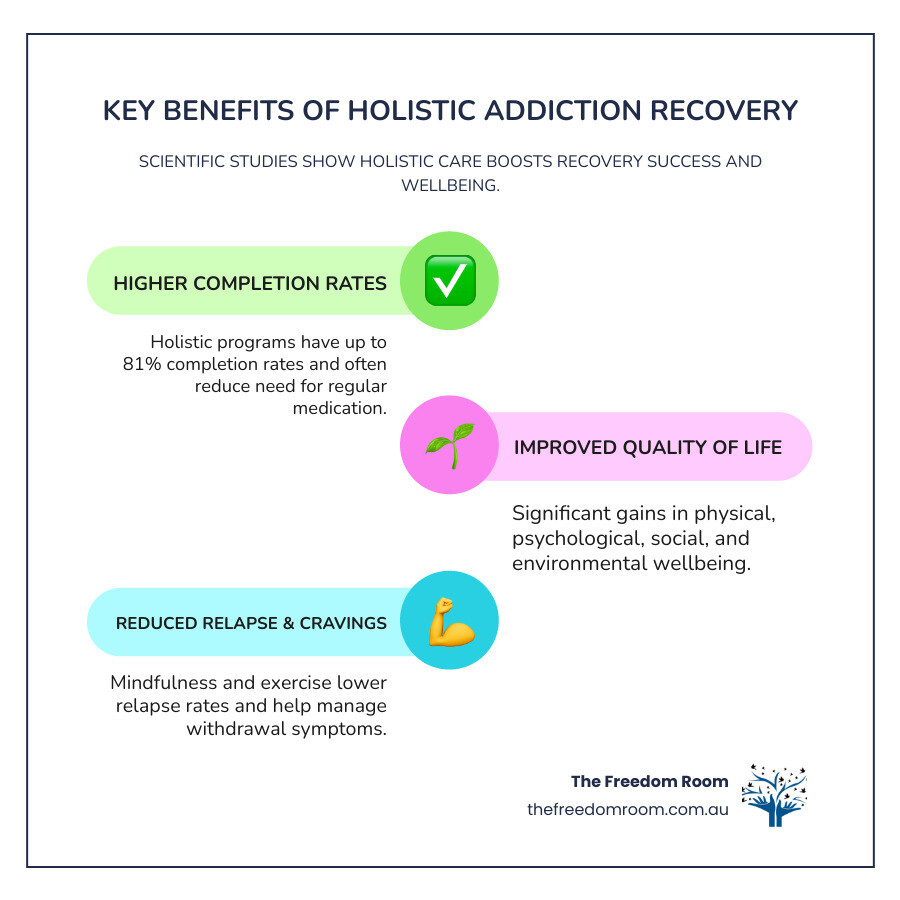
The evidence for holistic approaches is growing. Recent studies and real-world outcomes include:
- Higher completion rates: A four-month holistic program had an 81% completion rate, with most participants avoiding regular medication.
- Improved quality of life: A 10-week holistic rehab led to significant gains in physical, psychological, social, and environmental wellbeing (P < 0.001).
- Reduced relapse and cravings: Mindfulness and exercise both decrease relapse rates and help manage withdrawal symptoms.
- Better mental health: Holistic therapies are linked to reduced anxiety and depression, and increased self-esteem.
- Balanced lifestyle and social reconnection: By addressing all aspects of health, people are more likely to rebuild relationships and find daily fulfilment.
Challenges & Considerations
Holistic care is not a silver bullet, and there can be pitfalls:
- Limited research: While positive, large-scale studies are still emerging. Not all modalities are equally supported by evidence.
- Practitioner standards: Not all providers are equally qualified. Always check credentials and experience.
- Cost and access: Some therapies (like acupuncture or art therapy) may not be covered by insurance or available in all regions.
- Safety and contraindications: Some approaches (e.g., herbal therapies, acupuncture) may not suit everyone, especially during detox or with certain medical conditions.
- Realistic expectations: Holistic healing takes time and commitment—it’s not an overnight fix.

For more on the science behind holistic methods, see Scientific research on mindfulness in recovery.
Integrating Holistic and Conventional Treatments
The most effective addiction recovery combines holistic and conventional strategies. At The Freedom Room, we offer:
- Comprehensive assessment: Evaluating your physical, mental, and social needs.
- Personalised plans: No one-size-fits-all—your treatment is custom to your life, history, and goals.
- Dual diagnosis support: Holistic recovery can be especially helpful for those with co-occurring mental health issues.
- Medication-assisted therapy: For some, medications may be needed temporarily; these are carefully integrated with holistic care.
- Involving family: Loved ones are part of the healing journey, through education and support.
- Choosing the right centre: Look for accreditation, qualified staff, an evidence-based backbone, aftercare planning, and a supportive peer environment.
Read more about our approach at Holistic Approach to Addiction.
Is Holistic Addiction Recovery Right for You?
Holistic recovery can be a good fit if:
- You want to heal more than just the physical symptoms of addiction.
- You have co-occurring mental health issues, trauma, or chronic stress.
- You’re open to complementary therapies alongside conventional treatment.
- You value community, self-findy, and a personalised approach.
It may not suit everyone—some may require intensive medical intervention first, or have specific needs that require a different setting.
What to Look for in a Holistic Treatment Centre
When choosing a centre, consider:
- Accreditation and licensing
- Qualified, compassionate staff (preferably with lived experience)
- Evidence-based backbone (integration with medical and psychological care)
- Personalised treatment plans
- Aftercare and relapse prevention support
- Peer support and community connection
- Safe, welcoming environment
Sustaining Recovery & Daily Practice
Healing doesn’t stop when treatment ends. Sustaining recovery is about building routines, community, and self-care into your everyday life.
- Relapse prevention: Identify triggers, plan coping strategies, and stay connected with support networks.
- Daily routines: Consistent sleep, nutrition, exercise, and mindfulness practices help maintain balance.
- Peer groups: Ongoing involvement in support groups (in person or online) boosts accountability and reduces isolation.
- Mindfulness apps and resources: Many find guided meditations or gratitude journals helpful.
- Nutrition and exercise schedules: Plan meals, stay hydrated, and find enjoyable ways to move your body.
- Journalling and affirmations: Reflect on progress, celebrate wins, and reinforce positive beliefs.
You can explore more on this at Daily Recovery Affirmations.
Building Your Personal Holistic Toolkit
Here’s how to create a sustainable, personalised recovery toolkit:
- Self-assessment: Honestly identify your needs, strengths, and areas for growth.
- Goal setting: Start with small, realistic goals—progress is more important than perfection.
- Track progress: Use journals or apps to notice patterns and celebrate milestones.
- Access community resources: Engage with local wellness programs, peer-led workshops, or online groups.
Frequently Asked Questions about Holistic Addiction Recovery
Does Holistic Care Replace Medical Treatment?
No. Holistic care is meant to complement, not replace, evidence-based medical and psychological treatments. For many, detox and medical management are crucial first steps. Holistic therapies can support these treatments and make recovery more sustainable.
How Quickly Can I Expect Results?
Healing is a journey, not a sprint. Some people notice benefits from practices like meditation or exercise within days, while deeper changes (such as reduced cravings or improved mood) may take weeks or months. Consistency is key.
Are These Therapies Safe During Detox?
Some therapies (like gentle mindfulness or nutrition support) are generally safe during detox. Others (herbal remedies, acupuncture, or intense exercise) should only be used after consulting your healthcare provider. Always work with qualified professionals.
Ready for Change? Let’s Build a Stronger, Alcohol-Free Future Together
At The Freedom Room Wellness and Recovery, we know that healing from addiction is a courageous, life-changing journey. Our team—many of whom have walked this path themselves—offers authentic support, practical tools, and a non-judgemental space for you to heal and grow.
Whether you’re just starting out or seeking to deepen your recovery, we’re here to help you build a life of wellness, purpose, and connection. Reach out today and find how a holistic approach can support your mind, body, and spirit—every step of the way.
Learn more about our personalised, compassionate services at Holistic Addiction Recovery Services.
You don’t have to do this alone. With the right support, recovery is not just possible—it’s life-changing.