

holistic addiction recovery services: 10 Powerful Ways for Success 2025
Understanding Holistic Addiction Recovery Services
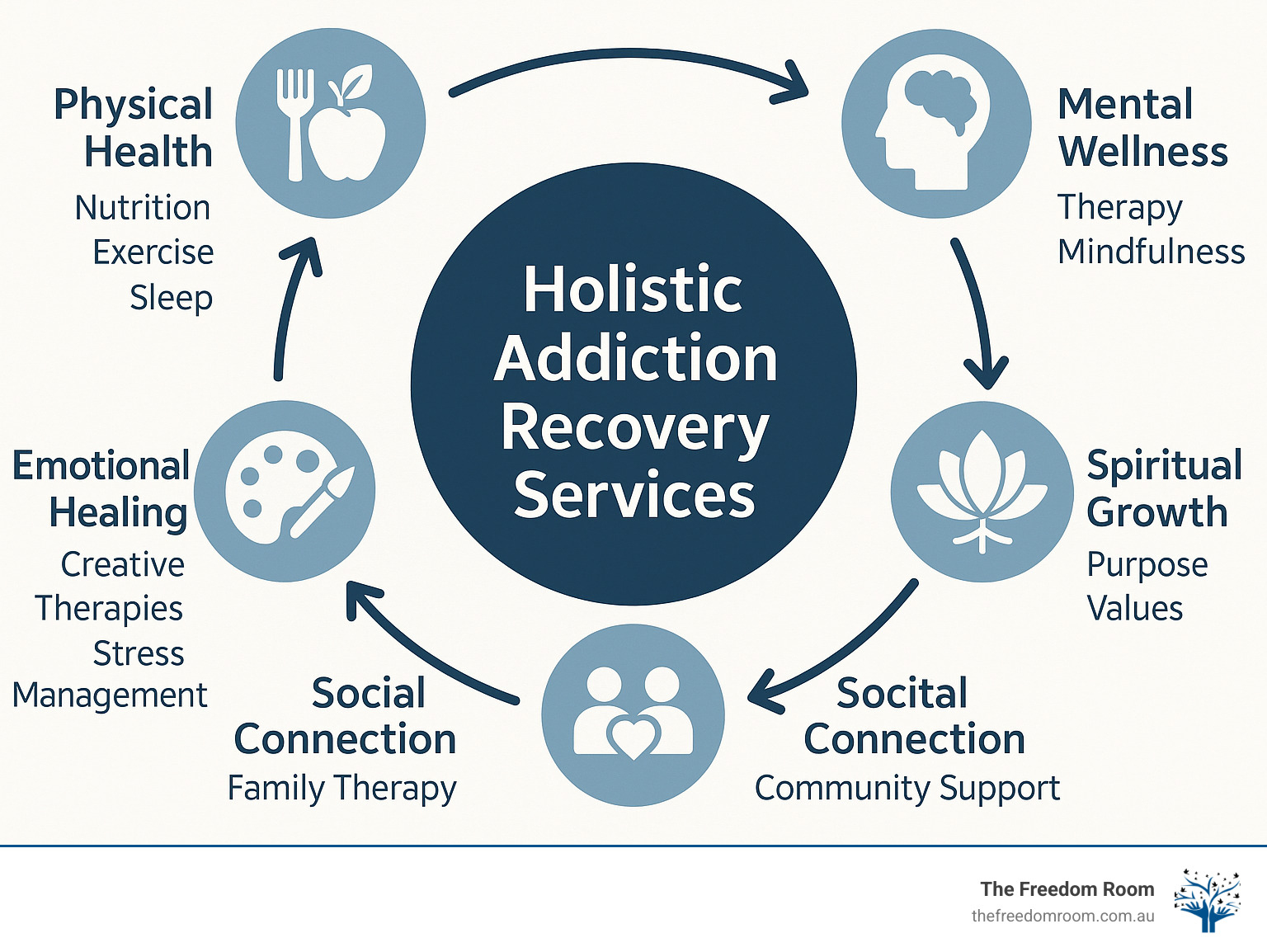
Holistic addiction recovery services focus on treating the whole person – addressing physical, mental, emotional, and spiritual aspects of healing rather than just eliminating substance use.
What are holistic addiction recovery services?
- Definition: Treatment that addresses all aspects of a person’s wellbeing during addiction recovery
- Core components: Physical health, mental wellness, emotional healing, spiritual growth, and social connection
- Common therapies: Nutrition counseling, fitness programs, meditation, yoga, art therapy, mindfulness, and nature-based activities
- Evidence base: Complementary to traditional approaches with growing research support
- Benefits: Improved treatment retention, reduced cravings, better stress management, sustainable recovery
Recovery isn’t just about stopping substance use – it’s about healing the whole person. Traditional addiction treatment often focuses primarily on abstinence, while holistic approaches recognize that lasting recovery requires addressing the underlying causes and developing new coping strategies across all life dimensions.
The holistic model views addiction as a complex issue affecting every aspect of wellbeing. When one area suffers, others are impacted too. By strengthening all these areas simultaneously, you create a more robust foundation for lasting recovery.
Many treatment centers now offer holistic services alongside evidence-based clinical care. This integrated approach helps people not just get sober but build fulfilling lives worth staying sober for.
I’m Rachel Acres, founder of The Freedom Room, and my journey through addiction recovery taught me the transformative power of holistic addiction recovery services, which is why we integrate whole-person healing into every aspect of our recovery programs.
1. Comprehensive Assessment & Personalised Planning
At The Freedom Room, we believe that effective recovery begins with thorough understanding. Our comprehensive assessment process examines all dimensions of your wellbeing:
- Physical health and medical history
- Mental health status and cognitive patterns
- Emotional regulation and coping strategies
- Social connections and support systems
- Spiritual wellbeing and sense of purpose
- Substance use patterns and triggers
This biopsychosocial-spiritual assessment provides a complete picture of your unique situation.
Once we understand your specific needs, we collaborate with you to create a personalised recovery roadmap. Using motivational interviewing techniques, we help you identify meaningful goals that inspire genuine commitment.
For some, this may include initial detoxification support, while for others, the focus might be on developing healthier coping mechanisms. The key is that your plan reflects your individual circumstances, preferences, and aspirations.
Learn more about our Addiction Counselling approach.
Why an Individual Blueprint Matters
Research consistently shows that personalised treatment plans lead to better outcomes. A one-size-fits-all approach simply doesn’t work because each person’s addiction journey is unique.
Your individualised plan establishes baseline metrics that allow us to track progress objectively. These might include:
- Physical health markers
- Psychological symptom scales
- Quality of life measures
- Relationship satisfaction indicators
Regular reviews ensure that your plan evolves as you do. What works in early recovery may need adjustment as you progress, and we’re committed to making those changes together.
Importantly, our comprehensive assessment includes screening for co-occurring disorders. Studies indicate that 47-95% of people in substance use treatment have mental health disorders that need addressing simultaneously. By identifying these early, we can integrate appropriate support from the beginning.
2. Holistic Addiction Recovery Services Explained
When we talk about holistic addiction recovery services, we’re referring to approaches that complement traditional treatment by addressing every aspect of your wellbeing – not just the addiction itself. These services recognise that lasting recovery requires healing the whole person.
In Australia, about 4 in 10 adults already use some form of complementary and alternative medicine in their healthcare routines. This growing acceptance has led to these holistic approaches being increasingly integrated into mainstream addiction treatment programs.
At The Freedom Room, we bring together a diverse team of professionals to support your recovery journey. Our multidisciplinary approach includes addiction counsellors, nutritionists, fitness instructors, mindfulness teachers, creative therapists, and peer support specialists – all working together to address different aspects of your healing.
It’s worth noting that the evidence behind various holistic approaches varies. Some methods, like mindfulness-based relapse prevention, have robust research supporting their effectiveness. Others show promising results but need more study. What we’ve found most effective is thoughtfully combining evidence-based treatments with complementary approaches custom to your unique needs.
We carefully select holistic addiction recovery services that have demonstrated real-world effectiveness and integrate them with proven therapeutic techniques to give you the best chance at lasting recovery.
What Sets Holistic Addiction Recovery Services Apart
The fundamental difference in our approach is our whole-system focus. While traditional treatment might primarily target abstinence, our holistic addiction recovery services aim to improve your overall wellbeing across all dimensions of life.
This comprehensive approach creates several important advantages for your recovery journey. First, by developing skills in multiple areas, you’ll build genuine confidence in your ability to maintain sobriety long-term. This improved self-efficacy becomes a powerful foundation for lasting change.
We’ve also found that clients report greater satisfaction with holistic programs. This isn’t just about comfort – higher satisfaction directly correlates with better treatment retention and completion rates, giving you a better chance at successful recovery.
Rather than just removing substances from your life, our holistic approach helps you build a fulfilling lifestyle that naturally supports long-term recovery. By addressing underlying issues like poor nutrition, chronic stress, or lack of purpose, we help neutralise many common relapse triggers before they become problems.
Scientific research on exercise & substance abuse has demonstrated that regular physical activity significantly reduces depression symptoms while increasing physical stamina – both crucial factors that help you engage more fully in the recovery process.
Choosing Quality Holistic Addiction Recovery Services
When looking for quality holistic addiction recovery services, several key factors deserve your attention. First, ensure any program you consider meets proper accreditation standards and employs qualified professionals. This foundation of quality care is non-negotiable.
Look for a favourable staff-to-client ratio – ideally around 2:1 – which ensures you’ll receive the personalised attention and care needed for effective recovery. The treatment environment also matters significantly. Many effective holistic programs, including ours, are situated in natural settings that support healing. Research consistently shows that connection with nature reduces stress and improves recovery outcomes.
Quality programs should also seamlessly integrate holistic approaches with access to medical and psychiatric care when needed. This balanced approach ensures all aspects of your wellbeing are addressed appropriately.
We often hear questions about insurance coverage for holistic services. While coverage varies by provider and policy, many insurance companies now recognise the value of integrated treatment models. At The Freedom Room, we can help you steer these considerations to make our services as accessible as possible for your situation.
3. Nutrition & Functional Medicine Heal the Body
When you’re recovering from addiction, your body needs healing too. Years of substance use often leave you nutritionally depleted and physically imbalanced. At The Freedom Room, we’ve seen how proper nutrition becomes a cornerstone of lasting recovery.
Think about it – your brain and body are trying to heal while adjusting to life without substances. The right nutritional support makes this journey significantly easier. In fact, research shows that well-nourished individuals have much higher chances of maintaining their recovery long-term.
Nutritional therapy addresses several critical aspects of recovery:
Your body likely has significant nutrient deficiencies after prolonged substance use. Alcohol and drugs deplete essential vitamins and minerals needed for proper brain function and overall health.
Unstable blood sugar levels can trigger intense cravings and mood swings that feel remarkably similar to substance cravings. Stabilizing your blood sugar through regular, balanced meals creates a more solid foundation for recovery.
Your brain requires specific nutrients to produce mood-regulating neurotransmitters like serotonin and dopamine. These are the very chemicals that substances artificially manipulated, and your brain needs support to restore natural production.
The gut-brain connection is increasingly recognized as crucial to mental health. Many people in recovery experience digestive issues that, when addressed, significantly improve emotional wellbeing.
At The Freedom Room, we might recommend amino acid therapy to help correct neurochemical imbalances during early recovery. These targeted supplements can help rebuild your brain’s natural feel-good chemicals that have been depleted by substance use.
We also provide practical guidance on meal planning, shopping on a budget, and simple cooking skills. These everyday tools become powerful allies in your recovery journey.
Learn more about our Nutrition focus and how it supports lasting recovery.
Food as First-Line Relapse Prevention
Many people don’t realize that proper nutrition serves as a powerful relapse prevention tool. Your daily food choices can either support or undermine your recovery efforts.
Balanced macronutrients – getting the right mix of proteins, healthy fats, and complex carbohydrates provides steady energy and mood stability throughout the day. This prevents the energy crashes that can trigger impulsive decisions.
Managing sugar intake helps prevent the mood rollercoasters that mimic substance use patterns. Many people in early recovery unknowingly substitute sugar for their substance of choice, which perpetuates biochemical imbalances and cravings.
Proper hydration is often overlooked but critically important. Even mild dehydration affects brain function and can intensify feelings of anxiety or fatigue that might trigger cravings.
Strategic meal timing prevents those vulnerable moments when hunger leads to irritability and weakened resolve. We help you develop eating patterns that support consistent energy and mood.
As part of our holistic addiction recovery services, we teach you to view food not just as fuel but as medicine – a daily opportunity to support your recovery journey with every meal and snack.
The beauty of nutritional therapy is that it empowers you with practical tools you can use every single day, creating a strong physical foundation for your emotional and spiritual growth in recovery.
4. Movement & Fitness Therapy Build Resilience

When it comes to holistic addiction recovery services, movement and fitness therapy aren’t just about getting fit – they’re about rebuilding your body and mind from the inside out.
Physical activity creates a cascade of positive effects that support recovery in remarkable ways. That post-exercise glow isn’t just in your imagination – it’s your body releasing endorphins, nature’s own mood boosters. These powerful chemicals help counter the depression and anxiety that often accompany early recovery.
Many people find that adding a daily walk, jog, or other movement routine can be a powerful anchor in early recovery. Even a short burst of exercise offers a healthy focus and a natural mood boost, making it easier to manage cravings and build new habits.
At The Freedom Room, we believe movement should be joyful, not punishing. We help you find physical activities that resonate with your personality and interests:
Yoga offers a beautiful bridge between physical and mental wellness. The mindful combination of movement, breath control, and meditation creates a powerful tool for stress reduction. Scientific research on yoga for anxiety confirms what practitioners have known for centuries – regular practice significantly improves emotional regulation and resilience.
Cardiovascular exercise like walking, swimming, or cycling does more than strengthen your heart. These activities boost energy levels, improve sleep quality (often disrupted in early recovery), and provide natural mood elevation. Even a 15-minute daily walk can make a meaningful difference.
Strength training rebuilds more than muscles. Many people in recovery have neglected their physical health, and watching your body grow stronger creates a powerful metaphor for your recovery journey. The confidence gained from physical achievements often spills over into other areas of life.
Outdoor activities combine exercise with the healing power of nature. Our group hikes offer both physical challenge and social connection – two essential ingredients for lasting recovery. Research shows that time in natural settings reduces cortisol (the stress hormone) and improves overall wellbeing.
Designing a Sustainable Fitness Plan
The secret to making fitness stick isn’t intensity – it’s consistency. We’ve seen too many people dive into ambitious exercise regimes only to burn out quickly. Instead, we focus on building progressive goals that evolve as your fitness improves. Starting with manageable 10-minute sessions and gradually building up creates lasting habits without overwhelming you.
Finding activities that bring genuine enjoyment is crucial. Exercise shouldn’t feel like punishment – it should be something you look forward to. Whether it’s dancing, cycling, swimming, or martial arts, the best exercise is the one you’ll actually do consistently.
We also emphasize injury prevention through proper form and appropriate intensity. Recovery is challenging enough without adding physical pain to the mix. Our approach prioritizes gentle progression over quick results.
When integrated with other aspects of recovery, physical activity creates a virtuous cycle – improved physical wellbeing leads to better mood, which strengthens motivation, which makes healthy choices easier, which further improves wellbeing. This upward spiral is a powerful force in building the resilience needed for lasting recovery.
5. Mindfulness, Meditation & Breathwork for Emotional Balance
When we struggle with addiction, we’re often trying to escape uncomfortable feelings or thoughts. Learning mindfulness practices offers a different way to relate to these experiences—we can observe them without judgment or immediate reaction.
Research shows impressive results: mindfulness-based approaches significantly reduce substance use and cravings while helping people regulate their emotions better. At The Freedom Room, we’ve seen how these practices transform recovery by:
Strengthening the brain’s decision-making center (the prefrontal cortex), which helps you pause before acting on impulses.
Calming your nervous system’s stress response, making you less likely to reach for substances when feeling overwhelmed.
Increasing awareness of your personal triggers before they lead to automatic substance use.
Building your capacity to tolerate discomfort, so you can ride out cravings without acting on them.
Promoting brain flexibility, helping your mind form new, healthier patterns and responses.
We offer several accessible mindfulness approaches as part of our holistic addiction recovery services:
- Simple breath techniques that activate your body’s relaxation response
- Guided meditations specifically designed for recovery challenges
- Body scan practices to reconnect with physical sensations
- Mindful movement like gentle yoga or tai chi
- Biofeedback sessions that show you in real-time how your thoughts affect your body
One particularly powerful technique we teach is the SOBER breathing space—Stop, Observe, Breathe, Expand awareness, and Respond mindfully. This quick practice can be used anywhere when cravings or emotional distress arise.
Want to explore more mindful approaches? Learn about The Healing Power of Journalling as another way to develop awareness and emotional balance.
Daily Mind-Training Routines
The real magic of mindfulness comes through consistent practice. We help you develop sustainable routines that fit your actual life—not some idealized meditation schedule that falls apart after a week.
We focus on 5-minute practices that even the busiest person can manage. Many clients start with just three mindful breaths at key points throughout their day.
We’ll recommend smartphone apps that provide guided meditations and help you track your progress. Many clients find these helpful for establishing a regular practice.
We’ll teach you how to bring mindfulness into everyday activities like eating, walking, or even washing dishes. These “informal practices” help embed mindfulness into your daily life.
Most importantly, we’ll work on relapse cue awareness exercises to help you identify and defuse triggers before they lead to substance use.
At The Freedom Room, we’ve found that mindfulness becomes even more powerful when combined with other elements of holistic addiction recovery services. The combination of nutrition, movement, creative expression, and mindfulness creates a comprehensive approach to emotional regulation that medication alone simply can’t match.
By training your mind to respond rather than react, you develop an inner strength that supports lasting recovery. It’s not about never feeling difficult emotions—it’s about having the tools to steer them without turning to substances.
6. Creative & Experiential Therapies Open up Expression

Sometimes words simply aren’t enough to express what’s happening inside. This is especially true in addiction recovery, where complex emotions, trauma, and shame often lurk beneath the surface, making traditional talk therapy challenging. That’s where creative and experiential therapies shine as powerful components of holistic addiction recovery services.
These approaches work their magic by gently bypassing our intellectual defenses, allowing access to deeper emotional material that might otherwise remain locked away. When you can’t find the words to describe your feelings, creating art, music, or movement can provide that symbolic expression while offering a safe distance to process difficult emotions.
At The Freedom Room, we’ve seen remarkable changes through several creative approaches. Art therapy sessions give clients various media to express emotions visually, often revealing patterns they weren’t consciously aware of. Music therapy helps regulate emotions and provides a non-verbal outlet for self-expression that can be particularly powerful for those who struggle to articulate their feelings.
Movement and dance therapy helps clients reconnect with their bodies after years of disconnect or trauma.
We also incorporate several nature-based experiential therapies. Equine-assisted therapy builds relationship skills and emotional awareness through interactions with horses, who mirror our emotional states with remarkable accuracy. Horticultural therapy offers grounding and nurturing experiences as clients tend to plants and gardens, while wilderness experiences build confidence and provide perspective through challenging outdoor activities.
These approaches are particularly effective for addressing trauma, which frequently accompanies substance use disorders. Creative expression provides a safe container for processing difficult experiences without retraumatization.
Turning Emotions into Art
The beauty of creative therapies lies in their ability to transform abstract emotional states into concrete, tangible expressions. This process of externalization makes internal struggles more manageable and less overwhelming.
In our holistic addiction recovery services, we create safe spaces for expressing difficult feelings like anger, grief, or shame through artistic mediums. The tactile engagement with art materials provides sensory grounding, helping clients stay present even when processing challenging emotions.
The shared experience of creating alongside others reduces isolation and builds community. When clients display their work and share its meaning with the group, powerful connections form. They often find they’re not alone in their struggles, which diminishes shame and fosters hope.
These creative approaches complement traditional talk therapy beautifully, accessing different neural pathways and often triggering breakthroughs when conventional methods have reached plateaus. By engaging both the analytical and creative parts of the brain, clients develop more integrated healing.
What makes creative therapies so valuable within our holistic addiction recovery services is their ability to help clients refind joy, playfulness, and self-expression—qualities often lost during active addiction. These positive experiences build self-esteem and provide healthy alternatives to substance-induced states, showing clients they can access fulfilling experiences naturally.
7. Spiritual & Purpose-Driven Practices Cultivate Meaning
When addiction takes hold, it often leaves a spiritual emptiness in its wake – a disconnection from what gives life meaning and purpose. This void isn’t necessarily religious in nature, but rather a fundamental human need for connection to something larger than ourselves.
At The Freedom Room, we’ve found that addressing this spiritual dimension is essential for lasting recovery, regardless of your religious beliefs or background. Our approach focuses on helping you refind what truly matters in your life.
Through values clarification exercises, we help you identify what you genuinely care about – perhaps it’s family relationships, creative expression, personal growth, or contributing to your community. These core values become your internal compass, guiding decisions large and small throughout your recovery journey.
We incorporate Acceptance and Commitment Therapy (ACT) principles that help bridge the gap between identifying values and living them daily. This practical approach encourages committed action aligned with what matters most to you, creating a life worth staying sober for.
Many clients find that gratitude practices shift their focus from what’s missing to what’s present, countering the negativity bias that often accompanies addiction. Something as simple as noting three things you’re grateful for each day can gradually transform your outlook.
Volunteering and service work offer meaningful ways to connect with others and find a sense of purpose beyond personal recovery. Supporting peers or giving back to the community can help build motivation, self-worth, and a deeper commitment to lasting change.
We also offer experiences in nature connection, which many find provides perspective and spiritual renewal. The simple act of walking mindfully through a forest or sitting quietly beside water can restore a sense of being part of something larger than yourself.
For those interested in twelve-step approaches, we provide information about secular 12-step options that focus on the core principles rather than religious concepts, making these powerful tools accessible to everyone.
Learn more about how approaches like EFT and CBT Therapy can help you connect with deeper meaning in your recovery journey.
Reclaiming Inner Purpose through Holistic Addiction Recovery Services
A pivotal question many face in recovery is: “Who am I when I’m not drinking or using?” Holistic addiction recovery services help you rebuild an identity beyond addiction, one grounded in authentic values and meaningful pursuits.
This identity work begins with exploring natural interests that may have been abandoned during active addiction. Perhaps you once loved music, art, cooking, or outdoor activities but set these passions aside as substance use took over.
Developing new skills and competencies provides a sense of mastery and purpose that builds confidence. Whether it’s learning a craft, taking a course, or developing professional abilities, these achievements reinforce your capability to grow beyond addiction.
Many find that finding ways to contribute to their families, communities, or society creates a powerful sense of purpose. This might involve rebuilding damaged relationships, mentoring others in recovery, or applying your unique talents to help others.
8. Family, Social & Community Support Strengthen Networks

Addiction rarely happens in isolation – it ripples through families, friendships, and communities. At The Freedom Room, we recognize that healing these connections is just as important as individual recovery work.
The research is clear: people with strong support networks are significantly more likely to maintain long-term sobriety. When loved ones understand addiction and recovery, they become powerful allies rather than unintentional enablers.
Family sessions can be a turning point for loved ones. Many find that what felt like support was sometimes enabling, and learn healthier ways to encourage recovery. These sessions often help families build a shared understanding of addiction and create new routines that strengthen everyone’s progress.
Our family-focused approach includes several key components. We offer structured family sessions that improve understanding and rebuild trust, while our couples work addresses relationship patterns that may have developed during active addiction. Many clients find tremendous value in our group recovery meetings that create lasting peer support networks.
We also emphasize boundary-setting skills – teaching both the person in recovery and their loved ones how to establish healthy limits. Our communication training helps families express needs and concerns effectively, without triggering defensive responses.
Many clients benefit from connecting with peer mentors who are further along in recovery. These relationships provide both practical guidance and living proof that lasting change is possible.
Learn more about how our Group Recovery Meetings can provide ongoing connection and accountability, addressing the isolation that often accompanies addiction.
Building a Safe Home Ecosystem
What happens between formal sessions often determines recovery success. That’s why we work closely with families to create supportive home environments that nurture sobriety.
This process begins with thorough education about addiction as a chronic health condition. We help family members understand that addiction isn’t a moral failing but a complex condition requiring ongoing management – much like diabetes or heart disease.
We teach families to recognize relapse warning signs and develop appropriate responses. Rather than reacting with panic or punishment, families learn to address concerning behaviors with compassion and clarity.
Many families benefit from establishing shared routines that support recovery – like regular meal times, exercise, or technology-free evenings. These structures provide stability that benefits everyone, not just the person in recovery.
Setting clear, compassionate boundaries is essential. We help families understand that boundaries protect everyone’s wellbeing and actually strengthen relationships by creating safety and predictability.
Regular family check-ins become a valuable tool for addressing challenges before they escalate. These conversations move from crisis management to proactive problem-solving, reducing household stress significantly.
This family-centered approach recognises a fundamental truth of holistic addiction recovery services: sustainable recovery requires changes in the entire system, not just the individual with the substance use disorder. When everyone grows together, healing becomes a shared journey of connection rather than a lonely struggle.
9. Integrated Dual-Diagnosis & Evidence-Based Counselling
While holistic approaches offer powerful healing, they shine brightest when paired with evidence-based therapeutic techniques. At The Freedom Room, we believe this integration creates a comprehensive approach that addresses both the symptoms you’re experiencing and their underlying causes.
Our approach combines the best of both worlds – the innovative, whole-person focus of holistic addiction recovery services alongside proven therapeutic methods that have strong research support:
- Cognitive Behavioural Therapy (CBT) helps you identify and transform unhelpful thought patterns that might be driving your substance use
- Acceptance and Commitment Therapy (ACT) builds psychological flexibility, helping you move toward what matters most even when difficult feelings arise
- Dialectical Behaviour Therapy (DBT) provides practical skills for emotional regulation when feelings become overwhelming
- Trauma-informed therapies address underlying painful experiences that may have contributed to your substance use
- Motivational techniques strengthen your commitment to change when the path feels challenging
This integrated approach is particularly crucial if you’re experiencing co-occurring mental health conditions alongside addiction – which research shows affects between 47-95% of people seeking addiction treatment. Mental health challenges and substance use disorders interact in complex ways, each potentially worsening the other. By addressing both simultaneously, we create the conditions for more effective, lasting recovery.
Learn more about CBT for Addiction and how it complements our holistic approaches.
Bridging Science and Holistic Practice
The most successful recovery journeys combine the precision of evidence-based practice with the depth of holistic healing. This integration creates several powerful benefits:
Symptom relief comes quickly through proven therapeutic techniques, giving you breathing room to do deeper work. When you’re less overwhelmed by immediate symptoms, you can engage more fully with the holistic practices that foster long-term healing.
Root-cause healing happens through holistic modalities that address the physical, emotional, and spiritual dimensions of addiction. These approaches help heal the underlying imbalances that contributed to your substance use in the first place.
Data tracking provides objective measures of your progress, helping us refine your treatment plan as needed. This evidence-based approach ensures we’re moving in the right direction and making adjustments when necessary.
Personalised integration means we tailor the specific combination of approaches based on your unique needs, preferences, and response to different modalities. There’s no one-size-fits-all formula – your recovery plan is as individual as you are.
By bridging the worlds of science and holistic practice, we create a recovery approach that’s both immediately effective and sustainable for the long term. This integration addresses not just the addiction itself but helps you build a foundation for genuine wellbeing across all dimensions of your life.
10. Continuity of Care, Aftercare & Relapse Prevention
Recovery isn’t a short-term fix but a lifelong journey of growth and healing. Research consistently shows that longer engagement with support services leads to better outcomes, which is why we’ve designed our holistic addiction recovery services to evolve alongside you.
At The Freedom Room, we understand that your needs change as you progress through recovery. That’s why we offer a continuum of care that adapts to where you are in your journey:
As you gain confidence and stability, we offer step-down levels of support that gradually increase your independence while maintaining the safety net you need. Many clients transition to our outpatient services, allowing them to apply their recovery skills in daily life while still having regular check-ins with our team.
For those with busy schedules or who live further away, our tele-support options ensure that geography never becomes a barrier to continued healing. These virtual connections provide flexibility without sacrificing the personal touch that makes our approach so effective.

One of the most cherished aspects of our program is our alumni community. These regular gatherings create lasting bonds between people who understand each other’s journeys.
We place special emphasis on relapse prevention planning, working with you to identify your unique triggers and develop specific strategies for high-risk situations. This isn’t about fearing relapse but about being prepared and confident in your ability to steer challenges.
If a slip or relapse does occur, we respond with compassion rather than judgment. We view these moments as valuable learning opportunities that strengthen your recovery foundation.
Long-Term Success with Holistic Addiction Recovery Services
Sustainable recovery requires maintaining the healthy practices developed during active treatment. We help you create realistic maintenance plans that include:
SMART goals that are Specific, Measurable, Achievable, Relevant, and Time-bound provide clear direction for your ongoing recovery journey. These concrete objectives help you track progress and celebrate victories along the way.
We also help you develop crisis planning with specific steps to follow during high-risk situations. Having this plan in place reduces anxiety about potential challenges and ensures you’re never caught unprepared.
Connecting you with community resources creates additional layers of support beyond our program. These might include support groups, wellness activities, or volunteer opportunities that enrich your recovery experience.
Regular wellbeing check-ins help you monitor your physical, emotional, and spiritual health, allowing you to address small issues before they grow into bigger challenges. These self-assessments become a natural part of your self-care routine.
Through our work with hundreds of clients, we’ve identified these 5 relapse-proof daily habits that build a strong foundation for lasting recovery:
- Morning mindfulness practice to set an intentional tone for your day
- Balanced nutrition with regular meals to stabilize mood and energy
- Physical movement that suits your individual capacity and preferences
- Connection check-in with at least one supportive person daily
- Evening reflection on gratitude and lessons learned
These seemingly simple practices create powerful protection against relapse when practiced consistently. They address all dimensions of wellbeing and help you build a fulfilling life that supports your ongoing recovery.
At The Freedom Room, we believe that recovery isn’t just about stopping harmful behaviors—it’s about creating a life so rich and meaningful that returning to old patterns becomes less appealing. Our holistic addiction recovery services provide the tools, support, and community you need to build that life, one day at a time.
Frequently Asked Questions about Whole-Body Recovery
What evidence supports holistic therapies?
The evidence varies by modality. Some approaches, like mindfulness-based relapse prevention, have strong research support with multiple clinical trials showing effectiveness. Others show promising results but need more research.
What we do know is that treatment satisfaction, which can be increased by holistic therapies, is related to treatment retention and completion—both of which correlate with better outcomes. Studies also consistently show that addressing multiple dimensions of wellbeing simultaneously leads to more sustainable recovery.
Are these approaches used alone or with medical treatment?
At The Freedom Room, we view holistic approaches as complementary to, not replacements for, evidence-based medical and psychological treatments. For many clients, especially those with co-occurring disorders or physical dependence, medical support remains essential.
The integration of conventional and holistic approaches creates a comprehensive recovery plan that addresses both immediate symptoms and underlying causes. This integrated approach often yields better results than either approach alone.
Will my insurance pay for holistic services?
Insurance coverage for holistic addiction recovery services varies widely depending on the provider and specific policy. Some holistic modalities like nutritional counseling and certain forms of therapy may be covered, while others might not.
At The Freedom Room, we work with clients to maximize insurance benefits where possible and find affordable options for services not covered. We believe financial barriers shouldn’t prevent access to comprehensive care.
Accept Your Recovery Path with Us by Your Side
At The Freedom Room Wellness and Recovery, we understand that lasting change requires addressing every dimension of your wellbeing. Our team members, who are themselves in recovery, bring authentic empathy and practical wisdom to your journey.
Our personalised sessions create a safe space to explore the roots of addiction and develop new coping strategies. Ongoing workshops build specific skills for maintaining recovery in real-world situations, and our community provides the connection and accountability that research shows is crucial for long-term success.
The holistic approach we offer doesn’t just help you stop drinking—it helps you build a fulfilling life that makes alcohol unnecessary. One client shared that after working with us they gained renewed health, purpose, authentic relationships, and a sense of peace once thought impossible.
If you’re ready to explore a whole-person approach to recovery, we invite you to learn more about Alcohol Use Disorder support and how our holistic addiction recovery services can help you create lasting change.
Recovery isn’t just about what you’re leaving behind—it’s about what you’re moving toward. Let’s take that journey together.
Support & Resources
Reaching out for help is a sign of strength, not weakness. If you or someone you love is struggling with alcohol addiction, please know that compassionate, understanding support is available right now.
The Freedom Room team is here to guide you through those first uncertain steps toward recovery:
Our Office: (07) 3325 1531
Mobile: 0400 236 743 (Rachel)
Sometimes, you might need immediate assistance outside our regular hours. In those moments, these trusted resources are always available:
Emergency Help: Call 000 for urgent situations
AA Helpline: 1300 222 222 for 24/7 peer support
Lifeline: 13 11 14 for crisis support and suicide prevention
Al-Anon: www.al-anon.org.au for family and friends affected by someone else’s drinking
The journey to recovery isn’t meant to be walked alone. Whether you’re taking your first steps or supporting someone who is, connecting with the right support makes all the difference. Our holistic addiction recovery services are designed to meet you exactly where you are today, with warmth, understanding, and practical guidance for the road ahead.
The courage to reach out is often the hardest part. We’re here when you’re ready, without judgment and with open hearts.