

Why Mental Health Support Is Essential for Your Wellbeing
Mental health support includes a wide range of services to help you manage emotional challenges, psychological distress, and mental health conditions. Whether you’re dealing with anxiety, depression, or feeling overwhelmed, understanding your options is the first step toward recovery.
If you need immediate mental health support in Australia:
- Crisis support: Call Lifeline Australia on 13 11 14 (24/7)
- Text support: Text 0477 13 11 14 for crisis chat
- Beyond Blue: 1300 22 4636 for anxiety and depression support
- Emergency: Call 000 for life-threatening situations
Mental health challenges affect millions of Australians annually, but effective, evidence-based treatments are available. With the right support, recovery is possible.
The journey to better mental health involves understanding your options, finding the right professional, exploring treatments, and building a support network. Australia’s stepped care model allows you to start with basic support and move to more intensive treatment as needed.
Your GP is often the first point of contact, helping you access Medicare-subsidised sessions with psychologists and other professionals. Taking that first step to seek support is key to addressing mental health and related challenges like substance use or relationship difficulties.
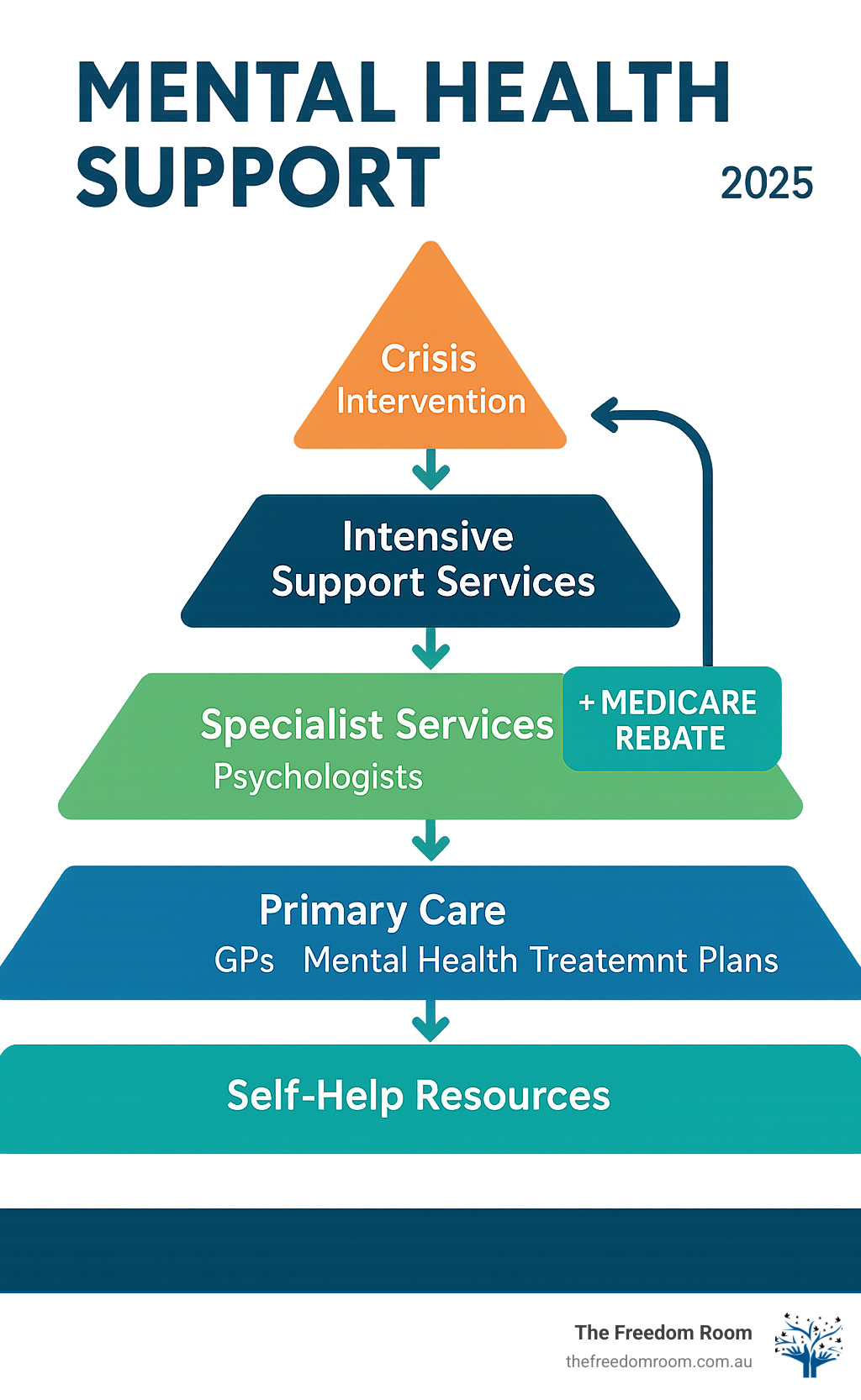
Understanding the Landscape of Mental Health Support
Navigating Australia’s mental health support system can be straightforward. The system uses a “stepped care” approach, meaning you can start with basic support and access more intensive help if required. This flexible network is designed to meet you where you are, whether you’re dealing with daily stress or more complex conditions.
This approach creates a safety net that adapts to your needs, from a chat with your GP to sessions with a psychologist or crisis support. For a detailed overview of the national framework, see an overview of the Australian mental health system.
The First Step: Your General Practitioner (GP)
Your GP is often your first ally in accessing mental health support. In a confidential setting, they can assess your situation and distinguish between temporary stress and more persistent conditions.
A key tool your GP provides is a Mental Health Treatment Plan. This plan is your roadmap to affordable care, making you eligible for Medicare rebates on sessions with psychologists, social workers, and other professionals. Your GP remains a central point of contact, referring you to specialists like psychiatrists and monitoring your progress.
Types of Mental Health Professionals
Australia’s mental health support network includes various professionals with unique skills. Finding the right fit is crucial for your recovery.
- Psychologists have at least six years of university training and specialise in talking therapies to help change unhelpful thought patterns and behaviours.
- Psychiatrists are medical doctors with specialist training who can diagnose complex conditions, prescribe medication, and provide various therapies.
- Accredited Mental Health Social Workers focus on how your environment affects your wellbeing, providing counselling that considers family, work, and community factors. Their services are often Medicare-rebated.
- Counsellors offer support for personal challenges and life changes. Look for membership in a professional body to ensure high standards, as they may not qualify for Medicare rebates.
- Psychotherapists work with deeper, long-standing emotional issues using various therapeutic techniques.
For those with alcohol-related concerns, specialised Therapy for Alcoholism can integrate with broader mental health support services.
Immediate Crisis Support: When You Need Help Now
When life feels overwhelming and you need mental health support immediately, crisis services are available. If you are experiencing intense emotional distress or thoughts of self-harm, reaching out to these services can be life-saving.
Australia has a comprehensive network of crisis services operating 24/7. Staffed by trained professionals and volunteers, they offer confidential, non-judgemental support. They can help de-escalate a crisis, create immediate safety plans, and connect you with ongoing support. Help is accessible via phone, text, or online chat, ensuring you can connect in a way that feels comfortable for you.

Key Australian Helplines and Hotlines
Australia’s crisis mental health support network includes several key services for immediate help.
- Lifeline Australia (13 11 14): The cornerstone of 24/7 crisis support, also offering text (0477 13 11 14) and online chat. Learn more at Lifeline Australia.
- Suicide Call Back Service (1300 659 467): Provides free, 24/7 professional counselling for anyone affected by suicide.
- Beyond Blue (1300 22 4636): A support line focused on anxiety, depression, and suicide prevention, connecting you with local services.
- 1800RESPECT (1800 737 732): Specialised crisis support for people affected by sexual assault, domestic or family violence, and abuse.
Accessing Broader Support for Basic Needs
Effective mental health support recognises that emotional wellbeing is tied to basic needs. Stress from housing instability, financial hardship, or food insecurity can intensify mental health challenges.
Support is available across Australia for these issues. State government housing departments and community organisations can assist with accommodation. Centrelink and financial counsellors can help with financial stress. Food banks and community pantries provide immediate food assistance.
- Ask Izzy: A free, anonymous website that connects you to local services for housing, food, financial support, and more.
- Local Councils: Often provide community support programs and can direct you to local resources.
Addressing these fundamental needs is a crucial part of improving your Emotional Wellness and allows you to better engage with your recovery.
Finding and Choosing the Right Professional Help
Finding the right mental health support professional can be achieved through several pathways. Online directories from professional associations, recommendations from your GP or trusted friends, university clinics, and community health centres are all excellent starting points.
These options can help you find qualified practitioners, often at reduced rates or with shorter waiting lists. For targeted support with alcohol use, exploring Addiction Counselling can be beneficial. Finding the right professional requires patience, but it is a worthwhile investment in your wellbeing.
How to Find a Suitable Mental Health Provider
Choosing a provider is about finding the right therapeutic relationship. It’s worth taking the time to find someone who understands your needs.
Consider the following:
- Experience: Does the provider have experience with your specific concerns, such as depression, trauma, or substance use?
- Therapeutic approach: Do they use methods like Cognitive Behavioural Therapy (CBT) or mindfulness-based approaches? Ask about their methods to see if they align with your preferences.
- Costs and coverage: Understand session costs, out-of-pocket expenses, and what Medicare or private health insurance will cover. A Mental Health Treatment Plan from your GP is needed for Medicare rebates.
- Availability: Check if their appointment times fit your schedule and ask about their waiting list.
An initial consultation can help assess compatibility. It is perfectly acceptable to continue searching if the first professional doesn’t feel right. Remember your Self-Care Activities during this process.
How to Provide Mental Health Support to a Loved One
Supporting a loved one requires compassion and healthy boundaries. Effective mental health support involves helpful, rather than harmful, approaches.
- Listen actively: Give your full attention without immediately offering solutions. Validate their feelings with phrases like, “That sounds really difficult.”
- Be non-judgemental: Avoid blame or criticism. Mental health struggles are not character flaws, and a safe, non-judgemental space encourages honesty.
- Encourage professional help: Gently suggest options and offer practical support, like helping them research providers or accompanying them to an appointment.
- Set boundaries: Protect your own wellbeing. Be clear and kind about what support you can and cannot offer.
- Avoid burnout: Maintain your own support network and activities. Supporting others can be demanding, and understanding concepts like Emotional Sobriety can be valuable for your own emotional health.
Exploring Different Types of Mental Health Treatments
The path to recovery is personal, so mental health support includes a variety of evidence-based treatments. The key is finding the combination of approaches that resonates with your unique needs, from talking therapies to holistic techniques.
An effective treatment plan often weaves together different approaches and evolves with your recovery journey. The goal is to develop lasting coping strategies and improve your quality of life. Discuss costs and payment options with providers, as Medicare rebates and private health insurance can make quality care more accessible.

Talking Therapies (Psychotherapy)
Talking therapies are a cornerstone of mental health support, involving collaborative work with a professional to explore thoughts, feelings, and behaviours.
- Cognitive Behavioural Therapy (CBT): A well-researched approach that helps you identify and challenge unhelpful thought patterns in the present moment. We often use CBT Techniques for Addiction for their proven effectiveness.
- Emotional Freedom Techniques (EFT): Also known as “tapping,” EFT is a tool that helps process the energy of long-held emotions like fear and worry. A trained EFT Practitioner guides you to tap on specific acupressure points while focusing on a distressing issue. This sends a calming signal to the brain’s alarm system (the amygdala), disrupting the stress response. This process helps clear negative emotions associated with trauma, addictions, anxiety, and depression without needing to relive painful experiences, fostering greater emotional resilience.
- Psychodynamic Therapy: Explores how past experiences and unconscious patterns influence your present behaviour and emotions.
- Interpersonal Therapy: Focuses on improving relationships and social functioning to alleviate mental health symptoms.
Holistic and Complementary Approaches
Many people find benefit from holistic approaches that honour the mind-body connection as part of their mental health support.
- Mindfulness: Focuses on the present moment without judgement to reduce stress. See Mindfulness for Alcohol Recovery for specific strategies.
- Meditation: Trains attention and awareness to achieve mental clarity and emotional stability.
- Yoga: Combines physical postures, breathing, and meditation to promote mental and physical health.
- Art Therapy: Uses creative expression to explore emotions and reduce stress.
- Trauma-Informed Care: An approach that recognises the widespread impact of trauma, creating a safe environment for healing. Learn more about Trauma-Informed Therapy.
- Breathing Exercises: Simple yet powerful techniques to calm the nervous system. Explore practical applications in Breathing Exercises for Addiction.
Integrating these approaches often leads to more sustainable recovery outcomes.
Specialised Support for Diverse Needs and Concerns
Mental health challenges don’t affect everyone in the same way, and Australia recognises this by offering specialised mental health support services custom to diverse needs and circumstances. These services go beyond a one-size-fits-all approach, providing culturally safe and community-specific resources that acknowledge the unique experiences of different populations.
We understand that effective mental health support isn’t just about accessing treatment—it’s about finding care that truly understands your background, circumstances, and specific challenges. Whether you’re dealing with a particular mental health condition or belong to a specific community, there are dedicated pathways designed to help you feel both supported and understood.
This personalised approach ensures that everyone can access relevant and effective care, regardless of their age, cultural background, sexual orientation, or specific mental health concerns. The goal is to create environments where individuals feel safe, respected, and empowered throughout their recovery journey.

Support for Specific Mental Health Conditions
Different mental health conditions require different approaches to treatment and support. Australia offers targeted mental health support for various conditions, ensuring that individuals receive care specifically designed for their particular challenges.
- Anxiety disorders affect millions of Australians, and specialised support often includes cognitive behavioural therapy, exposure therapy, and mindfulness-based approaches. Practical strategies and coping techniques can make a significant difference in managing daily anxiety. Resources like Anxiety Relief provide valuable tools for those seeking immediate support alongside professional treatment.
- Depression requires comprehensive care that may involve psychotherapy, lifestyle changes, and sometimes medication. Support groups play a crucial role, offering peer connections and shared experiences that can be incredibly healing. The approach often focuses on building resilience and developing healthy coping mechanisms.
- Substance use disorders benefit from integrated treatment approaches that address both the addiction and any underlying mental health conditions. A Holistic Approach to Addiction considers all aspects of a person’s life—physical, emotional, social, and spiritual—recognising that recovery involves more than just stopping substance use.
- Post-Traumatic Stress Disorder (PTSD) requires specialised trauma-focused therapies such as EMDR (Eye Movement Desensitisation and Reprocessing) or trauma-focused CBT. These approaches are specifically designed to help individuals process traumatic experiences safely and effectively.
- For individuals with ADHD, understanding The Link Between ADHD and Addiction highlights the importance of integrated care that addresses both conditions simultaneously, as they often co-occur and can complicate treatment if not properly managed.
Dedicated Services for Specific Communities
Australia has developed comprehensive mental health support services specifically designed to meet the unique needs of various communities, ensuring that cultural identity, age, and life circumstances are respected and incorporated into care.
- Youth mental health receives particular attention through services like Headspace, which provides free or low-cost support to young people aged 12-25 across Australia. For immediate support, Kids Helpline (1800 55 1800) provides free, confidential 24/7 counselling for young people aged 5 to 25.
- The LGBTQIA+ community has access to specialised support through QLife (1800 184 527), which provides anonymous and free peer support and referrals from 3 pm to midnight daily.
- Veterans and their families can access comprehensive support through Open Arms – Veterans & Families Counselling (1800 011 046), providing free and confidential counselling for current and former Australian Defence Force members and their families.
- Aboriginal and Torres Strait Islander peoples have access to culturally appropriate mental health support through 13YARN (13 92 76), a 24/7 national crisis support line. This service provides a culturally safe space to receive support from trained staff who understand their cultural context.
Accept Your Recovery Path with Us by Your Side
Taking the first step towards mental health support requires courage, and the journey to recovery is one you do not have to walk alone. It is a path of growth, challenges, and breakthroughs, and having the right support makes all the difference.
At The Freedom Room Wellness and Recovery, we understand this journey because many of our team members have lived experience with recovery. This shapes our authentic, compassionate approach. We create personalised care plans that honour your unique circumstances and goals.
Recovery is possible. We have seen countless individuals transform their lives through commitment and support. Our services, including those in Strathpine QLD, are designed to meet you where you are and guide you toward a healthier, more fulfilling life.
If you are ready to see how professional mental health support can help, we invite you to learn More info about our addiction counselling services. Seeking help is an act of strength that opens the door to genuine healing and lasting change.