

What is Well-Being and Why It Matters for Your Life
Well-being encompasses far more than simply feeling happy or avoiding illness. It represents a comprehensive state where your physical, mental, and emotional health work together harmoniously, creating a foundation for a meaningful and fulfilling life.
Quick Definition of Well-Being:
- A positive state of health, happiness, and prosperity
- Balance across physical, mental, emotional, social, and environmental dimensions
- The ability to manage stress while maintaining life satisfaction
- A sense of purpose and meaningful connections with others
- Overall quality of life where your fundamental needs are met
Well-being differs significantly from momentary happiness or the mere absence of disease. Research shows it’s a multidimensional concept that includes positive emotions, life satisfaction, resilience, and the capacity to contribute meaningfully to your community. When you experience true well-being, you feel energised, connected, and equipped to handle life’s inevitable challenges.
For those navigating recovery from alcohol dependency, understanding well-being becomes particularly crucial. Addiction often disrupts multiple dimensions of well-being simultaneously – affecting your physical health, emotional stability, relationships, and sense of purpose. The journey to recovery isn’t just about stopping drinking; it’s about rebuilding a comprehensive foundation for a thriving life.
Most people show significant improvements in their well-being within five weeks of consistently applying evidence-based techniques. However, cultivating lasting well-being requires ongoing commitment and the right support systems. The good news is that well-being skills can be learned and strengthened over time, much like building physical fitness.
Quick well-being definitions:
Understanding Well-Being: Beyond Happiness and Health
When we talk about well-being, we’re exploring something much deeper and more comprehensive than simply feeling good in the moment. It’s a state where your physical health, mental clarity, and emotional stability work together to create a foundation for genuine fulfilment.
What is the Definition of Well-being?
Well-being represents a positive quality of life where your fundamental needs are met across multiple dimensions. This includes your physical health, mental health, and emotional health working in harmony together. Rather than just the absence of illness or distress, well-being encompasses life satisfaction, a sense of meaning and purpose, and your ability to manage stress effectively.
Within positive psychology, well-being focuses on identifying what helps humans truly flourish. It recognises that a fulfilling life includes both positive experiences and the resilience to steer challenges constructively. This comprehensive approach acknowledges that managing difficulties is a natural part of healthy living, rather than something to avoid entirely.
For individuals in recovery, understanding this broader definition becomes particularly meaningful. Well-being isn’t about achieving constant happiness, but about building a stable foundation that supports you through life’s inevitable ups and downs. Scientific research on well-being and mental illness continues to reveal how these interconnected elements support long-term recovery and life satisfaction.
Distinguishing Well-being from Happiness
Many people use happiness and well-being interchangeably, but they represent quite different experiences. Happiness is primarily an emotion – a temporary feeling of joy or pleasure that naturally fluctuates based on circumstances, relationships, or daily events.
Well-being, however, represents a more enduring state of contentment and life satisfaction. It encompasses what researchers call eudaimonic flourishing – a deeper sense of purpose, personal growth, and meaningful connections that persist even during challenging times. This distinction becomes particularly important in recovery, where chasing temporary highs often led to destructive patterns.
True well-being includes moments of happiness but doesn’t depend on them for stability. Instead, it builds a foundation of inner peace and purpose that can weather life’s storms. This is why finding joy in sobriety involves finding these deeper sources of fulfilment rather than simply replacing one temporary pleasure with another.
The Integrated Nature of Health and Well-being
Your physical, mental, and emotional health don’t operate in isolation – they’re intimately connected parts of your overall well-being. Think of this mind-body connection as a complex ecosystem where changes in one area naturally influence all the others.

When you improve your physical health through regular exercise, you often notice improvements in mood, stress levels, and cognitive function. Conversely, chronic emotional stress can manifest as physical symptoms, weaken your immune system, and impact your overall vitality. This interconnectedness means that addressing well-being holistically often produces more sustainable results than focusing on isolated problems.
For those in recovery, this integrated approach becomes essential. Alcohol dependency affects multiple systems simultaneously – your brain chemistry, emotional regulation, social connections, and physical health. Understanding the long-term effects of alcohol on the brain highlights why recovery involves rebuilding well-being across all these interconnected dimensions rather than simply addressing drinking behaviour alone.
This holistic understanding forms the foundation for sustainable recovery, where each positive change supports and strengthens the others, creating an upward spiral towards genuine well-being.
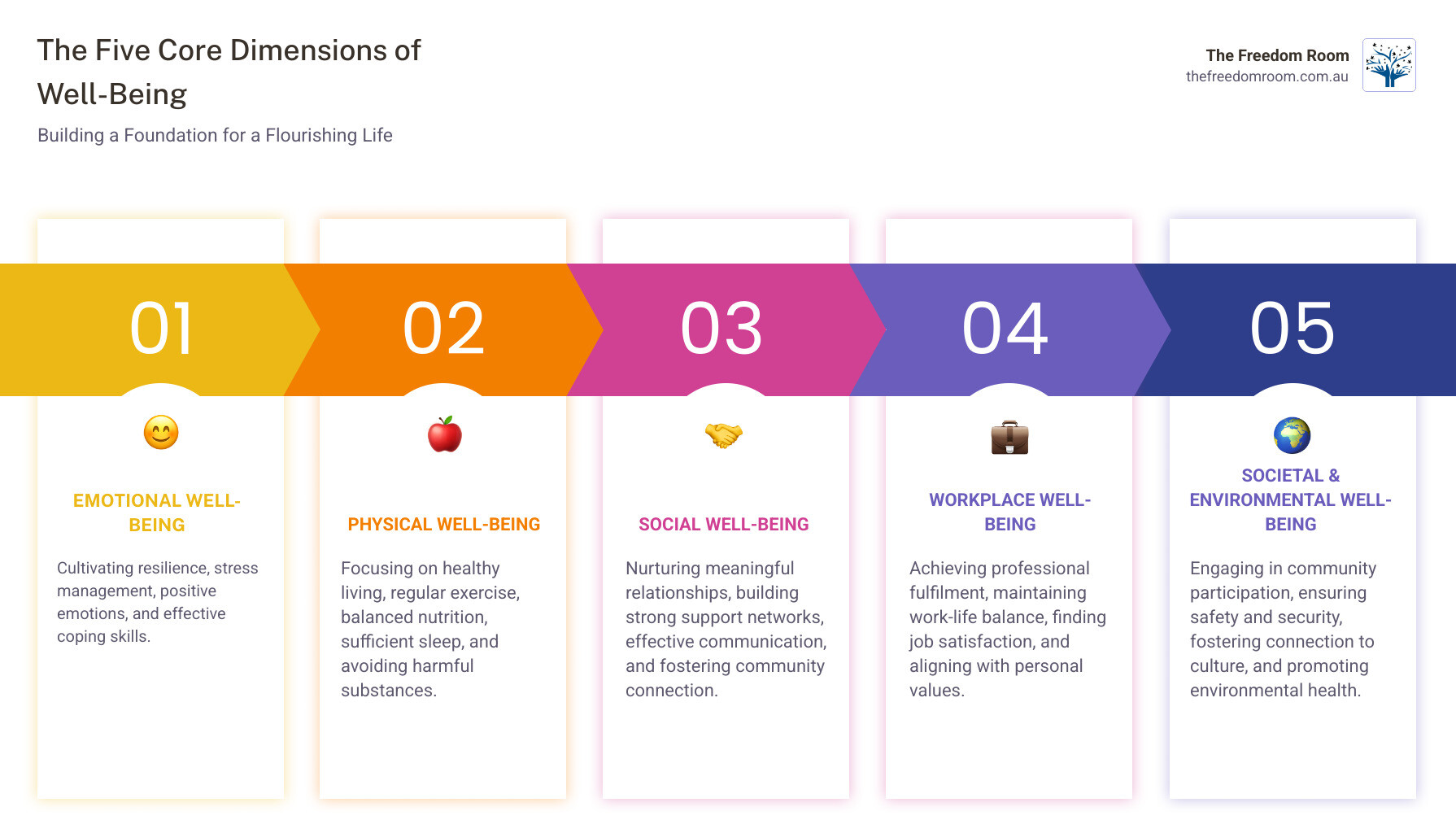
The Five Core Dimensions of a Flourishing Life
True well-being isn’t just about feeling good in the moment—it’s about thriving across all areas of your life. Think of well-being as a mix woven from five interconnected threads, each one strengthening and supporting the others. When you understand these dimensions, you can begin to see where your own well-being might need attention and care.
Emotional Well-Being
Your emotional well-being forms the heart of how you experience life. It’s about developing resilience when things get tough, learning effective stress management techniques, and cultivating genuine self-love. When you have strong emotional well-being, you can feel positive emotions more fully while also having the coping skills to steer life’s inevitable challenges.
For many people in recovery, emotional well-being becomes particularly crucial. Alcohol often masks or numbs difficult emotions, so learning to feel and process these feelings naturally is a vital skill. This journey involves building your capacity to handle triggers without returning to old patterns and finding healthy ways to celebrate life’s joys. Developing this emotional resilience is at the core of emotional sobriety.
Physical Well-Being
Your body is the vehicle that carries you through life, and physical well-being ensures it’s running smoothly. This dimension encompasses healthy living through regular exercise, balanced nutrition, quality sleep, and most importantly, avoiding harmful substances that can derail your health and recovery.
Physical well-being takes on special significance during recovery. Alcohol can severely impact your appetite, disrupt sleep patterns, and create nutritional deficiencies that affect both your body and mind. When you nourish your body properly, you often find that cravings become more manageable and your energy levels improve dramatically. Understanding the full scope of alcohol dependence helps illuminate why physical healing is such an essential part of overall recovery.
Social Well-Being
Humans are wired for connection, and your social well-being reflects the quality of your relationships and sense of belonging. This involves building meaningful relationships, creating strong support networks, improving your communication skills, and fostering genuine community connection.

Recovery often means rebuilding your social world from the ground up. Some relationships may need healing, while others might need to be left behind if they don’t support your new lifestyle. The good news is that recovery opens doors to deeper, more authentic connections with people who truly understand and support your journey. Building these healthy relationships in recovery becomes a cornerstone of lasting well-being.
Workplace Well-Being
Since you spend a significant portion of your life at work, workplace well-being plays a crucial role in your overall satisfaction. This dimension includes finding professional fulfilment, finding your life purpose through meaningful work, maintaining healthy work-life balance, achieving genuine job satisfaction, and ensuring your career aligns with your personal values.
For people in recovery, refinding professional purpose can be incredibly motivating. Work provides structure, accomplishment, and often a renewed sense of identity. Whether you’re returning to a previous career or exploring entirely new paths, finding work that resonates with your values and supports your recovery creates a powerful foundation for long-term well-being.
Societal and Environmental Well-Being
The final dimension extends beyond your personal sphere to encompass your relationship with the broader world. Societal and environmental well-being includes active community participation, feeling safe and secure in your environment, maintaining connection to culture, and caring for environmental health around you.
This dimension recognises that individual well-being is deeply connected to the health of our communities and environment. When you contribute to local initiatives, engage in sustainable practices, or volunteer for causes you care about, you often find a profound sense of purpose and belonging. These activities can provide meaning that extends far beyond personal recovery, creating a legacy of positive impact that enriches your own well-being in return.
Each of these five dimensions supports and strengthens the others. When you nurture your physical health, you often find your emotional resilience improves. Strong relationships can improve your workplace satisfaction, while meaningful work can boost your self-esteem and social connections. Understanding these interconnections helps you approach well-being as a holistic journey rather than isolated goals.
A Practical Guide to Improving Your Personal Well-being
Building stronger well-being doesn’t require dramatic life changes or perfect circumstances. It starts with understanding that small, consistent actions compound over time to create meaningful change. Whether you’re beginning your recovery journey or simply seeking to improve your quality of life, developing practical skills and daily habits forms the foundation of lasting change.
Foundational Skills for Personal Growth
The journey toward improved well-being begins with cultivating essential skills that support growth across all areas of your life. These foundational abilities act as building blocks, making it easier to steer challenges and accept positive change.
Developing a growth mindset transforms how you approach obstacles and setbacks. Instead of viewing challenges as threats, this perspective helps you see them as opportunities for learning and development. When you believe your abilities can improve through effort and dedication, you’re more likely to persist through difficult moments in recovery or personal development.
Cultivating self-awareness involves honestly examining your emotions, values, strengths, and areas for improvement. This introspection becomes particularly valuable during recovery, as it helps you identify triggers, understand your motivations, and make decisions aligned with your authentic self. Regular self-reflection through journaling or quiet contemplation can deepen this awareness over time.
Fostering a positive attitude doesn’t mean ignoring life’s difficulties or pretending everything is perfect. Rather, it involves consciously choosing to focus on possibilities and solutions whilst acknowledging challenges. This skill proves especially important when building new habits or working through setbacks.
Embracing lifelong learning keeps your mind engaged and adaptable. Whether you’re exploring new hobbies, developing professional skills, or learning about yourself through therapy, this curiosity-driven approach opens doors to fresh perspectives and opportunities for growth.
Daily Practices to Nurture Well-being
Creating sustainable well-being happens through consistent daily practices that gradually become second nature. These habits work together to support your physical, emotional, and mental health whilst building resilience for challenging times.
Mindfulness practice offers a powerful way to stay grounded in the present moment rather than getting caught up in regrets about the past or anxiety about the future. Even five minutes of focused breathing or mindful observation can reduce stress and improve emotional regulation. For those in recovery, mindfulness for alcohol recovery provides specific techniques custom to overcome addiction challenges.
Regular physical activity serves as both prevention and treatment for numerous physical and mental health concerns. You don’t need intense gym sessions – a daily walk, gentle yoga, or dancing to your favourite music can boost mood, improve sleep, and increase energy levels. The key is finding movement you genuinely enjoy, making it more likely you’ll maintain the habit long-term.
Prioritising healthy nutrition means fueling your body with foods that support both physical and mental health. Focus on whole foods, adequate hydration, and regular meal times. During recovery, proper nutrition becomes especially important as your body heals and rebuilds its natural balance.
Cultivating gratitude through daily acknowledgment of positive aspects in your life, however small, can shift your perspective and increase life satisfaction. This might involve keeping a gratitude journal, sharing appreciation with others, or simply taking a moment each day to notice something beautiful or meaningful.
Setting achievable goals provides direction and motivation whilst building confidence through regular accomplishments. Break larger aspirations into smaller, manageable steps that you can celebrate along the way. This approach prevents overwhelm and maintains momentum during challenging periods.
Therapeutic Approaches to Support Well-being
Sometimes professional guidance becomes essential for navigating complex challenges and building robust well-being. Evidence-based therapeutic approaches offer structured support for addressing underlying issues whilst developing practical skills for lasting change.

Cognitive Behavioural Therapy (CBT) helps you identify and transform unhelpful thinking patterns that contribute to distress or problematic behaviours. This approach proves particularly effective for addressing anxiety, depression, and addiction by teaching practical skills for reframing negative thoughts and developing healthier responses to challenging situations. Understanding CBT techniques for addiction can provide valuable insights into how this therapy supports recovery.
Acceptance and Commitment Therapy (ACT) takes a different approach by teaching you to accept difficult thoughts and feelings rather than fighting against them, whilst committing to actions that align with your personal values. This therapy builds psychological flexibility and resilience, helping you create a meaningful life even when facing emotional pain or uncertainty. Learning about Acceptance and Commitment Therapy (ACT) reveals how this approach supports long-term well-being.
Emotional Freedom Techniques (EFT), commonly known as “tapping,” offers a gentle yet effective method for processing emotional stress and trauma. This evidence-based approach involves tapping on specific acupressure points whilst focusing on distressing thoughts or emotions, which helps calm the amygdala – your brain’s alarm system responsible for the fight, flight, or freeze response.
EFT practitioners support clients in safely releasing emotional trauma held within the body and subconscious memories. This therapy proves particularly valuable because it allows you to process difficult experiences without reliving the original pain. Areas where EFT shows particular effectiveness include addictions, anxiety, depression, trauma, stress management, and self-confidence issues.
The technique works by sending calming signals to the amygdala whilst you focus on specific concerns. Over time, regular EFT practice can retrain your stress response, reducing the intensity and frequency of overwhelming reactions. This creates greater emotional resilience and inner calm, allowing you to steer daily challenges with increased ease and confidence.
The Bigger Picture: Societal Impact and Lifelong Benefits
Well-being extends far beyond personal boundaries. It creates ripple effects that strengthen entire communities and contributes to a healthier, more resilient society. Understanding this interconnectedness helps us appreciate why investing in our own well-being matters not just for ourselves, but for everyone around us.
The Role of Community and Society
The communities we live in profoundly shape our capacity for well-being. When we have access to quality healthcare, live in safe neighbourhoods, and feel genuinely included in our communities, our foundation for thriving becomes much stronger.
These social conditions act as powerful protective factors. Strong community connections can buffer the harsh effects of stress and adversity, providing emotional support when we need it most. Robust support systems don’t just make us feel better—they actually improve our physical health outcomes and increase our resilience during challenging times.
For those navigating recovery, community support becomes even more critical. The understanding and shared experience found in support groups can be transformative, reinforcing healthy coping strategies while reducing the isolation that often accompanies addiction. This is why exploring alcohol addiction support groups can be such a cornerstone of lasting well-being.
When communities prioritise well-being, they create environments where everyone has a better chance to flourish. This might include investing in green spaces, ensuring affordable healthcare access, or fostering social inclusion initiatives that bring people together.
The Evolution of Measuring Well-being
For decades, nations measured their success primarily through economic indicators like GDP. While economic prosperity matters, this narrow focus missed the bigger picture of what makes life truly worth living.
The understanding of progress has evolved significantly. Countries like the United Kingdom and New Zealand now incorporate well-being measures into their budget planning and policy decisions, recognising that citizens’ overall quality of life should be at the heart of governance.
Positive psychology has been instrumental in this shift, providing frameworks to assess human flourishing beyond simple happiness. Research now examines both subjective well-being—how we feel about our lives—and eudaimonic flourishing—our sense of meaning and purpose.
This broader perspective reveals important insights. The World Happiness Report provides global data on well-being, while research from organisations like Gallup shows that only 33% of workers worldwide are thriving, with 55% struggling and 11% suffering. These findings highlight the urgent need for comprehensive approaches to supporting human flourishing.
The Lasting Rewards of Prioritising Well-being
Investing in your well-being creates benefits that compound over time, enriching every aspect of your life. The rewards extend far beyond momentary feelings of happiness or contentment.
Increased resilience becomes one of the most valuable outcomes. When you prioritise well-being, you develop the capacity to bounce back from setbacks more quickly and effectively. Challenges transform from overwhelming obstacles into opportunities for growth and learning.
Your physical health outcomes improve significantly when well-being becomes a priority. This holistic approach often leads to reduced risk of chronic diseases, better immune function, and increased longevity. The mind-body connection means that nurturing your emotional and mental health directly supports your physical vitality.
Relationships flourish as you develop greater self-awareness and emotional regulation. Your capacity to form meaningful connections deepens, leading to more supportive and fulfilling relationships with family, friends, and colleagues.
Perhaps most importantly, prioritising well-being cultivates genuine life satisfaction. This isn’t about constant happiness, but rather a deep sense of contentment and purpose that remains steady even during difficult times.
Building well-being is a lifelong journey rather than a destination. It requires consistent effort, self-compassion, and the flexibility to adapt as life changes. For those in recovery, this commitment becomes particularly transformative, creating the foundation for profound and lasting positive change. The path to long-term addiction recovery demonstrates how prioritising well-being can completely reshape your relationship with yourself and the world around you.
Frequently Asked Questions About Well-being
Understanding well-being can feel overwhelming at first. These common questions help clarify the essential concepts and practical aspects of cultivating a more fulfilling life.
What is the main difference between well-being and happiness?
Many people use happiness and well-being interchangeably, but they represent quite different experiences. Happiness is essentially an emotion – a wonderful feeling of joy, pleasure, or contentment that comes and goes throughout your day. You might feel happy when you receive good news, spend time with loved ones, or accomplish something meaningful.
Well-being, however, runs much deeper. It represents a comprehensive and stable state that encompasses your overall health, sense of purpose, life satisfaction, and ability to manage life’s inevitable challenges. Think of happiness as the weather – it changes frequently and can be influenced by countless external factors. Well-being is more like the climate – a consistent, underlying condition that remains relatively stable even when individual days vary.
This distinction becomes particularly important in recovery. While happiness might fluctuate as you steer the ups and downs of healing, building solid well-being provides the foundation for lasting change and resilience.
How long does it take to see improvements in well-being?
The journey to improved well-being varies significantly from person to person, but research offers some encouraging insights. Many individuals notice meaningful improvements within five weeks of consistently applying evidence-based techniques and practices.
However, it’s important to understand that building genuine well-being is not a quick fix – it’s a lifelong commitment that requires ongoing effort and patience. Just as physical fitness develops gradually through regular exercise, well-being strengthens through consistent daily practices and mindful choices.
The initial weeks often bring the most noticeable changes as you begin implementing new habits and perspectives. You might find yourself sleeping better, feeling less overwhelmed by stress, or experiencing more moments of genuine contentment. These early improvements can be incredibly motivating and help sustain your commitment to the longer journey ahead.
For those in recovery, the timeline can be particularly meaningful. As your body heals from the effects of alcohol and you develop new coping strategies, improvements in well-being often accelerate and become more profound.
Can I just focus on one area of well-being, like physical health?
While focusing on one dimension of well-being is certainly better than neglecting all areas, the interconnected nature of human health means this approach has significant limitations. Your emotional, physical, social, workplace, and environmental well-being all influence each other in complex ways.
Consider how loneliness affects your entire system. Poor social well-being doesn’t just make you feel isolated – it can weaken your immune system, disrupt your sleep patterns, increase stress hormones, and make it harder to maintain healthy eating and exercise habits. Similarly, chronic physical health problems often lead to emotional distress, which can strain relationships and affect work performance.
This interconnectedness becomes even more apparent in recovery. Addressing only the physical aspects of alcohol dependence while ignoring the emotional, social, or psychological factors that contributed to the addiction often leads to incomplete healing. The most sustainable and effective approach acknowledges that true well-being requires attention to all dimensions of your life.
Starting with one area can provide an excellent foundation, but the goal should be gradually expanding your focus to accept a more holistic approach. This comprehensive strategy yields the most lasting and meaningful improvements in your overall quality of life.
Accept Your Recovery Path with Us by Your Side
Well-being is not a destination you arrive at one day, but rather a continuous journey of growth, resilience, and self-findy. It involves nurturing every aspect of your life—from your emotional and physical health to your meaningful connections with others and your broader community.
For those whose well-being has been impacted by challenges with alcohol, this journey holds profound and transformative significance. The path to recovery extends far beyond simply stopping drinking; it’s about rebuilding a comprehensive foundation for a thriving, purposeful life across all dimensions of well-being.
The Freedom Room understands this complexity intimately. Our team provides compassionate, expert guidance rooted in lived experience to help you rebuild a life of genuine purpose and vibrant health. We recognise that each person’s journey is unique, requiring personalised support that honours your individual circumstances and goals.
The beauty of focusing on well-being lies in its accessibility through small, consistent steps. Whether you’re taking your first tentative steps towards recovery or strengthening your existing foundation, every positive choice you make contributes to lasting change. These incremental improvements compound over time, creating momentum that carries you towards a fulfilling, vibrant future.
Recovery is not about achieving perfection—it’s about progress, self-compassion, and the courage to keep moving forward. By embracing a holistic approach to well-being, you’re not just addressing alcohol dependency; you’re cultivating resilience, finding new sources of joy, and building the skills needed to steer life’s inevitable challenges with confidence.
Your journey towards lasting well-being doesn’t have to be walked alone. Find the support you need through our addiction counselling services and take the first step towards the balanced, meaningful life you deserve.