

Why More Australians Are Seeking Alternatives to Traditional Recovery Models
Non 12 step recovery offers pathways to overcoming alcohol addiction without the spiritual foundations, concepts of powerlessness, or disease model central to traditional Alcoholics Anonymous programmes. These approaches emphasise self-empowerment, evidence-based therapies, and personal choice.
Quick Overview: Key Non 12 Step Recovery Options
- Secular peer support focuses on strengthening your sober self through mutual encouragement without spiritual requirements.
- Cognitive Behavioural Therapy (CBT) helps change unhelpful thinking patterns and behaviours through structured therapeutic work.
- Emotional Freedom Techniques (EFT) uses gentle tapping on acupressure points to calm the stress response and process emotional trauma.
- Evidence-based approaches integrate scientific research with practical tools for lasting change.
While the traditional 12-step model has helped many people, it is not the only path to recovery. What works for one person may not resonate with another. Some individuals find the spiritual elements of 12-step programmes uncomfortable, while others may struggle with the concept of admitting powerlessness over their addiction.
Non-12-step recovery approaches place you at the centre of your healing journey, recognising that you have the internal resources and capability to change. Rather than surrendering control to a higher power, you develop practical skills, process underlying trauma, and build sustainable coping mechanisms. You learn to understand and reshape the connection between your thoughts, feelings, and behaviours.
Modern approaches incorporate evidence-based therapies like Cognitive Behavioural Therapy and innovative techniques such as Emotional Freedom Techniques. These methods help address not just the addiction itself but also co-occurring mental health conditions like anxiety, depression, and trauma. This guide will walk you through the core differences between philosophies and help you determine which path might align best with your goals.
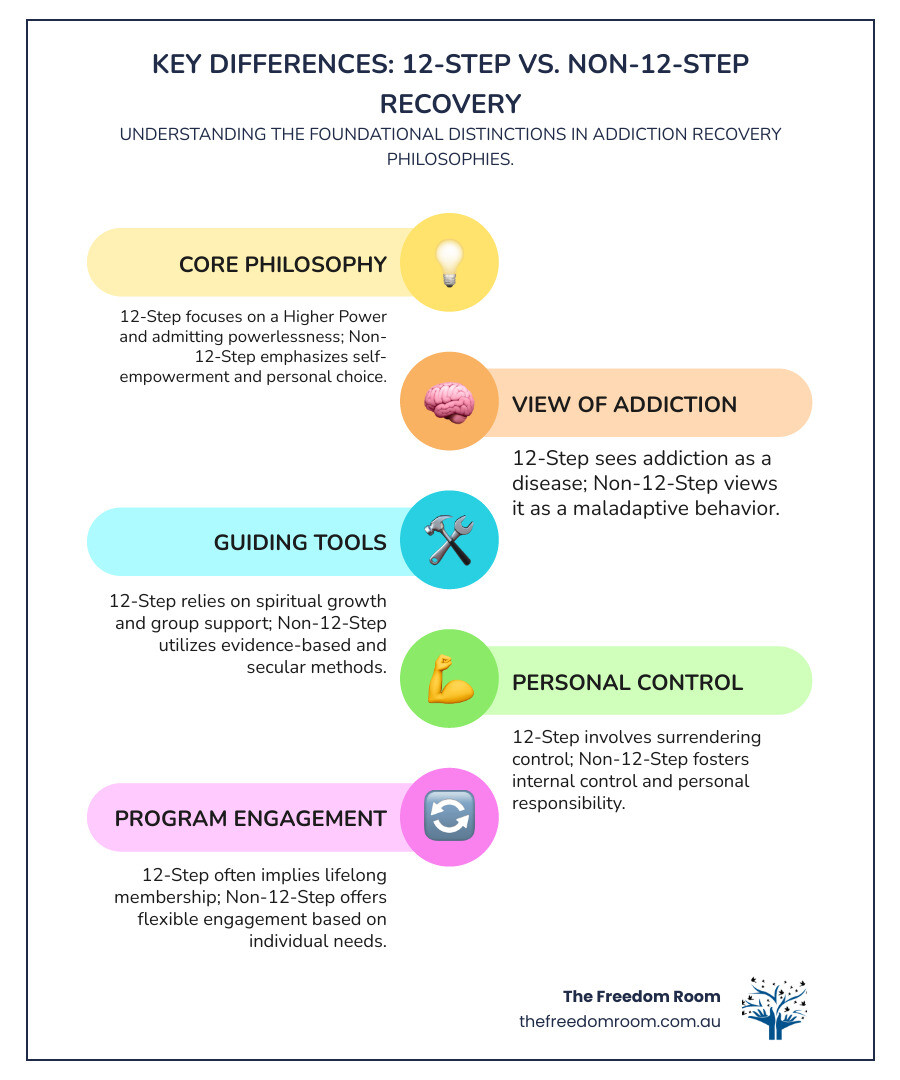
Key Differences: 12-Step vs Non-12-Step Recovery
- 12-Step Approach: Higher Power focus, admitting powerlessness, disease model, spiritual growth, lifelong programme membership
- Non 12 Step Approach: Self-empowerment focus, personal control, behaviour model, evidence-based tools, flexible programme engagement based on individual needs
Understanding the Core Differences: 12 Step vs. Non 12 Step
Understanding the fundamental distinctions between 12-step programmes and non 12 step recovery approaches can help you make an informed choice. These differences reflect different philosophies about the nature of addiction, the path to healing, and who holds the power to create change.

At the heart of these approaches lies a question about personal responsibility and self-empowerment. Both paths have helped countless people find freedom from addiction. The right choice depends on what resonates with your beliefs, values, and personal experience.
The 12-Step Approach: A Brief Overview
Traditional 12-step models, such as Alcoholics Anonymous, are built around a spiritual framework. The first step involves admitting powerlessness over alcohol. Participants are then encouraged to believe in and surrender their will to a Higher Power, however they define it.
The 12-step model views addiction as a chronic disease to be managed for life, often through lifelong attendance at group meetings. The emphasis is on spiritual awakening, making amends, and supporting others. Many people find profound healing in the fellowship and structure these programmes provide.
The Non 12 Step Recovery Philosophy: Empowerment and Choice
Non 12 step recovery programmes help you recognise and develop your inherent strength. The philosophy centres on internal control, meaning you have the resources within yourself to overcome addiction. These approaches are typically secular and draw on evidence-based psychological strategies.
One key distinction is the focus on the present and future. These programmes equip you with practical skills to manage urges, reshape unhelpful thoughts, and change behaviours right now. You learn to identify triggers, develop effective coping mechanisms, and build resilience.
Rather than viewing addiction solely as a disease that renders you powerless, non 12 step recovery often frames it as a maladaptive behaviour that can be unlearned. This perspective fosters a strong sense of personal responsibility, making you an active participant in your recovery. This shift in perspective can be profoundly empowering.
These programmes also evolve with scientific understanding, integrating new findings to refine their methods. The goal is not just to stop drinking but to achieve genuine emotional sobriety and sustained wellbeing. At The Freedom Room, we align with this philosophy of empowerment and personal responsibility.
Exploring Non 12 Step Recovery Pathways
The journey to recovery is not a singular path. Non 12 step recovery approaches offer genuine support and community without requiring spiritual or religious belief, creating environments where individuals can connect authentically.

Peer support sits at the heart of these approaches. Sharing experiences with others who have faced similar struggles helps you realise you are not alone and gain practical insights. This mutual encouragement builds a network of genuine connections.
What defines these pathways is their commitment to empowering you. They provide a secular, science-informed framework that respects your capacity for change. Key features often include:
- A focus on self-empowerment and personal responsibility
- Secular or science-based frameworks
- An emphasis on practical coping skills and psychological tools
- Flexibility to integrate with professional therapy
- Supportive group or individual formats
These are not abstract concepts but tangible strategies for managing urges, processing emotions, and building resilience. Whether you prefer group learning or individual therapy, these pathways honour your autonomy. At The Freedom Room, we integrate approaches like Cognitive Behavioural Therapy and Emotional Freedom Techniques to support this empowering journey towards holistic addiction recovery.
The Therapeutic Toolkit of Non 12 Step Recovery
A non 12 step recovery pathway provides a therapeutic toolkit built on evidence-based practices. These approaches help you understand the connections between your thoughts, feelings, and behaviours, equipping you with practical skills for lasting change. At The Freedom Room, we integrate these techniques as part of our commitment to holistic addiction recovery.
These therapeutic tools focus on building resilience. You learn to recognise unhelpful patterns, develop new coping strategies, and strengthen your confidence. This empowerment-focused approach forms the foundation of sustainable recovery.
Cognitive Behavioural Therapy (CBT)
Cognitive Behavioural Therapy is a highly effective approach in non 12 step recovery. This structured form of talking therapy helps you identify and challenge unhelpful thinking patterns while developing healthier behavioural responses. CBT gives you the tools to recognise cognitive distortions and reframe them based on reality.
How CBT Works
CBT operates on the principle that psychological challenges arise from faulty thinking and learned patterns of unhelpful behaviour. The therapy addresses both aspects to create comprehensive change.
Through CBT, you learn to recognise distorted thinking, gain insight into the behaviour of others, and develop problem-solving skills for difficult situations. Building confidence in your own abilities is central to the process. You collaborate with a therapist to create effective, customised strategies for change, empowering you to take control of your recovery journey with our approach to Cognitive Behavioural Therapy (CBT) for addiction.
Emotional Freedom Techniques (EFT)
Emotional Freedom Techniques, or tapping, offer a distinctive approach within the non 12 step recovery toolkit. This evidence-based tool provides relief from stress and emotional challenges by working directly with your body’s nervous system. The process involves gently tapping on specific acupressure points while focusing on distressing thoughts or emotions.
This combination of physical stimulation and cognitive focus sends calming signals to the brain’s stress centre, the amygdala. It helps disrupt the fight, flight, or freeze response, making it valuable for managing cravings and anxiety. For those with past trauma, trauma-informed therapy approaches like EFT provide a gentle yet profound pathway to healing by processing unresolved emotions and reducing their intensity.
Other Therapeutic Approaches
Beyond CBT and EFT, non 12 step recovery programmes often incorporate other evidence-based methods. Acceptance and Commitment Therapy (ACT) helps you accept difficult thoughts and feelings while committing to actions aligned with your values. Our work with Acceptance and Commitment Therapy (ACT) for addiction supports you in building this psychological flexibility.
Mindfulness-based practices are another cornerstone, teaching you to observe cravings and stress without automatic reaction. The skills you develop through mindfulness for addiction recovery create opportunities for choice. These diverse modalities combine to create a comprehensive, personalised pathway to sobriety.
Is a Non 12 Step Programme Right for You?
Choosing a recovery pathway is a deeply personal decision. There is no single approach that works for everyone. Honest self-assessment can help you understand which approach aligns with your values, beliefs, and past experiences. At The Freedom Room, we believe recognising what resonates with you is a vital part of building a sustainable recovery.

Non 12 step recovery programmes may be particularly well-suited to you if you identify with the following.
Who May Benefit Most from a Non 12 Step Approach?
- Individuals uncomfortable with spiritual or religious elements.
- Those seeking to feel empowered and in control of their recovery.
- People who prefer evidence-based psychological tools like Cognitive Behavioural Therapy (CBT) for addiction.
- Individuals who have not found success with traditional 12-step models.
- People managing co-occurring mental health conditions such as anxiety, depression, or trauma, as these programmes often integrate treatment for both.
How to Choose the Right Programme
Finding the right programme requires thoughtful consideration. Research the different non 12 step recovery pathways available, including those offered by The Freedom Room in Strathpine, Queensland. Attending different meetings, whether online or in person, can provide valuable insight into what feels like the right fit.
Align the programme’s philosophy with your personal values and recovery goals. Many individuals find success by integrating non 12 step recovery support with professional therapy, creating a comprehensive and personalised plan. If you are considering your options, our guide on how to quit drinking offers further insights. The most important step is taking action and reaching out for support.
Navigating the Journey: Relapse, Challenges, and Integration
Addiction is a complex condition that often requires ongoing attention. Relapse can be a part of the recovery process for many, similar to other chronic health conditions. This understanding reinforces the importance of taking a long-term perspective in addiction recovery.
How Non 12 Step Approaches Address Relapse
One of the most compassionate aspects of non 12 step recovery is how it views relapse. Rather than a personal failure, it is seen as a learning opportunity. This perspective is vital for reducing shame and encouraging you to continue moving forward.
When a slip occurs, you are supported in examining what happened without judgment, identifying triggers, and adjusting your coping strategies. You are encouraged to re-engage with your support network and use relapse prevention strategies to strengthen your resilience.
Potential Challenges and Limitations
While non 12 step recovery programmes offer many benefits, it is important to acknowledge some practical challenges. These groups may be less widespread than traditional models, which can affect access to regular meetings.
Finding consistent support might require more proactive effort, such as exploring online options. These programmes also require a high degree of self-motivation, as they place significant emphasis on personal responsibility and active participation in your recovery.
Complementing Professional Treatment
One of the greatest strengths of non 12 step recovery is its compatibility with professional treatment. These approaches integrate seamlessly with individual therapy, allowing you to build a comprehensive recovery plan. The combination of peer support and professional guidance can be highly effective.
At The Freedom Room, we work with clients to integrate non 12 step recovery principles with evidence-based therapies like CBT and EFT. This creates a robust support system that addresses both the practical and emotional aspects of recovery. Our alcohol addiction self-help resources can also complement these pathways.
Ready for Change? Let’s Build a Stronger, Alcohol-Free Future Together
Your recovery journey is uniquely yours, and it deserves an approach that honours your individual strengths and values. What matters most is finding the support and strategies that help you feel empowered and build the life you truly want to live.
At The Freedom Room, we recognise that non 12 step recovery offers a powerful alternative for many Australians. Our team’s lived experience informs everything we do, allowing us to offer support that is both authentic and deeply compassionate.
We work with you to create a personalised recovery plan that integrates evidence-based therapies like Cognitive Behavioural Therapy and Emotional Freedom Techniques. These are practical tools you can use to manage urges, process difficult emotions, and build genuine resilience. You are not asked to admit powerlessness, but instead to find your own capacity for change, supported by scientific understanding and compassionate guidance.
Recovery is not about perfection; it is about progress. If you are ready to explore a path that prioritises your personal strength and provides evidence-based tools for lasting change, we invite you to take the next step. Explore our affordable addiction treatment services and find out how The Freedom Room can support you in building the life you deserve.
Frequently Asked Questions about Non 12 Step Recovery
Is there evidence that non-12-step recovery approaches are effective?
Yes, many non-12-step approaches, particularly those based on Cognitive Behavioural Therapy (CBT), are considered evidence-informed. Research, including studies published in the Journal of Substance Abuse Treatment, indicates that group cohesion and the use of CBT skills are key components of their effectiveness. The effectiveness often depends on the individual’s engagement and the programme’s alignment with their personal needs.
Can I use both 12-step and non 12 step approaches?
Yes, many people find value in using a combination of different support systems. This approach, sometimes called “multiple pathways to recovery,” allows you to take what works for you from each philosophy. Non-12-step approaches are generally inclusive and support participants in using any and all resources that aid their recovery.
Do non-12-step approaches require complete abstinence?
It varies by approach. Most non-12-step frameworks, including those offered by The Freedom Room, are abstinence-based, meaning the goal is to stop the addictive behaviour completely. However, some individuals may choose to focus on harm minimisation or moderation, depending on their personal goals and needs.