

Relapse Prevention Strategies: 10 Powerful Ways to Avoid Failure 2025
Breaking the Cycle: Understanding Relapse Prevention
Relapse prevention strategies are essential tools for anyone in recovery from addiction. If you are looking for effective ways to maintain sobriety, here are the most important strategies to implement:
- HALT check: Monitor if you are Hungry, Angry, Lonely, or Tired
- Know your triggers: Identify and plan for high-risk situations
- Build a support network: Connect regularly with supportive people
- Practice mindfulness: Use techniques like the SOBER method (Stop, Observe, Breathe, Expand, Respond)
- Develop healthy routines: Maintain consistent sleep, nutrition, and exercise
- Create an emergency contact list: Have go-to people to call when cravings hit
- Use grounding techniques: Try the 5-4-3-2-1 sensory exercise during urges
Addiction recovery is a journey that often includes challenges. Like other chronic health conditions such as diabetes or asthma, substance use disorders have relapse rates of 40–60%. This does not represent failure – it is simply part of the process for many people.
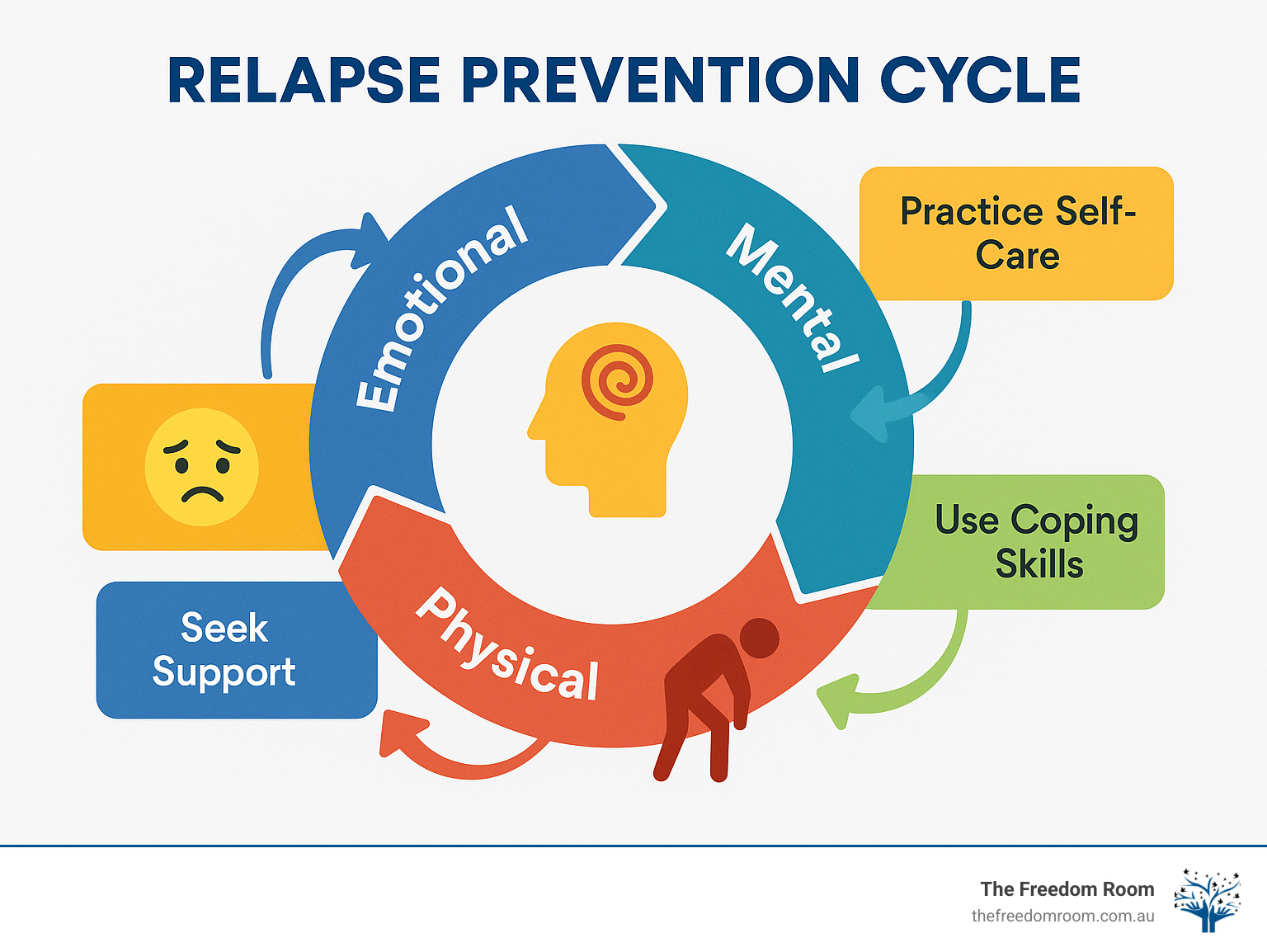
Relapse does not happen suddenly. It typically unfolds in stages: emotional (feeling anxious, angry), mental (thinking about using, romanticising past use), and finally physical (actually using substances). Understanding this progression gives you multiple opportunities to intervene before substance use occurs.
Key terms for relapse prevention strategies:
Understanding Relapse: Definition, Process and Stages
Relapse is far more than just a moment of giving in to temptation. It is a gradual process that unfolds over time – and understanding this journey gives you multiple chances to step in and redirect your path before returning to substance use.
What Is Relapse in Addiction Recovery?
When we talk about relapse in recovery, we are referring to returning to substance use after you have established a period of abstinence or controlled use. But there is an important distinction worth making:
- Lapse: A brief, one-time return to substance use followed by quickly recommitting to recovery.
- Relapse: A more sustained return to previous patterns, often approaching or matching how you used substances before recovery.
The good news? Research shows that up to 60% of people with substance dependence eventually achieve lasting recovery. However, many people need more than one cycle of lapse-relapse-treatment before finding their footing in long-term sobriety. This mirrors other chronic health conditions like diabetes or asthma, where ongoing management becomes a way of life.
Rather than seeing relapse as a personal failing (which it definitely is not), view it as valuable feedback that your current relapse prevention strategies need fine-tuning. This perspective helps reduce shame and makes it more likely you will reach out for support quickly if a lapse occurs.
Stages of Relapse to Watch For
Addiction researchers have found that relapse typically unfolds through three distinct stages, each with its own warning signs and intervention opportunities:
-
Emotional Relapse
You are not actively thinking about using, but your emotions and behaviours are setting the stage. Warning signs include increasing anxiety, mood swings, isolation, disrupted sleep, or skipping recovery meetings. The best intervention is recognising these signs early and doubling down on self-care. -
Mental Relapse
This stage involves an internal tug-of-war between wanting to use and wanting to stay sober. Warning signs include cravings, thinking about people or places from your using days, glamorising past substance use, or planning how you might use “controllably”. When you notice these thoughts, talk to someone in your support network immediately. -
Physical Relapse
This final stage involves actually using substances. It often begins with a single use (a lapse) that can either be contained or develop into a full relapse. If this happens, stop use as quickly as possible and reach out for help immediately.

This staged understanding of relapse is backed by scientific research on relapse stages, which confirms that recognising early warning signs significantly improves recovery outcomes. By learning to spot your own early warning signs, you gain powerful opportunities to course-correct before a full relapse occurs.
Why Relapse Happens: Risk Factors and Triggers
Understanding why relapse happens is like having a map through challenging territory. When you know what might trip you up, you can steer more safely around those obstacles. Relapse is not random – it is typically triggered by specific factors that increase vulnerability during recovery.
Stress remains one of the most powerful predictors of relapse. When life pressures mount, the brain often remembers old coping mechanisms. This is why developing healthy stress management techniques forms the foundation of effective relapse prevention strategies.
Mental health plays a crucial role too. Untreated depression, anxiety, or trauma often lurk beneath addiction, creating what specialists call co-occurring disorders. When these conditions remain unaddressed, they can silently undermine recovery efforts.
Your social environment matters tremendously. Recovery becomes exponentially more difficult when surrounded by people who still use substances or do not support your sobriety. Conversely, a strong support network dramatically improves your chances of maintaining recovery.
Paradoxically, success in recovery can sometimes create risk. Overconfidence – the belief that you are “cured” and can safely handle high-risk situations – has derailed many recovery journeys. Maintaining healthy respect for addiction’s power is essential for long-term sobriety.
Common Internal & External Triggers
Triggers generally fall into two main categories: those that originate within us and those that come from our environment.
Internal triggers often sneak up quietly. Emotions – particularly challenging ones like anger, loneliness, or sadness – frequently precede cravings. Physical sensations including fatigue, pain, or hunger can lower resistance to use. Thoughts or memories of pleasurable substance use may suddenly surface, along with romanticised versions of past experiences.
External triggers are everywhere in our environment. People connected to your using days can quickly reactivate old patterns. Places where you previously used substances can trigger powerful memories and cravings. Objects like bottle shops, glasses, or paraphernalia can spark urges. Situations including celebrations, arguments, or even receiving a pay cheque might be connected to past use patterns.
One of the most practical tools we teach at The Freedom Room is the HALT check. This simple acronym reminds you to pause when you are feeling vulnerable and check if you are:
Hungry
Angry
Lonely
Tired
These four basic human needs, when unmet, dramatically increase vulnerability to relapse. Taking a moment to address these fundamental needs before they escalate into cravings can make the difference between maintaining recovery and experiencing a setback.
Identifying Your Personal High-Risk Situations
While certain triggers are common to many people in recovery, your specific high-risk situations are as unique as your fingerprints. Developing awareness of your personal triggers is perhaps the most powerful relapse prevention strategy you can develop.
Self-monitoring through daily journalling helps track patterns between emotions, situations, and when cravings occur. This simple practice builds awareness that becomes your early warning system.
Functional analysis digs deeper by examining what happened before, during, and after past substance use. This detective work reveals patterns you might not consciously recognise.
Creating a personalised trigger inventory is another valuable tool. Take time to list people who might trigger cravings, places associated with past use, emotions that previously led to substance use, and times when you notice stronger urges. This inventory becomes a practical guide for situations requiring extra support or preparation.
Building Your Personalised Relapse Prevention Plan
A relapse prevention plan is not just another document – it is your personal roadmap to lasting recovery. Think of it as your customised guide that reflects your unique journey, challenges, and strengths. Creating this plan gives you concrete tools to steer through the inevitable bumps along the recovery road.
Essential Elements of an Effective Plan
When building your relapse prevention plan, include these key components that work together to keep you steady in recovery.
First, create a trigger inventory that honestly catalogues what might spark cravings for you. This is not about dwelling on the past – it is about clear-eyed preparation. Your triggers might include certain people, specific places, emotional states, or challenging situations.
Next, develop a warning signs checklist that helps you recognise when you might be heading toward trouble. These are your personal early warning signals – perhaps you notice yourself becoming irritable, withdrawing from friends, skipping meetings, or starting to romanticise your drinking days.
Your plan should include a coping strategies toolbox filled with practical actions for different scenarios. When faced with social pressure, you might have rehearsed refusal phrases ready. For managing difficult emotions, perhaps you will practise mindfulness techniques or have specific people to call.
A solid daily maintenance plan forms the foundation of sustainable recovery. This includes your morning and evening routines, regular support group attendance, exercise and nutrition guidelines, and healthy sleep practices.
Every good plan includes an emergency contacts section with names and numbers of people who understand your recovery journey. This might include your counsellor, trusted friends in recovery, family members who support your sobriety, and crisis helplines.
Finally, include a relapse response plan that outlines exactly what to do if you experience a lapse. Having these steps written down in advance makes it more likely you will take quick action rather than spiralling into shame.
Relapse Prevention Strategies: Daily Self-Care Essentials
Self-care is not optional in recovery – it is a fundamental relapse prevention strategy. When we neglect our basic needs, we become far more vulnerable to old patterns and cravings.
Sleep hygiene plays a crucial role in maintaining emotional balance. Aim for 7-9 hours of quality sleep each night by sticking to consistent bedtimes, creating a calming pre-sleep routine, limiting screen time before bed, and keeping your bedroom cool, dark, and quiet.
Balanced nutrition helps stabilise your mood and energy levels throughout the day. Regular meals containing protein, healthy fats, and complex carbohydrates provide steady fuel for your body and brain. Staying well hydrated is equally important – thirst can sometimes masquerade as cravings.
Regular exercise offers powerful support for your recovery journey. Even just 30 minutes of moderate activity most days can make a remarkable difference. The natural endorphin release helps lift your mood, reduce anxiety, and improve sleep quality.
Stress management techniques give you healthy alternatives to reaching for a drink when life gets challenging. Daily relaxation practices like deep breathing or progressive muscle relaxation help keep your nervous system regulated.
For more practical daily tools to support your recovery, check out The Freedom Room Sobriety Tips on our website.
Evidence-Based Relapse Prevention Strategies
While personal insights are valuable, science-backed approaches provide tested frameworks that truly work. Research consistently shows that combining multiple strategies gives you the best chance of maintaining your recovery journey.
Relapse Prevention Strategies: Mindfulness & Grounding Tools
Urge surfing is a powerful technique to recommend. Think of your craving as a wave – it builds, crests, and eventually subsides whether you act on it or not. When an urge hits, simply notice it without judgement, focus on where you feel it in your body, breathe into those sensations, and watch as it gradually fades. Most urges pass within 20-30 minutes if they do not receive attention.
The SOBER meditation gives you a quick mental reset when triggers appear. Each letter represents a step: Stop what you are doing, Observe what is happening in your body and mind, Breathe mindfully, Expand your awareness to the situation and options, and Respond thoughtfully rather than react automatically.
When anxiety or cravings feel overwhelming, 4×4 breathing can calm your nervous system quickly. Simply inhale for 4 seconds, hold for 4, exhale for 4, hold for 4, and repeat for a few minutes.
The 5-4-3-2-1 grounding technique anchors you firmly in the present moment when cravings try to pull you into the past or future. Name 5 things you can see, 4 things you can touch, 3 things you can hear, 2 things you can smell, and 1 thing you can taste.
Scientific research on mindfulness-based relapse prevention confirms these are not just feel-good exercises – they create measurable changes in how your brain responds to triggers.
Therapy & Medication: What the Evidence Shows
Cognitive Behavioural Therapy (CBT) has impressive evidence supporting its effectiveness across various substances. It helps you identify and change unhelpful thinking patterns while developing specific coping skills for your high-risk situations.
Motivational Interviewing works brilliantly when you are feeling uncertain about change. Rather than pushing you, this approach helps strengthen your own internal motivation and resolve any mixed feelings about recovery.
Contingency Management provides tangible rewards for maintaining sobriety – think of it as positive reinforcement for recovery behaviours.
For some people, medication-assisted treatment provides crucial support. For alcohol use disorder, medications like naltrexone reduce cravings and block pleasurable effects, while acamprosate helps ease lingering withdrawal symptoms. For opioid use disorder, medications such as methadone, buprenorphine, and naltrexone have strong evidence supporting their effectiveness.
Research clearly shows these medications work best when combined with counselling and support – they are tools in your recovery toolkit, not stand-alone solutions.
Power of Support Networks and Peer Groups
There is something uniquely powerful about connecting with others who truly understand your experience. Research consistently shows better long-term outcomes for people who participate in peer support groups.
Different groups offer different approaches – from traditional 12-Step programs like AA to cognitive-behavioural approaches such as SMART Recovery, Buddhist-inspired Refuge Recovery, or secular options like LifeRing. Online communities can also provide valuable connection, especially when in-person meetings are not accessible.
The benefits of peer support are profound – you are less isolated, you have living proof that recovery is possible, you gain practical strategies from others’ experiences, and you build a sober social network.
Family involvement dramatically improves recovery outcomes too. At The Freedom Room, we offer family education sessions, communication skills training, boundary-setting guidance, and resources for family members’ self-care.
Our Group Recovery Meetings provide a safe, understanding environment where you can build meaningful connections with others walking a similar path.
Responding to a Lapse and Getting Back on Track
Despite your best relapse prevention strategies, lapses can happen to anyone on the recovery journey. What truly matters is not that a lapse occurred, but how you respond to it. Your reaction can determine whether this becomes just a brief stumble or develops into a full relapse.

Turning a Lapse into a Learning Opportunity
If you experience a lapse, this moment does not define your entire recovery journey. The first and most important step is to stop using as quickly as possible – the longer substance use continues, the harder it becomes to return to your recovery path.
Reach out immediately to someone you trust. This might be your sponsor, counsellor, or a supportive friend who understands your recovery goals. At The Freedom Room, we create a safe space where you can discuss lapses without judgement.
Practise self-compassion rather than harsh criticism. Beating yourself up only increases shame, which can fuel continued use. Lapses are common in recovery from any chronic condition – they are part of the human experience, not evidence of failure.
Take time to analyse what happened with curiosity rather than criticism. What emotions were you experiencing before the lapse? Were there specific situations that increased your vulnerability? Can you identify particular thoughts that preceded the lapse? This reflection is not about blame but about gathering valuable information.
Use what you have learned to strengthen your relapse prevention strategies. Add newly identified triggers to your awareness list and develop specific coping strategies for similar situations in the future.
A powerful technique many find helpful is “playing the tape through” – mentally rehearsing the full consequences of returning to regular use versus recommitting to recovery. This helps reconnect you with your deeper motivations for staying sober.
Re-engage with your recovery activities promptly. Return to meetings, counselling sessions, and other support systems that have helped you in the past.
Professional & Community Resources for Immediate Support
When facing a lapse or high-risk situation, quick access to support can make all the difference. You can contact Lifeline, the Alcohol and Drug Information Service, or Emergency Services if you are experiencing a medical emergency. Full contact details are listed in the Support & Resources section at the end of this guide.
Treatment options beyond the immediate moment might include outpatient counselling (like our services at The Freedom Room), intensive outpatient programs, residential rehabilitation, or detoxification services when needed.
Peer support remains invaluable during challenging times. The AA Helpline, SMART Recovery Australia, and online recovery communities can provide understanding and guidance when you need it most.
Seeking help promptly is not a sign of weakness – it is a powerful demonstration of your commitment to recovery and your personal well-being.
Frequently Asked Questions about Relapse Prevention
How soon should I create a relapse prevention plan?
Ideally, relapse prevention planning should begin as early as possible in treatment – even during detoxification if appropriate. Research shows that approximately half of alcohol-dependent patients relapse within three months of detoxification, highlighting the importance of early intervention.
At The Freedom Room, we begin discussing relapse prevention strategies from your first session. Your plan will evolve as you gain insights about your triggers and effective coping mechanisms.
Can medication alone prevent relapse?
While medications can be valuable tools in relapse prevention, research consistently shows they work best when combined with counselling, support groups, and lifestyle changes. Medications address biological aspects of addiction but do not develop the coping skills and support networks needed for long-term recovery.
For example, supervised treatment with disulfiram (for alcohol use disorder) correlates with increased time to relapse and reduced drinking days compared to medication alone. Similarly, naltrexone and acamprosate show better outcomes when part of a comprehensive treatment approach.
What if my family does not understand my recovery needs?
Family misunderstanding is a common challenge in recovery. Some strategies that may help:
- Education: Share resources about addiction as a chronic health condition
- Clear communication: Express specific ways they can support you
- Family counselling: Professional guidance can improve understanding
- Boundaries: Clearly define what you need to maintain recovery
- Alternative support: If family support is not available, strengthen other relationships
At The Freedom Room, we offer family sessions designed to help loved ones understand addiction and recovery. However, we also recognise that not all families are able to provide ideal support, and we help clients build broader support networks.
Ready for Change? Let’s Build a Stronger, Alcohol-Free Future Together
Implementing effective relapse prevention strategies is a cornerstone of successful long-term recovery. At The Freedom Room, we understand this journey because we have walked it ourselves. Our team of counsellors and facilitators are all in recovery, bringing authentic understanding and practical wisdom to your recovery journey.
Our approach combines evidence-based techniques with compassionate support. Through our one-to-one sessions, we help you develop personalised relapse prevention strategies custom to your unique triggers, strengths, and challenges. Our workshops and group recovery meetings provide additional tools and connection with others who understand your journey.
Recovery is not just about avoiding relapse – it is about building a fulfilling life that makes sobriety worthwhile. We help you address the underlying factors that contributed to addiction while developing new skills for managing life’s challenges without substances.
Whether you are just beginning your recovery journey or looking to strengthen your sobriety after years of recovery, The Freedom Room offers the support, understanding, and practical strategies you need. Our Strathpine location provides a safe, discreet space to explore your recovery needs.
For more information about our approach to preventing relapse, visit our page on Addiction Relapse Prevention Strategies.
Recovery is a journey, not a destination. With the right tools and support, you can steer this path successfully, even when challenges arise.
Support & Resources
If you or someone you know is suffering from alcohol addiction, please seek professional help and support.
For help outside of business hours, you can contact:
Emergency Help: Call 000 (for immediate medical emergencies or if someone’s safety is at risk)
AA Helpline: 1300 222 222 (for peer support and information about meetings)
Lifeline: 13 11 14 (for crisis support and suicide prevention)
Al-Anon: www.al-anon.org.au (support for family and friends of people with alcohol problems)
Implementing effective relapse prevention strategies becomes much easier when you’re not doing it alone. Every person in recovery deserves a supportive network that understands both the challenges and possibilities that lie ahead.
The path to recovery isn’t always straight, but with the right support, it’s absolutely possible to build a fulfilling, alcohol-free life. Whether you’re taking your first tentative steps toward sobriety or working to strengthen your recovery after a setback, reaching out is always the right move.
Your journey matters to us. When you’re ready to talk, we’re here to listen.