
Why Sober Support Groups Are a Vital Part of Recovery
Sober support groups are one of the most effective tools available for people working towards lasting recovery from alcohol dependence. In Australia, individuals seeking to change their relationship with alcohol have access to a diverse range of peer-led networks. These groups provide a safe, non-judgmental environment where members can share their experiences, gain strength from others, and build practical strategies for maintaining sobriety.
To understand the landscape of peer support in Australia, it is helpful to categorise the primary types of groups available:
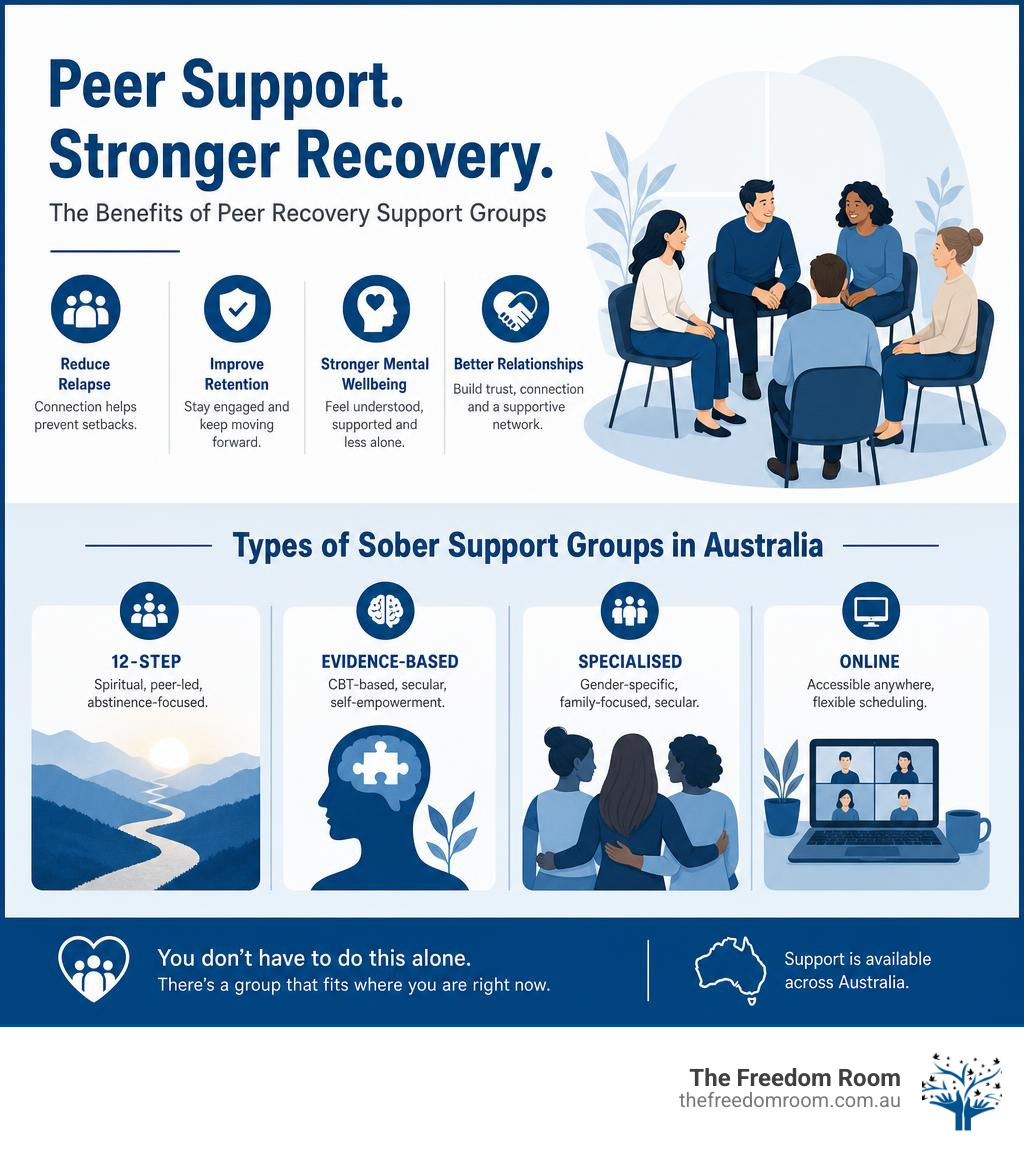
First, traditional 12-Step programs, such as Alcoholics Anonymous and Dual Recovery Anonymous, offer a spiritual, peer-led, and abstinence-focused framework. These groups rely on mentorship and a structured set of principles to guide recovery.
Second, evidence-based and secular programs, including SMART Recovery and LifeRing, utilise cognitive behavioural therapy principles and focus on self-empowerment and practical skill-building.
Third, specialised peer support networks, such as Women for Sobriety, Sober She Devils, and Al-Anon, cater to specific demographics, gender-specific needs, or the families of those experiencing physical alcohol dependence.
Fourth, online and virtual support groups, such as Virtual Sober Start and SMART Recovery Online, provide highly accessible, flexible scheduling for individuals across Australia, regardless of their geographic location.
Recovery is rarely a straight line. For many people, the hardest part is not stopping drinking. It is staying stopped, especially when stress, anxiety, or difficult relationships push old habits back to the surface. That is where peer support makes a real difference.
Research consistently shows that active involvement in support groups improves the likelihood of sustained recovery. Studies point to reduced rates of relapse, better treatment retention, and stronger relationships with family and friends as key long-term benefits.
Alcoholics Anonymous alone has helped more than two million people stop drinking across more than 180 countries. But AA is far from the only option. Today, Australians have access to a wide range of groups, from evidence-based secular programs to women-only meetings and family support networks.
Whether you are newly sober, considering cutting back, or supporting someone you love, there is a group that fits where you are right now.
Sober support groups word list:
Comparing the Best Sober Support Groups
Choosing a pathway to recovery is a highly personal decision. What works beautifully for one person might feel completely unhelpful to another. To find the right environment, it helps to compare how different mutual aid groups operate and how they view the process of change. Many people find that participating in these groups provides a sense of community, shared wisdom, and deep social connection that professional treatment alone cannot fully replicate.
According to Scientific research on alcohol use in Australia, risky drinking patterns remain a significant public health issue across the nation. For those experiencing physical alcohol dependence, peer-led groups serve as an accessible, cost-free bridge to long-term stability. These groups do not offer medical treatment, but they do offer a lived-experience framework that helps members navigate daily cravings and social pressures.
Traditional 12-Step Sober Support Groups
The most historically prominent and widely available mutual aid meetings are 12-step programs. Alcoholics Anonymous, founded in 1935, established the original template for peer-led recovery. The program operates on a spiritual foundation, encouraging members to admit powerlessness over alcohol and surrender their struggles to a higher power of their own understanding.
A central element of this model is sponsorship, where a more experienced member guides a newcomer through the 12 steps. For individuals seeking a structured, step-by-step spiritual path to sobriety, these meetings offer an incredibly vast network of local and global meetings. You can explore More info on 12-step options to understand how this framework functions in practice.
To find local meetings in your area or online, you can access Alcoholics Anonymous Australia directly. For individuals who are managing both a substance use issue and a co-occurring mental health condition, traditional 12-step groups can sometimes feel overwhelming. This is where specialised fellowships like Dual Recovery Anonymous are incredibly helpful. This specific group focuses on dual diagnosis, helping members address both chemical dependence and emotional or psychiatric illnesses in a supportive, non-judgmental environment.
Evidence-Based and Secular Sober Support Groups
For individuals who prefer a non-religious, scientific approach to recovery, several secular alternatives have gained immense popularity. The leading program in this space is SMART Recovery. This evidence-based program is grounded in cognitive behavioural therapy and motivational enhancement therapy. Instead of focusing on powerlessness or spiritual surrender, SMART Recovery emphasises self-empowerment, personal responsibility, and practical skill-building.
SMART meetings are led by trained facilitators and focus on a four-point program:
- Building and maintaining motivation to change.
- Coping with urges and managing cravings.
- Managing thoughts, feelings, and behaviours.
- Living a balanced, healthy, and positive life.
Another prominent secular option is LifeRing Secular Recovery. LifeRing operates on the philosophy that every individual possesses a sober self and an addict self. The goal of their meetings is to strengthen the sober self through positive peer connection and practical, present-day problem-solving. For more guidance on comparing these secular models to traditional programs, you can read More info on finding the right group.
Specialised Peer Support Recovery Options
Recognising that different demographics face unique challenges in recovery, many sober support groups have developed specialised formats. Women-only groups, for example, provide a safe space to discuss issues like trauma, societal stigma, caregiving responsibilities, and relationship dynamics without the presence of men.
A notable example of this is Sober She Devils, an international, secular, online women-only meeting of Alcoholics Anonymous. This group was created to offer a welcoming space for women who reject traditional higher-power concepts but still want the community benefits of peer support.
Similarly, family members of those experiencing physical alcohol dependence require their own spaces to heal. Programs like Al-Anon and Alateen provide support specifically for the friends and relatives of individuals with alcohol problems. These meetings help loved ones establish healthy boundaries, reduce enabling behaviours, and process their own emotional distress. You can find More info on family support to assist your family in finding the right local resources.
How to Choose the Right Support Group for You
Finding the right support group requires looking at your personal values, recovery goals, and practical lifestyle needs. There is no need to commit to the very first meeting you attend. In fact, we highly recommend trying several different formats to see which community culture resonates most with you.
Consider the following factors when making your choice:
- Abstinence versus Moderation: Programs like AA, SMART Recovery, and LifeRing require or strongly encourage complete abstinence. If you are looking to moderate your drinking rather than stop entirely, you may need to look for specific harm-reduction networks.
- Spiritual versus Secular: If you value spiritual growth and mentorship, a 12-step group may be ideal. If you prefer cognitive tools and psychological strategies, SMART Recovery is likely a better fit.
- Format and Location: Determine whether you prefer the physical connection of in-person meetings or the convenience of online options.
For those who need highly accessible, daily options, you can explore More info on group recovery meetings. Additionally, virtual groups like Virtual Sober Start offer daily online literature-based recovery sessions via Zoom, making it easier than ever to connect with a supportive community from the comfort of your home.
Discover the Support You Need for a Lasting, Successful Recovery

While peer-led sober support groups are incredibly valuable, they are often most effective when combined with professional, evidence-based treatment. At The Freedom Room Wellness and Recovery, we offer compassionate, cost-effective alcohol treatment designed to fit your unique lifestyle and goals.
Our professional services are highly personalised, incorporating individual counselling, educational workshops, and evidence-based therapies. What truly sets us apart is our unique lived-experience model. Our team is in recovery themselves, meaning we provide authentic empathy, practical understanding, and a stigma-free environment.
We operate in the local Brisbane northern suburbs, with our clinical space located at 9a/521 Beams Rd, Carseldine QLD 4034, which conveniently serves residents in Carseldine, Strathpine, and surrounding areas.
If you are ready to build a healthier, alcohol-free future, we invite you to explore Our Services to learn more about our treatment options, or Contact Us directly to speak with a member of our compassionate team today. For those interested in how structured group settings can accelerate healing, you can also read More info on group therapy.
Frequently Asked Questions (FAQ)
Are sober support groups free to attend?
Yes, almost all mutual aid support groups, including Alcoholics Anonymous, SMART Recovery, and LifeRing, are entirely free to attend. They operate on voluntary donations from members to cover basic costs like room hire or online platform fees, but there are no mandatory fees or membership dues.
Can I attend a support group if I am still drinking?
Yes, the only requirement for joining most recovery groups is a desire to change your relationship with alcohol. For instance, AA welcomes anyone with a desire to stop drinking, even if they have relapsed recently. However, out of respect for other members, you are generally asked to listen rather than speak if you have consumed alcohol on the day of the meeting.
What is the difference between open and closed meetings?
Open meetings are accessible to anyone, including family members, friends, students, and medical professionals who wish to observe or support a loved one. Closed meetings are strictly reserved for individuals who are personally working on their own recovery from alcohol or substance issues, ensuring a higher level of privacy and confidentiality.