

Understanding the Risks of Alcohol Detox at Home
The process of alcohol detoxification within a domestic setting is a significant consideration for many Australians who have determined that their consumption has become problematic. The domestic environment is frequently perceived as a sanctuary, offering privacy and familiarity during a challenging transition. However, the clinical reality of withdrawing from alcohol is complex, and for many individuals, the physiological risks are far more substantial than anticipated. This guide provides a professional overview of the requirements for a safe, medically supervised withdrawal process.
Clinical Overview of Home Detoxification
Can an individual safely undergo alcohol detoxification at home? The answer depends entirely on the level of physical dependence on alcohol and the quality of medical oversight provided.
- Mild physical dependence on alcohol: This may be managed at home, provided there is rigorous medical supervision and a robust support network.
- Moderate to severe dependence: This carries a high risk of complications; therefore, medical or inpatient detoxification is the recommended clinical standard.
- Unsupervised withdrawal: This is considered unsafe. The cessation of alcohol intake in dependent individuals can lead to life-threatening neurological and cardiovascular events.
- Mandatory requirement: It is essential to consult a General Practitioner (GP) to undergo a risk assessment before attempting any form of home detoxification.
- Emergency indicators: The onset of seizures, hallucinations, high fever, or a rapid heart rate necessitates an immediate call to emergency services via 000.
Alcohol withdrawal is fundamentally different from the cessation of other substances. When the human body develops a physical dependence on alcohol, the central nervous system adapts to the constant presence of a depressant. Sudden removal of this substance causes the nervous system to enter a state of hyper-excitability. The physiological consequences may vary from significant discomfort to fatal outcomes. Statistics indicate that Alcohol kills 15 Australians every day. Despite these risks, many individuals attempt to withdraw without professional support, often due to a lack of information regarding the available medical pathways.
Clinical evidence suggests that supervised home detoxification, conducted with appropriate medical oversight, is a legitimate and evidence-based option for suitable candidates. Research indicates that the acute phase can be completed safely in approximately ten days, with daily clinical check-ins being particularly critical during the initial ninety-six hours. The distinction between a supervised and an unsupervised detox is the primary factor in ensuring patient safety.
Physiological Dangers and the Kindling Effect
When examining the risks of an unsupervised alcohol detox at home, the primary concern is the brain’s reaction to the sudden absence of ethanol. Chronic alcohol consumption suppresses the central nervous system by enhancing the inhibitory neurotransmitter GABA and inhibiting the excitatory neurotransmitter glutamate. When alcohol is removed, the brain experiences a surge in glutamate, leading to hyper-excitability. This can result in a phenomenon known as kindling, where each subsequent withdrawal attempt becomes more severe and dangerous than the last.
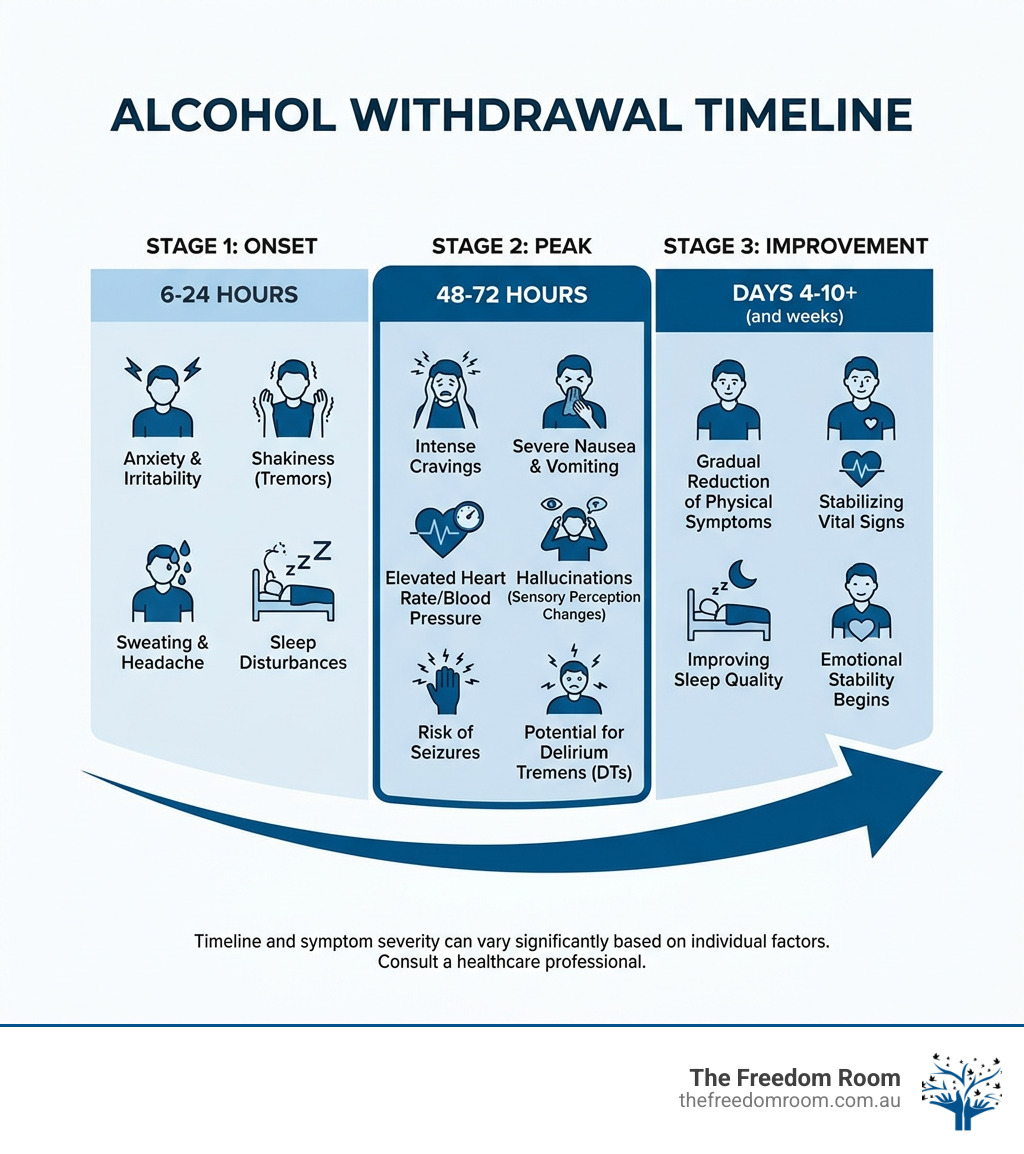
The most critical risk is delirium tremens, a medical emergency occurring in approximately 3 to 5 percent of individuals experiencing withdrawal. This condition typically manifests between 48 and 72 hours after the final drink. Without professional intervention, delirium tremens carries a high mortality rate due to potential cardiovascular collapse. Another significant danger involves withdrawal seizures, specifically tonic-clonic seizures, which can occur within the first 12 to 48 hours. These events can happen even in individuals with no prior history of epilepsy. Managing such complications without medical equipment or trained professionals is hazardous.
Recognising medical emergency signs is vital. If symptoms such as intense confusion, extreme agitation, or a high fever develop, the situation requires immediate hospitalisation. For detailed clinical information on these severe risks, please review the Scientific research on delirium tremens.
Common Symptoms and the Withdrawal Timeline
The progression of alcohol detox at home follows a predictable clinical timeline. Most individuals experience the onset of withdrawal symptoms within 6 to 24 hours after their final drink. These early symptoms reflect the body’s struggle to regain homeostasis. Common early indicators include significant anxiety, noticeable hand tremors, insomnia, nausea, and excessive sweating.
The peak withdrawal window occurs between 48 and 72 hours, representing the period of highest risk for seizures and delirium tremens. While physical symptoms often begin to subside after the fifth day, psychological cravings and sleep disturbances may persist. Understanding this timeline is essential for effective preparation. You may access More info about safe alcohol detox to assist in your preparation for this window.
Suitability Criteria for Home-Based Detoxification
Not every individual is a candidate for home-based withdrawal. A successful alcohol detox at home requires specific circumstances to ensure safety. Suitability criteria generally include a history of only mild to moderate physical dependence on alcohol, the absence of previous withdrawal seizures, and a stable, alcohol-free living environment. Furthermore, the presence of a reliable, sober support person who can provide 24-hour monitoring is mandatory. If an individual consumes more than twenty standard drinks daily or has a history of failed home attempts, an inpatient facility is the safer alternative. For further assessment, consult More info about alcohol dependence detox to determine the appropriate level of care. It is also critical to establish emergency protocols, including a list of contacts and a clear understanding of when to call 000. For clinical background on these risks, see the Scientific research on complications of alcohol withdrawal.
Preparing for a Medically Supervised Home Detox
Comprehensive preparation constitutes the fundamental basis for a safe withdrawal process. A supervised alcohol detox at home must commence with a thorough consultation with a General Practitioner. The physician will typically order baseline diagnostic tests, including full blood counts and liver function tests, to evaluate the patient’s physiological readiness. Many practitioners utilise patient contracts, which are formal agreements where the individual commits to daily monitoring and specific safety protocols. This structure ensures a level of clinical accountability that is absent in unsupervised attempts.
Daily monitoring by a healthcare professional, conducted either in person or via telehealth, is a cornerstone of modern detoxification protocols. This allows for the real-time adjustment of medications and the early detection of rising clinical risks. For further information on these systems, please refer to the Scientific research on home detox protocols.
The Role of Pharmacological Intervention
Medical supervision transforms a high-risk situation into a managed clinical process. GPs often prescribe specific medications to mitigate withdrawal symptoms. Diazepam is frequently utilised in a tapering regimen to stabilise the central nervous system and prevent seizures. Another vital component is the administration of thiamine (Vitamin B1). Chronic alcohol consumption severely inhibits the absorption of this essential nutrient, which can lead to Wernicke-Korsakoff syndrome, a form of permanent brain damage, if not addressed during withdrawal.
Post-detoxification medications, such as acamprosate or naltrexone, may be discussed to manage long-term cravings and support continued abstinence. You may explore More info about alcohol detox remedies to understand the pharmacological options available to support physical recovery.
Nutritional Requirements and Support Strategies
While medication addresses biological risks, nutrition provides the necessary fuel for cellular recovery. Hydration is paramount; it is recommended to consume at least three litres of non-alcoholic fluids daily to support renal function and replace fluids lost through diaphoresis. A nutrient-dense diet, even in the form of small, frequent meals, helps stabilise energy levels. Avoiding caffeine is advised, as it can exacerbate the anxiety and tremors associated with withdrawal.
Non-medical support strategies include maintaining a low-stress environment, utilising mindfulness techniques to manage anxiety, and keeping a detailed log of symptoms. Managing physical sensations, such as tremors, is a common challenge. You can find More info about tremors duration to understand the typical duration of these symptoms.
Long-Term Recovery and Relapse Prevention
Detoxification is merely the initial phase of recovery. It addresses the physical dependence on alcohol but does not resolve the underlying psychological drivers of consumption. Without a robust after-care plan, the risk of relapse remains significant. Long-term recovery involves the implementation of therapeutic strategies such as Cognitive Behavioural Therapy (CBT) or Acceptance and Commitment Therapy (ACT). These modalities assist individuals in identifying triggers and developing healthy coping mechanisms.
Ongoing support networks, including peer groups and professional coaching, provide the community connection necessary for sustained change. Building a toolkit of resilience may include exercise, new vocational interests, or family therapy. To explore recovery options outside of traditional clinical settings, please read More info about getting sober without rehab.
Professional Support for Your Recovery Journey
At The Freedom Room Wellness and Recovery, we provide a specialised approach to rehabilitation that is informed by both clinical best practices and lived experience. Our team consists of professionals who understand the complexities of overcoming a physical dependence on alcohol. Operating from Strathpine, QLD, we offer compassionate and cost-effective treatment programmes tailored to the unique requirements of each individual.
The clinical approach adopted by our organisation transcends the mere observation of symptoms; we focus on the holistic restoration of the individual. Our personalised recovery sessions and workshops are designed to bridge the gap between the acute detoxification phase and a fulfilling, alcohol-free life. Whether you require assistance navigating the medical system or emotional support during the early stages of sobriety, our team is dedicated to your success. Recovery is a process of rediscovering personal strength and building a future defined by health and purpose. Start your home alcohol detox journey with a team that prioritises your safety and long-term wellbeing.
FAQ
Is it clinically safe to undergo alcohol detoxification at home?
Home-based detoxification can be safe for individuals with mild physical dependence on alcohol, provided they have undergone a comprehensive medical assessment. Safety is contingent upon risk stratification, the presence of a 24-hour support person, and professional medical supervision. It is not considered safe for those with severe dependence or a history of withdrawal complications.
What are the primary indicators of delirium tremens?
Delirium tremens is a severe manifestation of alcohol withdrawal characterised by profound confusion, autonomic hyperactivity, hallucinations, and tremors. Physical signs include hypertension, hyperthermia, and tachycardia. This condition is a medical emergency that typically develops two to three days after the cessation of alcohol intake.
What is the expected duration of a home-based detoxification?
The acute physical withdrawal phase generally lasts between four and eleven days. Symptoms typically reach peak intensity between 48 and 72 hours and begin to resolve after five to seven days. However, psychological symptoms and sleep disturbances may persist for a significantly longer duration.
Which medications are typically prescribed during home withdrawal?
General Practitioners commonly prescribe benzodiazepines, such as diazepam, to manage symptoms and prevent seizures. Thiamine supplementation is also mandatory to prevent neurological damage. Following the acute phase, medications like naltrexone may be utilised to assist in maintaining long-term abstinence.
Under what circumstances should emergency services be contacted?
An ambulance should be summoned via 000 immediately if the individual experiences a seizure, loses consciousness, exhibits extreme agitation, experiences hallucinations, or develops a high fever. These symptoms indicate severe clinical complications that require immediate hospital intervention.