

Why Work-Life Balance and Burnout Prevention Matter More Than Ever
Work-Life Balance and Burnout Prevention has become one of the most critical challenges facing professionals today. With 84% of tech workers reporting burnout and 82% of employees experiencing it at least sometimes, the need for effective strategies has never been more urgent.
Quick Answer for Work-Life Balance and Burnout Prevention:
- Set clear boundaries between work and personal time
- Recognise early warning signs like exhaustion, cynicism, and reduced productivity
- Prioritise self-care through regular breaks, exercise, and adequate sleep
- Practice saying no to avoid overcommitment
- Seek support from colleagues, friends, or professional services
- Use time management tools like the Pomodoro Technique
- Unplug from technology during non-work hours
The statistics paint a sobering picture. About 50% of full-time employees work more than 40 hours per week, whilst 62% of Americans didn’t use their vacation days in 2023. This chronic overwork creates a perfect storm for burnout – a state of emotional, mental, and physical exhaustion that the World Health Organisation now recognises as an occupational phenomenon.
The pandemic has made things worse. Research shows that work-life boundaries have blurred significantly, with many professionals working longer hours and experiencing greater work-life imbalance than ever before.
But here’s the encouraging news: small changes can make a big difference. Even simple strategies like taking proper breaks, setting digital boundaries, and prioritising sleep can dramatically improve your wellbeing and job satisfaction.
The relationship between work-life balance and burnout prevention isn’t just about feeling better – it’s about creating sustainable success. When you’re well-rested, energised, and emotionally balanced, you’re more productive, creative, and resilient.
Understanding Work-Life Balance: Foundations for Well-Being
Work-Life Balance and Burnout Prevention isn’t about splitting your day into perfect halves. Instead, it’s about creating a rhythm that works for you – one that lets you show up professionally whilst still having energy left for the people and activities that matter most.
What does this balance actually look like? It’s about managing how you divide your time and energy between work responsibilities and everything else – your relationships, health, hobbies, and simply being human. This balance shifts depending on your values, what stage of life you’re in, and what’s happening around you.
Your personal values play a huge role here. If family time is paramount, your balance will look different from someone who’s passionate about career advancement. There’s no right or wrong – just what aligns with who you are and what you need to thrive.
Role conflict often creates the biggest challenges. When your work demands clash with your personal needs, stress builds quickly. Maybe you’re missing family dinners because of late meetings, or you’re checking emails during your child’s sports day. These conflicts signal that something needs adjusting.
The World Health Organisation has given us clear language around burnout, defining it as “a syndrome conceptualised as resulting from chronic workplace stress that has not been successfully managed.” It shows up through emotional exhaustion, cynicism (feeling detached from your work), and reduced professional efficacy (feeling like you’re not doing a good job).
Research from the Job Demands-Resources model shows us that work-life interference significantly increases burnout risk. When these boundaries blur, it creates a domino effect – poor balance leads to burnout, which makes maintaining healthy boundaries even harder.
Key Components of a Healthy Balance
Creating effective Work-Life Balance and Burnout Prevention requires understanding what actually supports your wellbeing day-to-day.
Time management isn’t about cramming more into your schedule – it’s about being intentional with your hours. Research shows that office workers are typically productive for only about three hours in an eight-hour workday. This suggests that working smarter, not longer, is the real key.
Energy management might be even more important than time management. Your energy naturally ebbs and flows throughout the day and week. Matching your energy to your tasks makes everything feel more manageable.
Boundary setting creates the scaffolding for balance. This might mean having a dedicated workspace, setting specific work hours, or using technology to limit after-hours communication. The key is making these boundaries clear to yourself and others.
Flexibility allows your system to bend without breaking. This means having structures that can accommodate both planned changes and unexpected demands without throwing your entire week into chaos.
Work-Life Balance and Burnout Prevention: Why They’re Inseparable
Work-Life Balance and Burnout Prevention work together like two sides of the same coin. When you maintain healthy boundaries, you’re naturally less likely to experience the chronic stress that leads to burnout. But when you’re already burned out, maintaining balance becomes exponentially harder.
The path from imbalance to burnout is well-documented. Chronic stress from work-life conflicts creates a direct pathway to emotional exhaustion. This exhaustion then breeds cynicism, and eventually, thoughts of leaving the job altogether.
The beautiful thing about addressing both simultaneously is that the strategies overlap significantly. When you prioritise self-care, set boundaries, and manage your time effectively, you’re preventing burnout whilst creating better work-life integration. Better sleep leads to clearer thinking, which helps with time management, which reduces stress, which improves sleep. It’s a virtuous cycle that builds momentum over time.
From Imbalance to Burnout: Mechanisms, Signs and Consequences
The journey from work-life imbalance to burnout isn’t sudden – it’s a gradual slide that many of us don’t notice until we’re already struggling. Understanding this progression can be your first line of defence in Work-Life Balance and Burnout Prevention.
The scientific research on burnout as occupational phenomenon reveals that burnout follows a predictable pattern. It typically begins with emotional exhaustion – that deep, bone-weary tiredness that doesn’t lift even after a good night’s sleep. You might find yourself dreading Monday mornings or feeling drained before your workday even begins.
From there, cynicism often creeps in. You start feeling mentally distant from your work and colleagues, perhaps rolling your eyes at meetings that once energised you. Tasks that used to feel meaningful now seem pointless.
The final stage involves feelings of inefficacy – doubting your abilities and questioning whether you’re making any real difference. You might find yourself wondering if you’re cut out for your role, even when you’ve previously excelled.
The consequences reach far beyond feeling tired at work. Burnout creates a domino effect that touches every aspect of your life. Turnover rates increase dramatically in workplaces with high burnout, whilst mental health issues like depression and anxiety become more common. Your physical health suffers too, with increased risk of cardiovascular disease, weakened immune system, and chronic pain conditions.

Early Warning Signs of Burnout
Your body and mind often send warning signals long before burnout fully takes hold. Learning to recognise these early signs can help you take action before things become overwhelming.
Sleep issues are often the first red flag. You might find yourself lying awake at 2 AM, mind racing with tomorrow’s to-do list, or waking up feeling like you haven’t slept at all.
Increased irritability is another common early warning sign. Perhaps you snap at your partner over dishes in the sink, or find yourself getting frustrated with colleagues over minor issues. That patience you once had seems to have evaporated.
Reduced productivity might seem counterintuitive when you’re working longer hours, but it’s incredibly common. You might sit at your desk for eight hours but struggle to accomplish what used to take you four.
Absenteeism patterns often change too. You might find yourself calling in sick more often, or using every excuse to avoid certain meetings or tasks.
Work-Life Balance and Burnout Prevention: Long-Term Costs of Ignoring the Issue
The price of ignoring work-life balance extends far beyond feeling tired. The financial impact alone is staggering – job-related stress costs businesses over $300 billion annually in the United States, whilst 61% of people identify work as their primary source of stress.
Healthcare costs escalate when burnout goes unchecked. Chronic stress increases your risk of heart disease, high blood pressure, and type 2 diabetes. Your immune system weakens, making you more susceptible to infections and illnesses.
Lost productivity affects both individuals and organisations. When you’re running on empty, even simple tasks take longer and require more effort. Creativity suffers, problem-solving becomes more difficult, and the quality of your work inevitably declines.
The encouraging news is that these costs are largely preventable. Companies that invest in employee wellbeing report a 91% positive wellbeing score compared to 51% for those that don’t prioritise Work-Life Balance and Burnout Prevention initiatives.
Practical Strategies for Individuals to Improve Work-Life Balance
Creating sustainable Work-Life Balance and Burnout Prevention starts with individual actions you can implement immediately. These strategies focus on what you can control, regardless of your workplace culture or demands.
Prioritisation is fundamental. Start each day by identifying your top three most important tasks. Research shows that trying to accomplish everything leads to accomplishing nothing well. Use the Eisenhower Matrix to distinguish between urgent and important tasks, focusing your energy on what truly matters.
Delegation isn’t just for managers. Look for opportunities to share responsibilities with colleagues, outsource personal tasks, or eliminate activities that don’t add value. Saying yes to everything means saying no to what’s most important.
The Pomodoro Technique can transform your workday. Work in focused 25-minute intervals followed by 5-minute breaks. This approach helps maintain concentration whilst preventing the mental fatigue that contributes to burnout.
Unplugging from technology is non-negotiable. Set specific times when you’re not checking emails or work messages. Use your phone’s “Do Not Disturb” features to create boundaries around your personal time.
Self-care isn’t selfish – it’s necessary. Regular physical activity, balanced nutrition, and adequate sleep form the foundation of resilience. Even 10 minutes of daily movement can significantly impact your energy levels and mood.
Mindfulness practices help you stay present. Whether through meditation, deep breathing exercises, or simply paying attention to your surroundings, mindfulness reduces stress and improves your ability to manage challenging situations. For more guidance on this approach, explore our gratitude practice resources.
Setting Boundaries & Time Management
Effective boundary setting requires both internal commitment and external communication. Start by defining your non-negotiable work hours and communicate these clearly to colleagues and supervisors.
Time-blocking transforms chaotic days into manageable schedules. Assign specific time slots to different types of work, including administrative tasks, creative projects, and relationship building. This prevents the day from becoming a series of reactive responses to whatever seems most urgent.
Learning to say “no” is a skill that improves with practice. When declining requests, be clear and direct whilst offering alternatives when possible. For example: “I can’t take on this project this week, but I could help you find someone who’s available, or we could discuss it for next month.”
Digital detox periods are essential for mental recovery. Designate specific times each day when you’re completely disconnected from work-related technology. This might be the first hour after waking up, during meals, or the last hour before bed.
Building Resilience and Self-Compassion
Resilience isn’t about being tough enough to handle anything – it’s about developing the flexibility to bounce back from challenges whilst maintaining your wellbeing.
Mindfulness practice builds emotional resilience. Regular meditation or mindfulness exercises help you observe your thoughts and feelings without being overwhelmed by them. This creates space between stimulus and response, allowing you to choose how to react rather than being driven by stress or emotion. Our mindfulness for alcohol recovery resources offer practical techniques that apply to stress management more broadly.
Self-compassion is crucial for sustainable balance. Treat yourself with the same kindness you’d show a good friend facing similar challenges. This means acknowledging that everyone struggles sometimes and that perfection isn’t the goal – progress is.

Employer & Manager Responsibilities in Burnout Prevention
Whilst individuals can take many steps to improve their work-life balance, organisational support is crucial for creating sustainable change. Employers and managers play a vital role in either contributing to or preventing burnout through their policies, practices, and culture.
Creating a psychologically safe culture starts with leadership behaviour. When managers model healthy work-life boundaries by not sending emails after hours, taking their vacation time, and openly discussing stress management, they give employees permission to do the same.
Workload design matters more than most organisations realise. Research shows that unclear expectations, excessive workloads, and lack of control over work processes are primary contributors to burnout. Managers need to regularly assess whether their team’s workload is reasonable and sustainable.
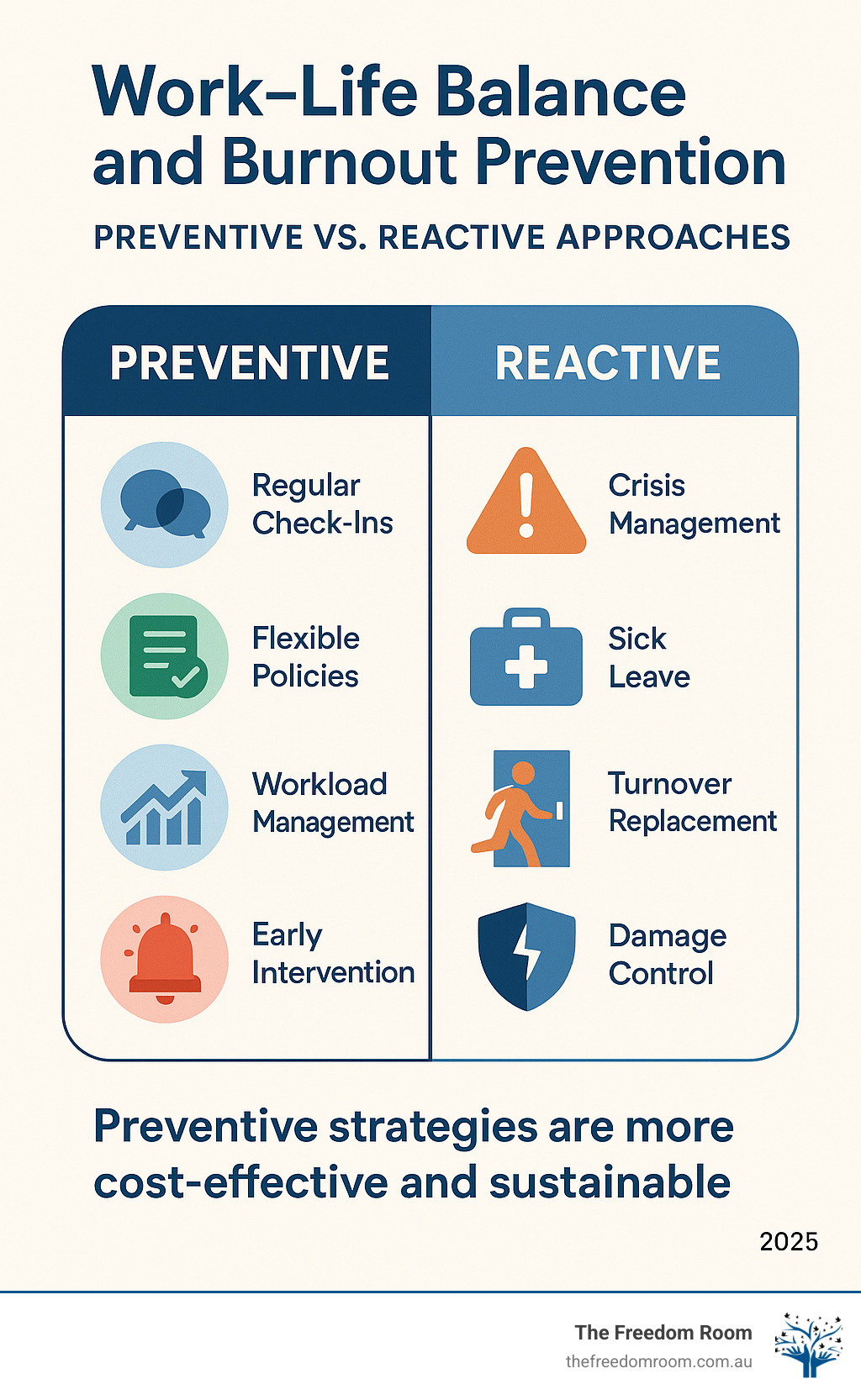
Flexible policies demonstrate genuine commitment to employee wellbeing. This might include flexible working hours, remote work options, compressed work weeks, or job sharing arrangements. The key is matching flexibility options to both business needs and employee preferences.
Leadership training should include burnout recognition and prevention. Managers need skills to identify early warning signs in their team members and know how to respond appropriately. This includes having difficult conversations about workload and connecting employees with available support resources.
Recognising Burnout in Teams
Managers have a unique opportunity to spot burnout before it becomes severe. This requires paying attention to changes in behaviour, performance, and engagement rather than waiting for employees to self-report problems.
Monitor engagement levels through regular one-on-one meetings. Ask open-ended questions like “How are you feeling about your workload?” and “Is there anything you need support with?” These conversations should happen regularly, not just during performance reviews.
Track absenteeism patterns and productivity changes. Sudden increases in sick days, missed deadlines, or declining work quality can indicate emerging burnout. Address these patterns with curiosity rather than criticism.
Watch for social withdrawal. Employees who previously participated in team activities or informal conversations may begin isolating themselves when experiencing burnout.
Policies that Foster Balance
Effective organisational policies go beyond offering benefits to actively promoting their use. Many employees hesitate to use available resources due to fear of appearing uncommitted or weak.
Flexible work arrangements should be normalised rather than treated as special accommodations. This includes options for remote work, flexible start and end times, and compressed work weeks where operationally feasible.
Encourage leave utilisation through policies that make taking time off the norm rather than the exception. Some organisations implement mandatory minimum vacation policies or “use it or lose it” approaches to prevent leave accumulation.
Set manageable performance targets that account for realistic capacity rather than aspirational goals. Regularly review whether expectations align with available resources and time.
Provide on-site support resources including employee assistance programmes, mental health services, and stress management workshops. For organisations dealing with stress-related issues that may contribute to substance use, resources like our stress and addiction recovery guidance can be valuable.
Measuring and Sustaining Work-Life Balance Over Time
Creating effective Work-Life Balance and Burnout Prevention isn’t a one-time achievement – it’s an ongoing process that requires regular monitoring and adjustment. Just like your fitness routine might need tweaking as your body changes, your balance strategies need fine-tuning as your life circumstances evolve.
Think of measurement as your compass rather than your destination. Employee surveys provide valuable baseline data and help track progress over time. The key is asking the right questions about workload perception, stress levels, job satisfaction, and work-life balance.
Key metrics paint a comprehensive picture when viewed together. Employee turnover rates, particularly voluntary departures, tell you whether people are voting with their feet. Absenteeism patterns and sick leave usage can reveal stress-related health impacts before they become severe. Productivity measures and quality indicators show whether your balance efforts are actually improving performance.
Employee engagement scores capture the emotional connection people have with their work, whilst tracking utilisation of wellbeing resources and flexible work options shows whether your initiatives are actually being used.
The Maslach Burnout Inventory offers a scientifically validated approach to measuring burnout across its three core dimensions: emotional exhaustion, depersonalisation, and personal accomplishment. Regular administration helps identify trends and high-risk groups before problems become crises.
The beauty of continuous improvement lies in its flexibility. What seemed effective initially may need adjustment as work demands change or new stressors emerge.
Evaluating Success of Work-Life Balance and Burnout Prevention Initiatives
Success measurement requires looking beyond the numbers to understand the human story behind the data. Quantitative metrics tell you what’s happening, but qualitative feedback reveals why it’s happening and what you can do about it.
Turnover rates often improve when work-life balance initiatives take hold, but don’t just celebrate lower numbers. Look beyond overall turnover to understand the reasons people are leaving and whether departures cluster in particular departments or roles.
Wellbeing scores from regular surveys reveal trends over time, but focus on patterns rather than getting caught up in single data points. Segment results by department, role level, or demographic groups to identify specific areas needing attention.
Productivity measures should improve when employees feel less stressed and more engaged, but be cautious about using productivity as your primary measure. This can inadvertently encourage overwork and undermine the very balance you’re trying to create.
Employee feedback through focus groups, suggestion boxes, or informal conversations provides insights that surveys might miss. Pay particular attention to feedback about barriers preventing people from using available resources.
The most successful organisations treat evaluation as an ongoing conversation rather than an annual event. They create multiple channels for feedback and respond quickly when issues emerge, demonstrating that employee wellbeing is a genuine priority.
Frequently Asked Questions about Work-Life Balance and Burnout
How much work is “too much”?
This question doesn’t have a one-size-fits-all answer, but research gives us some helpful starting points. Working consistently more than 50 hours per week significantly increases your burnout risk, whilst most people thrive in the 40-45 hour range.
But here’s what’s really important – it’s not just about counting hours. The intensity of your work, how much control you have, and whether you get proper recovery time matter just as much. You might handle 45 hours beautifully in a supportive workplace where you have autonomy and regular breaks, but struggle with 35 hours in a high-stress environment where you’re constantly micromanaged.
Your body and mind are excellent teachers if you listen to them. If you’re consistently exhausted, snapping at people you care about, or finding it hard to enjoy things outside work, you’re probably doing too much regardless of what the clock says.
Can positive stress still lead to burnout?
Absolutely, and this surprises many people. Positive stress (what researchers call “eustress”) can be wonderfully motivating – think of the excitement of a new project or the satisfaction of a challenging goal. But even enjoyable challenges become problematic when they never let up.
The difference is that positive stress usually comes with a sense of control and meaning, whilst negative stress feels overwhelming and pointless. However, both types use the same energy reserves in your body and mind. It’s like having a car you love driving – you still need to stop for petrol and maintenance.
If you adore your work but find yourself constantly switched on, you might be experiencing positive stress burnout. The solution isn’t to love your work less, but to create better boundaries and give yourself proper recovery time. Even the most passionate gardener needs to come inside eventually.
Does remote work improve or worsen balance?
Remote work is a bit like fire – it can warm your home beautifully or burn it down, depending on how you handle it. For many people, remote work dramatically improves work-life balance by eliminating commute time and creating a personalised environment where they can thrive.
But remote work can also blur boundaries in problematic ways. Without clear separation between work and home spaces, many people find themselves working longer hours or feeling like they’re never truly “off.” It’s easy to check “just one more email” when your laptop is sitting on the kitchen table.
Success with remote work requires intentional boundary setting. This means creating a dedicated workspace (even if it’s just a corner of your bedroom), establishing clear start and stop times, and communicating your availability expectations clearly with colleagues and family.
The key is using remote work’s flexibility to improve your balance rather than extend work into every corner of your life. When done well, remote work can be a powerful tool for Work-Life Balance and Burnout Prevention – but it requires the same thoughtful approach as any other aspect of managing your wellbeing.
Ready for Change? Let’s Build a Stronger, Alcohol-Free Future Together
Creating sustainable Work-Life Balance and Burnout Prevention is an ongoing journey that requires patience, commitment, and sometimes professional guidance. The path to better balance isn’t always straightforward, and that’s perfectly normal.
At The Freedom Room Wellness and Recovery, we recognise that chronic stress and burnout often contribute to unhealthy coping strategies, including problematic alcohol use. When work pressures feel overwhelming and life feels unmanageable, it’s natural to seek relief wherever we can find it.
Our team brings something unique to this challenge – many of us have walked this path ourselves. We understand how work stress can spiral into burnout, and how burnout can lead to choices we later regret. This lived experience, combined with our professional training, allows us to offer authentic support that goes beyond textbook solutions.
The connection between stress and substance use is real and common. When you’re exhausted from overwork, struggling to switch off after long days, or feeling overwhelmed by competing demands, alcohol can seem like a quick fix. Unfortunately, what starts as stress relief often becomes another source of stress and imbalance.
We offer personalised sessions, workshops, and therapy designed to help you develop healthier coping strategies whilst addressing the root causes of stress and burnout. Our approach recognises that sustainable recovery requires more than just stopping drinking – it requires building a life that feels balanced, meaningful, and manageable.
Seeking support is a sign of wisdom, not weakness. Building better work-life balance and preventing burnout often requires learning new skills, changing long-established patterns, and sometimes addressing underlying issues that contribute to chronic stress. You don’t have to figure this out alone.
Whether you’re dealing with work stress, experiencing burnout, or recognising the complex relationship between stress and alcohol use, we’re here to support your journey. Our coping skills to prevent relapse resources offer practical strategies that work in real-world situations.
Your wellbeing matters, and you deserve to live a life that feels sustainable and fulfilling. We’re here to help you build that life, one manageable step at a time.