

Coping Skills to Prevent Relapse: 10 Powerful Positive Tips 2025
Why Coping Skills Are Your Best Defence Against Relapse
Coping skills to prevent relapse are essential tools that help you manage stress, handle triggers, and maintain your recovery when life gets challenging. These evidence-based techniques can reduce your relapse risk by up to 40% when practised consistently.
The most effective coping skills include:
- HALT method – checking if you’re Hungry, Angry, Lonely, or Tired
- Mindfulness and meditation – managing cravings through awareness
- Trigger identification – knowing your personal risk situations
- Support networks – connecting with peers and professionals
- Self-care basics – proper nutrition, sleep, and exercise
- Grounding techniques – the 5-4-3-2-1 sensory method
- Emergency planning – having contacts and strategies ready
Recovery isn’t a straight line. Research shows that 40-60% of people in treatment for substance abuse will experience some form of relapse. But here’s what matters most: relapse doesn’t mean failure. It’s often part of the recovery process, and having the right coping skills can help you bounce back faster or avoid relapse entirely.
The key is understanding that relapse actually begins long before you pick up a drink or drug. It starts with emotional and mental warning signs that you can learn to recognise and address early.
Your brain needs time to heal from addiction. During this vulnerable period, stress, triggers, and challenging emotions can feel overwhelming without proper coping strategies. That’s why building a toolkit of healthy responses is so crucial for long-term recovery success.
When you develop strong coping skills, you’re not just preventing relapse – you’re building resilience, confidence, and a foundation for a fulfilling life in recovery.
Coping skills to prevent relapse definitions:
- Rebuilding Your Life After Addiction
- alcohol addiction recovery symptoms
- alcohol addiction recovery time
Understanding Relapse: What It Is and Why It Happens
Before diving into coping skills to prevent relapse, let’s clear up some confusion about what relapse actually means. Many people think it’s simply picking up a drink or drug after being sober, but there’s more to the story.
A lapse is like a brief stumble – perhaps one drink or a single use. It’s a slip, not a fall. A relapse, however, means returning to your old patterns of addictive behaviour. Understanding this difference matters because it changes how you respond to setbacks and how you feel about yourself.
Here’s something that might surprise you: addiction is recognised as a chronic brain disorder that fundamentally changes how your brain works. It affects your brain’s reward system, particularly the dopamine pathways that control pleasure and motivation. When you use substances repeatedly, your brain adapts by producing less natural dopamine and requiring more of the substance to feel normal.
This neurobiological change means that even after achieving sobriety, your brain remains vulnerable. It’s not a character flaw or lack of willpower – it’s a medical reality that affects millions of people worldwide.
Scientific research on relapse rates shows that approximately 60% of individuals with substance dependence eventually enter sustained recovery, though many require multiple treatment episodes before achieving long-term sobriety. The 40-60% relapse rate might sound discouraging, but remember – this also means that recovery is absolutely possible with the right support and tools.
Several high-risk factors increase your vulnerability to relapse. Unmanaged stress – whether it’s a sudden crisis or ongoing pressure – tops the list. Co-occurring mental health conditions, particularly PTSD, significantly increase risk and affect one-third to half of people with substance use disorders.
Social isolation leaves you without crucial support when you need it most. Exposure to triggers without adequate coping skills can feel overwhelming. Ironically, overconfidence in early recovery can also be dangerous, leading people to put themselves in risky situations they’re not ready to handle.
Why Relapse Occurs in Recovery
Understanding why relapse happens helps remove the shame and self-blame that can keep you stuck. Relapse rarely happens because of a single cause – it’s usually a combination of factors building up over time.
Stress build-up is the most common culprit. When stress accumulates without healthy outlets, your brain remembers substances as a quick solution. Unaddressed triggers can catch you completely off guard. These might be certain people, places, specific emotions, or even anniversaries of significant events.
Insufficient coping skills leave you vulnerable when life throws you curveballs. If you haven’t developed healthy ways to handle difficult emotions, boredom, social pressure, or unexpected challenges, old patterns start looking tempting again.
Treatment gaps also contribute significantly to relapse risk. Recovery requires ongoing support, and gaps in treatment or support can leave you feeling isolated and vulnerable.
Post-acute withdrawal symptoms deserve special mention because they’re often unexpected and can make you feel like recovery isn’t working. Sleep disturbances, mood swings, anxiety, and difficulty concentrating can persist for months. When you’re not prepared for these symptoms, they can feel overwhelming and trigger thoughts of using again just to feel normal.
The good news? Understanding these factors means you can prepare for them and develop coping skills to prevent relapse before you need them most.
Key Warning Signs and Stages of Relapse
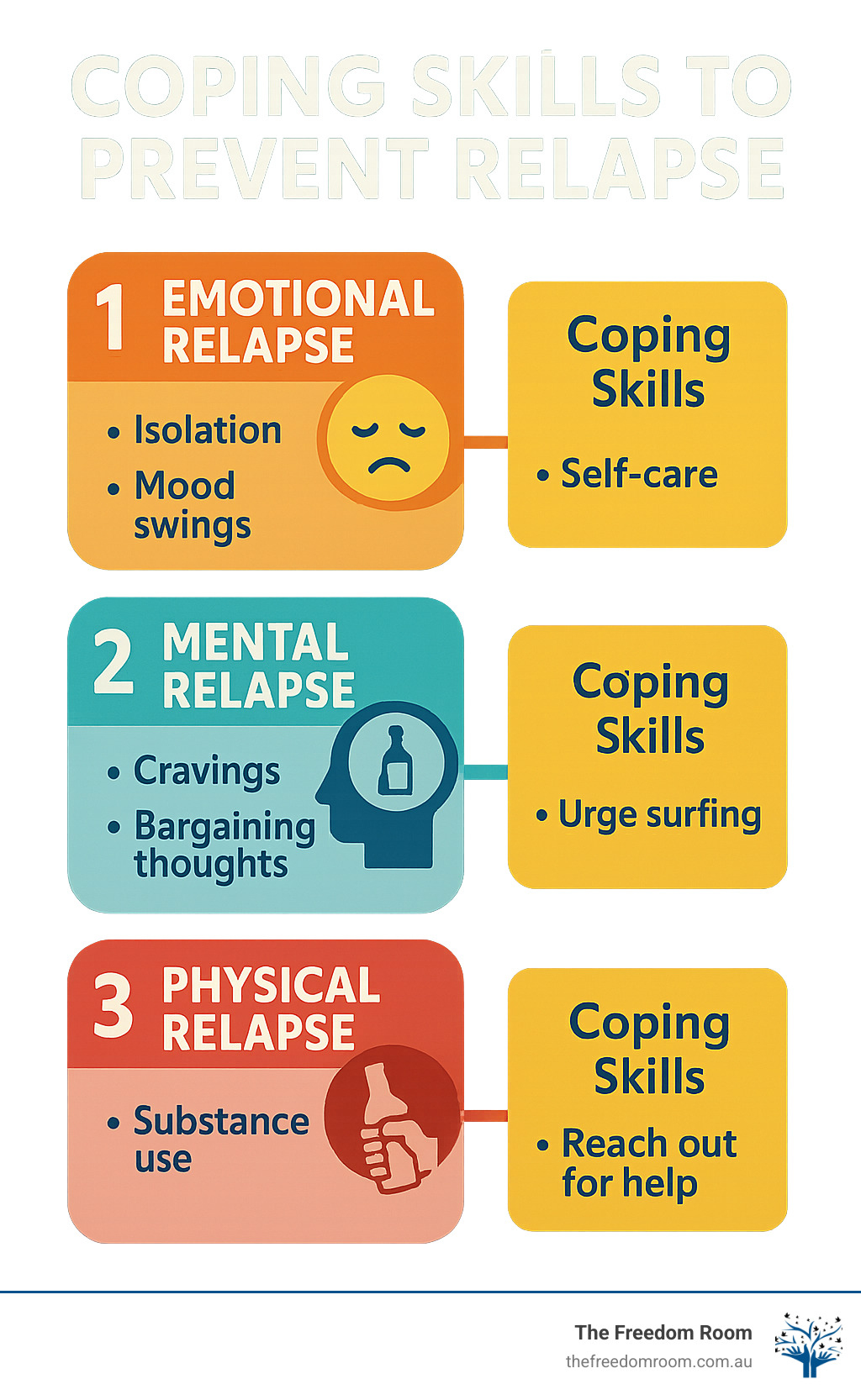
Relapse doesn’t happen overnight. It’s a process that unfolds in three distinct stages, each with its own warning signs. Recognising these stages early gives you the power to intervene before reaching physical relapse.
Emotional relapse is the first stage, where you’re not consciously thinking about using, but your emotions and behaviours are setting you up for future relapse. Warning signs include:
- Bottling up emotions instead of expressing them
- Isolating from supportive people
- Not attending meetings or therapy sessions
- Poor eating and sleeping habits
- Mood swings and irritability
- Anxiety and restlessness
Mental relapse involves internal conflict between wanting to stay sober and thinking about using. Your rational mind knows you shouldn’t use, but part of you starts entertaining the idea. Signs include:
- Glamorising past substance use
- Thinking about people, places, and things associated with use
- Planning a relapse in your mind
- Looking for opportunities to use
- Lying to yourself and others
Physical relapse is the final stage – actually using substances. However, by this point, the relapse process has been building for weeks or even months.

Early Red Flags You Should Never Ignore
Certain warning signs are particularly important to recognise because they often appear early in the relapse process:
Sleep disturbances are among the first signs of emotional relapse. When you stop prioritising rest, your emotional regulation suffers, making you more vulnerable to stress and triggers.
Skipping meetings or therapy sessions indicates withdrawal from your support system. This isolation removes accountability and reduces access to coping strategies just when you need them most.
Romanticising past use involves selectively remembering the positive aspects of drinking or drug use whilst forgetting the negative consequences. You might catch yourself thinking, “It wasn’t that bad” or “Maybe I can control it now.”
Increased secrecy about your thoughts, feelings, or activities suggests you’re pulling away from the transparency that supports recovery.
Negative self-talk and harsh self-criticism can create emotional pain that makes substances seem appealing as a way to escape difficult feelings.
Essential Coping Skills to Prevent Relapse
Now that you understand how relapse unfolds, here are the practical skills that keep you on track. Think of them as tools in a well-stocked toolbox – you will rarely need all of them at once, but it is reassuring to know they are there.
Self-Care Foundations
Meeting your basic physical needs is the first line of defence. Addiction often disrupts sleep, appetite and activity levels, so reset these fundamentals as early as possible.
Balanced nutrition: eat regular meals built around protein, complex carbohydrates and plenty of fresh produce. A steady blood-sugar level keeps mood and energy more stable, which in turn reduces cravings.
Restorative sleep: aim for a consistent bedtime and wake-up time. Even if sleep is patchy at first, the routine itself signals to your brain that it is safe to switch off.
Regular movement: choose activities you enjoy – a brisk walk, stretching, yoga or team sport. Exercise releases endorphins and lowers stress hormones.
Stress reduction: short breathing exercises, progressive muscle relaxation, journalling or a quick walk in nature can disperse tension before it builds to dangerous levels.
More info about self-care tips
Mindfulness & Meditation for Craving Control
Mindfulness trains you to notice thoughts and body sensations without sliding into automatic reactions.
Urge surfing: visualise a craving like a wave that rises, crests and falls. Breathe through the discomfort instead of trying to fight it.
4-7-8 breathing or a simple SOBER pause give you a built-in circuit-breaker between a trigger and a response.
Scientific research on mindfulness meditation
Using the HALT Method Daily
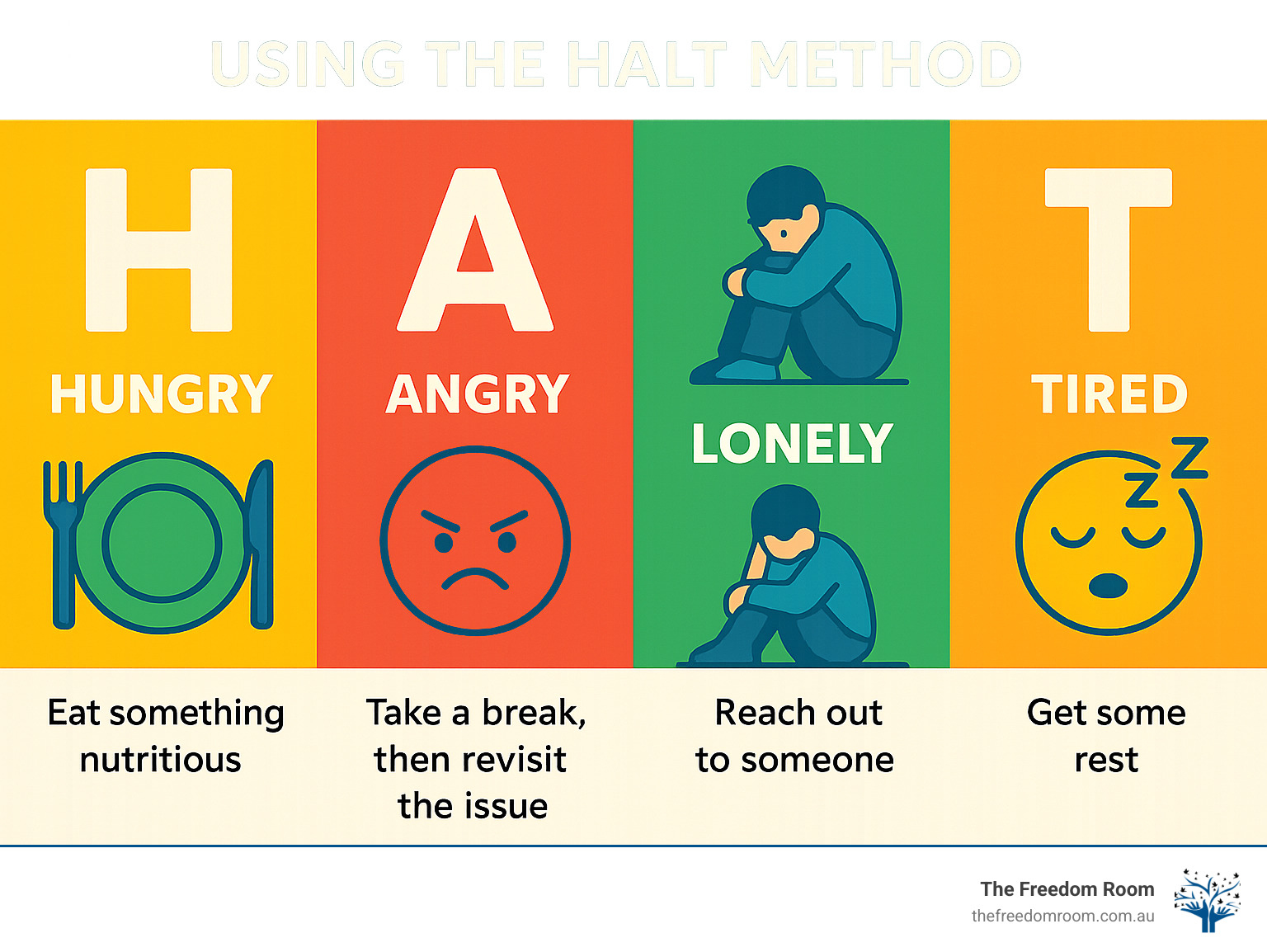
HALT stands for Hungry, Angry, Lonely, Tired – four everyday states that leave you wide open to cravings. A quick mental check several times a day allows you to correct the problem before it grows.
Identify & Manage Personal Triggers
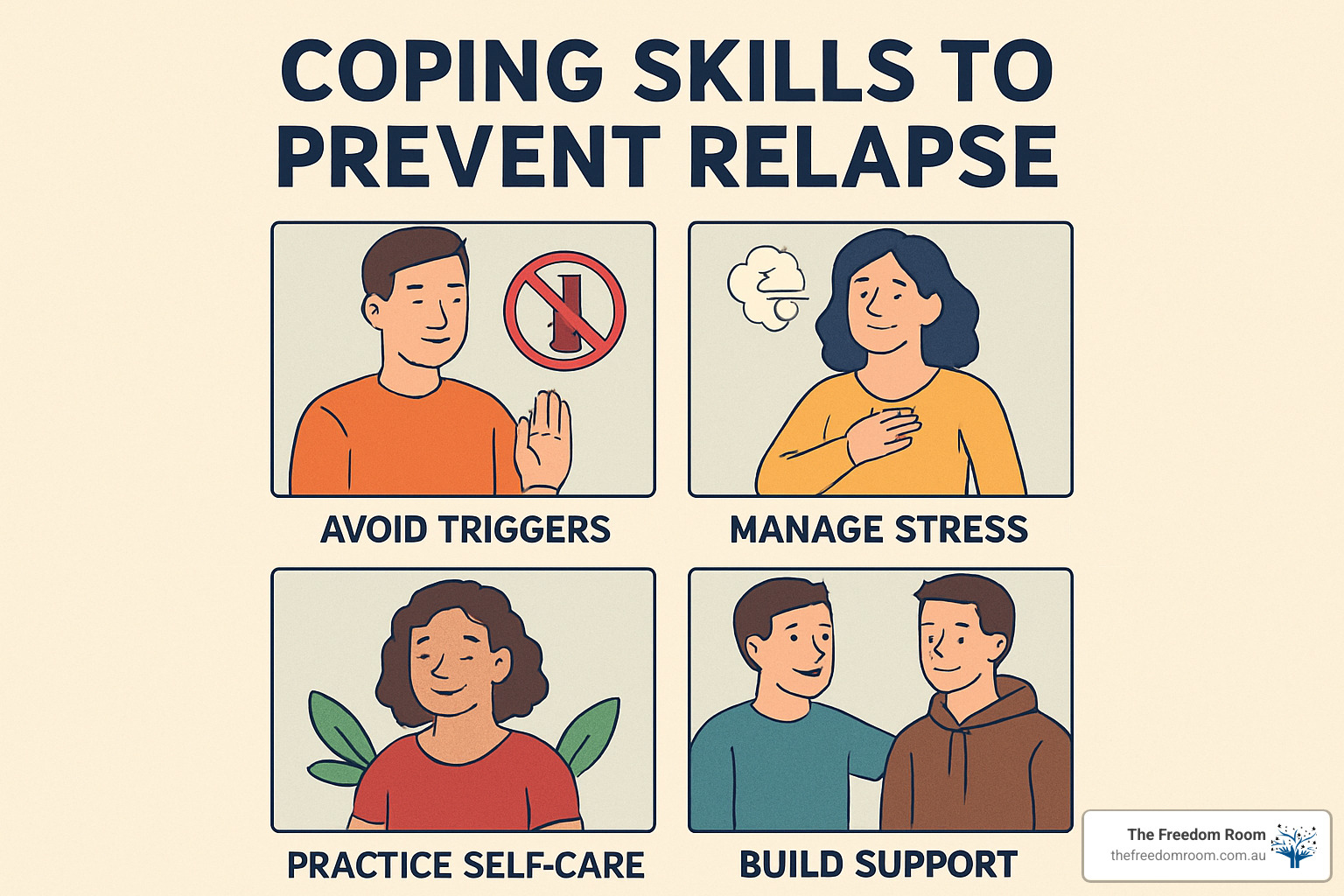
Make a written list of your high-risk people, places, emotions and situations. For each one, write a simple plan: avoid, leave, distract, call a support, or use a breathing exercise.
Addiction Relapse Prevention Strategies
By combining these techniques you give yourself multiple safety nets, dramatically lowering the chance of a return to active use.
Building Your Personal Relapse Prevention Toolkit
Think of this as your personalised emergency kit. When stress hits, you should be able to reach for a written plan and know exactly what to do.
Crafting a Written Relapse Prevention Plan
Put it on paper. Studies consistently show that written goals are achieved more often than unwritten ones.
- List your short-, medium- and long-term recovery goals.
- Note every known trigger and at least one coping response for each.
- Create an emergency contact list that covers day, evening and after-hours support.
- Include “play-the-tape-through” reminders so you can quickly recall the real outcomes of past use.
Support Networks & Peer Groups
Recovery flourishes in community. Sponsors, 12-step or SMART meetings, our Group Recovery Meetings, and sober friends provide accountability and a safe place to talk through cravings.
Role of Therapy & Professional Help
Therapies such as CBT, ACT and motivational interviewing give you practical skills for challenging thoughts, sitting with feelings and staying aligned with your values.
When Medication Can Help
Medication-assisted treatment (MAT) can reduce cravings and block the rewarding effect of alcohol or opioids. Discuss options such as naltrexone, acamprosate, disulfiram, methadone or buprenorphine with your GP. MAT works best when paired with counselling and peer support.
Frequently Asked Questions about Coping Skills to Prevent Relapse
What should I do immediately after a lapse?
Pause, breathe and reach out to a trusted supporter right away. Treat the incident as a learning opportunity: identify the trigger, update your prevention plan, and return to healthy routines the same day.
How do I stay motivated to practise coping skills daily?
Build tiny, repeatable habits. Link a two-minute breathing exercise to your morning coffee, jot gratitude notes while brushing your teeth, or run a HALT check at lunchtime. Small wins compound into lasting change.
Can mindfulness really reduce cravings long-term?
Yes. Regular mindfulness practice rewires brain regions involved in impulse control and stress regulation. Over time, cravings still arise but feel less urgent, and you gain the space to make a sober choice.
At The Freedom Room we integrate mindfulness into CBT and ACT because we continually see its effectiveness in extending sobriety.
Accept Your Recovery Path with Us by Your Side
Recovery is a journey that’s much easier when you don’t travel alone. At The Freedom Room Wellness and Recovery, we understand the challenges you face because we’ve walked this path ourselves. Our team consists of people in recovery who bring both professional expertise and lived experience to your support.
We offer a comprehensive approach to recovery that includes all the coping skills to prevent relapse discussed in this guide. Our services include:
- One-to-one counselling with understanding counsellors who know what recovery requires
- Group Recovery Meetings three times weekly for ongoing peer support
- CBT and ACT therapy to build cognitive and emotional coping skills
- Family sessions to heal relationships and build support systems
- Personalised workshops covering mindfulness, stress management, and life skills
- Relapse prevention planning custom to your specific triggers and needs
What sets us apart is authenticity. When you work with our team, you’re not just getting professional help – you’re connecting with people who truly understand your struggles and can offer hope based on their own recovery success.
We believe recovery should be accessible and affordable. Our cost-effective approach ensures that financial barriers don’t prevent you from getting the support you need.
Located in Strathpine, Queensland, we provide a discreet, welcoming space where you can focus on your recovery. We even welcome children if you need to bring them to sessions.
Recovery isn’t about perfection – it’s about progress, connection, and building a life worth living. Whether you’re just starting your recovery journey or working to strengthen your sobriety, we’re here to support you with compassion, understanding, and proven strategies that work.
More info about our addiction recovery services
Support & Resources
If you or someone you know is suffering from alcohol addiction, please seek professional help and support at:
Our Office: (07) 3325 1531
Mobile: 0400 236 743 (Rachel)
For help outside of these hours, you can also contact:
Emergency Help: Call 000
AA Helpline: 1300 222 222
Lifeline: 13 11 14
Al-Anon: www.al-anon.org.au