

Clinical Indicators of Alcohol Use Disorder
Alcohol use disorder symptoms encompass a diverse range of physical, behavioural, and psychological indicators. These clinical signs suggest that an individual has developed a physical alcohol dependence and may no longer possess the capacity to regulate their consumption. Within the Australian healthcare context, the identification of these symptoms is essential for early intervention and the facilitation of successful long term recovery outcomes.
The National Health and Medical Research Council (NHMRC) provides guidelines that assist in identifying problematic drinking patterns. The following list outlines the most frequent clinical signs observed in individuals experiencing difficulties with alcohol consumption:
- Consuming larger quantities of alcohol than originally intended.
- Experiencing persistent desires or unsuccessful efforts to reduce alcohol intake.
- Allocating a significant duration of time to obtaining, using, or recovering from the effects of alcohol.
- Experiencing intense cravings or a profound urge to consume alcohol.
- Failing to fulfil major role obligations at work, school, or home due to recurrent alcohol use.
- Continuing alcohol use despite persistent social or interpersonal problems caused or exacerbated by the effects of alcohol.
- Relinquishing or reducing important social, occupational, or recreational activities because of alcohol use.
- Using alcohol in situations where it is physically hazardous, such as operating machinery or driving.
- Continuing alcohol use despite knowledge of having a persistent physical or psychological problem, likely caused or exacerbated by alcohol.
- Developing a tolerance, defined by a requirement for markedly increased amounts of alcohol to achieve intoxication or a diminished effect with continued use of the same amount.
- Experiencing withdrawal symptoms when alcohol use is discontinued or significantly reduced.
If an individual recognises two or more of these indicators, it is recommended to consult a healthcare professional. Many individuals in Australia do not identify a problematic pattern until the symptoms become severe, primarily because alcohol use disorder often develops gradually over several years.
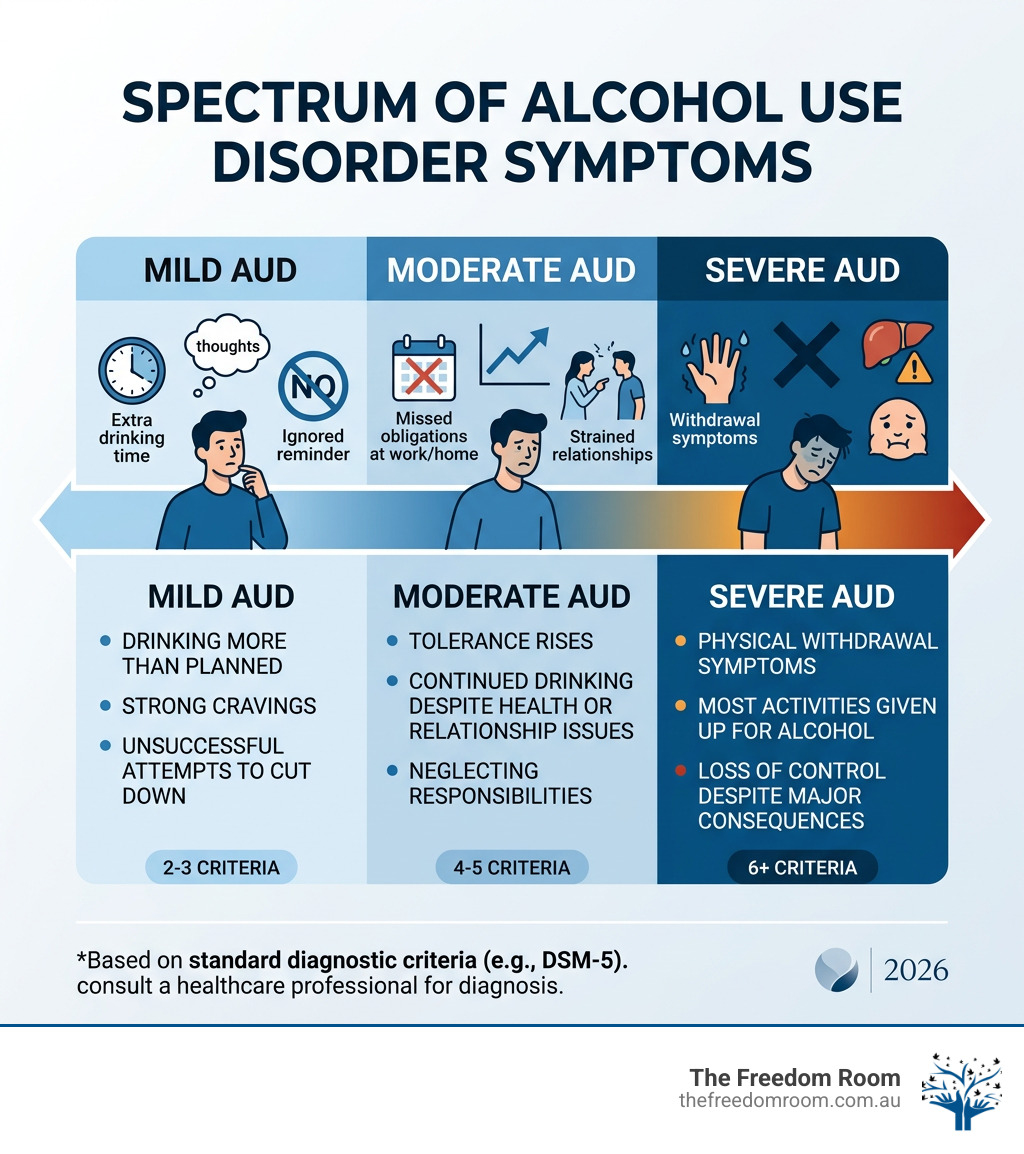
According to the National Institute on Alcohol Abuse and Alcoholism (NIAAA), this condition is a recognised medical issue. It is defined by an impaired ability to stop or control alcohol use despite adverse consequences. The disorder exists on a spectrum ranging from mild to severe, depending on the number of diagnostic criteria met.
Understanding these clinical red flags is the primary step toward reclaiming health and stability. It is important to acknowledge that this condition is a manageable health issue that requires professional support and clinical compassion.
Alcohol use disorder symptoms terminology:
Identification and Assessment of Alcohol Use Disorder Symptoms
Identifying alcohol use disorder symptoms involves a comprehensive evaluation of how alcohol impacts physiological health and daily functioning. A primary indicator of a developing clinical issue is the presence of physical alcohol dependence. This state occurs when the brain and body adapt to the constant presence of ethanol and struggle to maintain homeostasis without it.
Tolerance is frequently the initial sign that an individual is developing a physical alcohol dependence. Observers may notice that a standard drink no longer provides the same level of relaxation or physiological effect. Over time, the liver and brain adapt to the substance, requiring larger quantities to achieve the desired results.
This escalation often leads to the onset of withdrawal symptoms. When the concentration of alcohol in the bloodstream decreases, an individual may experience tremors, diaphoresis, or intense anxiety. These physiological shifts represent fundamental changes in the operation of the central nervous system.
Research from the Interactive Body demonstrates that chronic alcohol use interferes with brain communication pathways. This interference significantly affects mood, concentration, and motor skills. In Australia, the Australian Institute of Health and Welfare (AIHW) provides extensive data on the impact of alcohol on the national health landscape, noting that alcohol remains one of the most significant causes of preventable disease and death.
Physical Indicators and Facial Manifestations of Chronic Consumption
While many symptoms are internal, long term alcohol use often leaves visible marks on the physical appearance of an individual. One of the most discussed clinical signs involves changes to the facial structure and skin. These changes are caused by the toxic effects of ethanol and its primary byproduct, acetaldehyde.
Facial redness and broken capillaries are common because alcohol causes the blood vessels to dilate. Over time, these vessels may lose their elasticity, leading to permanent spider veins or a persistent flushed appearance. Skin puffiness is another frequent indicator, often caused by dehydration and systemic inflammation.
Other physical signs include:
- Jaundice, which is a yellowing of the skin and eyes that indicates significant liver distress or failure.
- Significant weight fluctuations caused by the high caloric content of alcohol or poor nutritional intake.
- Poor coordination and balance, which may persist even when the individual is not currently intoxicated.
- A general decline in personal hygiene and self care routines.
If concerns arise regarding these physical changes, individuals can find more info about signs of alcohol dependence to help identify if a loved one is struggling. Recognising these signs early can lead to more effective clinical intervention strategies.
Behavioural and Psychological Alcohol Use Disorder Symptoms
The psychological impact of this disorder is often more disruptive than the physical signs. Behavioural changes frequently revolve around secrecy and the prioritisation of alcohol over other life commitments. Observers might notice an individual concealing alcohol containers or providing inaccurate information regarding the quantity of alcohol consumed.
Neglecting duties at home or in the workplace is a major indicator of a growing clinical problem. This might manifest as frequent absences from work, missed deadlines, or a lack of engagement with family responsibilities. Mood instability is also common, as the temporary physiological highs of drinking are followed by deep emotional lows.
Internal cravings are a hallmark of the disorder and represent intense, intrusive thoughts about alcohol. Many individuals have made repeated, unsuccessful efforts to reduce consumption or stop entirely. They often find themselves returning to previous patterns due to the altered reward system in the brain.

Internal Health Complications and Long Term Risks
Chronic alcohol use takes a heavy toll on the internal organs. The liver is the primary site for alcohol metabolism, and overconsumption leads to a spectrum of damage. This can range from fatty liver and hepatitis to irreversible cirrhosis.
The cardiovascular system is also at significant risk from heavy drinking. This can lead to hypertension, heart arrhythmias, and an increased risk of stroke. Furthermore, there is a strong scientific consensus regarding alcohol and cancer risk.
The National Toxicology Program lists alcohol as a known human carcinogen. It is linked to cancers of the liver, breast, oesophagus, and colon. Long term use also suppresses the immune system, making the body more susceptible to infections such as pneumonia.
Understanding the DSM-5 Alcohol Use Disorder Symptoms
In a clinical setting, healthcare professionals use the Diagnostic and Statistical Manual of Mental Disorders (DSM-5) for diagnosis. Rather than using outdated labels, they assess an individual based on eleven specific criteria. The number of criteria met determines the severity of the condition.
A mild diagnosis involves meeting two to three criteria. A moderate diagnosis involves meeting four to five criteria. A severe diagnosis is indicated when six or more criteria are present. Understanding these alcohol use disorder criteria helps treat the condition as the medical issue it truly is.
These criteria include spending a significant amount of time drinking or recovering from its effects. They also include giving up important social or work activities to drink. Continuing to use alcohol even when it causes physical or mental health problems is another key diagnostic factor.
Risk Factors and Causes of Physical Dependence
There is no single cause for the development of this disorder, but rather a combination of factors. Research suggests that genetics account for approximately sixty per cent of the risk. If an individual has a family history of dependence, their biological vulnerability may be higher.
Environmental factors are also highly influential in the development of the disorder. Individuals who begin drinking before the age of fifteen are more likely to report issues later in life. Mental health conditions such as depression, PTSD, and ADHD are also frequently linked with alcohol problems.
There is a deep connection between childhood trauma and later substance use. Many individuals use alcohol as a way to self medicate or numb the pain of past experiences. Social environments that encourage heavy drinking can also act as triggers for dependency.
Seeking Professional Help and Treatment Options
Recovery is a journey that requires professional guidance and a structured approach. For those with severe symptoms, medical detoxification is a vital first step. Withdrawing from alcohol can be physically dangerous, and medical supervision ensures safety during the process.
Once the body is clear of alcohol, behavioural therapies like Cognitive Behavioural Therapy (CBT) are highly effective. These therapies help individuals identify triggers and develop healthier coping mechanisms. Medication assisted treatment can also be used to reduce cravings and manage the brain’s response to alcohol.
Support groups and peer led recovery pathways are also essential components of a successful plan. Connecting with others who have experienced similar challenges reduces the isolation that often fuels the disorder. Whether through alcohol use disorder treatment programmes or community workshops, having a structured plan improves the chances of success.
Professional Support for Sustainable Recovery
At The Freedom Room Wellness and Recovery, we understand that overcoming physical alcohol dependence involves more than cessation. It requires addressing the underlying issues and constructing a life characterised by health and stability. Our approach is rooted in lived experience, as our team members are in recovery themselves, allowing us to offer authentic empathy and support without judgment.
We provide a range of personalised sessions and wellness workshops in Strathpine, Queensland, designed to be compassionate and cost effective for all participants. We focus on evidence based techniques like Emotional Freedom Techniques and Cognitive Behavioural Therapy to help individuals navigate the psychological aspects of recovery. Our goal is to provide affordable alcohol treatment that empowers participants to take control of their future.
Pathways to Recovery
If you have recognised these clinical indicators in your own life or in someone you care for, please be aware that professional help is available. Alcohol use disorder is a treatable medical condition, and seeking assistance is a sign of significant strength. You do not have to navigate this path without support. By understanding the symptoms and seeking the appropriate clinical resources, you can begin the journey toward a healthier and more fulfilling life. Our community is here to support you throughout the transition toward a stable future.
Ready to take the next step? Explore our services or contact us to speak with someone who can help.
FAQ
What is the clinical definition of alcohol use disorder?
Alcohol use disorder is a medical condition characterised by an impaired ability to stop or control alcohol use despite adverse social, occupational, or health consequences. It is considered a brain disorder that ranges from mild to severe.
What are the facial indicators of chronic alcohol consumption?
Common signs include persistent facial redness, broken capillaries, and skin puffiness. A yellowish tint to the skin or eyes, known as jaundice, may also indicate liver strain. These changes are often caused by chronic inflammation and the toxic effects of ethanol.
What are the early signs of physical alcohol dependence?
Early signs include developing a higher tolerance and experiencing mild withdrawal symptoms such as morning anxiety or tremors. Individuals may also find it difficult to adhere to a pre-set drink limit or spend an increasing amount of time thinking about alcohol.
When should professional help be sought for alcohol use?
Professional help should be sought if alcohol consumption is causing problems in relationships or affecting performance at work. If an individual is unable to stop drinking despite a desire to do so, professional support is recommended. If severe withdrawal symptoms occur, seek medical attention immediately.
How do genetics affect the risk of developing the disorder?
Genetics are estimated to account for approximately sixty per cent of the risk for alcohol use disorder. While a family history does not guarantee the disorder will develop, it indicates a higher biological predisposition.
What resources are available for recovery in Australia?
In Australia, resources include General Practitioners for medical referrals and support groups such as Alcoholics Anonymous or SMART Recovery. Private recovery centres like The Freedom Room also offer specialised programmes. National helplines are available for immediate support and information.