

Finding an Effective Addiction Therapy Pathway
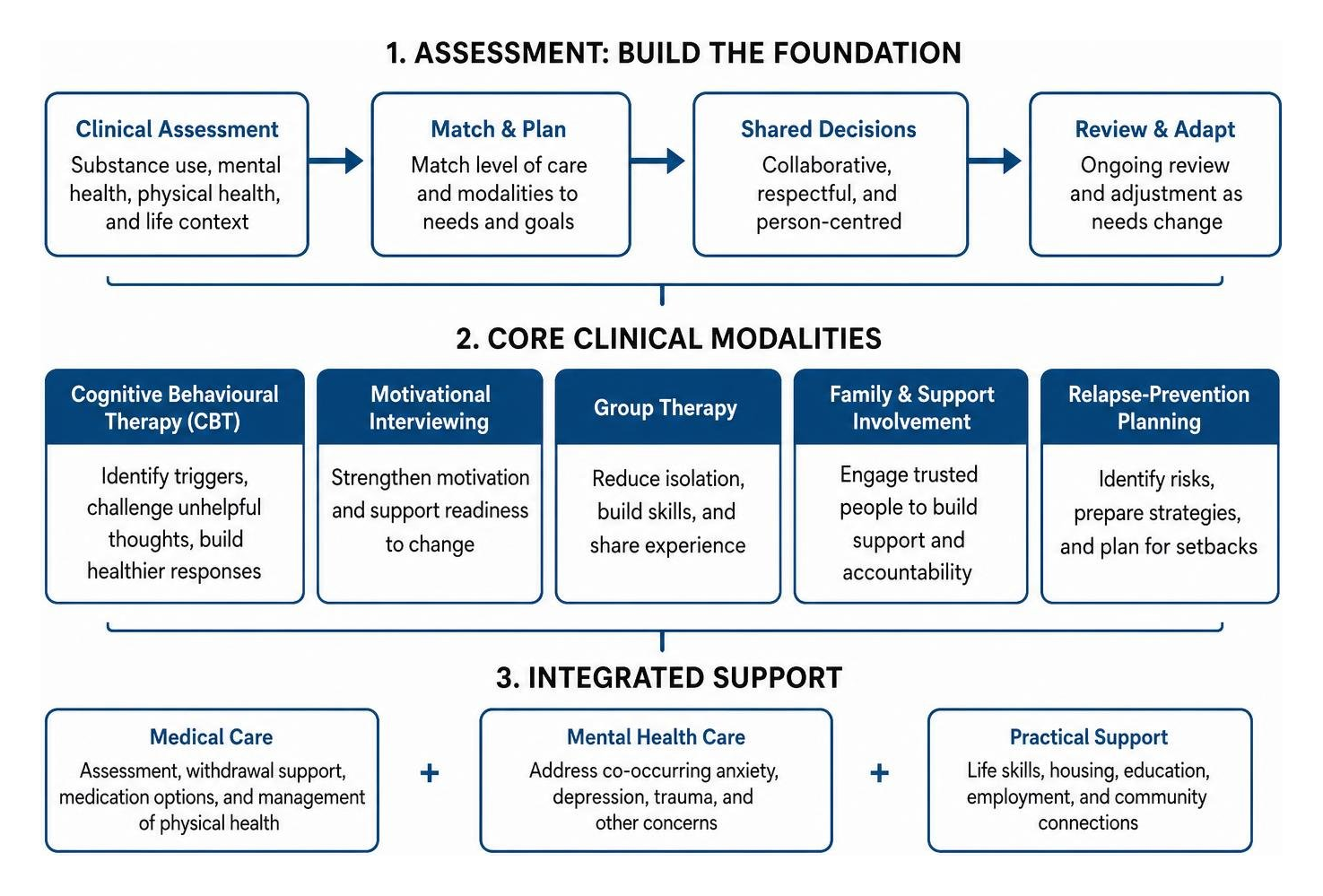
Navigating the process of overcoming substance dependency requires structured clinical guidance, compassionate personal support, and evidence-based interventions. Effective addiction therapy starts with a thorough clinical assessment, ensuring therapeutic interventions match the individual, their recovery goals, and the specific nature of their substance use. For individuals experiencing physical alcohol dependence, a robust care plan combines specialised psychological counselling, medical supervision, practical relapse-prevention skills, and ongoing community support.
When evaluating different treatment pathways across Australia, individuals and families should look for care models providing comprehensive assistance. High-quality clinical care prioritises individual dignity while applying scientifically validated techniques designed to foster sustainable behavioural change. An effective therapeutic pathway should:
- Address alcohol consumption patterns and concurrent mental health concerns simultaneously, including generalised anxiety, clinical depression, or unresolved psychological trauma.
- Utilise evidence-based psychological frameworks, such as cognitive behavioural therapy, motivational interviewing, dialectical behavioural strategies, and structured relapse-prevention planning.
- Incorporate comprehensive medical assessment and monitoring whenever physical dependence on alcohol, acute withdrawal risks, or prescription pharmacotherapy are present.
- Treat every person with empathy and respect, actively involving them in collaborative treatment planning while adapting interventions as recovery evolves.
There is no single therapeutic method that suits every person across all stages of recovery. Cognitive behavioural therapy helps people identify maladaptive thought patterns, recognise triggers, and develop healthier coping mechanisms. Motivational interviewing assists when an individual experiences ambivalence about lifestyle changes. Group therapy and family-focused support systems reduce emotional isolation while building mutual accountability. Combining prescription medications with structured psychological therapy often yields positive long-term outcomes.
Recovery from substance dependence is a continuous health process involving progressive learning, emotional healing, comprehensive support, and renewed daily commitment. Sustainable progress requires professional practitioners who understand the psychological, physical, and environmental complexities of dependence. The most effective addiction therapy remains grounded in rigorous research, practical application, and genuine respect for the lived realities of the person seeking help.
Core Modalities in Modern Addiction Therapy
Navigating recovery requires an understanding of clinical practices that produce measurable outcomes. Substance use complexities mean treatment cannot rely on a single rigid format. Clinicians evaluate readiness for change, severity of dependence, and environmental stressors before structuring an individualised care plan. Scientific research on addiction psychotherapeutic care shows that successful outcomes occur when psychological interventions operate alongside medical monitoring, active family support, and multi-disciplinary teams.
Clinical assessment is the foundational step in any structured recovery framework, matching the client with appropriate care ranging from outpatient counselling to intensive therapies. Aligning therapeutic strategies with personal readiness prevents premature demands that increase resistance. A strong therapeutic alliance provides the emotional safety needed to explore vulnerable behavioural patterns and initiate lasting change.
Cognitive Behavioural Interventions and Tailored Addiction Therapy
Cognitive behavioural approaches remain among the most rigorously evaluated modalities in mental health and substance dependence. Applying cognitive behavioural therapy for alcohol dependence assists individuals in identifying cognitive distortions, environmental cues, and automatic emotional responses preceding substance use. Examining these antecedents allows clients to develop actionable behavioural alternatives.
A formal scientific evaluation of cognitive behavioural therapy across substance use disorders demonstrates moderate to strong initial effect sizes in reducing consumption frequency and managing craving intensity. These structured strategies empower participants by rebuilding self-efficacy and psychological resilience. In practice, cognitive restructuring allows participants to challenge unhelpful beliefs regarding their capacity to manage emotional distress without relying on alcohol.
Key cognitive behavioural strategies include:
- Conducting functional analyses to map specific thoughts, emotions, and situations triggering cravings.
- Developing cognitive reframing techniques to challenge rationalisations about substance use.
- Mastering assertiveness and refusal skills through guided clinical role-play scenarios.
- Implementing structured craving-management tools, such as urge surfing and somatic grounding.
- Designing proactive relapse prevention action plans for managing high-risk environments.
Stepped Care Models and Medical Integration in Addiction Therapy
Effective treatment systems employ stepped-care models, scaling intervention intensity to clinical complexity. Integrating evidence-based alcohol treatment with medical management ensures that biological factors, such as acute withdrawal and neurochemical imbalances, stabilise alongside psychosocial therapy.
Scientific research on psychotherapies in opioid use disorder and other substance dependencies illustrates the necessity of combining pharmacotherapy with psychological care. Stepped-care models often initiate treatment with low-intensity counselling and motivational interviewing, escalating to intensive psychological therapy or coordinated primary healthcare interventions when addressing complex dual diagnoses.
Group Dynamics and Relapse Prevention Frameworks
Recovery strengthens within a shared social context that diminishes isolation. Engaging in group therapy for alcoholism offers individuals a structured setting to observe healthy coping strategies modelled by peers sharing similar life experiences.

The scientific summary of group therapy in substance abuse treatment highlights that structured group environments create a powerful culture of recovery. Peer affiliation overcomes interpersonal defensiveness and shame effectively. Psychoeducational groups provide neurobiological knowledge, while process groups offer safe opportunities for constructive feedback, interpersonal learning, and sustained sobriety.
Personalised Treatment Pathways and Long-Term Recovery Outcomes
Standardised treatments must adapt to accommodate individual circumstances. Personalised recovery pathways consider genetic vulnerabilities, psychiatric histories, neurodiversity, and social determinants such as housing and employment. According to national health data from the Australian Institute of Health and Welfare, alcohol continues to account for substantial health and social burdens across diverse demographics, reinforcing the necessity for flexible support services.
Long-term recovery outcomes depend on building recovery capital, encompassing internal strengths, personal resources, and external community networks. Ethical healthcare requires respect for client autonomy, transparent goal-setting, and collaborative care models. Digital therapeutics and telehealth services further enhance accessibility, allowing individuals across regional Australia to access clinical guidance without disruption to employment or familial responsibilities.
Addressing Co-Occurring Conditions and Social Determinants
Substance use rarely occurs in isolation. Many individuals experiencing physical alcohol dependence also navigate co-occurring psychological challenges, including major depression, generalised anxiety, or complex trauma. Providing trauma-informed therapy ensures that the underlying emotional pain driving addictive behaviours is addressed with safety and clinical care.
When past trauma is unaddressed, traditional behavioural therapies can inadvertently increase distress. Clinicians integrate mindfulness-based interventions, such as acceptance and commitment therapy, to help clients build psychological flexibility. Rather than fighting distressing internal experiences, individuals learn to observe their thoughts non-judgementally and commit to value-driven actions.
Holistic and Community-Supported Recovery Pathways
Sustained recovery flourishes when clinical interventions connect with holistic lifestyle changes and restorative community relationships. A comprehensive, holistic approach to addiction integrates physical well-being, mindfulness practices, emotional regulation, and family systems therapy into a cohesive framework.

At The Freedom Room, our team members walk alongside you with authentic lived experience of recovery, providing genuine empathy free from judgement. We utilise contemporary frameworks such as the acceptance and commitment therapy hexaflex to guide individuals toward psychological presence, emotional acceptance, and meaningful living. Involving supportive family members and participating in empathetic therapeutic communities restores the relational foundations necessary to sustain long-term sobriety.
Ready for Change? Let’s Build a Stronger, Alcohol-Free Future Together
Recovery is a courageous journey of rediscovery, growth, and lasting transformation. You do not have to navigate the complexities of alcohol dependence alone. With the right clinical modalities, compassionate peer insight, and an individualised care plan, sustained sobriety and a meaningful life are fully within your reach.
We invite you to discover our dedicated approach by exploring Our Services to see how our tailored programs, workshops, and individual counselling sessions can support your personal goals. When you are ready to take that next meaningful step, please Contact Us directly to speak confidentially with our compassionate team.
Visit us in person at our welcoming centre located at: 9a/521 Beams Rd, Carseldine QLD 4034.
Together, we can build a resilient, fulfilling, and alcohol-free future.
References
NBK587365. Boness CL, Votaw VR, Schwebel FJ, Moniz-Lewis DIK, McHugh RK, Witkiewitz K. “An Evaluation of Cognitive Behavioral Therapy for Substance Use Disorder: A Systematic Review and Application of the Society of Clinical Psychology Criteria for Empirically Supported Treatments..” Clinical psychology : a publication of the Division of Clinical Psychology of the American Psychological Association, 2023. PMCID PMC10572095. Durpoix A, Rolling J, Coutelle R, Lalanne L. “Psychotherapies in opioid use disorder: toward a step-care model..” Journal of neural transmission (Vienna, Austria : 1996), 2024. PMCID PMC11055728. NBK64206.
Frequently Asked Questions
How long does a typical course of addiction therapy take?
The duration of treatment varies depending on individual needs, dependence severity, and co-occurring mental health conditions. Structured cognitive behavioural interventions typically run between 12 and 16 weekly sessions. Long-term recovery often involves ongoing engagement with support groups, periodic booster sessions, and continuous lifestyle adjustments to maintain sobriety over years.
Can therapy be effective if someone is still unsure about quitting alcohol?
Yes. Modalities such as motivational interviewing are specifically designed for individuals experiencing ambivalence about substance use. Rather than forcing compliance, therapy provides a non-judgemental space to explore personal values, weigh drinking costs and benefits, and build intrinsic motivation for positive change at a sustainable pace.
What is the difference between individual and group addiction therapy?
Individual therapy provides a private setting to address personal trauma, co-occurring psychological diagnoses, and specific behavioural triggers. Group therapy complements this by reducing social isolation, fostering peer accountability, and offering real-world coping strategies from peers with lived experience. Both modalities work well together within a comprehensive treatment plan.
What role does family support play during addiction therapy?
Family involvement enhances long-term recovery outcomes by establishing healthy boundaries, rebuilding mutual trust, and improving interpersonal communication. Involving family members in psychoeducation helps loved ones understand dependence mechanisms, enabling them to provide constructive, non-enabling support throughout the recovery journey.