
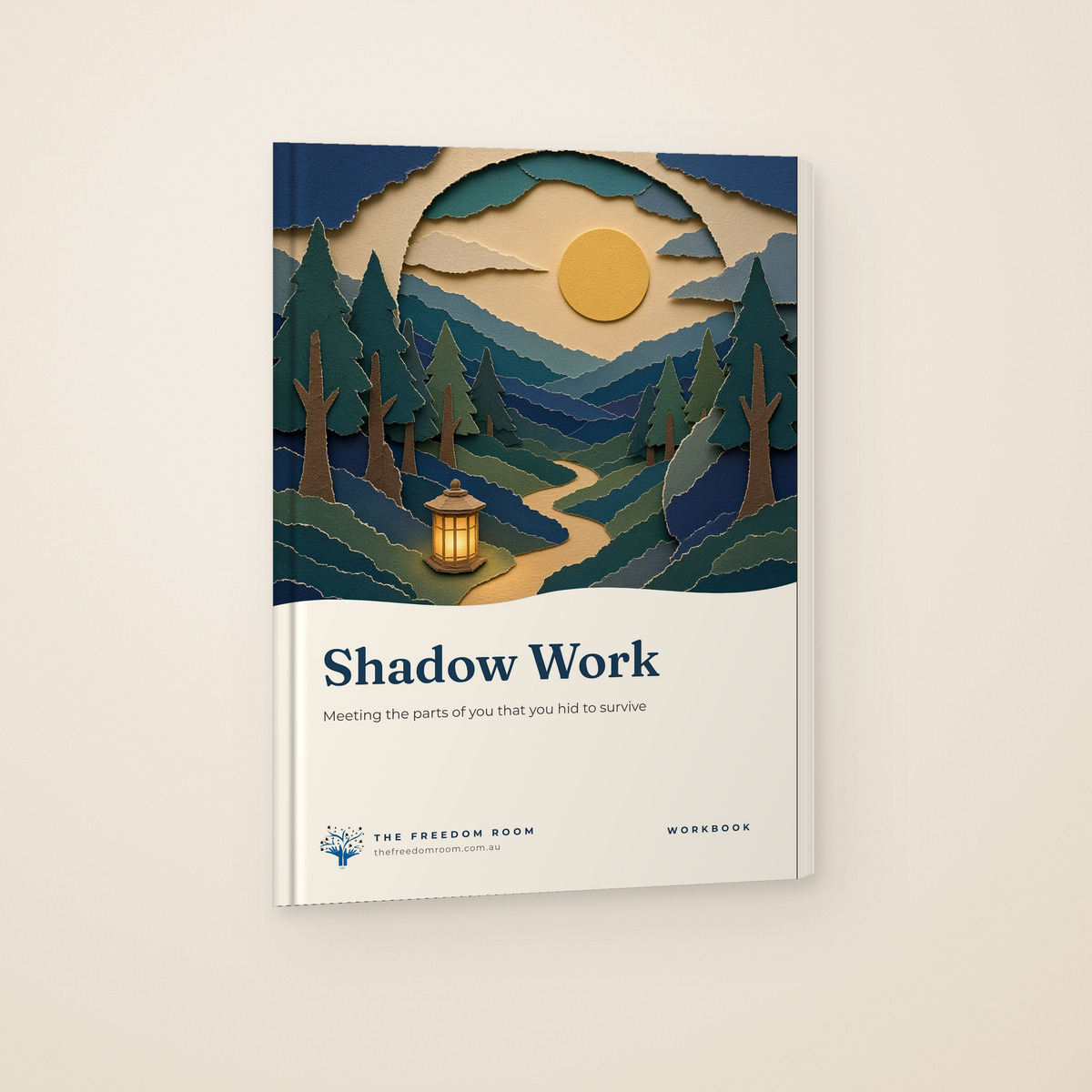
This workbook is for you if some part of you already knows that putting the drink down was only the beginning. Maybe you’ve been sober a while and old patterns are still running the show. Maybe you’ve only just stopped, and you’re noticing feelings you used to drink over. Maybe you keep repeating the same argument, the same shutdown, the same shame, and you can’t work out why.
This workbook is about the parts of you that you hid in order to get through. We call that the shadow. It isn’t a dark, dramatic idea, and it isn’t about deciding that you’re a bad person. It’s about the traits, feelings and needs that weren’t welcome at some point in your life, so you learned to tuck them away. Anger. Neediness. Softness. Ambition. The wish to be looked after. The wish to take up space.
Those hidden parts don’t disappear. They show up in recovery as patterns: the critic in your head, the urge to pull away, the need to get everything right, the way you reach for something to take the edge off when a feeling gets too close. Shadow work can help you understand why certain feelings still knock you sideways, and it can help you treat yourself with a bit more honesty and kindness. The shadow isn’t the enemy. It’s the part of you that learned to survive.
This workbook is for anyone in recovery, whether you stopped last week or years ago. You do not need to have done a program with us first, and you don’t need a dramatic story. Ordinary lives have shadows too. You can use Shadow Work on its own, or alongside the other Freedom Room workbooks.
What’s inside
There are ten modules. Each one has some teaching, practical exercises, questions to write in, and one small action to take:
- What the shadow is
- How your shadow was formed
- Recognising your patterns
- Attachment and closeness
- Old wounds
- The ways you learned to cope
- Meeting your younger self
- Bringing the parts home
- Moving forward
- A fortnight of writing
The modules build on each other, so it helps to go in order if you can. You don’t have to go into the deepest material. A small, ordinary example is often the best place to start. If a memory feels like too much, stop. Write about the feeling in the present, not the whole story from the past. This is not a substitute for trauma therapy. If you have a counsellor or psychologist, this workbook can sit alongside that work.
How you get it
After you order, you’ll receive an instant PDF download. It’s yours to keep, so you can save it, print it, and work through it at home at your own pace.
If you’d like to talk anything through, you can call The Freedom Room on (07) 3325 1531.

Reviews
There are no reviews yet.