

What Empowerment in Recovery Really Means
Empowerment in recovery is the process of reclaiming control over your life after addiction has diminished your sense of agency. It transforms you from a passive recipient of treatment into an active participant who drives your own healing journey.
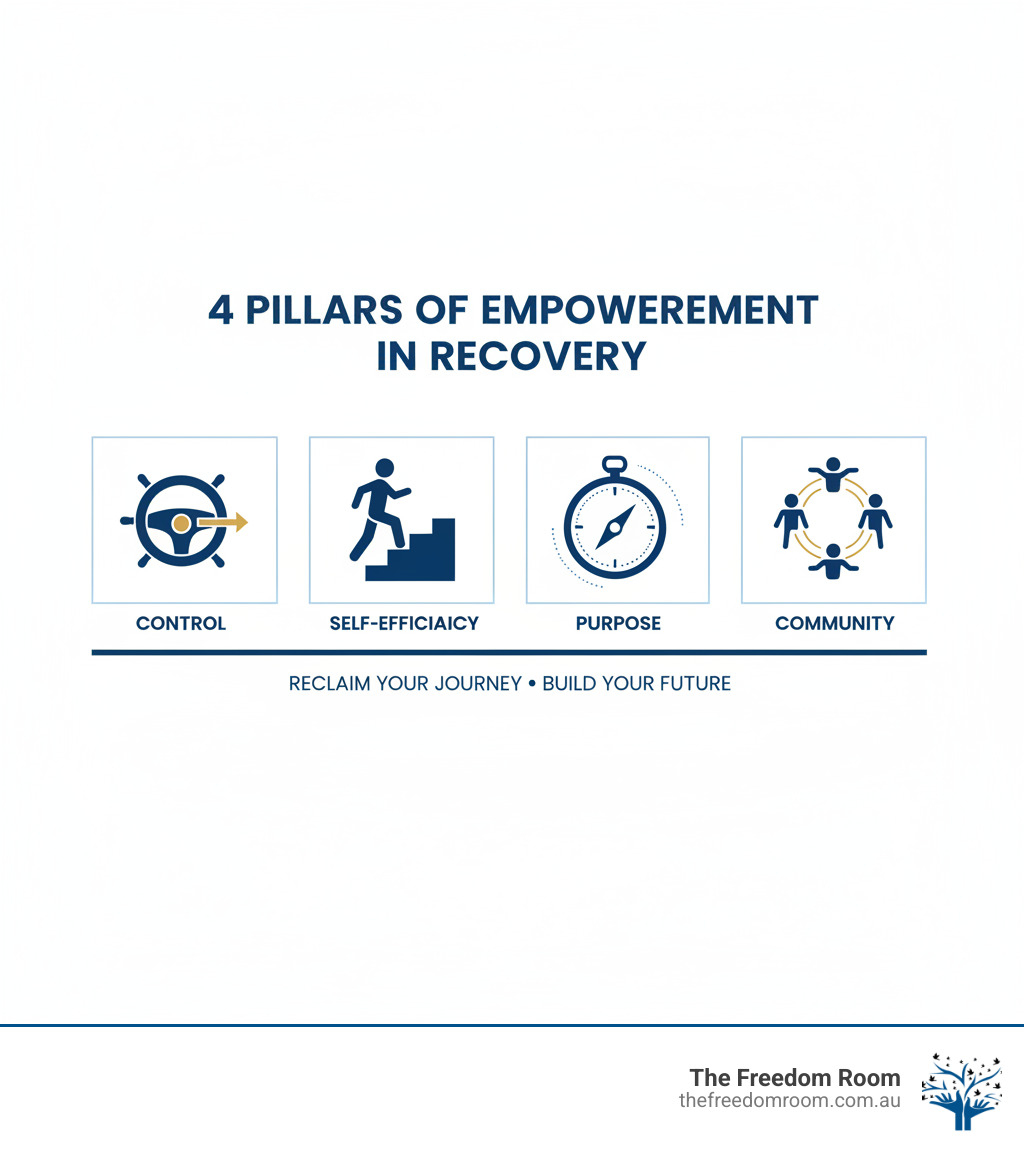
Key aspects of empowerment in recovery include:
- Taking control – Making informed decisions about your treatment and life choices
- Building self-efficacy – Developing confidence in your ability to overcome challenges
- Finding purpose – Finding meaning and direction beyond addiction
- Creating connections – Building supportive relationships that reinforce your recovery
Research shows empowerment-oriented care is more effective than traditional models. Studies indicate that 58% of people with addiction eventually recover, with empowerment playing a crucial role.
Addiction can make you feel powerless by impairing your ability to make sound decisions. This powerlessness is a challenging aspect of the experience.
The shift to empowerment-based recovery is a fundamental change. Instead of viewing you as someone to be “fixed,” this approach recognises your inherent strengths and capacity for growth. It acknowledges that lasting recovery happens when you direct your own healing process.
This approach does not minimise the seriousness of addiction or suggest willpower alone is sufficient. Instead, it provides the tools, support, and environment needed to rebuild your personal agency while addressing the underlying causes of your addiction.
Understanding the Core of Empowerment in Recovery
When you’re struggling with addiction, it can feel like you’ve lost yourself and are just a passenger in your own life. This is where empowerment in recovery becomes crucial; it’s about finding your way back to the driver’s seat.
What is Empowerment in the Context of Addiction Recovery?
Empowerment in recovery is about reclaiming your ability to make meaningful choices about your life and treatment. It is the process of moving from feeling overwhelmed by addiction to actively participating in your own healing.
Addiction strips away your sense of agency, leading to decisions you never thought you would make. This powerlessness is one of an addiction’s most devastating aspects.
True empowerment means taking control of your recovery, making informed decisions about treatment, regaining your personal agency, and moving beyond the helplessness that addiction creates. Self-empowerment is a gradual but effective approach that encourages self-finding, confidence, and independence. At The Freedom Room, we believe genuine healing begins when you are empowered to direct your own recovery.
For more comprehensive information on this journey, explore our detailed guide on Addiction Recovery.
The Shift from Traditional to Empowerment-Based Models
Addiction treatment has changed dramatically. Traditional approaches often positioned you as a passive recipient of care, with professionals making most decisions. This ‘top-down’ model focused on your deficits and problems. While well-intentioned, this could foster the very powerlessness addiction creates.
Modern, holistic approaches use a different philosophy. We see you as a complete person with needs, strengths, and potential. This client-as-partner model transforms you into an active collaborator.
This strengths-based perspective focuses on your capabilities, not just your problems. It involves collaborative care where you participate in your treatment plan. This approach respects your autonomy and recognises that lasting change happens when you feel empowered to create it.
You can learn more about the philosophical foundations of this approach through an overview of the strengths perspective.
Why Empowerment is Crucial for a Successful Recovery
Empowerment is a practical necessity for lasting recovery. When you feel empowered, you become more engaged in your treatment, more likely to follow through with recovery plans, and develop the resilience to handle challenges without relapsing. This creates a powerful sense of ownership over your journey.
Research strongly supports this approach. Studies show empowerment-oriented care is more effective, with statistics revealing that 58% of people with addiction eventually achieve recovery, with empowerment playing a pivotal role.
These numbers represent real people who reclaimed their lives by developing the confidence and tools to sustain sobriety. The recovery journey can span decades, which underscores why an empowering framework for long-term wellbeing is so essential. When empowered, you are not just avoiding relapse; you are actively building a life that makes sobriety feel rewarding.
For a deeper understanding of this journey and how empowerment fits into the broader picture of recovery, explore our comprehensive Guide to Addiction Recovery.
Practical Strategies for Cultivating Empowerment
Building empowerment in recovery involves taking concrete steps to reclaim control over your life. These practical strategies strengthen your resilience, deepen self-awareness, and provide tools to support your sobriety.

The Role of Therapy in Building Empowerment
Therapy creates a safe foundation to explore addiction’s underlying causes while developing skills to steer life without substances. At The Freedom Room, we use two effective approaches to build your personal power.
Cognitive Behavioural Therapy (CBT) is based on the principle that your thoughts, feelings, and behaviours are connected. This collaborative approach puts you in control of your recovery. Through CBT, you learn to:
- Recognise distorted thinking patterns that create problems.
- Re-evaluate these thoughts against reality.
- Understand your motivations and those of others.
- Build confidence in your problem-solving abilities.
- Face fears and learn relaxation techniques to manage stress.
Emotional Freedom Techniques (EFT), or ‘tapping,’ offers a gentle way to process emotions that may drive addiction. This evidence-based approach helps release fear, anger, and worry without reliving trauma. EFT involves tapping on acupressure points while focusing on distressing thoughts, which sends calming signals to the brain’s alarm system. This disrupts the fight, flight, or freeze response. EFT is a safe technique, and sessions typically leave you feeling better as negative emotions are cleared.
Both approaches empower you with practical tools for independent use, reinforcing your ability to manage your own wellbeing.
Learn more about EFT and CBT therapy and how these approaches can support your journey.
Setting Meaningful Goals and Practising Patience
Goal setting turns hopes into concrete steps. Setting meaningful goals means you are actively creating your future, which is central to empowerment in recovery. Effective goals follow the SMART framework: Specific, Measurable, Achievable, Relevant, and Time-bound.
Short-term wins, like attending three support meetings, build momentum and prove change is possible. Your long-term vision, such as career or relationship goals, keeps you motivated.
Celebrating progress, no matter how small, reinforces positive change. Recovery is a marathon, not a sprint, so practising patience with yourself during setbacks is essential. Each challenge is a learning opportunity, not a failure.
This patient, goal-oriented approach is fundamental to Rebuilding Your Life After Addiction.
Developing Healthy Coping Mechanisms
Healthy coping mechanisms replace the role substances played in managing stress and difficult emotions. Developing these skills is crucial for empowerment in recovery as they provide alternatives when cravings arise.
- Mindfulness helps you stay present and observe thoughts without reacting, creating a pause where you can choose a different path.
- Exercise, like walking or swimming, is a natural mood booster and stress reliever that improves sleep and reduces anxiety.
- Creative outlets such as writing or painting provide healthy ways to express emotions and build self-esteem.
- Stress management techniques like deep breathing or meditation help calm your nervous system before overwhelm takes hold.
The key is finding coping mechanisms that resonate with you. Empowerment comes from building your own toolkit of healthy responses.
For practical guidance, explore our Mindfulness for Addiction Recovery Tips. You’ll also find strategies in our guide to Healthy Coping Mechanisms.
Building a Foundation of Self-Belief and Purpose
True empowerment in recovery goes beyond avoiding substances. It requires deep internal work to rebuild your self-worth and find a renewed purpose that makes sobriety genuinely fulfilling. When addiction has been central to your life, recovery can leave you wondering who you really are.
The Link Between Empowerment, Self-Confidence, and Self-Efficacy
Self-efficacy is your belief in your ability to handle challenges and achieve goals. In recovery, this belief is rebuilt through small successes that gradually restore your faith in yourself.
Each time you manage a craving, attend a therapy session, or reach out for support, you prove you can handle difficult situations. These moments are profound acts of self-empowerment. As your confidence grows, it creates a positive cycle: you feel more capable, take on new challenges, and achieve more success, which builds even greater confidence.
Breaking the cycle of self-doubt from addiction takes time and patience. Fostering a positive self-image means recognising you are not defined by your addiction, but by your courage to seek recovery and your commitment to growth. This internal shift is fundamental to lasting change.
For deeper insights into this transformative process, explore our guide on Personal Growth in Recovery.
Finding Purpose and Meaning Beyond Addiction
A profound part of empowerment in recovery is finding what truly matters to you beyond addiction. When substances have been your focus, recovery can initially feel like a void that needs filling.
- Finding new passions involves refinding old interests or exploring new ones. This could mean volunteering in your community, which can provide a deep sense of fulfilment.
- Career goals can gain new significance with the clarity recovery brings. Returning to study or changing careers becomes possible as recovery opens doors addiction closed.
- Reconnecting with core values like family, creativity, or health becomes possible. These values become your compass, guiding you to build an authentic life.
Creating a life worth staying sober for is a powerful motivator. When your days are filled with joy, connection, and inspiring goals, sobriety becomes about what you are gaining. This journey of refinding purpose is not always straightforward. Remain open to new experiences and be patient with the process of self-finding.
To explore how fulfilling life in recovery can be, visit our page on The Joys of Sobriety.
The Power of Connection: Support Systems and Empowerment
Recovery is not a solo journey. The connections you build with family, friends, and your community form the backbone of lasting empowerment in recovery, providing encouragement and understanding when challenges arise.

How Family and Friends Can Foster Empowerment in Recovery
Your family and friends are powerful allies in your recovery. For them to support you effectively, they must balance care with healthy boundaries.
- Encouragement versus enabling is a crucial distinction. Empowerment happens when loved ones support your responsibility, celebrating achievements while allowing natural consequences. Enabling involves shielding you from those consequences.
- Setting healthy boundaries protects everyone. They ensure support promotes healing and respect, not unhealthy dependency.
- Open communication is the foundation for meaningful support. Honest discussions about feelings and challenges build trust and help everyone understand what support is most effective.
- Celebrating milestones together amplifies your achievements and reinforces positive behaviour, building your confidence.
For guidance on nurturing these important relationships, explore our insights on Healthy Relationships in Recovery.
The Role of Peer and Community Support
Connecting with others who understand your journey creates a unique form of empowerment in recovery. Peer support offers a deep understanding from shared experience that even the most caring family cannot provide.
Shared experience is the foundation of peer support. Connecting with others who have faced similar struggles creates a sense of belonging, validates your experiences, and fosters hope. In these environments, mutual understanding thrives, and you can share challenges without fear of judgment.
Being part of a supportive community naturally helps with reducing isolation, which can be a relapse trigger. Accountability also emerges organically as members support each other’s goals.
Resource groups are a particularly effective form of community support. Research demonstrates that these groups lead to significant increases in self-reported empowerment, quality of life, and treatment satisfaction compared to traditional approaches. The empowerment model helps individuals overcome powerlessness and isolation by finding their voice and shaping their recovery.
You can learn more about the research supporting this approach in the study on the Effectiveness of Resource Groups for Improving Empowerment.
The Long-Term Benefits of an Empowered Recovery
Committing to an empowerment-focused recovery means choosing a transformed way of living. The benefits extend far beyond sobriety, creating positive ripple effects in every area of your life.

Sustaining Sobriety and Preventing Relapse
Empowerment in recovery is your strongest defence against relapse. It builds the resilience and inner strength to handle life’s challenges without turning to alcohol.
Empowerment sharpens your decision-making. You learn to pause and choose responses aligned with your goals, shifting from reactive to proactive thinking. This helps you anticipate and manage difficulties before they become overwhelming. Empowerment also encourages you to accept new experiences, step outside your comfort zone, and build a fresh, alcohol-free life away from old, risky patterns.
This proactive approach creates a powerful foundation for long-term recovery. For practical guidance, explore our resources on Staying Sober After Rehab and find comprehensive Relapse Prevention Strategies.
Enhancing Overall Well-being
The transformative power of empowerment in recovery improves your physical, mental, and emotional health. As you take control, you will notice profound and widespread improvements.
- Your mental and physical health flourish with healthier choices. Anxiety becomes more manageable, sleep improves, and energy increases.
- Stronger relationships develop as you become more self-aware and confident. The communication skills gained in recovery help you connect authentically.
- Your life satisfaction grows as you pursue goals aligned with your values. Each achievement contributes to a sense of fulfilment.
- You develop a renewed sense of self beyond your relationship with alcohol. You see yourself as capable and resilient, not defined by past struggles.
These improvements reflect our belief in nurturing your entire being. Find more about prioritising your overall well-being on our Take Care of Yourself page.
Ready for Change? Let’s Build a Stronger, Alcohol-Free Future Together
We’ve explored how empowerment in recovery transforms lives from the inside out. It’s about reclaiming your voice, rebuilding confidence, and finding the strength you always had.
Empowerment shifts you from feeling powerless to becoming the author of your own story. Modern, holistic approaches honour your strengths, while therapies like CBT and EFT provide tools to change thought patterns and process emotions. Meaningful goals become your roadmap, and healthy coping mechanisms provide alternatives to life’s challenges. Recovery flourishes within connection, through family, peer, and community support.
The long-term benefits are clear. Empowerment in recovery helps you build a fulfilling life you want to protect. Greater resilience, better decision-making, and improved wellbeing become your new reality.
At The Freedom Room, our team understands this journey because we have lived experience. We offer compassionate, evidence-based treatment through personalised sessions, workshops, and therapy designed to empower you. We believe true healing happens when you direct your own recovery, supported by people who genuinely understand.
Recovery is about becoming who you were always meant to be. If you’re ready to choose an empowered recovery journey, we’re here to walk alongside you.
Explore our affordable addiction treatment services today and find the support you need for a lasting, successful recovery.