

Understanding How to Support Someone Facing Alcohol Addiction
Knowing how to help alcoholic loved ones can feel overwhelming, but your support can make a significant difference. Watching someone struggle is difficult, and you may feel helpless or frustrated. However, it is important to remember that recovery is possible.
This guide provides practical steps for offering meaningful support. We will cover how to recognise the signs, have compassionate conversations, find treatment options, and care for yourself during the process.
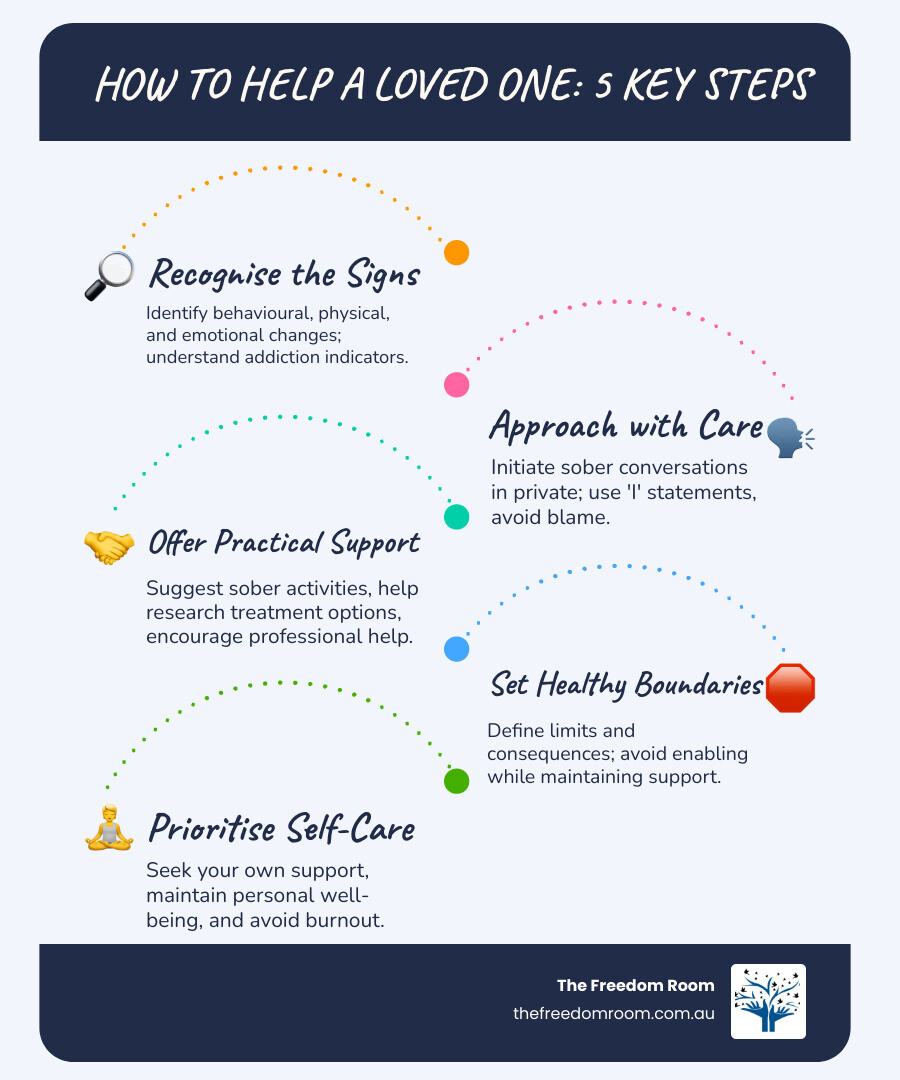
Key Steps to Help Someone with Alcohol Addiction:
- Recognise the signs: Look for behavioural, physical, and emotional changes.
- Choose the right moment: Talk when they are sober in a private, calm setting.
- Communicate with care: Use ‘I’ statements and listen without judgement.
- Offer practical support: Help research treatment and suggest alcohol-free activities.
- Set healthy boundaries: Avoid enabling behaviour while remaining supportive.
- Encourage professional help: Connect them with counselling or treatment programmes.
- Care for yourself: Seek your own support through therapy or trusted friends.
Support is not about forcing change. It is about creating an environment where recovery is possible by showing empathy, setting boundaries, and connecting your loved one with professional help when they are ready.
Recognising the Signs and Understanding the Impact
Identifying that a loved one may be struggling with alcohol is the first step in learning how to help an alcoholic. The signs can be subtle and emerge gradually, making them easy to dismiss.
Changes may appear in their behaviour, such as missing work or avoiding family. You might notice physical signs like bloodshot eyes or unexplained bruises, or emotional shifts including irritability and mood swings. Our article on Signs of Alcohol Addiction explores these indicators in more detail.

Alcohol Use Disorder (AUD) is a medical condition defined by specific criteria. Key warning signs include:
- Drinking more or for longer than intended.
- Unsuccessful attempts to cut down.
- Spending significant time drinking or recovering.
- Experiencing strong cravings.
- Neglecting responsibilities at home, work, or school.
- Continuing to drink despite it causing problems.
- Developing tolerance or experiencing withdrawal symptoms.
It is important to distinguish between alcohol misuse, which is a pattern of harmful drinking, and Alcohol Use Disorder (AUD), a medical condition. AUD exists on a spectrum from mild to severe, based on the number of criteria met.
Long-term heavy drinking can lead to serious health consequences, including liver damage, heart problems, brain function deterioration, and an increased risk of cancer. Risk factors for AUD include genetics, a family history of alcohol problems, childhood trauma, and co-occurring mental health conditions.
In Australia, alcohol is the most common substance for which people seek treatment, particularly those aged 40 and over. Recognising the signs is the essential first step in offering meaningful support.
How to Approach a Loved One About Their Drinking
Starting a conversation about someone’s drinking requires careful thought to ensure they feel supported, not attacked. The goal is to open a door for communication.
Timing is crucial. Choose a moment when the person is sober and you are in a private, calm setting. This allows for a clear and honest discussion.
How you speak makes a significant difference. Use ‘I’ statements to express concern without placing blame. For example, say, “I feel worried when I see how much you’re drinking,” instead of, “You’re drinking too much.” Having specific examples of concerning behaviour can make the issue harder to dismiss.
Active listening is just as important as speaking. Try to understand their perspective without judgement, even if you disagree. If they become defensive or the conversation gets heated, it is better to step back and try again later. Our guide on How to Help Someone with Alcohol Addiction offers more strategies.
Many people need several gentle conversations before they are ready to acknowledge a problem. Patience, consistency, and healthy boundaries create the foundation for change. Keep the door open, letting them know you are there when they are ready.
How to Help an Alcoholic: Practical Steps for Support
Once communication is open, practical support can empower your loved one toward healthier choices. This support should be constructive, not enabling.

Practical help can remove barriers to recovery. Consider these steps:
- Offer practical assistance: Drive them to appointments or help research treatment options like Addiction Counselling or other Alcohol Addiction Help.
- Create a supportive environment: Remove alcohol from shared spaces and suggest sober activities like a walk or a coffee catch-up.
- Set healthy boundaries: This is crucial for your wellbeing and their recovery. Define clear limits and consequences for unacceptable behaviour related to drinking.
- Avoid enabling: Do not make excuses for them or provide financial support that could facilitate drinking. Enabling shields them from the natural consequences of their actions.
Family Alcohol Counseling can help everyone learn healthier ways to interact and present a unified approach, which strengthens the recovery environment.
How to help an alcoholic who is resistant to change
Resistance and denial are often symptoms of addiction. When faced with resistance, patience is key. It can be helpful to involve other family members to present a united front of concern. A formal intervention, guided by a professional, can also be effective.
Focus on allowing them to experience the natural consequences of their actions, rather than shielding them. Most importantly, maintain your boundaries consistently. This sends a clear message that your support is contingent on healthy engagement, not enabling.
Navigating Treatment Options and the Recovery Journey
When a loved one is ready for help, understanding the treatment options is the next step. A variety of effective, evidence-based treatments are available. Our page on Alcohol Use Disorder Treatment offers a detailed guide.
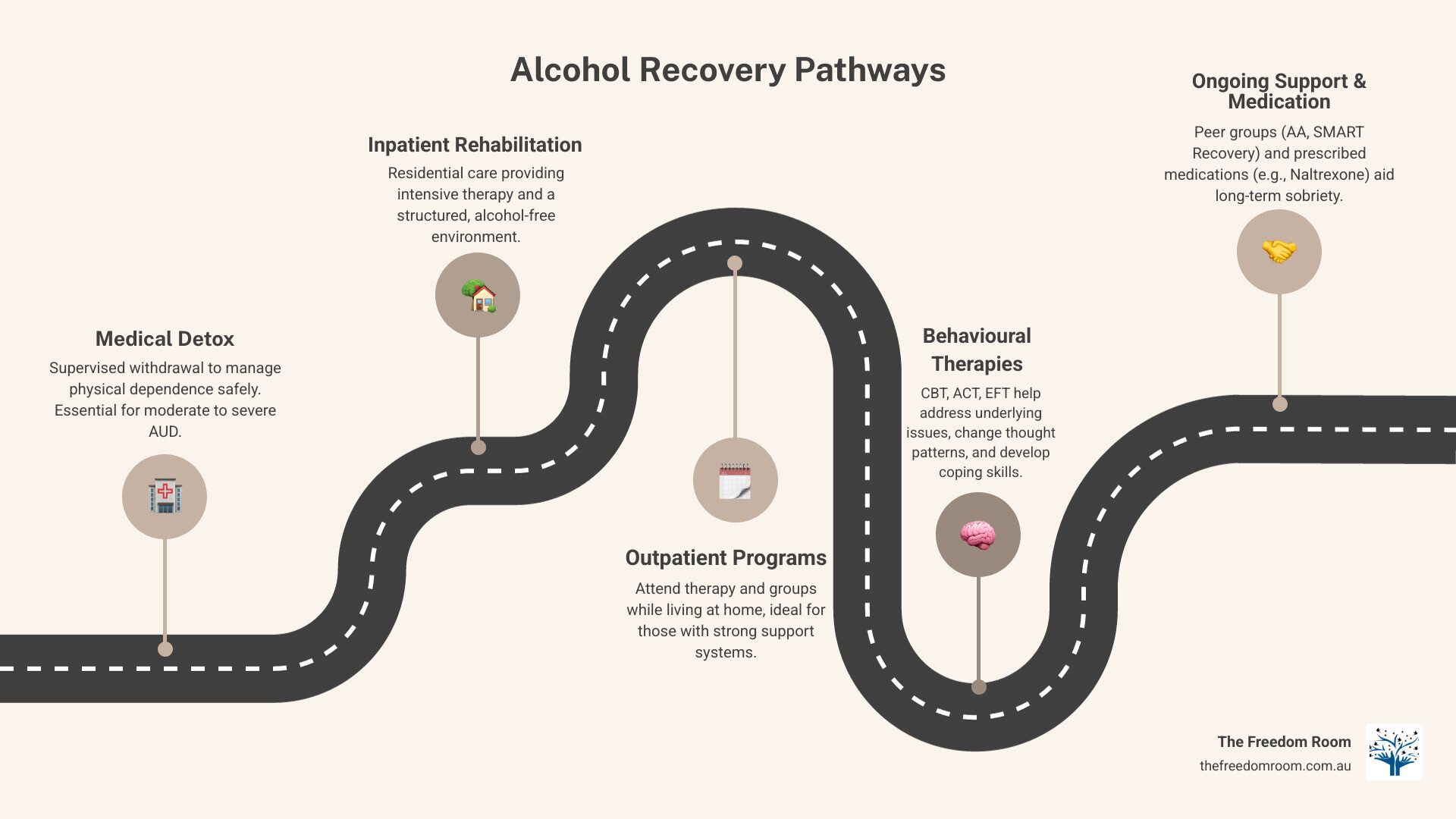
For many, treatment begins with medically supervised detox, as alcohol withdrawal can be dangerous. Following detox, options include inpatient rehabilitation for intensive, residential support or outpatient programmes that allow individuals to live at home while attending therapy. For those in Queensland, facilities like Alcohol Rehab Brisbane offer local options.
Therapy for Alcohol Addiction is a core component of recovery. Effective approaches include:
- Cognitive Behavioural Therapy (CBT) for Alcoholism
- Acceptance and Commitment Therapy (ACT)
- Emotional Freedom Technique (EFT)
Peer support groups like Alcoholics Anonymous (AA) and family groups like Al-Anon provide invaluable connection and understanding. Medications can also play a crucial role alongside therapy to reduce cravings and support abstinence. Treatment in Australia is guided by principles that ensure care is person-centred and evidence-informed, as outlined in the National Framework for Alcohol, Tobacco, and other Drug Treatment 2019-2029.
How to help an alcoholic during their recovery journey
Recovery is a long-term process, and setbacks can happen. It is not a sign of failure but an opportunity to adjust the recovery plan. Our guide on Addiction Recovery provides further insight.
Support your loved one by helping them identify triggers, celebrating milestones, and maintaining your belief in their ability to recover. Encourage the use of Healthy Coping Mechanisms and practices like Mindfulness for Addiction Recovery. Your consistent patience and encouragement are vital.
Supporting Yourself: The Importance of Self-Care
Supporting a loved one through addiction is emotionally and physically taxing. The stress and anxiety can lead to burnout, so it is crucial to remember that your own self-care is not selfish; it is essential.

The emotional toll can be profound. Many people find themselves neglecting their own needs while focusing entirely on how to help alcoholic loved ones. This pattern of self-neglect diminishes your capacity to provide support over time.
To sustain your ability to help, it is vital to seek your own support. Consider these strategies:
- Connect with others: Peer support groups for families, such as Al-Anon or SMART Recovery Family & Friends, offer a safe space to share experiences.
- Access therapy: A therapist can help you manage stress, set boundaries, and maintain your own mental health.
- Maintain your own life: Continue to engage in hobbies, friendships, and activities you enjoy to prevent isolation and maintain your sense of self.
- Prioritise fundamentals: Ensure you get adequate sleep, eat well, and exercise regularly. Develop Healthy Coping Mechanisms like mindfulness or journaling to manage stress.
You cannot pour from an empty cup. Taking care of yourself ensures you have the strength and clarity to continue supporting your loved one on their recovery journey.
Ready for Change? Let’s Build a Stronger, Alcohol-Free Future Together
Supporting someone through alcohol addiction is a challenging journey filled with hope. We have covered how to recognise the signs, communicate with care, offer practical support, steer treatment, and maintain your own wellbeing.
The key message is that your support is invaluable, but it works best alongside professional help and self-care. Recovery is not just a hope but an achievable reality. A fulfilling, alcohol-free life is within reach.
At The Freedom Room, our team brings lived experience to every interaction, offering compassionate and personalised support. We understand the challenges individuals and families face and provide an environment where healing is fostered.
If you are ready to take the next step for yourself or a loved one, we are here to walk alongside you. Building a healthier future begins with a single decision to reach out.
Explore our affordable addiction treatment services and find out how we can support you in creating lasting change.
Frequently Asked Questions About Helping Someone with Alcoholism
What should I do if my loved one refuses to admit they have a problem?
Denial is a common symptom of addiction. Instead of trying to force a label on them, focus on expressing your concerns using ‘I’ statements about how their behaviour affects you. For example, “I feel frightened when you drive after drinking.”
It is also essential to maintain firm, healthy boundaries. Avoid enabling their behaviour by shielding them from the natural consequences of their actions. Continue to offer support and have resources ready for when they are open to help. Patience and consistency are key.
Can I force someone to go to rehab in Australia?
Involuntary treatment laws in Australia vary by state and territory. They are typically reserved as a last resort for situations where the person poses an immediate and serious risk of harm to themselves or others. This is a complex legal process and not the preferred first step.
Most treatment frameworks prioritise voluntary engagement. However, research shows that treatment does not need to be voluntary to be effective. If you are considering this path, it is essential to seek professional legal and addiction advice specific to your location.
What’s the difference between a slip and a full relapse?
A slip is a brief, one-time return to drinking that is quickly corrected. A full relapse is a more significant return to old, harmful patterns of drinking. It is crucial to understand that neither is a failure. Both are common occurrences in recovery and should be viewed as learning opportunities.
When a setback occurs, the focus should be on reviewing and adjusting the recovery plan. This might involve identifying new triggers or strengthening coping strategies. Respond with compassion, not judgement, to help your loved one get back on track.