

Why Mental Health Matters for Your Overall Well-being
How to improve mental health is one of the most important questions you can ask yourself. Mental health encompasses your emotional, psychological, and social well-being – it affects how you think, feel, and act in daily life.
Quick ways to improve your mental health today:
- Get quality sleep – Aim for 7-9 hours with a consistent bedtime routine
- Move your body – Just 30 minutes of walking can boost your mood
- Connect with others – Spend quality time with supportive friends or family
- Practice mindfulness – Take 5-10 minutes to focus on the present moment
- Eat nutritious foods – Include mood-boosting nutrients like omega-3s and whole grains
- Limit alcohol and substances – These can worsen anxiety and depression
- Practice gratitude – Write down three things you’re thankful for each day
- Learn something new – This builds confidence and creates a sense of purpose
- Help others – Acts of kindness release feel-good hormones
- Seek professional help – When symptoms persist for more than two weeks
Mental health is not just the absence of mental illness. It’s about feeling capable, resilient, and able to cope with life’s challenges. Research shows that good mental health helps you handle stress, relate to others, make healthy choices, and reach your full potential.
The connection between mental and physical health is undeniable. Poor mental health can increase your risk of physical health problems, while caring for your mental well-being can improve your overall quality of life.
Taking small, consistent steps towards better mental health creates lasting change. Whether you’re dealing with stress, anxiety, depression, or simply want to feel more balanced, the strategies in this article will help us build a stronger foundation for our well-being.
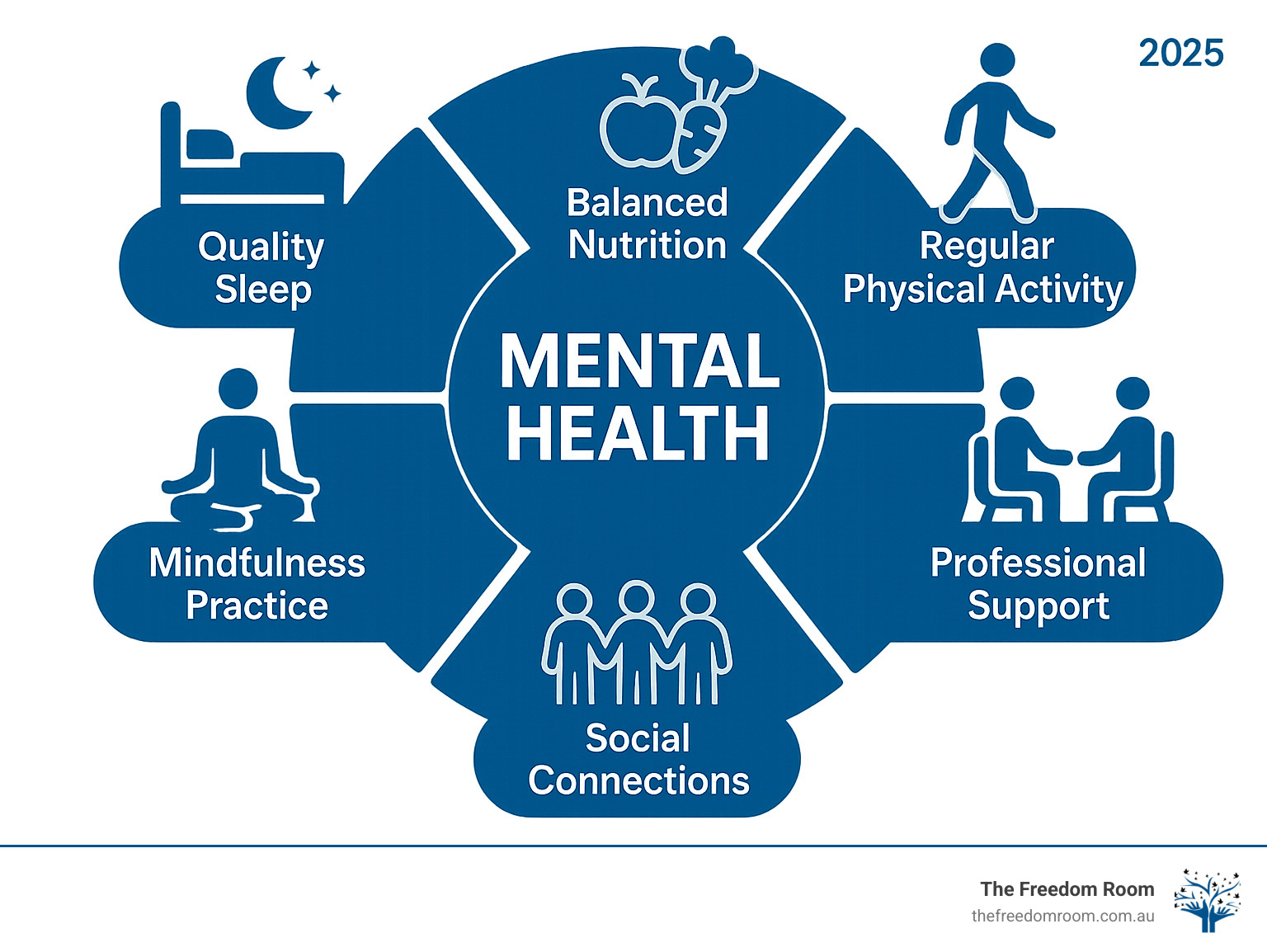
How to improve mental health glossary:
Foundational Pillars: The Mind-Body Connection
Your mental and physical health work together like dance partners – when one moves, the other follows. Understanding how to improve mental health starts with recognising this powerful connection. When you nurture your body through quality sleep, proper nutrition, and regular movement, your mind responds with greater resilience, clarity, and emotional balance.
The beauty of focusing on these foundational elements is that small, consistent changes can create profound shifts in how you feel each day. Let’s explore how these three pillars can transform your mental wellbeing.
Prioritise Quality Sleep for Mental Resilience
Sleep is your brain’s nightly maintenance. While you rest, your mind processes experiences, consolidates memories, and clears out mental clutter. Inadequate sleep can leave you feeling foggy, irritable, and emotionally fragile.
Sleep deprivation affects your mood regulation. Even one night of poor sleep can make stressors feel overwhelming and increase anxiety or depression symptoms. This can create a difficult cycle where poor sleep worsens mental health, which in turn makes quality sleep more elusive.
Improving sleep hygiene doesn’t require dramatic changes. Start with a consistent schedule by going to bed and waking up at similar times daily, even on weekends. This helps regulate your natural sleep-wake cycle, making it easier to fall asleep and wake up.
Your bedroom environment plays a crucial role too. Keep your space cool (around 16°C to 18°C), dark, and quiet. Consider your bedroom a sanctuary for rest – remove work materials, limit screen time before bed, and create a calming atmosphere that signals to your brain it’s time to wind down.
Small adjustments like avoiding caffeine after midday and limiting alcohol consumption can significantly improve your sleep quality. Alcohol might make you feel drowsy initially, but it often disrupts your sleep cycles later in the night.
Quality sleep is one of the most powerful tools for building mental resilience. For more comprehensive strategies on nurturing yourself, explore our guide on taking care of yourself.
Fuel Your Mind with a Balanced Diet
Your brain is an energy-hungry organ, and the quality of fuel you provide directly influences your thoughts, moods, and ability to cope with stress. Nutrition and brain health are intimately connected; what you eat today affects how you feel tomorrow.
Mood-boosting foods provide essential nutrients for neurotransmitters like serotonin and dopamine. Foods rich in omega-3 fatty acids (e.g., salmon, walnuts) support brain cell integrity and mood. Complex carbohydrates from whole grains provide steady energy and can have a calming effect.
Fresh fruits and vegetables supply antioxidants that protect your brain from oxidative stress, while lean proteins provide amino acids necessary for neurotransmitter production. The Mediterranean-style eating pattern, rich in these whole foods, has been consistently linked to better mental health outcomes.
Hydration deserves special attention in your mental health toolkit. Even mild dehydration can impair concentration, increase anxiety, and affect your mood. Aim for at least eight glasses of water daily, and notice how your mental clarity improves when you’re properly hydrated.
Be mindful of substances that can undermine your mental wellbeing. Excessive caffeine can increase anxiety and disrupt sleep, while alcohol – though it might seem to provide temporary relief – often worsens anxiety and depression symptoms over time. Refined sugars can create energy spikes followed by crashes that leave you feeling irritable and unfocused.
Making gradual changes to your eating patterns is more sustainable than dramatic overhauls. Start by adding one serving of vegetables to your meals or swapping processed snacks for nuts and fruits. For comprehensive nutrition guidance, visit Eat Well for evidence-based recommendations.
Move Your Body to Boost Your Mood
Physical activity is perhaps nature’s most effective antidepressant. When you move your body, you trigger the release of endorphins – natural chemicals that create feelings of happiness and euphoria. But the mental health benefits of exercise extend far beyond this immediate mood boost.

Regular movement provides powerful stress reduction by lowering cortisol levels and providing a healthy outlet for tension and frustration. It also improves sleep quality, increases self-confidence, and offers a sense of accomplishment that builds resilience over time.
The good news is you don’t need intense gym sessions to see benefits. Research shows that just 30 minutes of daily exercise, like a brisk walk, can significantly improve mood and reduce symptoms of anxiety and depression. Some studies even suggest regular walking can be as effective as medication for mild to moderate depression.
Find activities that bring you joy, so exercise doesn’t feel like a chore. Dancing, gardening, swimming, or hiking in local bushland are all beneficial. The key is consistency over intensity.
Consider exercise as a form of moving meditation. When you focus on the rhythm of your steps, the feeling of fresh air on your skin, or the satisfaction of physical challenge, you’re practising mindfulness while strengthening your body.
Start small and build gradually. If 30 minutes feels overwhelming, begin with 10-minute walks and increase the duration as your fitness improves. The goal is to create a sustainable habit that improves your mental wellbeing rather than adding stress to your life.
These three foundational pillars work synergistically – better sleep improves your food choices, good nutrition provides energy for exercise, and regular movement improves sleep quality. By nurturing the mind-body connection through these essential practices, you’re building a strong foundation for lasting mental health improvements.
How to Improve Mental Health with Mindful Practices
Beyond the physical foundations we’ve explored, our inner world of thoughts, emotions, and mental patterns plays an equally vital role in our wellbeing. How to improve mental health often comes down to developing a healthier relationship with our thoughts and feelings. Learning mindful practices gives us the tools to steer life’s ups and downs with greater ease and resilience.
Cultivate Presence with Mindfulness and Meditation
Mindfulness is simply the art of paying attention to the present moment without judgement. Rather than getting caught up in worries about tomorrow or regrets about yesterday, we learn to notice what’s happening right here, right now. This might sound simple, but in our busy world, it’s surprisingly powerful.
Regular mindfulness helps you notice your thought patterns more clearly. This awareness creates space between an event and your automatic reaction, giving you more choice in how you respond to challenges.
Starting a mindfulness practice doesn’t require hours or special equipment. Begin with just a few minutes each day, focusing on your breath or bodily sensations. Everyday activities like washing dishes can become mindful moments when you bring your full attention to them.
The beauty of mindfulness lies in its accessibility. Whether we’re sitting quietly in meditation or simply pausing to take three conscious breaths during a stressful day, we’re cultivating present moment awareness. This practice helps reduce stress, improve emotional regulation, and create a greater sense of calm in our daily lives.
For those interested in exploring these practices further, our Mindfulness and ACT approach offers additional insights into building this foundation.
Manage Stress with Healthy Coping Mechanisms
Life inevitably brings challenges, and how we respond to stress significantly impacts our mental health. Developing healthy coping mechanisms is essential for maintaining our wellbeing without relying on strategies that might provide temporary relief but create longer-term problems.
Understanding Our Stress Response
When we encounter stress, our brain’s amygdala – a small but powerful alarm system – triggers our body’s natural “fight, flight, or freeze” response. This ancient survival mechanism floods our system with stress hormones, preparing us to face danger. While this response serves us well in genuinely threatening situations, it can become overactive in our modern lives, reacting to everyday stressors or memories from the past.

Emotional Freedom Techniques (EFT)
One particularly effective approach for managing stress is Emotional Freedom Techniques (EFT), or ‘tapping’. This evidence-based tool involves gently tapping on specific acupressure points while focusing on a distressing thought or emotion. This process sends a calming signal to the brain’s alarm system (the amygdala), helping to reduce the ‘fight, flight, or freeze’ response.
EFT is not about suppressing emotions but gently processing them, helping to retrain our stress response over time. It can be beneficial for a range of issues, including addictions, anxiety, depression, trauma, and stress management. For those dealing with anxiety specifically, our guide on EFT Tapping for Anxiety Relief provides detailed support.
The Power of Journalling
Journalling is another powerful coping mechanism. Writing down thoughts and feelings helps process emotions, organise thinking, and gain perspective. Regular journalling can reduce stress and improve self-awareness by creating a safe space to explore your inner world, identify patterns, and find relief in expression. For deeper insights, explore The Healing Power of Journalling.
Reframe Negative Thoughts for a Positive Outlook
Our thoughts have tremendous power over how we feel and behave. When negative self-talk and unhelpful thought patterns take hold, they can perpetuate cycles of anxiety, low mood, and stress. Learning to reframe these thoughts is a crucial skill for cultivating a more positive mindset and improving our mental health.
Cognitive reframing involves catching negative or unhelpful thoughts and consciously shifting them into more balanced, realistic perspectives. This doesn’t mean ignoring genuine difficulties or forcing false positivity. Instead, it’s about approaching challenges from a more constructive angle.
The Process of Reframing
When you notice a negative thought, first identify it. Then, challenge its validity by asking if it’s 100% true and looking for evidence. Finally, replace the unhelpful thought with a more balanced one. For instance, reframe “I’m completely useless” to “I made a mistake, but I’m learning from this experience.” This shift offers a more compassionate and realistic perspective.
This practice builds resilience and empowers us to take greater control of our emotional responses. Over time, we become more skilled at catching unhelpful thought patterns before they spiral into overwhelming feelings. Incorporating Daily Recovery Affirmations into our routine can further support this positive mindset development.
By cultivating these mindful practices, we develop a stronger, more resilient relationship with our thoughts and emotions, creating a solid foundation for lasting mental wellbeing.
The Power of Connection and Purpose
Humans are inherently social beings, and our connections with others, along with a sense of purpose, form the bedrock of our mental well-being. These fundamental aspects of our lives can dramatically transform our happiness and resilience, particularly when we’re exploring how to improve mental health.
Strengthen Social Connections
The relationships we nurture play a profound role in our mental health. Spending quality time with loved ones, sharing our feelings, or helping others helps combat loneliness and builds a protective buffer for our well-being.
Strong social connections foster a deep sense of belonging, boost our self-worth through validation, create opportunities to share positive experiences, and offer crucial emotional support during challenges.

Building meaningful connections requires effort. Reach out regularly via calls, video chats, or meet-ups. When together, dedicate quality time by putting away distractions and engaging meaningfully.
Sometimes we need to expand our social circle. Joining groups or activities such as local clubs, volunteer organisations, or hobby groups introduces us to like-minded people who share our interests. Offering support to others not only strengthens our bonds but also provides us with a profound sense of purpose and connection.
This continuous process of building and maintaining relationships enriches our lives immeasurably. For deeper insights, explore Healthy Relationships in Recovery and learn more about how Friendships: Enrich Your Life and Improve Your Health.
Find the Benefits of Giving Back
Acts of giving and kindness have a powerful ripple effect. Research shows helping others triggers positive feelings and activates the brain’s reward system, making altruism a great tool for improving mental well-being.
When we contribute to others or our community, something remarkable happens. We find a genuine sense of purpose that provides meaning and direction to our lives. The act of giving releases feel-good hormones, fostering increased positive emotions and natural happiness. Knowing we’ve made a positive difference improves our self-worth and builds lasting confidence.
Perhaps unexpectedly, giving back also creates stronger social connections. Volunteering or helping neighbours often leads to new friendships and a greater sense of community belonging that enriches our social world.
The beauty of giving back lies in its simplicity. We might volunteer our time to a local charity, offer to help a friend with a challenging task, or perform small everyday acts of kindness like expressing genuine gratitude or offering heartfelt compliments. These actions represent practical, actionable steps we can take daily to improve our mental health.
Accept Lifelong Learning and Gratitude
Continuous growth through learning and gratitude creates a powerful foundation for mental well-being. Learning new skills boosts self-confidence and self-esteem, fostering purpose and creating connections with like-minded people.
Learning opportunities surround us daily. We might take on new responsibilities at work, explore creative hobbies like painting, music, or gardening, enrol in community courses or workshops, or dive into online tutorials to master DIY projects. Each new skill builds our confidence and opens doors to fresh perspectives.
Alongside learning, practising gratitude has been clearly linked with improved well-being, mental health, and overall happiness. Gratitude involves acknowledging and appreciating the positive aspects of our lives, even during challenging times.
Keeping a gratitude journal where we write down three things we’re thankful for each day creates a powerful daily practice. Expressing thanks directly to people in our lives strengthens relationships whilst lifting our spirits. Mindful appreciation of simple pleasures—like savouring a cup of tea or enjoying a walk in nature—helps us find joy in everyday moments.
These practices naturally shift our focus towards the positive, reframe our perspective, and build a more optimistic outlook on life. When we understand how to improve mental health through gratitude and learning, we create sustainable pathways to lasting happiness.
For deeper exploration of these transformative practices, we invite you to find our resources on Gratitude and Increase Your Happiness.
Knowing When and How to Seek Professional Support
While self-care strategies and lifestyle adjustments form a powerful foundation for mental wellbeing, there are times when professional support becomes essential. Understanding how to improve mental health includes recognising when we need additional help and knowing where to turn for it.
Seeking professional support is not a sign of weakness—it’s actually a demonstration of wisdom and self-compassion. Many of us hesitate to reach out, thinking we should be able to handle everything on our own. However, mental health professionals are trained to provide specialised tools and insights that can accelerate our healing journey in ways that self-help alone cannot achieve.
Recognising the Signs You Might Need Help
The signs you need professional support can be obvious or subtle. It’s important to trust your instincts when something feels wrong, even if you can’t pinpoint why.
Persistent symptoms lasting two weeks or more are a clear sign professional help could be beneficial. This includes ongoing sleep difficulty, significant appetite changes, or persistent sadness that doesn’t lift.
Changes in our daily functioning often signal that it’s time to seek support. When we find ourselves struggling to get out of bed due to our mood, losing interest in activities we once enjoyed, or having difficulty completing our usual daily tasks, these are important warning signs to acknowledge.
Emotional overwhelm can manifest as feeling stuck, increased irritability, or relying on alcohol or other substances to cope. These patterns suggest your current coping strategies may need professional reinforcement.
The most serious warning sign is having thoughts of harming ourselves or others. If this occurs, seeking immediate professional help is crucial and potentially life-saving.
Even if our symptoms don’t feel severe, reaching out for support when we sense we’re not coping as well as we could be is always a valid choice. Prevention and early intervention are often more effective than waiting until symptoms become overwhelming.
For a more detailed assessment of your mental health needs, we recommend exploring My Mental Health: Do I Need Help? for additional guidance.
Navigating Your Options for Professional Help
Understanding the mental health support options in Australia can remove uncertainty about where to begin. Different types of support offer unique benefits and often work best in combination.
Your General Practitioner is typically the most accessible starting point for mental health support. GPs can discuss your concerns in a familiar, comfortable setting and provide initial guidance. They’re also able to develop a Mental Health Treatment Plan, which provides Medicare rebates for sessions with psychologists and other mental health professionals, making treatment more affordable.
Counselling and therapy encompass various approaches delivered by psychologists, social workers, and qualified counsellors. These professionals help us understand and manage our thoughts, feelings, and behaviours through structured conversations and evidence-based techniques. The therapeutic relationship itself becomes a powerful tool for healing and growth.
Emotional Freedom Techniques practitioners offer a specialised approach that can be particularly effective for trauma, anxiety, and emotional distress. EFT practitioners guide clients through the gentle process of tapping on specific acupressure points while addressing emotional concerns, helping to calm the nervous system and process difficult experiences safely.
Crisis support services provide immediate assistance when we need urgent help. In Australia, several national helplines offer 24/7 support: Lifeline (13 11 14) provides crisis support and suicide prevention, Beyond Blue (1300 224 636) offers support and advice for anxiety and depression, the National Alcohol and Other Drug Hotline (1800 250 015) provides confidential substance use support, and the Suicide Call Back Service (1300 659 467) offers specialised phone and online counselling.
The key is finding the right fit for your specific needs and circumstances. Sometimes this involves trying different approaches or professionals until you find what resonates most effectively with you.
How to Improve Your Mental Health Through Therapy
Therapy offers something unique that self-help cannot: a dedicated, confidential space with a trained professional to guide your healing journey with expertise and objectivity.
The therapeutic environment itself is healing. Having a consistent, safe space where you can explore sensitive topics, past experiences, or current struggles without fear of judgement creates conditions for profound personal growth. This safety allows you to examine patterns and experiences that might be difficult to process alone.
Professional guidance means learning coping mechanisms and communication strategies that are specifically custom to your individual needs and circumstances. Rather than trying generic approaches, a therapist can help you develop a personalised toolkit of skills that address your unique challenges and goals.
Fresh perspectives emerge naturally through the therapeutic process. A skilled therapist can help you identify unhelpful patterns in your thinking or behaviour that you might not recognise on your own. This awareness becomes the foundation for meaningful change.
Personal growth and resilience develop through consistent therapeutic work. Beyond addressing immediate symptoms or concerns, therapy builds your capacity to handle future challenges with greater confidence and emotional stability. The insights and skills gained often serve you throughout your lifetime.
Therapy can be beneficial even when you don’t have a specific diagnosed mental health condition. Many people engage in therapy for personal development, relationship improvement, or navigating life transitions. It’s an investment in your overall wellbeing that pays dividends in multiple areas of your life.
When preparing to speak with a healthcare provider, it helps to organise your thoughts. Consider your symptoms, how long you’ve had them, and your treatment goals. For practical guidance, see Tips for Talking with a Health Care Provider about Your Mental Health.
Seeking professional support is an act of courage and self-compassion. You don’t have to steer your mental health challenges alone—support is available, and taking that first step towards getting help is often the most important one you can take.
Accept Your Recovery Path with Us by Your Side
Understanding how to improve mental health is an ongoing journey, not a destination. It requires consistent action, self-compassion, and the courage to seek support. Every small step—from better sleep to nurturing connections or exploring therapies like EFT—builds a foundation for lasting well-being.
Recovery and mental health improvement are deeply personal experiences that benefit greatly from authentic, compassionate support. At The Freedom Room Wellness and Recovery, located in Strathpine, Queensland, we understand this intimately because our team has walked similar paths of healing and growth. This lived experience allows us to offer genuine empathy alongside practical guidance, creating a unique blend of understanding and professional expertise.
Our approach centres on the belief that true healing happens within a community of support. We provide cost-effective, personalised sessions, workshops, and therapy designed to meet you exactly where you are in your journey. Whether you’re navigating addiction recovery, managing stress and anxiety, working through depression, or simply seeking to strengthen your mental well-being, we’re here to walk alongside you.
We recognise that each person’s path to wellness is unique. Our non-judgmental approach focuses on empowering you to find your inner resilience and accept a life of genuine freedom and well-being. The challenges you face don’t define you—your commitment to growth and healing does.
Taking the step to seek support is an act of courage and self-care. It demonstrates your commitment to creating positive change in your life and building the mental health foundation you deserve.
Find the support you need for a lasting, successful recovery. Find our addiction counselling services.