

Understanding the Battle Between Stress and Calm
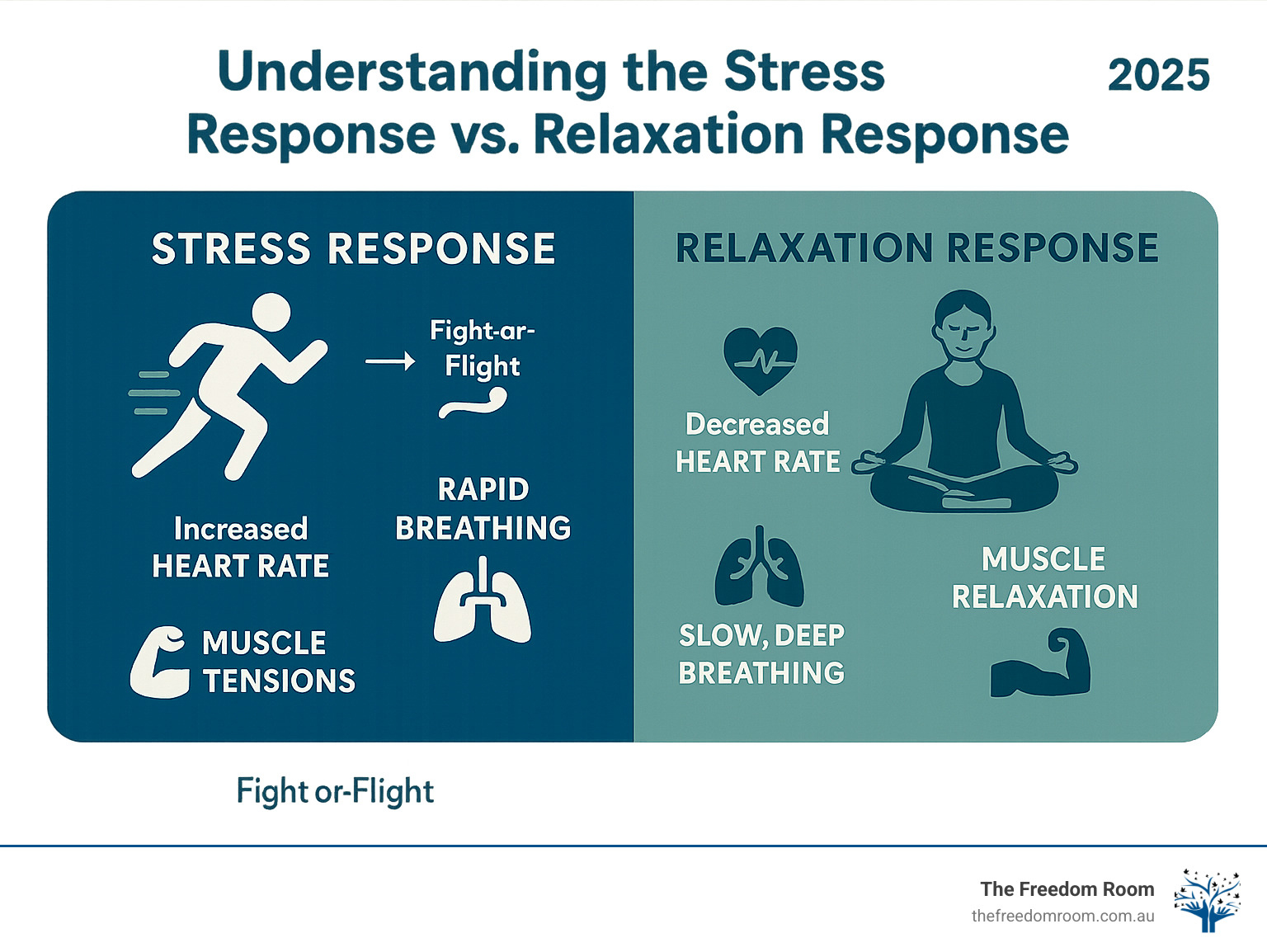
Relaxation techniques for anxiety offer powerful, evidence-based tools to combat the stress that often drives addictive behaviours. When anxiety takes hold, your body activates its “fight or flight” response, flooding your system with stress hormones like adrenaline and cortisol.
Top Relaxation Techniques for Anxiety
- Diaphragmatic breathing – Slow, deep belly breathing to activate your vagus nerve
- Progressive muscle relaxation – Systematically tensing and releasing muscle groups
- Guided imagery – Creating mental sanctuaries using all five senses
- Mindfulness meditation – Present-moment awareness without judgement
- EFT tapping – Gentle acupressure points combined with focused attention
Designed for immediate physical threats, this stress response is often overactive in modern life, triggered by everyday stressors or the challenges of recovery.
Fortunately, your body also has a built-in relaxation response. First identified by Dr. Herbert Benson, this response is the physiological opposite of stress. It activates your parasympathetic nervous system, slowing your heart rate, lowering blood pressure, and restoring balance.
Regular practice builds a “reserve of inner calm” you can access when stress threatens to overwhelm you. Even a few minutes daily can significantly help manage anxiety and support your recovery journey.
Relaxation techniques for anxiety vocab explained:
- breathing exercises for addiction
- mindfulness for alcohol recovery
- which is a cognitive technique for stress management
Foundational Relaxation Techniques for Anxiety Management
These accessible, evidence-based methods help you switch on your body’s natural relaxation response. Think of them as your personal toolkit for managing stress. With regular practice, they become reliable allies you can call upon whenever anxiety threatens to overwhelm you.
The Power of the Breath: Diaphragmatic Breathing
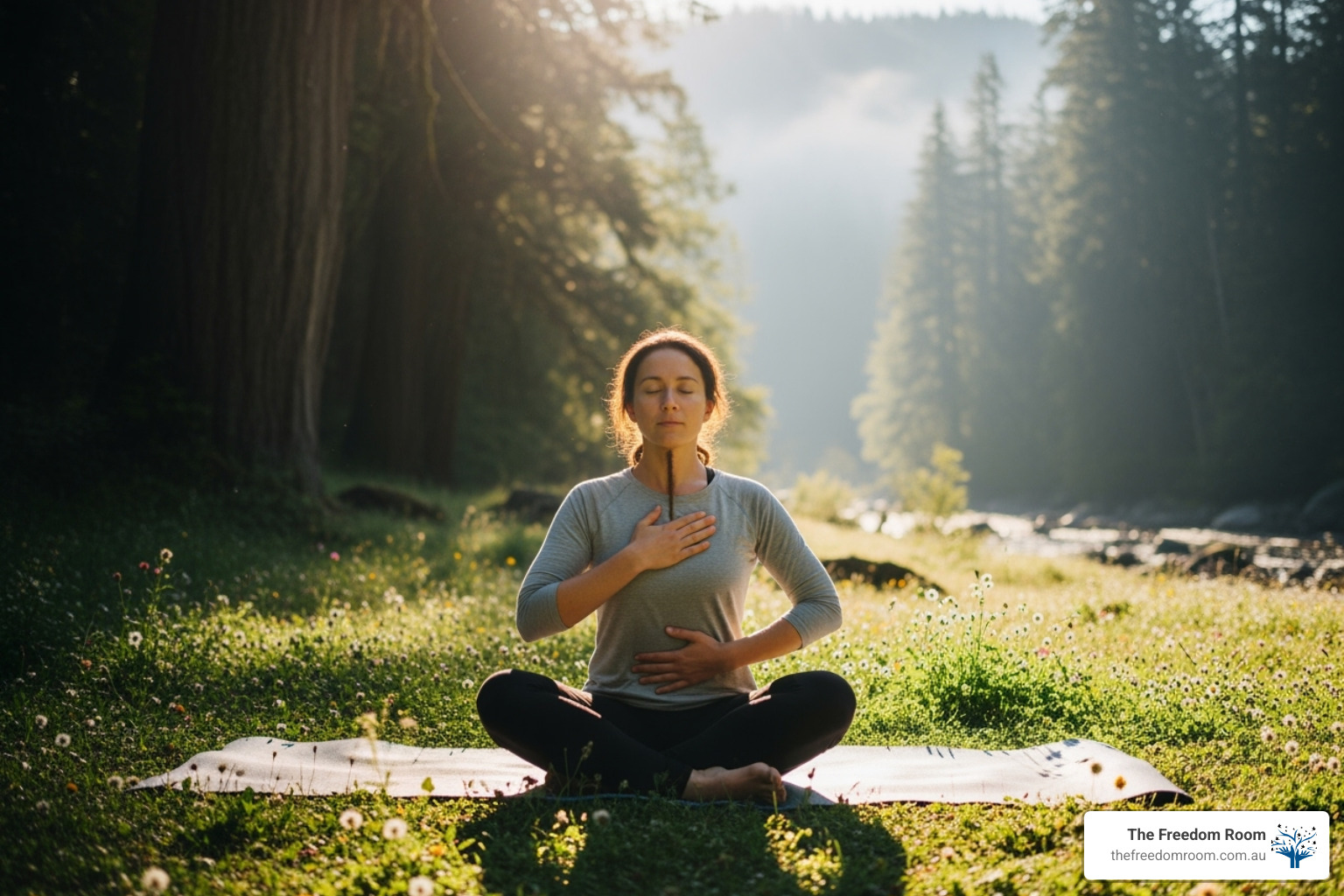
Your breath is a powerful tool for relaxation. Unlike the shallow chest breathing common with stress, diaphragmatic (or belly) breathing engages your body’s natural calming mechanisms. Deep diaphragmatic breathing stimulates the vagus nerve, sending a calming signal to your brain. This action slows your heart rate, lowers blood pressure, and activates the parasympathetic nervous system—your body’s relaxation response.
To practise:
- Find a comfortable position, sitting or lying down.
- Relax your shoulders. Place one hand on your chest and the other on your belly.
- Breathe in slowly through your nose, letting your belly expand while your chest stays relatively still.
- Exhale gently through your mouth, making the exhale longer than the inhale to signal safety to your nervous system.
- Continue for at least five minutes, focusing on a slow, smooth rhythm.
Regular practice builds a “relaxation reserve” you can tap into when stress strikes. For more specific guidance, explore our breathing exercises for addiction.
Releasing Physical Tension: Progressive Muscle Relaxation (PMR)
Anxiety often leads to unrecognised physical tension. Progressive Muscle Relaxation (PMR), developed by Dr. Edmund Jacobson, teaches you to identify this tension by systematically tensing and releasing muscle groups. The principle is simple: deep muscle relaxation is incompatible with anxiety. PMR improves body awareness and provides immediate relief from physical symptoms like headaches and shoulder tension.
The process involves tensing a muscle group for five to seven seconds, then releasing it completely. Start with your feet and move systematically up your body: calves, thighs, buttocks, abdomen, hands, arms, shoulders, neck, and face. As you release, focus on the sensation of relaxation flowing through the muscle. This awareness helps you catch stress early.
Once familiar with the process, you can use abbreviated versions throughout the day. Research shows that regular PMR practice improves sleep and reduces headaches, making it a reliable tool in your anxiety management toolkit, as documented in studies on the effectiveness of Progressive Muscle Relaxation.
Creating Inner Peace: Guided Imagery and Visualisation
Your imagination is a powerful tool for managing anxiety. Guided imagery uses your mind to create calming experiences, even when your surroundings are stressful. By engaging all your senses to create a vivid mental sanctuary, your body responds as if you are truly there. This triggers the relaxation response and reduces intrusive thoughts.
To practise, choose a place that feels safe and calm to you—a quiet beach, a serene forest, or a cosy room. Engage all your senses to make it immersive:
- See the colours and light.
- Hear the surrounding sounds or silence.
- Smell the scents in the air.
- Feel the sensations on your skin.
- Taste the clean air or sea spray.
If your mind wanders, gently guide it back to your sanctuary. You can create your own scripts or find guided recordings online. For broader strategies, visit our guide on How Can You Relax?.
Staying in the Now: One of the Best Relaxation Techniques for Anxiety
Anxiety often involves worrying about the future or ruminating on the past. Mindfulness anchors you in the present moment, reducing anxiety’s power. It means paying attention to your current experience without judgement. You learn to observe anxious thoughts with curiosity, rather than fighting them, creating space to respond thoughtfully instead of reacting impulsively.
Start by focusing on your breath. Sit comfortably and notice the natural rhythm of your breathing. When your mind wanders—which it will—gently notice where it went without criticism, and guide your attention back to your breath. This act of returning is the core of the practice.
Mindfulness is a key component of Acceptance and Commitment Therapy (ACT), an approach we use at The Freedom Room. Learn more about Mindfulness and ACT and how these practices support recovery. Research shows that mindfulness practice improves psychological health, reducing anxiety and improving well-being.
A Deeper Dive: Emotional Freedom Techniques (EFT Tapping)

Emotional Freedom Techniques (EFT), or “tapping,” is an evidence-based tool combining gentle physical touch with focused attention. It helps process the emotional roots of stress and anxiety that often drive addictive behaviours, offering a nurturing way to handle feelings of fear, anger, and worry.
Understanding How EFT Calms Your Nervous System
EFT works by targeting the amygdala, your brain’s alarm system. When the amygdala perceives a threat, it triggers the “fight, flight, or freeze” response. By gently tapping on specific acupressure points on your face and upper body while focusing on a distressing issue, you send a calming signal directly to the amygdala. This physical stimulation, combined with cognitive focus, disrupts the stress response and allows your nervous system to return to balance.
Processing Trauma Safely with EFT
One of EFT’s greatest strengths is its ability to help you process trauma without re-traumatising yourself. An EFT practitioner guides you to release emotional trauma held in the body in a safe, controlled manner. The goal is not to forget difficult experiences, but to remove their emotional charge so they no longer trigger distress. This ensures you feel better after each session.
Wide-Ranging Benefits for Recovery and Wellbeing
EFT recognises that many challenges have emotional roots. By clearing this stress, the body can relax and enter the parasympathetic nervous system state necessary for healing. It has shown particular effectiveness with:
- Addictions and anxiety
- Depression and PTSD
- Childhood trauma and phobias
- Pain management and grief
- Self-confidence and self-esteem
Regular practice can retrain your stress response, building emotional resilience. To start exploring this technique, learn more through Tapping for Anxiety Relief and EFT Tapping for Beginners.
Mind-Body Practices for Holistic Wellbeing
This section explores practices that integrate physical movement with mental focus. These approaches recognise the intricate connection between mind and body, helping to achieve deeper levels of relaxation and resilience against anxiety.
Yoga for Stress and Anxiety
Yoga effectively combines physical postures (asanas), breathing exercises (pranayama), and meditation, making it a powerful relaxation technique for anxiety. It addresses both the physical tension and mental turbulence that anxiety creates, helping to release stress held in the body while calming the nervous system through mindful movement.
For anxiety relief, nurturing styles are particularly beneficial:
- Hatha yoga offers a gentle, slower pace.
- Satyananda yoga incorporates specific relaxation and meditation techniques.
- Restorative yoga uses supported poses to soothe the nervous system.
Look for classes labelled ‘gentle,’ ‘for stress relief,’ or ‘for beginners.’ Always consult your doctor before starting a new exercise regimen. Incorporating yoga is a wonderful act of self-care, offering dedicated time to find peace. Research confirms the therapeutic effects of yoga for stress reduction.

The Flowing Movements of Tai Chi and Qigong
Often called “moving meditation,” Tai Chi and Qigong are ancient Chinese practices involving slow, deliberate movements coordinated with deep breathing. This low-impact exercise is accessible to all fitness levels and helps dissolve stress. The rhythmic movements activate the body’s relaxation response, while the mental focus required helps distract from anxious thoughts.
Research on Tai Chi and Qigong for mental disorders shows their effectiveness in improving balance and flexibility while reducing stress hormones. Regular practice creates a sense of groundedness and calm.
Rhythmic, Mindful Movement and Self-Massage
Simple, rhythmic movements can be powerful relaxation techniques. Mindful movement turns daily activities into opportunities for stress relief.
- Mindful walking is a highly accessible example. Focus on the sensation of your feet on the ground and the rhythm of your breath as you walk.
- Other rhythmic activities like gentle swaying or knitting can also be meditative when done with conscious awareness.
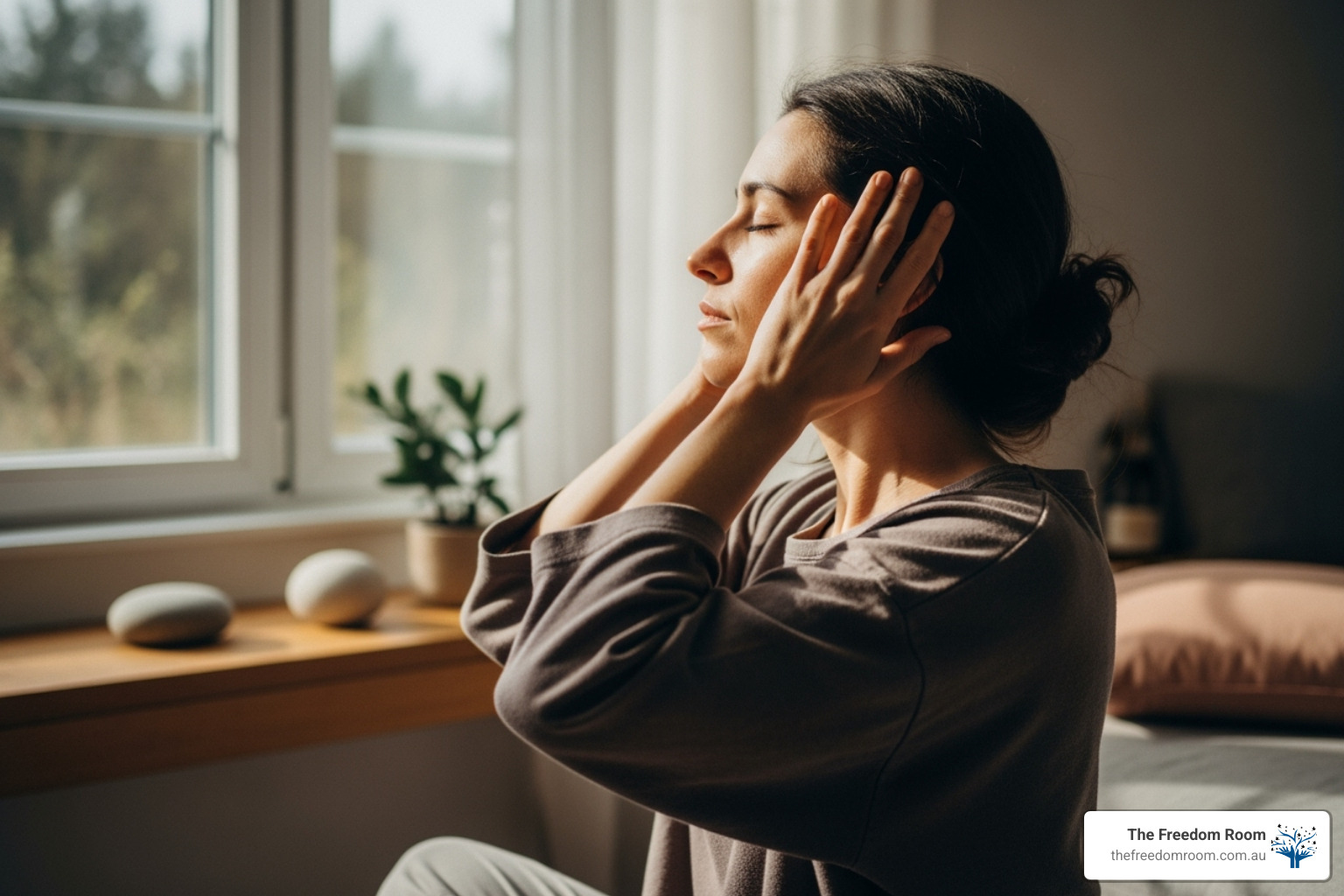
Self-massage offers immediate relief from physical tension. A few minutes of gentle massage can release tightness in the neck, shoulders, and jaw. Use your fingertips to gently knead tense areas, apply circular motions to your temples, and massage your palms and fingers. Massage therapy research confirms its significant stress-reduction benefits.
Frequently Asked Questions about Relaxation for Anxiety
Here are answers to common questions about using relaxation techniques for anxiety, helping to clarify what to expect as you incorporate these tools into your life.
How long does it take for relaxation techniques to work?
Benefits can be both immediate and long-term. You might notice subtle changes in your first session, like slower breathing, which shows your body is responding. Lasting change, however, requires consistent practice. Regularity builds neuroplasticity, rewiring your brain to be less reactive to stressors.
Think of it like building fitness: progress requires patience. Even 5-10 minutes daily builds a “reserve of inner calm” and is more effective than infrequent, lengthy sessions. The key is progress over perfection.
Can I do these techniques anywhere?
Yes, many techniques are versatile and can be practised discreetly anywhere, making them valuable for real-world situations.
- Breathing exercises are the most portable tool and can be done without anyone noticing.
- Mindfulness can be integrated into daily activities like walking or washing dishes.
- Progressive muscle relaxation can be adapted by subtly tensing and releasing muscles in your hands or jaw.
While a quiet space is ideal for longer sessions, the adaptability of these techniques ensures relief is always available.
What if a technique makes me feel more anxious?
It’s a common experience to feel more anxious at first. This can happen because you become more aware of physical sensations (like a rapid heartbeat) that you usually ignore. For those with a history of trauma, some techniques may also be triggering.
If a technique increases anxiety, try a different one. If the feeling persists across multiple methods, seeking professional guidance is important. A trauma-informed professional can help you find suitable approaches and address underlying issues. At The Freedom Room, our team offers support custom to your unique needs.
Find Your Strength, Begin Your Journey, and Stay Sober for Good
Learning relaxation techniques for anxiety is about more than managing stress—it’s about reclaiming control and building genuine resilience. When you commit to regular practice, you create lasting change that supports your recovery and improves your overall wellbeing.
Each time you practise, you help rewire your brain’s stress response. The goal is progress, not perfection, building resilience one day at a time. These skills become the foundation for handling future challenges with greater clarity and compassion.
At The Freedom Room, we understand the deep link between anxiety and addiction. Our team’s lived experience provides authentic understanding, and we know these relaxation techniques are essential tools for recovery. They empower you to make conscious choices that strengthen your alcohol-free life.
You don’t have to do this alone. Recovery thrives in connection. Our compassionate team is here to support you with personalised sessions and workshops, drawing on our own experiences to guide you.
Ready to transform your relationship with stress and support your alcohol-free future? Your journey towards lasting wellness begins with a single step.