

The Importance of Mental Health as a Foundation for Well-being
Why is mental health important? Mental health is a fundamental component of overall well-being, influencing cognition, emotion, and the capacity to navigate life’s challenges. It has a direct impact on an individual’s relationships, occupational performance, physical health, and resilience.
The key reasons mental health is integral to a functional life include:
- Physical Health Connection: Poor mental health is associated with an increased risk of chronic conditions such as heart disease and diabetes, and it can compromise immune function.
- Quality of Relationships: Mental well-being influences the ability to connect with others, communicate effectively, and maintain healthy relationships.
- Work and Productivity: Good mental health enhances concentration, decision-making capabilities, and overall workplace performance.
- Resilience Building: A strong state of mental health equips individuals to adapt to change and recover from adversity.
- Daily Functioning: Mental well-being is determinantal to an individual’s ability to manage everyday tasks and responsibilities.
- Life Satisfaction: Mental health directly correlates with a sense of purpose, happiness, and overall quality of life.
Encompassing emotional, psychological, and social well-being, mental health is more than the absence of a diagnosed illness. It is a state in which an individual can realise their potential, cope with normal life stressors, work productively, and contribute to their community.
Mental health exists on a continuum. While approximately one in five Australian adults experience a mental health condition annually, every person has a state of mental health, just as they have physical health. This mental state can fluctuate, ranging from optimal well-being to periods of stress or low mood.
This spectrum model highlights that maintaining mental health is an ongoing investment in one’s quality of life, not merely a response to a crisis.
Related Concepts
Distinguishing Mental Health from Mental Illness
Defining Mental Health and Mental Illness
Mental health refers to an individual’s overall emotional, psychological, and social well-being. It provides the foundation for navigating challenges, building relationships, and finding purpose. A positive state of mental health enables individuals to process emotions, make sound decisions, and engage meaningfully with their community.
Mental illness, in contrast, refers to clinically diagnosed conditions that significantly affect thought, feeling, or behaviour. These conditions often impact daily function and require professional treatment. Examples include anxiety disorders, depression, trauma-related conditions, and substance use disorders.
This distinction is critical. Good mental health is more than the absence of illness, and the presence of a mental health condition does not preclude an individual from working towards wellness and recovery.
The Mental Health Continuum Model
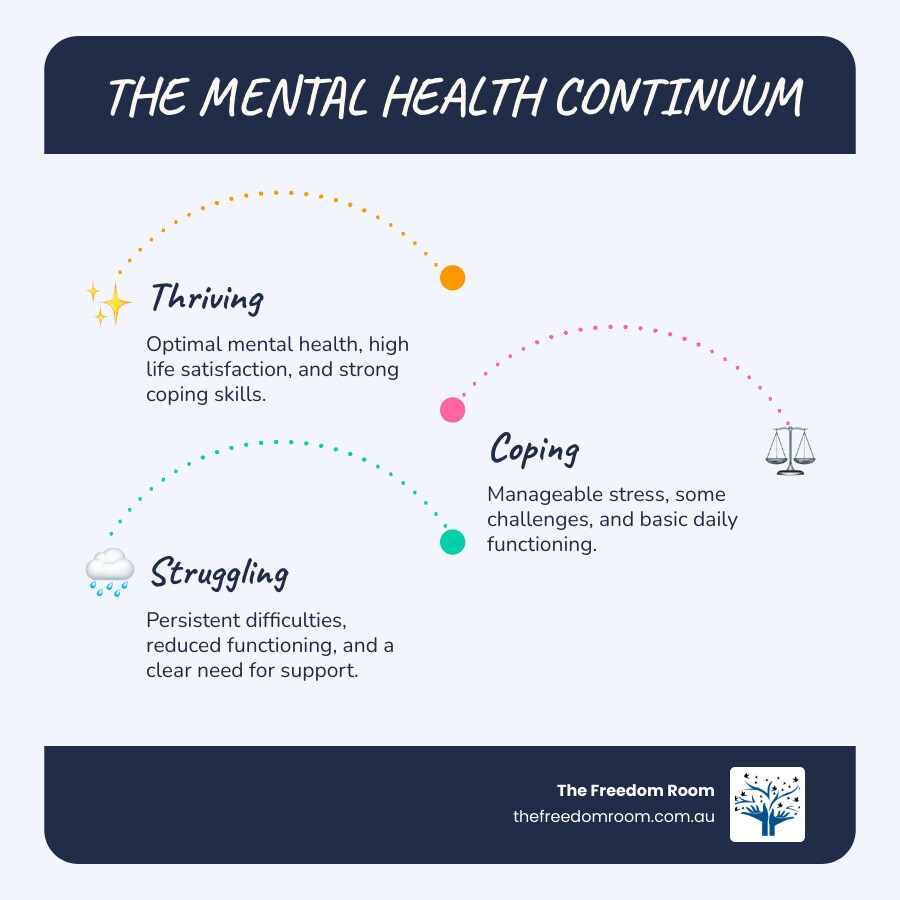
Mental health is best conceptualised as a continuum rather than a binary state of ‘healthy’ or ‘unwell’. Individuals move along this spectrum throughout their lives, influenced by factors such as stress, life events, relationships, and physical health.
- At one end of the spectrum is thriving, characterised by resilience and high levels of engagement.
- In the middle is coping, where an individual is managing daily stressors but may feel challenged.
- At the other end is struggling, which indicates persistent difficulties and a potential need for additional support.
This dynamic model illustrates that mental health is not static. Identifying one’s position on the spectrum enables the implementation of appropriate actions, from proactive well-being strategies to seeking professional support.
A Holistic Perspective on Health
Mental health is an integral component of overall health. Capacities such as emotional regulation, stress management, and relationship building all contribute to an individual’s quality of life. Neglecting mental well-being can have detrimental effects on physical health, occupational performance, and personal relationships.
Recognising this interconnectedness promotes a comprehensive approach to well-being. By understanding Emotional Wellness as part of a broader health framework, individuals can make informed decisions regarding when and how to seek support, contributing to a more fulfilling life.
The Pervasive Impact of Mental Health on Daily Life
An individual’s mental well-being profoundly influences all aspects of their existence, shaping their thoughts, feelings, and responses to the world.
When an individual is mentally well, they possess the capacity to process emotions, address challenges, and maintain social connections, which allows them to thrive. The effects of one’s mental state are far-reaching. Good mental health facilitates positive contributions to family, work, and community, whereas poor mental health can create significant challenges in these domains.
The Interrelationship Between Mental and Physical Health
A significant mind-body connection exists, wherein an individual’s mental state directly influences their physical health. Chronic stress, anxiety, or depression can trigger physiological responses. The release of stress hormones like cortisol can weaken immune function, increasing vulnerability to illness and impeding recovery.
This relationship is bidirectional. Physical symptoms such as unexplained headaches, sleep disturbances, or persistent fatigue can be indicators of underlying mental health concerns.
Research demonstrates that untreated mental health conditions elevate the risk of heart disease, diabetes, and other chronic illnesses. The link between depression and heart disease is well-documented, with depression recognised as a significant independent risk factor. Understanding this connection supports a holistic approach to health. Addressing issues such as Anxiety Relief can lead to improvements in both emotional and physical well-being.
The Impact of Mental Health on Relationships and Work
Mental health is a cornerstone of meaningful interpersonal relationships. Positive mental health enables clear communication, empathy, and confident navigation of social situations. It supports the ability to set boundaries, resolve conflicts, and provide support to others, which are foundational skills for healthy relationships.
In the workplace, mental well-being affects concentration, decision-making, and collaborative ability. Poor mental health can make routine tasks feel overwhelming, thereby reducing productivity and exacerbating job-related stress. The World Health Organization estimates that 12 billion working days are lost globally each year due to anxiety and depression, highlighting the societal and economic importance of mental health.
Financial stress can compound mental health issues, creating a detrimental cycle. Poor mental health can impact employment, which in turn threatens financial stability and increases anxiety. Breaking this cycle often requires addressing both mental health and related stressors, such as Stress and Alcohol Addiction.
The Role of Mental Health in Building Resilience
A crucial function of mental health is its role in fostering resilience. Resilience is defined as the capacity to navigate challenges and recover from setbacks. Strong mental health promotes effective coping skills and healthy self-esteem, which helps individuals adapt to change and perceive setbacks as temporary.
It allows for the maintenance of perspective during difficult periods, enabling an acknowledgement of struggles without becoming overwhelmed. This resilience makes everyday stressors more manageable. Developing Psychological Flexibility can further assist individuals in adapting to life’s changes with greater ease.
Resilience is not an immutable trait; it can be developed. Prioritising mental health is therefore an investment in one’s future capacity to manage life’s challenges.
Recognising Signs of Mental Health Challenges
Similar to physical health, mental health presents signals that indicate its status. Developing an awareness of these signs is a key component of maintaining well-being. Self-awareness involves paying mindful attention to one’s internal state and noticing significant changes from baseline functioning.

Common Risk Factors and Warning Signs
Mental health challenges often arise from a complex interplay of life experiences, environmental circumstances, and biological predispositions. Key risk factors include adverse childhood experiences, chronic stress, social isolation, and biological factors such as genetics. For instance, understanding The Link Between ADHD and Addiction illustrates how neurodevelopmental differences can influence behaviour. Substance use can also be both a symptom and a contributing cause of mental health issues.
Warning signs often manifest as changes in an individual’s typical patterns of behaviour, thought, or feeling. Key indicators may include:
- Significant changes in sleep or appetite.
- Markedly decreased energy levels and persistent fatigue.
- Social withdrawal or a consistent pattern of declining social invitations.
- Persistent emotional distress, such as ongoing sadness, anger, or guilt.
- Increased substance use, potentially as a form of self-medication.
- Severe mood swings or uncharacteristic engagement in risky behaviours.
- Difficulty with daily functioning, including occupational duties, personal hygiene, or household responsibilities.
- Thoughts of self-harm or harming others, which necessitate immediate professional intervention.
An Overview of Common Mental Health Conditions
Familiarity with common mental health conditions, which affect millions of Australians, can help reduce stigma and encourage help-seeking behaviour. These conditions frequently co-occur.
- Anxiety disorders are the most prevalent mental health challenge in Australia. They encompass conditions such as generalised anxiety disorder, social anxiety, and specific phobias, and can present with physical symptoms like panic attacks.
- Depression is characterised by more than transient sadness; it involves a persistent low mood, loss of interest in previously enjoyed activities, and feelings of hopelessness. Thoughts of suicide are a serious symptom requiring immediate help.
- Trauma-related disorders, such as Post-Traumatic Stress Disorder (PTSD), can develop following a traumatic event. Symptoms may include flashbacks, nightmares, and severe anxiety.
- Substance use disorders involve the compulsive use of a substance despite adverse consequences. They often co-occur with other mental health conditions, a situation referred to as a ‘dual diagnosis’. A Holistic Approach to Addiction is crucial for addressing both issues concurrently.
- Other common conditions include psychotic disorders (e.g., schizophrenia), eating disorders, bipolar disorder, and personality disorders. All are treatable with appropriate support and intervention.
Knowing When to Seek Professional Help
Determining when to seek professional help can be challenging, as stress and sadness are normal parts of life. However, professional help should be considered if symptoms persist for two weeks or more and negatively impact daily functioning.
Key indicators that professional support may be warranted include:
- Ongoing difficulty sleeping or significant changes in appetite.
- Struggling to get out of bed, concentrate, or a loss of interest in enjoyable activities.
- Persistent irritability, frustration, or restlessness.
- Increasing difficulty completing daily tasks at work or home.
- Thoughts of self-harm or suicide, which always require immediate professional help. In Australia, contact Lifeline on 13 11 14 or emergency services on 000 in a life-threatening situation.
A General Practitioner (GP) is an appropriate initial point of contact. A GP can conduct an initial assessment and provide referrals to specialists as needed. Seeking assistance is a proactive step towards managing one’s health.
Practical Strategies for Maintaining Mental Well-being
Maintaining good mental health requires proactive and consistent self-care strategies. This involves making intentional choices to support one’s well-being on an ongoing basis, similar to the management of physical health.

Everyday Practices for a Healthier Mind
The implementation of small, consistent practices can significantly contribute to mental well-being. Actionable steps include:
- Prioritising Quality Sleep: Aiming for 7-9 hours of sleep per night. A consistent schedule and a relaxing, screen-free pre-sleep routine can be beneficial.
- Engaging in Regular Physical Activity: Incorporating 30 minutes of moderate activity, such as walking or swimming, on most days.
- Maintaining a Nutritious Diet: Consuming healthy meals, ensuring adequate hydration, and being mindful of the effects of caffeine and alcohol on mood.
- Practising Mindfulness: Utilising techniques such as meditation, deep breathing exercises, or gentle stretching. Mindfulness and ACT can help individuals remain grounded in the present moment.
- Setting Realistic Goals: Establishing achievable goals based on personal strengths and learning to decline additional commitments to prevent overwhelm.
- Cultivating Gratitude: Regularly acknowledging positive aspects of one’s life can foster a more positive perspective.
- Finding Meaning and Purpose: Engaging in hobbies or activities that provide a sense of meaning.
- Challenging Negative Thought Patterns: Identifying and reframing unhelpful or negative thoughts, focusing on aspects within one’s control.
The Importance of Social Connection and Stigma Reduction
Social connection is a fundamental human need and serves as a protective factor against mental health challenges. Strategies for building healthy, supportive relationships include:
- Maintaining Connections: Regularly engaging with friends and family through in-person meetings, calls, or shared activities.
- Community Involvement: Participating in community events or volunteering to foster a sense of belonging.
- Open Communication: Discussing mental health with trusted individuals to normalise the conversation and reduce feelings of isolation.
- Empathetic Listening: When others share their experiences, listening without judgment and offering compassionate support is crucial.
Reducing the stigma associated with mental health is a collective responsibility. Shame and fear of judgment are significant barriers to seeking help. It is essential to treat mental health with the same gravity as physical health, thereby creating safe environments that encourage help-seeking and foster a more tolerant society.
Professional Therapeutic Support
While self-care and social support are vital, professional guidance is often necessary. A range of therapeutic approaches can provide effective support:
- Psychotherapy (Talk Therapy): This involves structured conversations with a trained professional. Approaches like Cognitive Behavioural Therapy (CBT) are designed to help individuals modify unhelpful thinking patterns and behaviours. CBT for Alcoholism is one such application.
- Medication: A psychiatrist or qualified GP can assess, diagnose, and prescribe medication to help manage symptoms of certain mental health conditions.
- Support Groups: Connecting with peers who have similar experiences can reduce isolation and provide practical coping strategies.
- Complementary Therapies: Adjunctive approaches like yoga, art therapy, or music therapy can be beneficial for some individuals.
One evidence-based approach is Emotional Freedom Techniques (EFT), also known as “tapping.”
What is Emotional Freedom Techniques (EFT)?
EFT is an evidence-based therapeutic tool used to alleviate psychological distress. The technique combines elements of cognitive therapy with the stimulation of acupressure points. This process aims to reduce the intensity of distressing emotions and restore a sense of calm.
What is the role of an EFT Practitioner?
An EFT Practitioner is a trained professional who guides individuals through the process of addressing emotional trauma in a safe and controlled environment. The practitioner facilitates the clearing of traumatic stress without requiring the client to re-experience the event intensely. The primary objective is to neutralise the emotional charge associated with a traumatic memory, thereby reducing its distressing impact.
What health areas does EFT focus on?
EFT can be integrated into a comprehensive treatment plan, as emotional factors can contribute to various health conditions. Reducing emotional stress can promote physiological relaxation, which supports the body’s natural healing processes. EFT has been shown to be beneficial for conditions including:
- Addictions
- Anxiety
- Depression
- Sexual/Emotional/Physical Abuse
- PTSD (Post-Traumatic Stress Disorder)
- Stress Management
- Childhood Trauma
- Phobias
- Pain Management
- Loss and Grief
- Self-Confidence/Self-Esteem
How EFT Works:
EFT operates on the principle of modulating the body’s stress response. The amygdala, a key component of the brain’s threat-detection system, can become hyper-responsive, triggering the ‘fight, flight, or freeze’ response. The practice of tapping on specific acupressure points while cognitively engaging with a distressing issue has been shown to send a calming signal to the amygdala. This intervention can disrupt the stress cascade, allowing the nervous system to return to a state of equilibrium. With consistent practice, EFT may help retrain the brain’s stress response, thereby enhancing emotional resilience.
Conclusion: The Importance of Integrated Mental Health Support
A comprehensive understanding of the importance of mental health is fundamental to overall well-being and the recovery process. Mental health serves as the cornerstone of a fulfilling life, with significant effects on physical health, interpersonal relationships, occupational performance, and resilience.
Prioritising mental health is a proactive choice that supports long-term well-being. This is particularly relevant in the context of recovery from alcohol addiction, where mental health and substance use are deeply interconnected.
The Reality of Mental Health Challenges in Australia
Mental health challenges are widespread in Australia. Recent societal events have contributed to increased rates of anxiety and depression, demonstrating that these conditions can affect anyone. For individuals with alcohol addiction, this context is crucial. The link between mental well-being and substance use is complex and requires compassionate, professional support to achieve lasting recovery.
An Integrated Approach to Recovery and Mental Health
An effective approach to recovery acknowledges that addressing mental health is integral to the process. Personalised treatment plans may utilise evidence-based therapies such as Cognitive Behavioural Therapy (CBT) and Emotional Freedom Techniques (EFT). These methods provide practical tools intended to support long-term well-being. Through services like Addiction Recovery Counselling, a safe and non-judgemental environment can be provided for clients to explore their challenges. This holistic approach addresses the whole person, acknowledging the inextricable link between mental well-being and sustainable recovery.
Initiating the Path to Recovery
The decision to seek support for one’s mental health is a significant and proactive step. Initiating this process, whether for recovery from a specific condition or for general well-being, requires both courage and hope.
The paths of recovery and mental health improvement are often non-linear. An appropriate support system and effective tools are essential for navigating these experiences. A support structure that combines professional expertise with an understanding of these unique challenges can provide practical strategies and foster an environment conducive to genuine healing.
Prioritising mental health and seeking appropriate support is an investment in one’s recovery, quality of life, relationships, and future.