
Why Structured Recovery Programs Are Worth Understanding Before You Choose
Structured recovery programs provide organised, evidence-based support for people working to overcome physical dependence on alcohol or other substances. They differ from informal or self-directed approaches by offering clear frameworks, professional guidance, and consistent accountability.
Choosing the right path matters. Research consistently shows that matching a person to the right level of care is one of the strongest predictors of staying engaged and achieving lasting recovery.
In Australia, physical dependence on alcohol remains a significant public health concern. Yet many people delay seeking help simply because the system feels overwhelming to navigate. The range of options, the clinical language, and the uncertainty about what actually works can make it hard to know where to start.
This guide cuts through that confusion. Whether you are evaluating options for yourself or someone you care about, you will find clear, practical information to help you make a confident, informed decision.
Structured recovery programs terms to know:
Navigating Structured Recovery Programs in Australia
Understanding how to access support within the Australian healthcare system is the first step toward lasting change. Individuals are often overwhelmed by medical jargon and clinical pathways. In Australia, treatment services are broadly categorised using framework models like the American Society of Addiction Medicine (ASAM) criteria, which help clinicians determine the appropriate level of care. These levels range from low-intensity outpatient support to intensive, 24-hour residential rehabilitation.

Navigating these options requires distinguishing between clinical and non-clinical support systems. Clinical services involve medical detoxification, psychiatric assessments, and evidence-based psychological therapies delivered by registered health professionals. Non-clinical support focuses on peer-led environments, social integration, and practical lifestyle modifications. Both pathways are essential, and they work best when integrated into a cohesive, personalised plan.
What Are Structured Recovery Programs?
A structured recovery program is a coordinated, goal-oriented treatment plan designed to help individuals overcome physical alcohol dependence. Unlike unstructured self-help efforts, these programmes follow a systematic schedule of therapeutic interventions, educational workshops, and regular progress reviews. This structure helps stabilise the nervous system and provides a predictable environment where healing can occur.
The choice between outpatient and residential care depends on personal circumstances, safety requirements, and the level of dependence. Outpatient programmes allow individuals to live at home and maintain work or family commitments while attending scheduled therapy sessions. Residential programmes offer an immersive, live-in environment with 24-hour supervision and support, which is often crucial for individuals with complex needs or those lacking a supportive home environment. According to the Australian Institute of Health and Welfare alcohol statistics, alcohol remains one of the most common substances for which Australians seek treatment, highlighting the critical need for accessible, structured pathways.
Core Components of Structured Recovery Programs
Every effective recovery journey begins with physical stabilisation. Medical detoxification and clinical withdrawal management ensure that individuals can safely stop drinking under professional supervision. This process minimises the severity of withdrawal symptoms and addresses any immediate health risks. Once physical stability is achieved, the focus shifts to psychological and behavioural therapies.
Many structured programmes integrate mutual-help philosophies to provide ongoing community support. The historical 12-Step model, first developed in the 1930s, is still utilised by nearly half of all treatment facilities worldwide to encourage self-reflection and peer accountability. Alternatively, modern secular approaches like SMART Recovery focus on self-management, cognitive tools, and scientific principles. These diverse methodologies fit together to form a comprehensive care plan, as explored in the guide on Proven Paths: Why Evidence-Based Recovery Works.
The Role of Recovery Residences and Sober Living
Transitioning directly from an intensive treatment program back into daily life can feel like stepping into a storm. Recovery residences and sober living homes serve as a vital bridge in the continuum of care. These non-clinical, alcohol-free living environments provide a safe space where individuals can practice their new coping skills while slowly reintegrating into society, returning to work, or pursuing education.
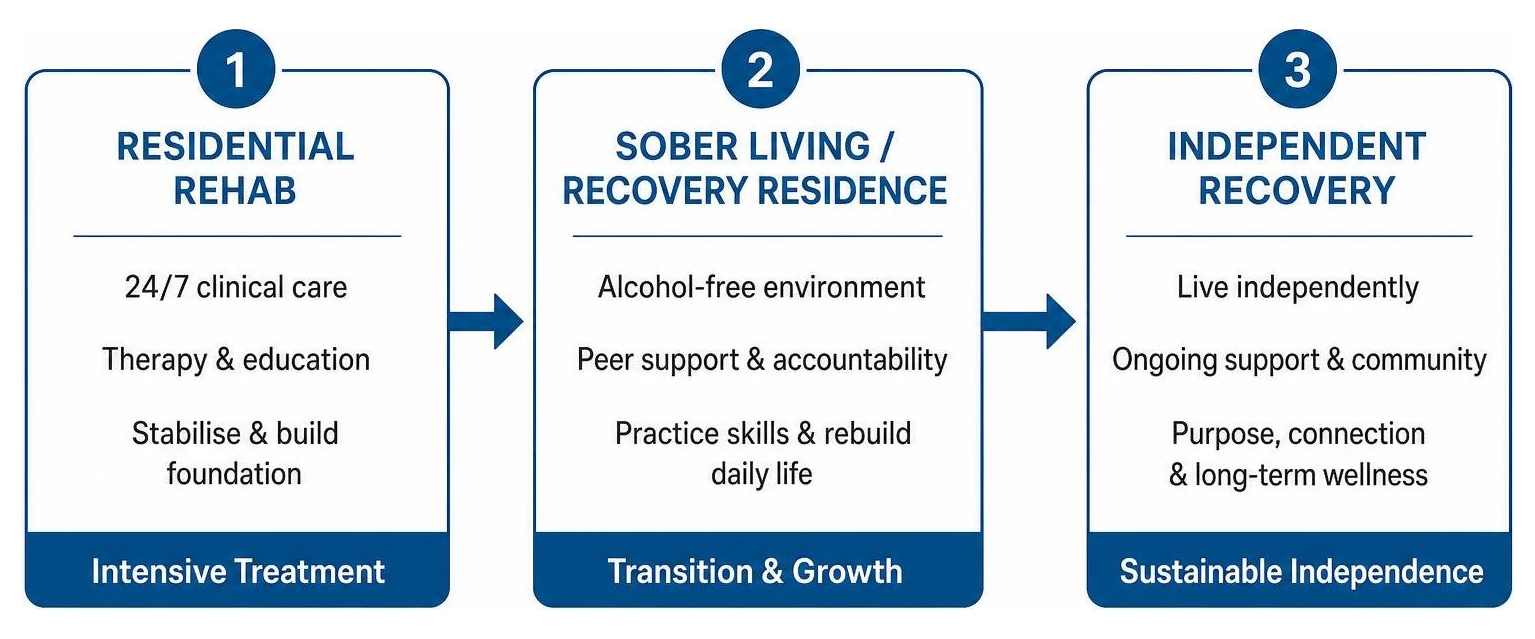
Within these environments, residents benefit from peer-led support and structured daily routines, including mandatory house meetings and random drug and alcohol screenings. This ongoing accountability reduces the isolation that so often triggers a return to old habits. By fostering a shared culture of recovery, transitional housing helps individuals build the practical life skills and stable foundations required for long-term independence.
Evidence-Based Therapies and Support Pathways
The core of psychological rehabilitation relies on evidence-based therapeutic modalities that help rewire deeply ingrained habits. Cognitive Behavioural Therapy (CBT) is widely regarded as a gold standard in addiction care, helping individuals identify negative thought patterns and develop practical strategies to handle triggers. Acceptance and Commitment Therapy (ACT) further assists by encouraging individuals to accept their internal experiences without using alcohol to escape.
Education and interactive learning are incredibly powerful tools for personal transformation. Participating in structured group learning environments allows individuals to share experiences, build communication skills, and reduce shame. If you are exploring different formats, you can read our comparison of The Best Alcohol Recovery Workshops Compared or learn more about our interactive Workshops designed to support your personal growth.

Tailoring Support for Special Populations
No two recovery journeys are identical, and generic approaches often fail to address the specific needs of diverse groups. For individuals experiencing co-occurring mental health conditions, such as anxiety, depression, or post-traumatic stress disorder, integrated dual-diagnosis treatment is essential. Addressing the physical dependence on alcohol without treating the underlying mental health condition significantly increases the risk of a relapse.
Gender-specific programmes and trauma-informed care are also critical components of modern structured recovery. Women, adolescents, and families face unique social, biological, and psychological challenges that require sensitive, tailored interventions. By incorporating holistic wellness approaches, such as mindfulness, stress management, and nutritional support, structured programmes can treat the whole person rather than just the physical symptoms of dependence.
Long-Term Aftercare and Relapse Prevention
Achieving sobriety is a monumental milestone, but maintaining it requires a dedicated, long-term strategy. Research indicates that the duration of a treatment episode is a powerful predictor of success, with programmes lasting three months or longer showing significantly better outcomes. Furthermore, statistics show that almost 90 percent of those who remain abstinent for two years are also drug- and alcohol-free at ten years, proving that the early years of recovery are the most critical for building a lasting foundation.
Ongoing peer coaching, outpatient support groups, and regular check-ins are vital parts of an effective aftercare plan. Having a structured framework to guide you through the transition ensures that you never feel alone or unsupported. You can learn more about how to navigate this crucial phase of your healing journey by exploring A 12-Week Journey to Sobriety.
Take the First Step Toward a Fulfilling, Alcohol-Free Life
Seeking help for physical alcohol dependence is a deeply personal and significant decision. At The Freedom Room, we offer compassionate, cost-effective support through personalised sessions, workshops, and therapy. Our team consists of dedicated professionals who are in recovery themselves. This lived experience allows us to provide authentic support, deep empathy, and practical guidance free from judgement.
Whether you require intensive support, transitional guidance, or practical tools to maintain your sobriety, we are here to assist you. We invite you to explore our comprehensive range of services on our Our Services page or read our Post-Rehab Support Complete Guide to learn more about sustaining your progress.
Our physical clinic is located in Queensland, and you can visit us at 9a/521 Beams Rd, Carseldine QLD 4034. Please contact our friendly team today through our Contact Us page to discuss how we can tailor a program to support your unique path to healing.
Frequently Asked Questions
What is a structured recovery program?
A structured recovery program is a coordinated, goal-oriented treatment plan designed to help individuals overcome physical alcohol dependence. It follows a systematic schedule of therapeutic interventions, educational workshops, and regular progress reviews to provide a predictable environment for healing.
What is the difference between clinical and non-clinical support?
Clinical services involve medical detoxification, psychiatric assessments, and evidence-based psychological therapies delivered by registered health professionals. Non-clinical support focuses on peer-led environments, social integration, and practical lifestyle modifications.
How long do structured recovery programs typically last?
Program durations vary based on individual needs, but research indicates that programs lasting three months or longer show significantly better outcomes for long-term sobriety.
What is the role of sober living environments?
Sober living environments serve as a vital bridge in the continuum of care, providing a safe, alcohol-free space where individuals can practice coping skills while transitioning back into daily life, employment, or education.