

Why Conflict Resolution for Addiction Recovery Matters
Conflict resolution for addiction is defined as the systematic practice of managing and resolving interpersonal and internal disputes to safeguard sobriety, mitigate psychological stress, and reconstruct damaged relational structures. The following summary outlines the essential components of conflict resolution within the recovery process:
Active listening: The process of fully comprehending the perspectives of others without formulating a premature response. ‘I’ statements: A communication technique used to express personal feelings and needs without assigning blame, such as stating, I feel concerned when, rather than using accusatory language. Emotional regulation: The capacity to pause and reflect before reacting to external stimuli to prevent the escalation of tension. Collaboration: The pursuit of mutually beneficial solutions that address the concerns of all involved parties. Professional support: The utilisation of clinical therapy, mediation, or peer support groups when conflicts exceed personal management capabilities.
Addiction rarely only impacts a single facet of an individual’s life. It frequently strains familial relationships, fractures professional trust, and leaves a legacy of unresolved tension that does not automatically dissipate upon the cessation of substance use. In the Australian context, the social and economic costs of substance misuse are significant, and the restoration of social capital is a vital component of the healing process.
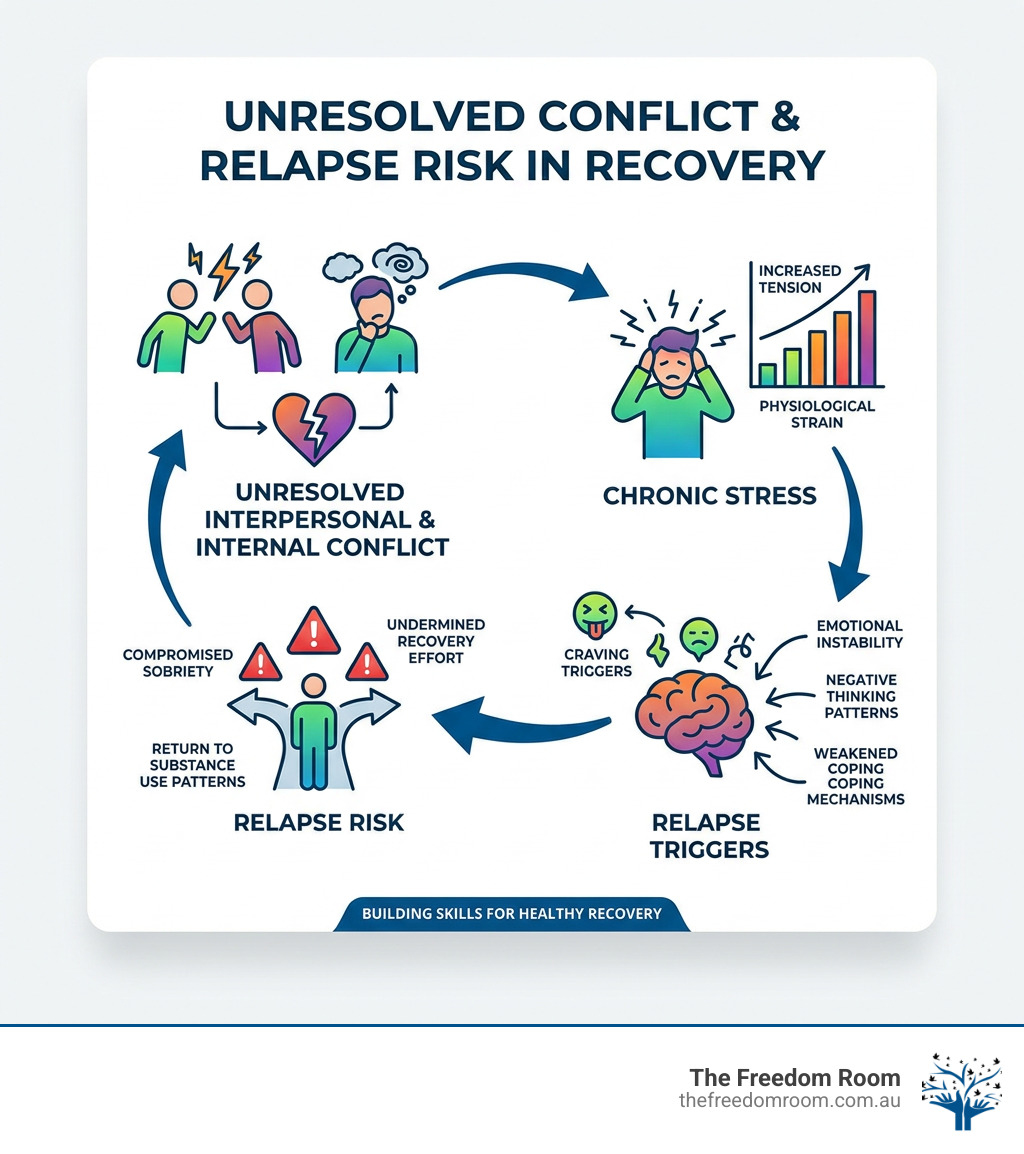
Stress is widely recognised as a primary catalyst for relapse following clinical treatment, according to data provided by the National Institute on Drug Abuse. Interpersonal conflict represents one of the most consistent and potent sources of this stress. Unresolved conflict does not remain dormant; rather, it accumulates into resentment, intensifies cravings, and can systematically undermine even the most dedicated recovery efforts.
The acquisition of conflict resolution skills is a learnable clinical objective rather than an inherent personality trait. With the application of appropriate methodologies and professional support, the management of conflict becomes a significant asset in maintaining long-term sobriety. This comprehensive guide examines the core skills, theoretical frameworks, family dynamics, internal psychological conflicts, and professional support systems necessary to integrate these skills into daily life.
The Impact of Conflict Resolution for Addiction on Sobriety
The implementation of effective conflict resolution for addiction serves as a fundamental pillar for maintaining emotional and psychological stability. During the initial phases of recovery, the human nervous system often remains highly sensitised to external stressors. Disagreements that might otherwise be considered minor can be perceived as significant threats, thereby activating the physiological fight or flight response. This reaction frequently results in an intensified urge to utilise substances as a maladaptive coping mechanism to alleviate the resulting anxiety or anger.
Statistical evidence suggests that the relapse rate for substance use disorders remains between 40 and 60 percent globally. A substantial proportion of these relapses is precipitated by interpersonal discord. When individuals lack the necessary tools to navigate a disagreement, they may revert to historical patterns of avoidance or aggression. Both responses cultivate a volatile environment that renders long term abstinence difficult to sustain.
By developing the capacity to manage conflict, individuals can reduce the frequency and intensity of emotional triggers. This therapeutic process facilitates neurological healing and enhances the ability to address life’s challenges without resorting to substance use. Further information regarding how these skills protect the recovery journey is available in our guide to healthy conflict resolution in recovery.
Addressing conflict also promotes a necessary sense of personal accountability. Historically, individuals may have utilised substances to evade the consequences of their actions or the discomfort associated with confrontation. Recovery necessitates remaining present and accepting responsibility for one’s role within relationships. This transition is essential for establishing healthy relationships in recovery that offer genuine support rather than facilitating enabling behaviours.
Unresolved issues represent a significant psychological burden. Scientific research has demonstrated that high levels of social stress are directly correlated with increased cravings. By proactively engaging in conflict resolution therapy, individuals can overcome these emotional obstacles and redirect their energy toward positive growth and holistic wellness.

Core Skills for Conflict Resolution for Addiction
The foundation of successful resolution lies in the ability to communicate with clarity and listen with depth. Active listening is perhaps the most critical skill to develop within a recovery context. It involves more than the mere audition of words; it requires a complete focus on the speaker and an acknowledgement of their perspective without the immediate formulation of a defensive counterargument.
The use of ‘I’ statements is another practical technique that prevents the escalation of hostility. Instead of employing accusatory language such as, You always cause me stress, which typically results in the other party becoming defensive, one might state, I feel overwhelmed when the environment is cluttered because it complicates my ability to remain calm. This approach prioritises the internal experience of the speaker rather than assigning blame.
Emotional regulation serves as the essential pause mechanism in the recovery process. When an individual recognises an increase in heart rate or the onset of anger, taking a moment to breathe or temporarily withdrawing from the conversation can prevent a minor disagreement from evolving into a relapse trigger. Learning how to resolve conflict involves the early identification of these physiological indicators of distress.
Empathy enables individuals to perceive situations from the perspective of others. Many loved ones have experienced significant trauma due to the past actions of the individual in recovery. Acknowledging their pain and valid concerns, even when such realisations are difficult, establishes a foundation for relational healing. For more specific methodologies, one may explore the effective conflict resolution techniques utilised in contemporary clinical practice.
Applying the Three Cs and 5 Rs in Recovery
In various recovery settings across Australia, structured frameworks are employed to assist individuals in navigating complex social interactions. The Three Cs of conflict resolution provide a systematic roadmap for this process. The Three Cs are:
- Collaboration is the primary component, wherein parties work collectively to identify a mutually beneficial solution.
- Compromise involves a process where both parties make concessions to reach a middle ground.
- Communication ensures that the entire process remains transparent, respectful, and focused on the resolution of the issue.
In addition to the Three Cs, many practitioners find significant value in the 5 Rs of restorative justice. These principles are particularly effective for repairing the interpersonal and communal damage caused by substance misuse. The 5 Rs include:
- Relationship: Prioritising the preservation and health of the connection between individuals.
- Respect: Ensuring that all participants are treated with dignity, regardless of the nature of the disagreement.
- Responsibility: Accepting ownership of personal actions and the subsequent impact on others.
- Repair: Committing to active efforts to rectify the harm that has been inflicted.
- Reintegration: Facilitating the return of the individual into the supportive structure of the community or family group.
These frameworks are frequently practised within the context of a conflict resolution group therapy guide. In a group setting, individuals can engage in the role play of various scenarios within a secure environment, receiving constructive feedback from peers who possess a shared understanding of the unique challenges associated with sobriety. This collective practice fosters the confidence required to apply these skills in real world situations.
Managing Family Dynamics and Boundaries
Family dynamics often represent the most complex arena for conflict resolution. Years of substance misuse can result in deeply entrenched patterns of enabling or persistent resentment. Enabling occurs when family members protect the individual from the natural consequences of their actions, which inadvertently allows the physical dependence on alcohol to persist. Establishing healthy boundaries is a fundamental act of support that protects both the individual in recovery and the integrity of the family unit.
One of the most effective clinical models for family involvement is CRAFT, which stands for Community Reinforcement and Family Training. In contrast to traditional interventions that may be confrontational in nature, CRAFT instructs family members on the use of positive reinforcement to encourage sobriety and the implementation of healthy detachment when substance use occurs. Research indicates that family members trained in the CRAFT methodology are significantly more successful at facilitating treatment entry for their loved ones compared to other intervention strategies.
For individuals navigating recovery within a partnership, couples alcohol counselling serves as an essential resource. It provides a neutral clinical space to address the erosion of trust and to establish new relational parameters. Learning to navigate these transitions is a critical component of alcohol conflict resolution within the domestic environment.
Families must also learn to distinguish between constructive support and controlling behaviour. Genuine support involves the encouragement of the individual’s autonomy and recovery efforts while simultaneously maintaining the well-being of the family members. This process often requires professional guidance to dismantle historical cycles of codependency and address underlying trauma.
Addressing Internal Conflict and Cognitive Dissonance
Conflict is not exclusively an interpersonal phenomenon; frequently, the most significant challenges occur internally. Cognitive dissonance refers to the psychological discomfort experienced when an individual’s actions are inconsistent with their core values. For instance, an individual may highly value their role as a reliable parent while simultaneously experiencing a powerful urge to consume substances. This internal friction generates substantial stress, guilt, and psychological tension.
Managing this internal conflict necessitates a high degree of self awareness. Individuals must learn to identify the cognitive distortions that attempt to rationalise unhealthy choices and counter them with a firm commitment to sobriety. Journaling, mindfulness practices, and cognitive behavioural therapy are effective methods for exploring and resolving these internal discrepancies.
When individuals experience profound guilt regarding past actions, it can precipitate a shame spiral that poses a threat to recovery. Conflict resolution skills, when applied internally, involve the process of self forgiveness while maintaining personal accountability. This involves acknowledging the error, making appropriate amends, and consciously choosing a constructive path forward. Further tips for conflict resolution are available for those seeking to achieve both internal and external peace.
The Role of Professional Support in Conflict Resolution for Addiction
While self help strategies are beneficial, professional intervention often provides the necessary clinical breakthrough for long term success. At The Freedom Room Wellness and Recovery in Strathpine, Queensland, we recognise that every individual’s path to recovery is distinct. Our team members possess lived experience in recovery, which enables the provision of authentic empathy and practical, evidence based advice.
Professional support offers several distinct advantages for individuals navigating conflict:
Objective Mediation: A qualified therapist can serve as a neutral third party to facilitate the resolution of complex family or relationship impasses. Trauma Informed Care: Many conflicts are rooted in historical trauma that requires specialised clinical attention and sensitive management. Structured Skill Building: Therapy offers a dedicated environment to practice communication and de-escalation techniques under professional supervision. Safe Environment: Clinical settings provide a secure space to articulate concerns that may feel too volatile to discuss within the home environment. Personalised Strategies: We assist in the development of tailored plans to address the specific conflicts encountered in daily life.
Whether through individual counselling sessions or structured workshops, seeking professional assistance is a demonstration of personal strength. We encourage individuals to explore our comprehensive services to determine how we can best support their specific recovery requirements.
Building Long Term Resilience Through Daily Practice
Consistency is the fundamental requirement for ensuring that conflict resolution becomes an integrated aspect of one’s lifestyle. Similar to physical exercise, these interpersonal skills increase in efficacy with regular application. It is necessary to practice active listening during routine, everyday interactions rather than reserved solely for significant disputes. This practice establishes a foundation of trust and mutual respect that can withstand future challenges.
Accountability also encompasses the formal process of making amends. A sincere apology involves more than a simple expression of regret; it requires the specific acknowledgement of the harm caused, the expression of genuine remorse, and a detailed explanation of the steps being taken to prevent a recurrence. This process is vital for the restoration of damaged relationships and the alleviation of personal guilt.
The delayed emergence effect suggests that the clinical benefits of acquiring these skills often become more pronounced over time. While initial attempts at healthy communication may feel unaccustomed or awkward, they eventually result in more favourable interpersonal outcomes and a more stable recovery environment. Every instance in which an individual chooses resolution over resentment represents a significant investment in their future well-being.
Embrace Your Recovery Path with Us by Your Side
At The Freedom Room Wellness and Recovery, we maintain the conviction that no individual should be required to navigate the complexities of addiction and conflict in isolation. Our Strathpine based team is committed to providing compassionate and professional support that prioritises your long term well-being. Because our practitioners have personal experience with the recovery process, we offer a unique level of understanding and authentic empathy.
If you are prepared to move beyond the stress of unresolved conflict and construct a more stable and peaceful life, our organisation is available to assist. Our personalised addiction counselling sessions and clinical workshops are designed to provide the practical tools necessary for a lasting and successful recovery.
Contact us today to discuss how we can support your journey toward a fulfilling and alcohol free future.
Frequently Asked Questions
What is the most effective way to handle a conflict during early recovery? Early recovery necessitates a composed approach centred on emotional regulation and the utilisation of ‘I’ statements to articulate needs without assigning blame. It is often beneficial to implement a temporary time out if emotional intensity becomes too high, ensuring that reactions remain considered rather than impulsive.
How does unresolved conflict lead to a relapse? Unresolved conflict generates chronic psychological stress and persistent resentment, both of which serve as significant emotional triggers for individuals with a physical dependence on alcohol. When stress levels remain elevated, the neurological pathways associated with cravings are more likely to be activated, thereby increasing the difficulty of maintaining long term sobriety.
Can family therapy help if a loved one refuses treatment? Evidence based methodologies such as CRAFT empower family members to utilise positive reinforcement and establish healthy boundaries to encourage treatment entry for those who may be resistant to help. This approach focuses on modifying the family dynamic to make sobriety a more attractive option while reducing the rewards associated with substance use.
What are the Three Cs of conflict resolution? The Three Cs comprise Collaboration to identify mutually beneficial solutions, Compromise to achieve a middle ground, and Communication to ensure that all participants feel heard and respected. These three pillars establish a robust framework for healthy dialogue within any relationship.
How can I practice conflict resolution skills daily? Daily practice involves the consistent application of active listening in all conversations, pausing to reflect before reacting to emotional triggers, and maintaining personal accountability for one’s emotional responses. It also includes the regular use of ‘I’ statements and the practice of empathy during routine interactions to establish these skills as habitual behaviours.