

Why Every Person in Recovery Needs a Plan
A relapse prevention plan is a personalised, written roadmap that helps you recognise warning signs, manage triggers, and maintain your recovery from alcohol addiction. It is a proactive strategy that helps turn reactive responses into deliberate, healthy actions when challenges arise.
What a relapse prevention plan includes:
- Personal triggers (people, places, emotions, situations)
- Coping skills (mindfulness, breathing exercises, distraction techniques)
- An emergency action plan (who to call and what to do in a crisis)
- A support network (therapist, trusted friends, peer support groups)
- Lifestyle strategies (routine, exercise, sleep, meaningful activities)
- A regular review schedule (to adjust the plan as needed)
Recovery from alcohol addiction is rarely a straight line. Research shows that relapse rates for substance use disorders are between 40% and 60%. These statistics are not meant to discourage you; they highlight why having a relapse prevention plan is so important.
A well-crafted plan helps you avoid relapse and gives you the tools to recognise early warning signs. It allows you to intervene before a lapse occurs and respond with compassion if one does happen. It transforms fear into preparedness and uncertainty into confidence.
Relapse is a process, not an event. It often begins with emotional shifts like poor self-care or isolation, progresses to mental relapse involving cravings, and finally reaches physical relapse. Understanding this progression allows you to interrupt it at the earliest stage.
Creating a relapse prevention plan is an act of self-empowerment. It is about building a life rooted in purpose and wellness, not just avoiding alcohol.
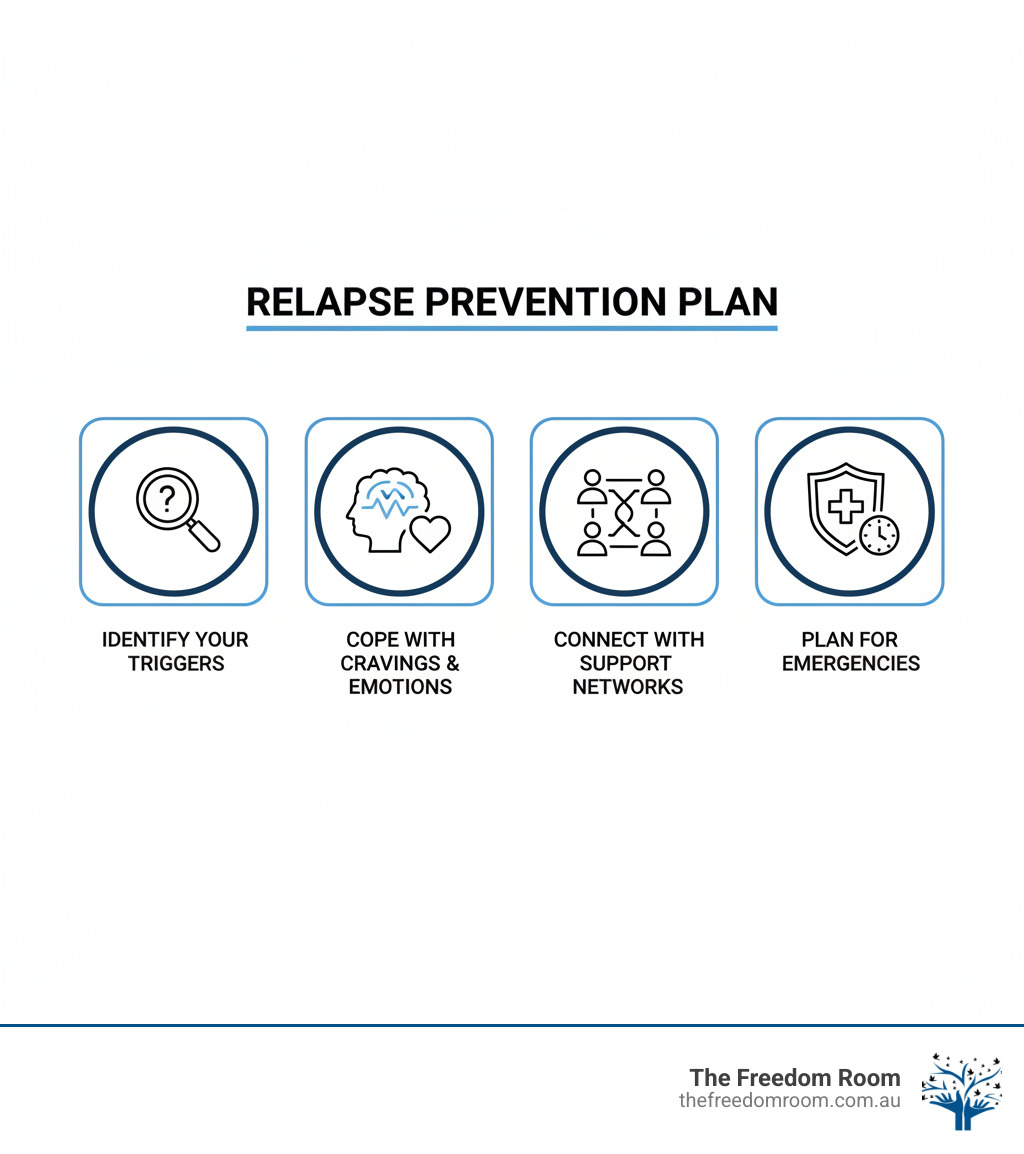
A relapse prevention plan terms you need:
Understanding Relapse: The Foundation of Prevention
Understanding relapse is a cornerstone of navigating the recovery journey. Relapse is often misunderstood as a sudden event, but it is a process that unfolds over time. Recognising its distinct stages offers opportunities for intervention and prevention.
This knowledge is the foundation of any effective relapse prevention plan. When you understand how relapse develops, you gain the power to interrupt it before it leads to physical use. This transforms fear into preparedness and helps you respond with action rather than shame.

The Three Stages of Relapse
The relapse process typically moves through three stages: emotional, mental, and physical. Each stage presents warning signs that allow you to take action before the situation escalates.
Emotional relapse is where the process begins, often before any conscious thoughts of drinking. This stage involves a decline in self-care, bottling up emotions, and withdrawing from support. While you are not consciously thinking of drinking, these behaviours create vulnerability. This is the time to prioritise self-care and reconnect with your support system. Our Mental Health Relapse Prevention Guide offers strategies for maintaining emotional wellness.
Mental relapse follows if emotional distress is not addressed. This stage is marked by an internal conflict between staying sober and thoughts of using. Cravings may intensify, and you might start glamorising past alcohol use or bargaining with yourself. This is a critical time to use coping strategies and reach out for support. Our resources on Coping With Alcohol Cravings provide practical guidance.
Physical relapse is the final stage, involving the act of consuming alcohol. It is important to distinguish between a lapse (a brief return to use) and a relapse (a more sustained return to old patterns). Neither is a moral failing. The goal of a relapse prevention plan is to interrupt the process long before this point. For more information, explore our Addiction Recovery Process Complete Guide.
Key Relapse Prevention Models
Several evidence-informed frameworks guide the development of effective relapse prevention strategies.
Marlatt’s Cognitive-Behavioural Model focuses on identifying high-risk situations and developing coping skills to manage them effectively. It uses cognitive-behavioural techniques to help you recognise and challenge unhelpful thought patterns that contribute to relapse risk.
Gorski’s CENAPS Model provides a structured, multi-step approach focused on self-regulation, integration, and understanding the addiction process. It emphasises self-knowledge, developing coping skills, and utilising a strong support network to maintain long-term recovery.
Both models underscore that prevention is an active, ongoing process that requires practical, client-driven strategies for managing triggers.
Reframing Relapse: Feedback, Not Failure
A common misconception is viewing relapse as a failure. It is more helpful to see it as feedback. Addiction is a chronic health condition, and like diabetes or hypertension, setbacks can occur.
A lapse or relapse does not mean treatment failed. It means your relapse prevention plan needs adjustment. Every setback offers valuable information about unrecognised triggers or areas where coping strategies need strengthening.
When you view relapse as feedback, you remove the shame that often prevents people from seeking help. This perspective fosters resilience and encourages you to re-engage with your recovery with new insight. For more on this compassionate viewpoint, consider Why relapse isn’t a sign of failure.
How to Create a Relapse Prevention Plan: Core Components
An effective relapse prevention plan is a dynamic, written document. It is a personalised, action-oriented strategy that evolves with your recovery journey. Creating this plan involves honest self-reflection and a commitment to proactive steps that support your daily wellness.
Think of your plan as a living roadmap that maps out practical steps for where you want to go. This is not about perfection; it is about building awareness and preparing for challenges with a clear course of action.
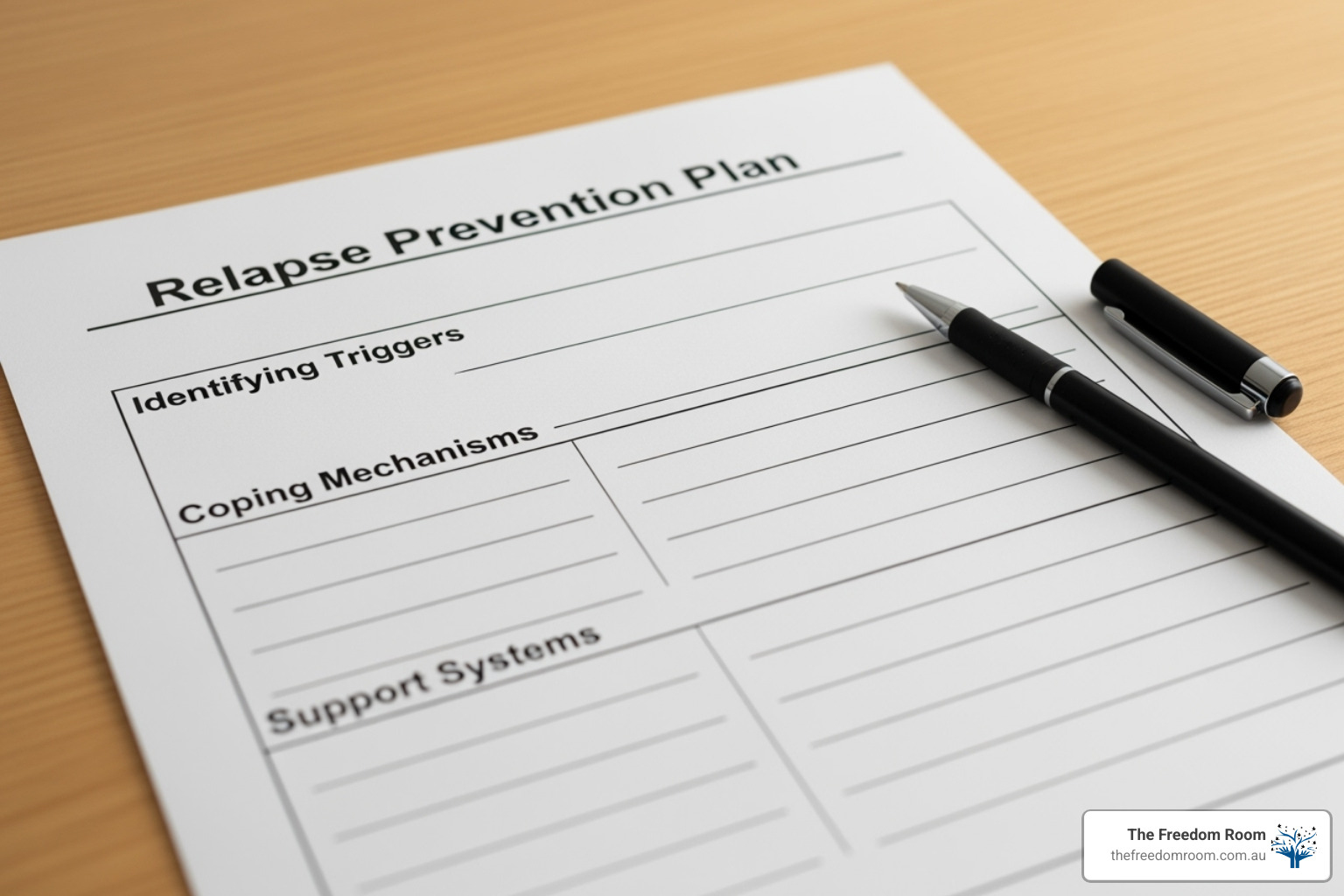
Identifying Your Personal Triggers
Understanding your personal triggers and high-risk situations is the cornerstone of your plan. These are the internal and external cues that can activate the urge to drink.
- Internal triggers come from within, including emotions like stress, anxiety, anger, or boredom. Thoughts of glamorising past use or feeling overwhelmed can also be powerful triggers.
- External triggers are environmental factors, such as specific people, places, or situations like social gatherings and anniversaries.
The HALT acronym is a simple tool for self-checking your vulnerability: Hungry, Angry, Lonely, Tired. Regularly checking in with HALT helps you address basic needs before they escalate. A Downloadable relapse prevention worksheet can be a beneficial starting point. Learning about healthy coping mechanisms is the next vital step.
Building a Toolkit of Coping Skills
Once you identify triggers, develop a toolkit of coping skills to manage cravings and difficult emotions. Cravings are a normal part of recovery; having strategies to ride them out is key. Our guide on Coping skills to prevent relapse offers extensive support.
Effective coping strategies include:
- Mindfulness and meditation help you observe cravings and emotions without judgement, allowing them to pass naturally. Explore our Mindfulness for Addiction Recovery Tips and Meditation for Addiction and Relapse Prevention.
- Breathing exercises, like box breathing, can quickly calm your nervous system during moments of intense craving. Learn more about Breathing Exercises for Addiction.
- Physical activity can reduce negative emotions and provide a healthy outlet for stress. Even a short walk can make a meaningful difference.
- Distraction techniques, such as hobbies, music, or journaling, can redirect your focus away from cravings. Journaling is a powerful tool for processing emotions, as highlighted in The Healing Power of Journalling.
- Cognitive Behavioural Therapy (CBT) helps you change unhelpful thinking and behavioural patterns. It is based on the principle that our thoughts, emotions, and actions are interconnected. CBT strategies involve recognising distorted thinking, developing problem-solving skills, and learning to face fears. Our resources on CBT for Addiction and Cognitive Behavioral Relapse Strategies provide practical guidance.
- Emotional Freedom Techniques (EFT), or tapping, is a tool used to process emotional distress. By tapping on specific acupressure points while focusing on a difficult emotion, you can send a calming signal to the brain’s stress centre. This helps disrupt the stress response, fostering greater emotional resilience. Find more about Emotional Freedom Technique.
Developing an Emergency Action Plan
An emergency action plan details immediate steps to take if you feel on the verge of returning to alcohol use. This plan should include:
- A support contact list with phone numbers for your therapist, sponsor, and trusted friends or family.
- Clear action steps, such as calling a support person or going to a safe, alcohol-free environment.
- A safe place to go if your home environment feels risky, like a friend’s house or a support group meeting.
- Delaying tactics, such as “playing the tape through” to visualise the negative consequences of drinking. This helps break impulsive decision-making.
Building a Supportive Lifestyle for Lasting Recovery
Sustainable recovery involves cultivating a holistic lifestyle that supports your overall well-being. This creates a resilient recovery ecosystem for both your physical and mental health. Our approach to Holistic Addiction Recovery explores this philosophy in depth.

The Power of Connection and Community
Isolation is a strong predictor of relapse, while connection and community are powerful allies. Building a robust support network is essential to any relapse prevention plan.
- Peer support groups offer motivation from people with shared lived experience. Our Peer Support Recovery programmes highlight this transformative approach.
- A recovery coach provides one-on-one guidance and accountability, often from their own lived experience of recovery.
- Family support is vital. Engaging loved ones in your recovery journey strengthens your support system and bolsters motivation.
- Professional therapy provides a safe space to process emotions, develop coping strategies, and address underlying issues.
Integrating Wellness and Healthy Routines
Lifestyle changes are integral to long-term sobriety. A structured daily routine provides purpose and reduces idle time that might lead to unhelpful thoughts.
Prioritising physical and mental health can significantly bolster recovery. This includes:
- Regular exercise to reduce negative emotions and improve mood.
- Balanced nutrition to support your mood, energy, and cognitive function.
- Adequate sleep, as poor sleep lowers inhibitions and makes you more vulnerable to triggers.
- Purposeful activities like hobbies or volunteering to provide a sense of accomplishment and meaning.
These pursuits remind you that life in recovery can be rich and fulfilling. Our guide on Caring for Your Mental Health offers further insights.
The Role of Professional Support in a Relapse Prevention Plan
Professional support offers expert guidance, evidence-based strategies, and accountability that strengthens your recovery foundation.
Therapies like Cognitive Behavioural Therapy (CBT) equip you with practical skills to manage thoughts and behaviours. Learn more about Cognitive Behavioural Therapy for alcohol.
Emotional Freedom Techniques (EFT) offer a gentle way to process underlying emotional distress that can fuel addiction. Explore Emotional Freedom Technique in more detail.
Other approaches like Acceptance and Commitment Therapy (ACT) foster psychological flexibility. Our page on ACT and Mindfulness for Trauma offers further insights.
Ongoing monitoring through regular check-ins with a professional provides an external layer of support, helping you stay on track and make necessary adjustments to your plan.
Maintaining and Personalising Your Relapse Prevention Plan
Your relapse prevention plan is a living document that should evolve with you. As you progress in recovery, your plan should reflect your growth and changing needs. Think of it as a trusted companion that you check in with regularly.
How to Create a Personalised Relapse Prevention Plan
The most effective plan is one that feels authentically yours, reflecting your personal goals and values.
To personalise your plan, reflect on your history with alcohol to identify patterns. Write it in your own words with specific, actionable steps. For example, instead of “manage stress,” write “when feeling overwhelmed, use box breathing for five minutes and then call a friend.”
Ensure the plan is easily accessible, such as a copy on your phone or at home. A downloadable relapse prevention worksheet can provide a helpful structure to start.
Your therapist or recovery coach can offer guidance, but a client-driven plan that you have ownership over is far more likely to be followed.
Reviewing and Updating Your Plan
Regular reviews ensure your relapse prevention plan remains relevant and effective.
Review your plan frequently, such as weekly in early recovery, shifting to monthly as you become more stable. There is no single right schedule; it is about what serves you best at each stage.
Always update your plan after major life changes, such as a new job, a relationship shift, or a loss. These events can introduce new stressors. Similarly, a close call or a lapse provides valuable information about how to strengthen your plan.
Sharing your plan with a therapist, sponsor, or trusted friend adds a valuable layer of accountability. This collaborative approach reinforces your commitment to ongoing wellness.
Find Your Strength, Begin Your Journey, and Stay Sober for Good
Creating and maintaining a relapse prevention plan is an empowering step in your recovery. It transforms uncertainty into a clear, proactive strategy for maintaining your well-being.
This guide has covered the essentials of an effective plan: understanding relapse, identifying triggers, building coping skills, and creating a supportive lifestyle. These elements work together to form a safety net for your recovery journey.
Relapse is not a failure; it is feedback. It is an opportunity to learn, adjust your plan, and strengthen your recovery. Progress, not perfection, is the key to building a stronger foundation every day.
At The Freedom Room, our team’s lived experience provides authentic, non-judgemental support. We are here to help you build a fulfilling, alcohol-free life, and we will walk alongside you every step of the way.
Our post-rehabilitation support services are designed to provide ongoing guidance and encouragement. From Cognitive Behavioural Therapy for alcohol to Emotional Freedom Technique, we offer the tools and community you need to thrive.
Your recovery matters, and you do not have to do it alone. Reach out to our team today to build a relapse prevention plan that supports your journey to lasting sobriety.
Frequently Asked Questions about Relapse Prevention
Here, we address some of the most common concerns about a relapse prevention plan and the recovery journey.
What is the difference between a lapse and a relapse?
Understanding this distinction helps you respond with clarity and compassion.
- A lapse is a brief, one-time return to alcohol use, followed by a quick recommitment to recovery.
- A relapse is a more sustained return to old patterns of use, abandoning recovery efforts for a period.
If a lapse occurs, it is crucial to take immediate action. Avoid shame and contact your support network. Use the experience as a learning opportunity to identify triggers and strengthen your relapse prevention plan.
How often should I review my relapse prevention plan?
The frequency of review depends on your stage of recovery.
- In early recovery, review your plan weekly. This is a time of rapid change, and frequent check-ins allow for quick adjustments.
- In long-term recovery, monthly or quarterly reviews may be sufficient once you have established stability.
- After significant events, always review your plan. Life changes, close calls, or lapses introduce new stressors and provide crucial feedback for strengthening your strategies.
Is a relapse a sign of failure?
No. This is a damaging misconception. Relapse is not a moral failing or a sign of weakness.
Addiction is a chronic health condition. Like other chronic conditions such as diabetes, recurrence can happen. It does not mean the person or the treatment has failed.
View a relapse as feedback that your relapse prevention plan needs adjustment, not as a reason for shame. It is an opportunity to learn, strengthen your strategies, and re-engage with your recovery with greater insight and resilience.