

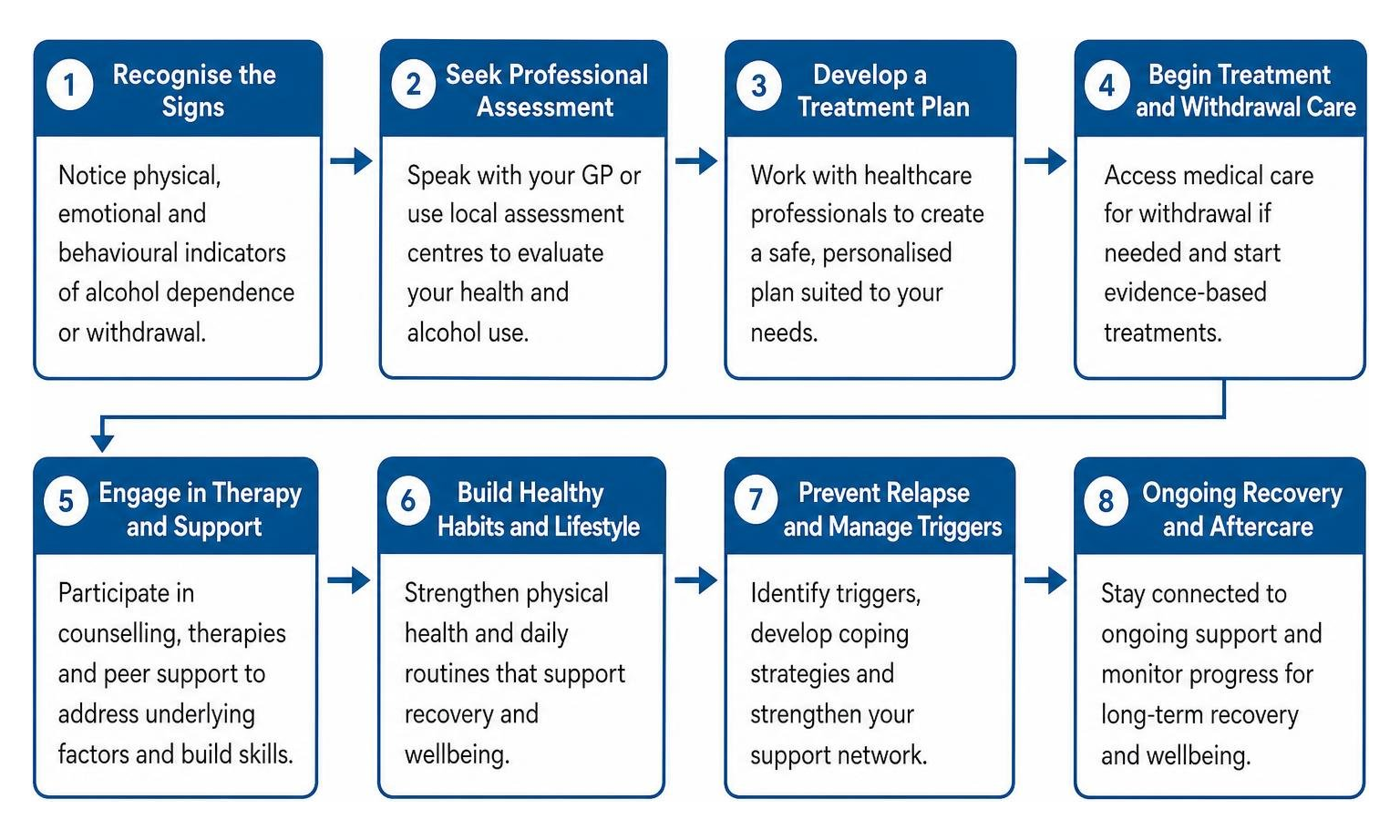
Finding professional help for alcohol dependence begins with an honest assessment of your drinking habits and establishing a safe, evidence-based pathway toward health. When alcohol consumption regularly exceeds recommended thresholds, physical tolerance and psychological reliance can develop gradually. Navigating this transition safely requires clinical oversight, proven psychological interventions, and structured community support.
At The Freedom Room, our multidisciplinary team combines professional clinical expertise with personal lived experience in recovery. We appreciate the courage required to seek help, and we provide compassionate, confidential, and practical guidance throughout every stage of the healing process.
Evidence-Based Treatment and When Medical Care Is Needed
According to the Australian Institute of Health and Welfare, alcohol remains one of the primary reasons Australians seek professional drug and alcohol treatment services. The National Health and Medical Research Council (NHMRC) Australian Guidelines advise that healthy adults should consume no more than 10 standard drinks per week and no more than 4 standard drinks on any single day to minimise the lifetime risk of harm from alcohol-related disease or injury. When alcohol use consistently exceeds these national recommendations, neurochemical adaptations occur within the brain, leading to increased tolerance and physical dependence.
Identifying the Physical and Psychological Signs of Dependence
Alcohol dependence involves both physical adaptation, in which the central nervous system requires alcohol to maintain equilibrium, and psychological reliance, where alcohol becomes a primary mechanism for coping with emotional distress or daily pressures.
Clinical evaluation helps differentiate between social drinking, hazardous consumption, and established dependence. Exploring dedicated support for alcohol use disorder can help you identify where your patterns sit along the diagnostic spectrum.
Key physical and behavioural indicators associated with alcohol dependence include:
- Development of tolerance, requiring progressively larger quantities of alcohol to achieve the desired effect.
- Frequent, intense cravings or persistent intrusive thoughts about consuming alcohol.
- Impaired control over drinking, including an inability to stop once consumption has commenced.
- Prioritising alcohol consumption over occupational, social, domestic, or recreational commitments.
- Continued drinking despite awareness of persistent physical complications, psychological distress, or relational strain.
- Chronic sleep architecture disruption, gastrointestinal disorders, or elevated liver enzymes on routine pathology tests.
- Emergence of heightened rebound anxiety, restlessness, or depressive symptoms as blood alcohol concentration drops.
Specific physical withdrawal indicators requiring immediate medical intervention include:
- Involuntary coarse tremors or shaking in the hands upon waking.
- Profuse perspiration, tachycardia, elevated pulse rate, or hypertension.
- Severe gastrointestinal distress, persistent nausea, and dry retching.
- Profound psychomotor agitation, panic episodes, or acute insomnia.
- Confusion, auditory or visual hallucinations, or unprovoked seizures.
Professional Assessments and First Steps to Access Help for Alcohol Dependence
Consulting a General Practitioner (GP) is the most effective initial step in accessing structured support. A GP conducts a thorough baseline health assessment, orders essential liver function pathology and full blood counts, evaluates mental health history, and discusses safe treatment options.
To prepare for this consultation, maintain a detailed diary of your average daily and weekly alcohol consumption, record any physical sensations experienced when not drinking, and list all prescribed or over-the-counter medications. Clear and transparent communication allows your practitioner to recommend an appropriate clinical care plan.
For individuals residing in Queensland, accessing public healthcare resources is facilitated through the Queensland Government alcohol and drug help portal, which provides directories for public intake assessment centres, hospital detoxification units, and community health services. Reviewing a guide to finding effective drinking help alongside public services enables individuals to clarify their specific recovery goals, whether that involves structured moderation or complete abstinence.
| Support Pathway | Focus Areas | Typical Setting | Primary Goal |
|---|---|---|---|
| Medical Withdrawal | Supervised detox, vital monitoring, symptom management | Inpatient clinic, hospital, or supported home care | Safe cessation and physiological stabilisation |
| Evidence-Based Therapy | Cognitive behavioural therapy, motivational enhancement | Outpatient psychology, recovery centres | Identifying triggers, reshaping coping patterns |
| Clinician-Led Medication | Craving reduction, relapse deterrents | General practice, specialist addiction medicine | Supporting chemical balance and long-term sobriety |
| Peer & Family Support | Shared lived experience, mutual accountability | Community groups, family therapy | Sustained community connection, repairing relationships |
Recognising When Medical Withdrawal Support Is Needed
For individuals with established physical dependence on alcohol, ceasing drinking abruptly without medical management carries significant health risks, including severe autonomic hyperactivity and seizures. A medically supervised withdrawal regimen, commonly known as detoxification, provides close clinical monitoring and pharmaceutical intervention to ensure safety and physical comfort while the body clears alcohol.
Supervised withdrawal protocols typically occur over five to ten days, depending on individual physiological response. Medical staff may prescribe targeted medications, such as benzodiazepines, on a tapering schedule to dampen central nervous system excitability and prevent complications. Clinicians also correct electrolyte imbalances, administer intravenous or intramuscular high-dose thiamine (vitamin B1) to prevent Wernicke-Korsakoff syndrome, and monitor vital signs around the clock.
Counselling and Tailored Recovery Support for Alcohol Dependence
Following successful physiological stabilisation, psychological therapy addresses the emotional, behavioural, and cognitive factors driving problematic drinking habits.
Evidence-based therapeutic modalities include:
- Cognitive Behavioural Therapy (CBT), identifying maladaptive cognitive patterns and developing actionable emotional regulation skills.
- Motivational Interviewing (MI), resolving ambivalence regarding lifestyle changes and strengthening internal commitment to recovery.
- Dialectical Behaviour Therapy (DBT), enhancing distress tolerance, interpersonal effectiveness, and emotional stability.
- Acceptance and Commitment Therapy (ACT), aligning behavioural choices with core personal values rather than emotional avoidance.
- Systemic family therapy, addressing relational dynamics, resolving interpersonal conflict, and establishing healthy home environments.
Our team provides effective help with alcohol addiction by uniting clinical modalities with real-world recovery experience.
According to the NICE clinical guidelines for alcohol dependence, integrating psychological counselling with approved anti-craving medications significantly improves recovery maintenance. Medical specialists may prescribe pharmacotherapy medications such as acamprosate or naltrexone to assist in restoring neurotransmitter equilibrium and diminishing compulsive cravings.
Building Long-Term Sobriety, Relapse Prevention, and Support Networks

Achieving initial sobriety represents an important turning point, but maintaining long-term recovery requires sustained lifestyle restructuring, emotional resilience, and active boundary management. Recovery is a continuous process of personal development, replacing destructive habits with positive, alcohol-free routines.
Relapse Prevention Strategies and Continuing Aftercare
Relapse is not an inevitable outcome, but when setbacks occur, they indicate that specific coping mechanisms or support networks require adjustment. Developing a detailed, personalised relapse prevention plan equips individuals with proactive strategies to navigate high-risk scenarios effectively.
Core elements of an effective aftercare plan include:
- Establishing structured daily routines that prioritise restorative sleep, wholesome nutrition, and regular exercise.
- Identifying and documenting internal triggers, such as fatigue, loneliness, or emotional tension, alongside external environmental cues.
- Formulating a written emergency response protocol with direct contact details for trusted clinicians and support figures.
- Incorporating mindfulness-based stress reduction and grounding techniques to navigate acute emotional distress safely.
- Scheduling regular outpatient counselling sessions to maintain accountability and address emerging challenges early.
Family Support Systems and Community Resources
Alcohol dependence creates significant emotional and practical strain across familial and intimate relationships. Involving partners and family members within the recovery process through structured family counselling produces substantially better long-term outcomes than navigating treatment in isolation.
Complementary community groups and mutual-aid fellowships provide ongoing connection alongside clinical care:
- SMART Recovery groups offer practical, cognitive-behavioural tools for self-management within supportive peer environments.
- Al-Anon Family Groups provide dedicated peer support, practical guidance, and healthy boundary-setting tools for relatives.
- Online peer recovery communities and mobile check-in platforms offer continuous connection and immediate accountability.
Ready for Change? Let’s Build a Stronger, Alcohol-Free Future Together
Making the decision to address alcohol dependence is a profound and positive step toward reclaiming your health and vitality. You do not have to undertake this journey on your own. At The Freedom Room, our experienced team provides empathetic, professional, and practical recovery support informed by real-world understanding.
We invite you to explore our services to discover the full scope of treatment pathways available. You can access in-person clinical care through our dedicated addiction counselling services located at 9a/521 Beams Rd, Carseldine QLD 4034, or engage with structured remote therapy through The Freedom Room 12-week online recovery program.
When you are ready to take positive action, please contact us to discuss a confidential, customised recovery plan designed to support lasting wellbeing and health.
Frequently Asked Questions
What is the very first step I should take if I want to stop drinking?
The safest initial step is consulting a General Practitioner or qualified addiction specialist. A medical practitioner can evaluate your overall health, assess your degree of physical alcohol dependence, and determine whether supervised medical withdrawal is necessary before you begin counselling or lifestyle changes.
Can I safely detox from alcohol at home?
Home-based detoxification is only considered safe for mild dependence when evaluated, prescribed, and closely monitored by a qualified medical practitioner. Individuals with moderate to severe physical dependence on alcohol require 24-hour clinical supervision in an inpatient or hospital facility to prevent potentially life-threatening complications such as seizures or delirium tremens.
How long does it take for the brain and body to recover from alcohol dependence?
Acute physiological withdrawal symptoms generally resolve within five to ten days, though individual timelines vary. Neurochemical recovery, cognitive clarity, and emotional equilibrium continue to improve over several months of sustained sobriety. Regular psychological therapy, balanced nutrition, and structured routines significantly enhance long-term neurological healing.
Do I have to commit to lifelong abstinence, or can I learn to moderate?
Treatment goals depend on individual health factors, medical history, and the severity of dependence. While individuals with mild alcohol-related harm may sometimes achieve safer moderation, those with severe physical dependence on alcohol generally find complete abstinence to be the safest and most sustainable path for enduring health.
How can I support a family member who refuses to acknowledge their drinking problem?
Approach conversations with empathy, choosing calm moments when your loved one is not intoxicated. Use open, non-judgemental communication that focuses on your care and concern rather than assigning blame. Set clear personal boundaries and seek independent support through organisations such as Al-Anon or specialist family counselling services.