
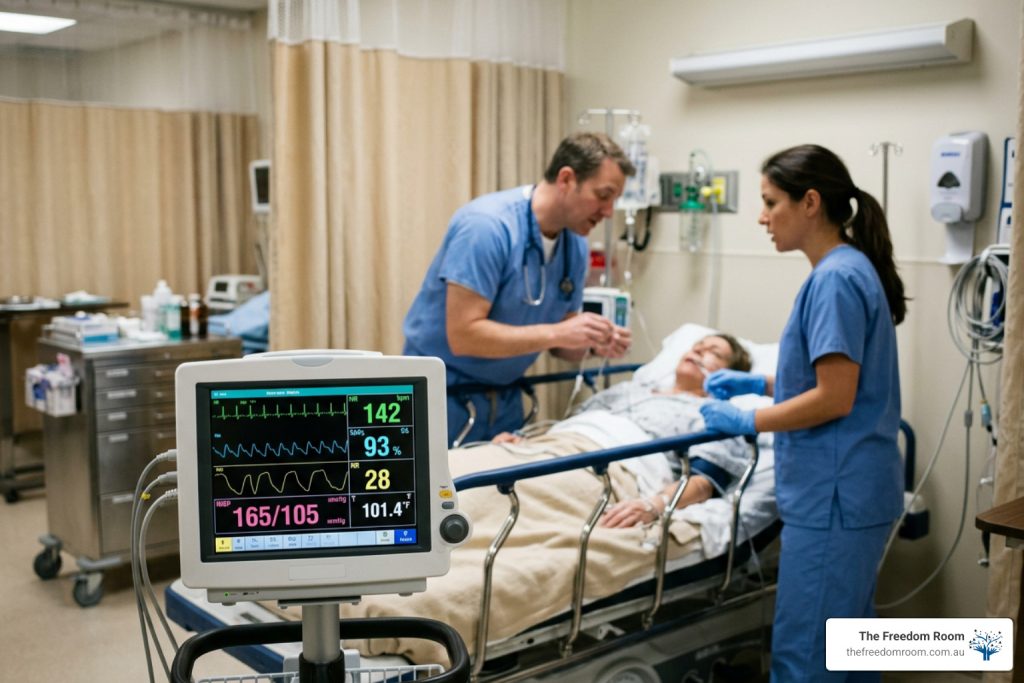
Clinical Presentation and Symptoms of Acute Delirium Tremens
Acute delirium tremens (DTs) is the most severe and life-threatening manifestation of alcohol withdrawal syndrome. It is clinically characterised by sudden global confusion, disorientation, severe psychomotor agitation, vivid hallucinations, and profound autonomic instability, including high fever, heavy diaphoresis, and marked tachycardia. This medical emergency typically develops 48 to 72 hours after the cessation or substantial reduction of heavy drinking in individuals with severe physical dependence on alcohol. Without prompt hospitalisation and medical management, acute delirium tremens carries significant mortality risks from cardiovascular collapse, hyperthermia, and status epilepticus.
Recognising the clinical presentation early is vital because the transition from uncomplicated withdrawal to delirium tremens can occur rapidly. Patients experiencing acute delirium tremens lose contact with reality, exhibiting severe cognitive fragmentation and fluctuating consciousness. They may display profound fear, agitation, and extreme restlessness, often struggling against bed rails or attempting to flee imagined threats. Autonomic instability can escalate quickly, placing immense strain on the cardiovascular and respiratory systems.
Neurobiology and Pathophysiology of Withdrawal Delirium
To understand why this medical crisis occurs, we must examine how chronic alcohol consumption alters central nervous system neurochemistry. Alcohol acts as a central nervous system depressant by enhancing gamma-aminobutyric acid (GABA), the brain’s primary inhibitory neurotransmitter, while concurrently suppressing N-methyl-D-aspartate (NMDA) glutamate receptors responsible for excitatory neurotransmission.
With prolonged heavy drinking, the brain adapts through compensatory neuroadaptations:
- GABA Receptor Downregulation: The brain decreases the number and sensitivity of GABA receptors to counterbalance alcohol’s persistent depressant effect.
- NMDA Receptor Upregulation: The brain increases the density of NMDA glutamate receptors to preserve baseline cognitive arousal.
When alcohol intake is abruptly halted, the inhibitory brake is instantly removed, leaving uninhibited, hyperactive glutamate receptors. This shift causes extensive glutamate excitotoxicity and triggers a massive noradrenergic storm. As outlined in evidence-based clinical guidance, this acute sympathetic overdrive produces the severe tremors, blood pressure surges, and delirium characteristic of complicated withdrawal. Furthermore, repeated unassisted detoxifications cause a cumulative neurological phenomenon known as kindling, lowering the seizure threshold as discussed in our essential guide to alcohol addiction withdrawal. Over time, kindling worsens the severity of each subsequent withdrawal episode, predisposing patients to earlier onset of seizures and complex delirium.
Key Risk Factors for Acute Delirium Tremens
While not all dependent drinkers develop delirium, several clinical indicators markedly increase vulnerability. According to Australian alcohol data and research, chronic heavy drinking patterns significantly elevate physical complications.
- Previous Complicated Withdrawals: Past episodes of withdrawal seizures or delirium represent the strongest single predictor of recurrence.
- Sustained Daily Consumption: Consuming large volumes of alcohol daily over years causes profound neuroadaptation.
- High Blood Alcohol Concentration with Active Withdrawal: Tremors presenting alongside elevated measurable blood alcohol indicate advanced tolerance.
- Haematological and Electrolyte Imbalances: Low potassium (hypokalaemia), low magnesium, and thrombocytopenia (low platelet count) strongly correlate with severe progression.
- Nutritional Depletion: Depleted thiamine (vitamin B1) stores impair cerebral metabolism, elevating neurotoxicity risks.
- Concurrent Medical Illness: Co-occurring acute infection, pancreatitis, or liver impairment reduces physiological reserve.
Our complete guide to delirium tremens provides further insight into assessing withdrawal risk profiles.
Timeline and Warning Signs of Acute Delirium Tremens
Withdrawal delirium follows a recognisable progression, often emerging after a deceptive window of temporary lucidity where early tremors or nausea briefly seem to improve.
- Stage 1: Minor Withdrawal (6 to 24 Hours): Mild tremors, insomnia, anxiety, diaphoresis, and elevated pulse.
- Stage 2: Hallucinosis and Seizures (12 to 48 Hours): Transient visual or auditory perceptual distortions and generalised tonic-clonic seizures, while orientation is usually preserved.
- Stage 3: Severe Delirium (48 to 72+ Hours): Complete onset of withdrawal delirium, with severe cognitive disintegration and severe sympathetic overdrive, peaking between days four and five.
For a detailed hourly breakdown, consult our guide to alcohol withdrawal and detox timelines.
Autonomic Instability and Perceptual Hallucinations
The physical hallmarks of delirium tremens stem from unmoderated autonomic discharge. Resting heart rates often exceed 130 beats per minute, systolic blood pressure can surpass 180 mmHg, and profuse drenching sweats lead to severe dehydration. Core body temperatures may rise sharply into life-threatening hyperpyrexia.
These physical crises occur alongside terrifying sensory disturbances. Visual hallucinations often feature menacing shapes, while tactile disturbances frequently manifest as formication, which is the intense sensation of insects crawling on or under the skin. Auditory hallucinations may involve distressing voices or threatening noises that compound the patient’s agitation. As explored in the DTs decoded: recognising the most severe alcohol withdrawal symptoms, these terrifying symptoms combined with intense delusions require continuous acute medical monitoring in an intensive care setting, as highlighted in medical management reviews.
Medical Management, Prognosis, and Safe Recovery Pathways

Treating acute delirium tremens requires urgent inpatient medical admission. The primary objectives are stabilising vital signs, terminating central neurochemical hyperactivity, correcting critical fluid deficits, and preventing secondary physical injury. Because mortality without medical intervention can reach up to fifteen percent, immediate clinical intervention in an emergency or intensive care unit is non-negotiable.
Emergency Diagnostic Tools and Medical Protocols
In emergency settings, clinical teams utilise validated objective instruments to guide pharmacological decisions. While CIWA-Ar protocols work well in mild withdrawal, summaries from the clinical overview of delirium tremens note that CIWA-Ar is unreliable during active delirium because patients cannot coherently answer questions. Instead, objective sedation tools like the Richmond Agitation-Sedation Scale (RASS) are utilised to gauge the depth of sedation and symptom severity.
- Benzodiazepine Sedation Protocols: High-dose parenteral benzodiazepines (such as diazepam, lorazepam, or oxazepam) are titrated rapidly using symptom-triggered approaches to restore GABAergic inhibition and prevent status epilepticus. Lorazepam or oxazepam is preferred in patients with significant hepatic impairment or advanced age.
- Refractory Delirium Interventions: If aggressive benzodiazepine dosing fails to control extreme agitation, intravenous barbiturates like phenobarbital or infusions of propofol or dexmedetomidine are deployed in intensive care to provide synergistic neural suppression.
- Parenteral Thiamine Administration: High-dose thiamine must always be administered intravenously or intramuscularly before any glucose infusions to prevent acute Wernicke’s encephalopathy, a disabling and potentially fatal condition.
- Intravenous Fluid and Electrolyte Repletion: Correcting potassium, magnesium, and phosphate imbalances restores metabolic stability, rehydrates depleted tissues, and minimises cardiac dysrhythmias.
Attempting unsupervised withdrawal at home carries severe medical hazards; enrolling in structured safe alcohol detox is essential for physical safety and continuous clinical supervision.
Post-Detoxification Rehabilitation and Relapse Prevention
Once physical stabilisation is achieved, long-term recovery begins. Medical detox manages acute physiological danger, but ongoing emotional, psychological, and lifestyle support is necessary to rebuild sustainable health and prevent relapse. Detoxification clears the substance from the body, but it does not resolve the underlying behavioural patterns, emotional triggers, or psychological distress that drive harmful drinking.
At The Freedom Room Wellness and Recovery, we provide compassionate, cost-effective alcohol addiction treatment designed to bridge the transition from clinical detox to lasting wellness. Our team members are in recovery themselves, offering genuine empathy, practical insights, and an environment free from clinical detachment.
Through personalised one-on-one sessions, interactive recovery workshops, and evidence-based therapeutic modalities, we assist individuals in uncovering root drivers of drinking, restoring physical wellbeing, and establishing robust relapse prevention plans. Moving beyond physical alcohol dependence is a journey, and with authentic, lived-experience support, lasting sobriety is achievable. Clients gain practical tools to navigate high-risk situations, manage stress, repair personal relationships, and cultivate meaningful daily routines that support long-term wellness.
Start Your Journey to Lifelong Recovery Today
Recovering from severe physical dependence on alcohol requires immediate medical safety followed by dedicated long-term care. You do not have to navigate this path alone.
Our compassionate team at The Freedom Room Wellness and Recovery offers lived-experience guidance tailored to your individual recovery goals. Discover our individualised programs through Our Services to find the right support pathway for your circumstances.
Take the first step toward lasting wellness, emotional resilience, and renewed vitality. To speak confidentially with our supportive team, reach out through our Contact Us page to arrange a private assessment. You can also visit our recovery centre locally at 9a/521 Beams Rd, Carseldine QLD 4034, proudly supporting individuals and families across Strathpine and surrounding communities.
Frequently Asked Questions
What is the difference between delirium tremens and alcoholic hallucinosis?
Alcoholic hallucinosis typically occurs within 12 to 24 hours of cessation and features auditory or visual hallucinations while the patient remains orientated. In contrast, acute delirium tremens develops later (usually 48 to 72 hours post-cessation) and involves profound disorientation, global cognitive confusion, and dangerous autonomic instability including fever and tachycardia.
Can delirium tremens be treated safely at home?
No. Acute delirium tremens is a critical medical emergency that carries substantial mortality without specialised hospital care. It requires continuous inpatient cardiorespiratory monitoring, intravenous sedation, and fluid resuscitation in an acute hospital or intensive care setting.
How long do delirium tremens symptoms usually last?
With proper inpatient medical management, acute delirium symptoms typically subside within three to eight days. However, post-acute symptoms such as sleep disturbance, anxiety, and mood changes can persist for several weeks during neurological recalibration.
Why is thiamine given before glucose in severe alcohol withdrawal?
Chronic alcohol use severely depletes thiamine (vitamin B1) reserves. Administering intravenous glucose before replenishing thiamine accelerates cerebral carbohydrate metabolism, exhausting residual B1 stores and precipitating acute Wernicke’s encephalopathy, a severe neurological disorder causing permanent cognitive and physical impairment.
For confidential, experienced guidance, connect with our team through Our Services or contact us through our Contact Us page to make a private enquiry. When you are ready, compassionate lived-experience support is available at 9a/521 Beams Rd, Carseldine QLD 4034.