

Practical Steps to Master Communication and Relational Healing in Recovery
To resolve conflict without relapsing, pause before responding, regulate your nervous system, use clear “I” statements, and set firm boundaries around respectful communication. These steps create enough emotional space to speak honestly without escalating into blame, withdrawal, or cravings. Understanding that conflict resolution is critical for any recovering addict helps turn stressful disagreements into opportunities for stability, accountability, and relational healing.
Unresolved disputes can quickly intensify resentment, guilt, and emotional dysregulation. When interpersonal tension peaks, fight-or-flight mechanisms may trigger cravings to self-soothe. Learning practical communication tools, impulse control, and emotional regulation ensures that moments of friction no longer threaten hard-won sobriety. For an in-depth examination of managing these dynamics, explore the definitive guide to conflict resolution for addiction.
Developing genuine emotional sobriety means addressing uncomfortable interpersonal situations directly rather than deflecting or surrendering. When individuals express their needs constructively, they reduce the internal pressure that previously fuelled substance use. Constructive disagreement can then become a bridge to deeper intimacy, mutual respect, and lasting personal integrity.
How Neurobiology and the Stress Cycle Drive Relapse Triggers
Interpersonal friction is not merely a social challenge; it is a profound neurological event. During heated arguments, the brain’s instinctual limbic system reacts instantly to perceived emotional threats. This survival-oriented structure triggers an involuntary surge of cortisol and adrenaline, prompting reactive responses such as shouting, shutting down, or fleeing. In individuals recovering from substance dependence, these automatic pathways are deeply intertwined with historical coping mechanisms. When emotional safety feels compromised, the brain seeks the quickest route to equilibrium, which historically involved alcohol or other substances.
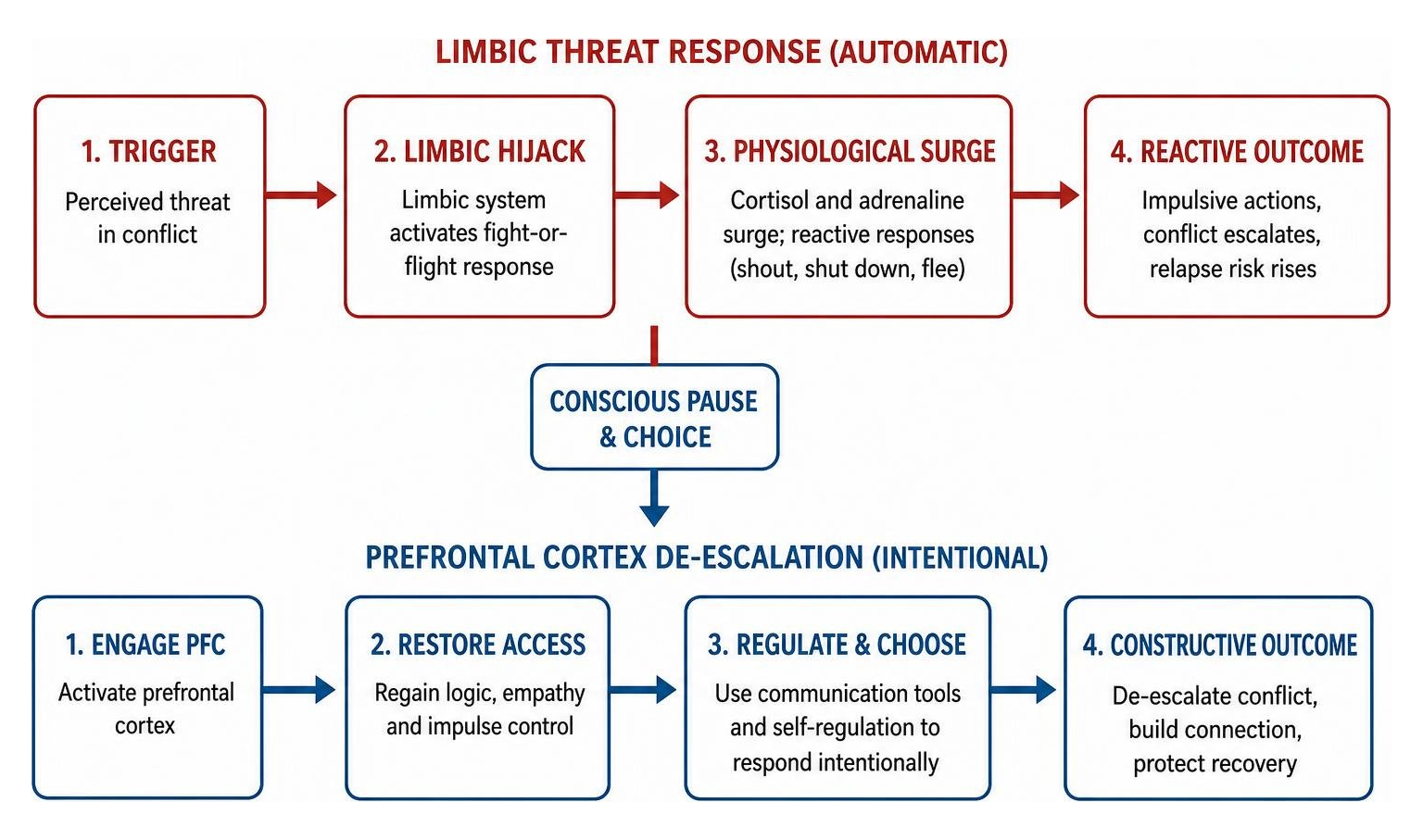
When the limbic system dominates, access to the prefrontal cortex, the region responsible for impulse control, empathy, logic, and long-term planning, is temporarily compromised. Without conscious intervention, a person naturally defaults to familiar reactionary patterns, accelerating through a rapid anger and stress cycle. The clinical framework presented in the Conflict Resolution for Recovery curriculum highlights how understanding this neurobiology allows individuals to interrupt automatic reflexes and engage the rational cortex before acting. Recognising physical warning signs, such as an elevated pulse, shallow breathing, or tension in the jaw, gives individuals the vital seconds needed to implement de-escalation practices.
In Australia, the physiological impacts of alcohol misuse remain significant. According to verified Australian Institute of Health and Welfare alcohol research, alcohol remains one of the most widely used substances contributing to substantial personal and community harm. Developing structured approaches to alcohol conflict resolution enables individuals to de-escalate physiological arousal, break destructive behavioural loops, and preserve their recovery journey in high-stress domestic or professional settings.
Neurobiological healing takes deliberate practice and time. As the brain undergoes neuroplastic adaptation during sustained sobriety, new neural connections form to support healthier stress responses. By consistently practising physiological calming strategies, such as diaphragmatic breathing, bilateral stimulation, and grounding exercises, individuals retrain their autonomic nervous system to stay regulated even in high-stakes conversations. Over time, these deliberate practices replace reactive distress with calm, thoughtful dialogue.
Why Conflict Resolution Is Critical for Any Recovering Addict Facing Trauma and Shame
A substantial proportion of people navigating recovery carry unaddressed psychological trauma and adverse life experiences. More than 90% of individuals who attempt to cease addictive behaviours without resolving the underlying emotional drivers, such as unresolved trauma and relational distress, eventually experience a relapse. Compulsive substance use frequently serves as a coping crutch to numb profound emotional pain, fear, and chronic shame. When unexpected interpersonal confrontation occurs, it can instantly trigger deep feelings of unworthiness and defensive hostility.
Historically, conventional treatment paradigms insisted on maintaining total abstinence before addressing underlying psychological wounds. However, contemporary evidence demonstrates that sequential approaches can create unnecessary emotional limbo, leaving deep-seated distress unmanaged. As clinical insights on Why “Get Sober First” Is Backwards and Wrong | Psychology Today Canada demonstrate, treating post-traumatic stress concurrently with substance use disorders enhances engagement and overall outcomes without compromising sobriety. Addressing these emotional burdens alongside communication training builds comprehensive, lasting resilience.
Furthermore, data from complex populations indicates that over 80% of incarcerated men report at least one adverse childhood experience; treating this underlying trauma directly improves emotional well-being and social functioning. Engaging in conflict resolution therapy while simultaneously processing emotional trauma dismantles internalised shame, empowering individuals to navigate difficult conversations with genuine self-worth, emotional resilience, and constructive vulnerability.
When shame is left unaddressed, disagreements are often perceived as direct attacks on personal worth. This misinterpretation leads to acute defensiveness, counterattacks, or total withdrawal. By separating one’s core identity from temporary behavioural missteps, recovering individuals learn to tolerate constructive feedback without collapsing into self-loathing or resorting to chemical numbing.

Mastering Constructive Communication and Emotional Regulation
Mastering constructive communication requires shifting from an adversarial mindset to one of collaborative problem-solving. In active dependence, interpersonal encounters often centre on defensiveness, manipulation, or proving oneself right. In sustainable recovery, the primary objective shifts toward mutual understanding and relational connection. Embracing this perspective allows disagreements to become constructive opportunities for personal maturity rather than threats to emotional safety.
Cultivating emotional resilience during discussions requires systematic practice and patience. Recovering individuals can replace reactive defensiveness with curiosity, active listening, and thoughtful responses by applying effective conflict resolution techniques. Moving from instinctual reactions to structured dialogue ensures that both parties feel respected, heard, and valued throughout any discussion, reinforcing the foundation of mutual trust necessary for lasting sobriety.
Effective communication also demands high self-awareness regarding tone, posture, and facial expressions. Non-verbal cues frequently convey more emotional weight than the spoken words themselves. Maintaining an open posture, relaxing facial muscles, and speaking in a calm, moderate volume prevent unnecessary escalation. When both parties observe physical signals of calmness, the likelihood of a constructive resolution increases exponentially.
Why Conflict Resolution Is Critical for Any Recovering Addict Rebuilding Relationships
Rebuilding broken trust is one of the most delicate tasks in recovery. Years of physical dependence on alcohol or other substances often leave partners, family members, and friends feeling guarded, anxious, or resentful. In many instances, relationships develop unhelpful codependent patterns, where boundaries become blurred and communication relies on passive-aggressive remarks or unspoken expectations.
To foster healthy relationships in recovery, both individuals must establish transparent, realistic relationship agreements. These agreements define acceptable behaviour, establish emotional safety, and clarify expectations around accountability. Rather than relitigating past mistakes during every disagreement, collaborative partners focus specifically on identifying the precise moment of misunderstanding and addressing current needs.
Using nonviolent communication frameworks helps dismantle old blame cycles. By accessing a guide to healthy conflict resolution in recovery, families and couples learn to validate each other’s feelings without invalidating personal recovery needs, creating an environment where mutual respect, accountability, and genuine healing can flourish.
Consistent accountability is the cornerstone of relational repair. Words alone cannot repair years of instability, but consistent, respectful actions over time gradually restore confidence. When individuals acknowledge their part in a dispute promptly, offer sincere amends without making excuses, and adhere strictly to agreed boundaries, relational partners begin to feel secure once again.
Step-by-Step Techniques for De-escalating Disputes and Setting Boundaries

De-escalating interpersonal tension requires intentional structure, clear boundaries, and disciplined self-regulation. When discussions become heated, relying on structured conversational strategies prevents emotional flooding and protects both individuals from saying things that undermine relational trust and sobriety milestones.
The following structured steps provide a reliable framework for de-escalating disputes in daily life:
- Implement an intentional pause: The moment physical signs of anger or distress appear, such as elevated heart rate, shallow breathing, or clenched fists, request a structured 15-minute break. This simple pause interrupts the limbic response and allows the prefrontal cortex to regain control.
- Utilise assertive “I” statements: Frame concerns around personal experiences rather than accusatory generalisations. Replacing statements such as “You always disregard my schedule” with “I feel overwhelmed when our plans change unexpectedly” eliminates immediate defensiveness and invites collaborative discussion.
- Opt for neutral, side-by-side environments: Engaging in difficult conversations while going for a walk or driving reduces intimidating eye contact and lowers perceived confrontational pressure, fostering calmer exchanges.
- Establish and maintain firm boundaries: Setting clear boundaries is an act of self-care and mutual respect. Explicitly outline personal limits regarding respectful language, acceptable behaviours, and communication cut-off times. To implement these strategies seamlessly, review how to set boundaries in recovery in 7 simple steps.
Adhering to these practical guidelines creates an atmosphere of safety where emotional needs can be communicated without fear of volatile reactions.
Sustaining Sobriety Through Professional Support and Collaborative Growth
Sustaining long-term recovery is rarely an individual pursuit. When relationship wounds, complex family dynamics, or deep-seated trauma stall personal progress, seeking objective professional guidance is a vital sign of strength. Structured peer support and professional mediation provide safe, neutral environments where underlying relational tensions can be explored without risk of escalation.
Working with experienced practitioners allows recovering individuals to practice real-time conversational regulation, address longstanding codependent dynamics, and unlearn maladaptive conflict patterns. At The Freedom Room, our lived experience in recovery combined with evidence-informed approaches ensures our clients receive authentic, empathetic, and highly practical support. Accessing specialised addiction counselling empowers individuals to navigate complex interpersonal disputes confidently while protecting their sobriety.
Therapeutic intervention provides the dedicated space necessary to dissect complex emotional patterns that are difficult to untangle alone. Through targeted therapeutic modalities, individuals learn to identify their core emotional triggers, reframe cognitive distortions, and practice assertive communication strategies in simulated settings. This guided preparation builds real-world confidence, making healthy communication an instinctive response in everyday interactions.
Discover the Support You Need for a Lasting, Successful Recovery
Mastering constructive conflict resolution transforms interpersonal challenges into meaningful opportunities for personal growth, emotional connection, and sustained healing. By understanding the brain’s stress response, addressing root trauma, implementing intentional communication techniques, and establishing firm personal boundaries, you can build a fulfilling and stable life free from substance dependence.
At The Freedom Room Wellness and Recovery, our team walks alongside you with the authentic empathy that comes from personal lived experience in recovery. We provide compassionate, evidence-informed support tailored to your unique circumstances and relational goals. To explore our full range of therapeutic programmes, discover Our Services today. If you are ready to rebuild your relationships and secure your future, please Contact Us or visit us at our centre located at 9a/521 Beams Rd, Carseldine QLD 4034, proudly supporting individuals and families across Strathpine and surrounding communities.