

What Are the Long-Term Effects of Alcohol on the Brain?
The long-term effects of alcohol on the brain are serious, wide-ranging, and affect people far sooner than most realise. Here is a quick overview of what chronic alcohol use does to the brain:
- Memory loss and blackouts: Alcohol blocks the hippocampus from forming new memories
- Brain shrinkage: Long-term heavy drinking causes cortical thinning and loss of grey and white matter
- Cognitive decline: Decision-making, attention, and executive function all deteriorate
- Alcohol-related brain damage (ARBD): Affects roughly 1 in 3 people with physical dependence on alcohol
- Wernicke-Korsakoff syndrome: A severe neurological condition caused by thiamine (vitamin B1) deficiency
- Increased dementia risk: Heavy drinking significantly raises the risk of alcohol-related dementia
- Adolescent and prenatal vulnerability: Developing brains face disproportionately severe and lasting damage
The encouraging news: research shows the brain can begin to heal with sustained abstinence. But understanding the damage first is critical.
Alcohol is one of the most widely consumed psychoactive substances in Australia. According to the Australian Institute of Health and Welfare, alcohol use remains a leading contributor to preventable disease and injury in this country. Yet the conversation about what it actually does inside the brain is rarely had clearly or honestly.
Most people know that drinking affects how you think and feel in the moment. Fewer people understand that years of heavy drinking can physically reshape the brain’s structure, disrupt its chemistry, and impair functions that touch every area of daily life.
This guide explains exactly what happens to the brain over time, who is most at risk, and what recovery can realistically look like.
Long-term effects of alcohol on the brain terms you need:
- Long-term effects of alcohol withdrawal
- Long-term effects of quitting drinking
- Long-term psychological effects of alcohol
Understanding the Long-Term Effects of Alcohol on the Brain
Neurobiology and Long-Term Effects of Alcohol on the Brain
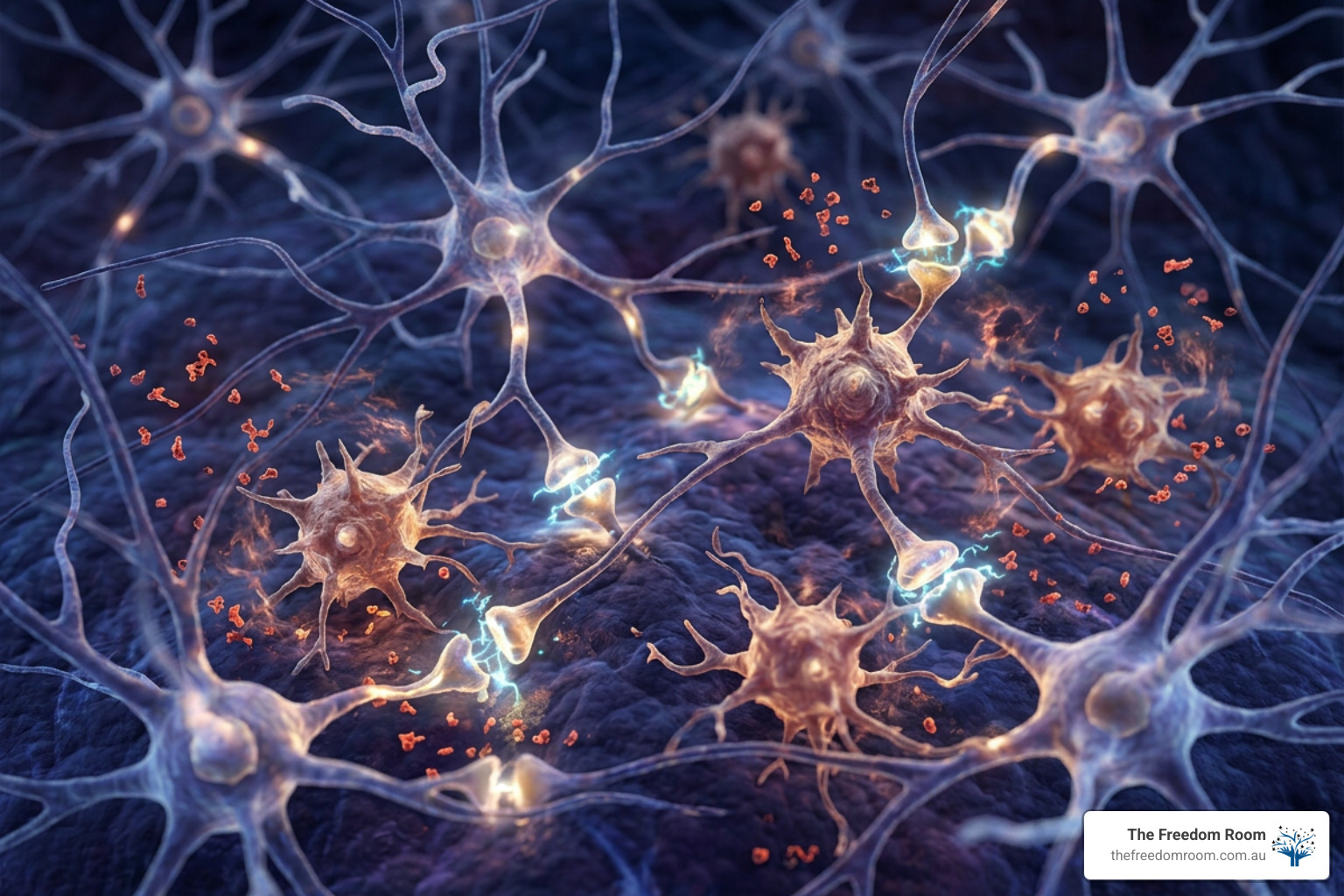
When examining the central nervous system, alcohol alters basic chemical communication between neurons. It increases gamma-aminobutyric acid (GABA) activity, which slows down brain signalling and creates temporary feelings of relaxation. Concurrently, it suppresses glutamate, the primary excitatory neurotransmitter responsible for learning, motivation, and quick cognition.
Over extended periods of excessive drinking, the brain attempts to compensate for these disruptions. It reduces its natural sensitivity to GABA and increases glutamate receptor activity. This compensation creates a chemical imbalance, leading to physical dependence on alcohol and high levels of anxiety, restlessness, and neurological hyperexcitability when alcohol levels drop.
Beyond neurotransmitters, long-term alcohol consumption induces direct neurotoxicity. Enzymes in neural tissue break down ethanol into acetaldehyde, a toxic metabolite that generates reactive oxygen species. This process triggers oxidative stress and persistent neuroinflammation by activating microglial cells in the central nervous system.
Over time, this continuous inflammatory response damages blood-brain barrier integrity and leads to mitochondrial bioenergetic failure. When nerve cells cannot produce sufficient cellular energy, their structural integrity deteriorates. For deeper clinical context, review Scientific research on central nervous system toxicity as well as A Practical Guide to Alcohol Brain Effects to explore these cellular pathways in detail.
Structural Changes, Cortical Thinning, and Brain Atrophy
The physical structure of the brain undergoes significant transformations during years of heavy drinking. Neuroimaging reveals consistent volume reductions across several key brain regions. The outer layer of the brain, known as the cerebral cortex, experiences widespread cortical thinning, directly impacting executive functions, emotional regulation, and decision-making capacities.
Structural brain alterations from alcohol misuse typically include:
- Cortical thinning across the frontal, temporal, and parietal lobes, impairing reasoning and emotional control
- Loss of grey matter volume, reducing the density of neuronal cell bodies responsible for processing information
- Microstructural disruption of white matter tracts, weakening communication pathways connecting brain regions
- Hippocampal atrophy, leading to deficits in short-term memory consolidation and learning
- Cerebellar Purkinje cell reduction, resulting in ataxia, unsteadiness, and loss of fine motor coordination
- Prefrontal cortex shrinkage, which weakens impulse control and increases risk of relapse
Purkinje cells within the cerebellum are particularly vulnerable to long-term alcohol exposure. Studies show individuals with severe cerebral atrophy experience up to a 43% reduction in these specialised motor neurons, explaining why chronic heavy drinkers display unsteadiness and balance issues.
To explore the molecular mechanisms driving these structural losses, see this Scientific research on neurotoxicity of chronic exposure.
Alcohol-Related Brain Damage vs Progressive Dementias
Alcohol-related brain damage (ARBD) is an umbrella term covering a spectrum of neurological conditions caused by persistent high-volume alcohol intake. Roughly 1 in 3 individuals with severe physical dependence on alcohol develops some degree of ARBD. Most individuals diagnosed with ARBD are between 40 and 60 years old.
A critical distinction exists between ARBD and primary progressive dementias such as Alzheimer’s disease. Alzheimer’s disease is an irreversible, progressive condition characterised by amyloid plaques that continuously worsen. In contrast, ARBD is non-progressive once alcohol consumption ceases. With sustained abstinence and appropriate medical support, cognitive decline generally stabilises and can significantly improve.
Beyond direct neurological damage, long-term alcohol use creates systemic health complications. Excessive drinking elevates cardiovascular risks, including hypertension and ischemic stroke vulnerability, while advancing liver disease and increasing cancer risks. Consult Scientific research on structural neuroimaging across the lifespan and The Mental Toll of Long-Term Alcohol Use for additional insights.
Wernicke-Korsakoff Syndrome and Thiamine Deficiency
One of the most severe neurological outcomes of chronic alcohol misuse is Wernicke-Korsakoff syndrome (WKS). WKS is a two-stage disorder driven primarily by severe thiamine (vitamin B1) deficiency, an essential nutrient required for brain glucose metabolism. Heavy alcohol use leads to thiamine deficiency through poor dietary intake, impaired intestinal absorption, and reduced hepatic storage.
The acute phase, Wernicke’s encephalopathy, presents as a medical emergency characterised by mental confusion, abnormal eye movements, and severe unsteadiness. If left untreated with intravenous vitamin B1 replacement, approximately 80% to 85% of cases progress to Korsakoff’s psychosis.
Korsakoff’s psychosis is a chronic memory disorder inflicting severe damage on the diencephalon and hippocampus, creating profound anterograde and retrograde amnesia. Individuals frequently display confabulation, where the brain unconsciously fabricates stories to fill memory gaps.
Heavy drinking sessions also cause alcohol-induced blackouts when rapid spikes in blood alcohol concentration block hippocampal memory consolidation. For neuroimaging findings, review Scientific research on alcoholism neuroimaging alongside our Beginner’s Guide to Long-Term Negative Effects of Alcohol.
Vulnerability Across the Lifespan: Adolescent and Prenatal Brain Impact

The human brain undergoes maturation from prenatal stages through age 25. During adolescence, the brain undergoes critical synaptic pruning and myelination in the prefrontal cortex, which governs impulse control and long-term planning.
Consuming alcohol during this developmental window disrupts critical structural growth patterns. Binge drinking causes lasting alterations in neuroimmune signalling and mesolimbic dopamine sensitivity. Adolescents engaging in heavy drinking face elevated risks of long-term executive function deficits and a higher likelihood of developing physical alcohol dependence later in life.
Prenatal alcohol exposure is equally severe. Alcohol crosses the placenta freely, exposing the fetus to high blood alcohol levels and acting as a direct teratogen. This exposure can result in Fetal Alcohol Spectrum Disorders (FASD), causing permanent cognitive impairments and structural brain anomalies. The National Health and Medical Research Council (NHMRC) Australian alcohol guidelines recommend that children under 18 and pregnant or breastfeeding women avoid alcohol completely.
For additional details, explore the Australian Institute of Health and Welfare report and read Long-Term Effects of Drinking Alcohol on the Brain.
Reversibility, Neuroplasticity, and Recovery Pathways
Clinical neuroimaging demonstrates that the brain possesses remarkable neuroplasticity. When alcohol consumption stops, structural recovery begins rapidly. MRI studies reveal measurable increases in brain tissue volume within weeks of stopping alcohol use. Over seven months of sustained abstinence, individuals show significant cortical thickness recovery across 25 of 34 major brain regions.
The timeline of neurological healing during abstinence typically unfolds as follows:
- 1 to 4 weeks: Early reduction in swelling, normalisation of neurotransmitter receptors, and rapid cortical volume gains
- 1 to 3 months: Improvements in short-term memory, attention span, problem-solving abilities, and balance
- 6 to 12 months: Restored white matter integrity and substantial restoration of executive functioning
- Beyond 1 year: Continued structural neuroplasticity and long-term cognitive stabilisation
Lifestyle factors supporting neurological healing include complete abstinence, nutrient-rich nutrition emphasising thiamine, regular physical exercise to stimulate brain-derived neurotrophic factor (BDNF), smoking cessation, and quality sleep hygiene.
For academic literature on structural recovery, consult Scientific research on alcohol impact on the brain and read Long-Term Effects of Alcohol on the Brain.
Ready for Change? Let’s Build a Stronger, Alcohol-Free Future Together
Understanding how alcohol impacts your central nervous system is an essential step toward making informed health decisions. If you or someone you care about is living with physical dependence on alcohol, the brain possesses an extraordinary capacity to heal, adapt, and rebuild when provided with appropriate clinical and structured support.
At The Freedom Room Wellness and Recovery, we offer compassionate, evidence-based, and cost-effective support for physical dependence on alcohol designed to help you regain long-term autonomy. Our professional team brings authentic clinical expertise and lived experience to deliver non-judgemental guidance through every phase of recovery.
Through structured one-on-one sessions, group workshops, and tailored therapeutic modalities, we work alongside you to establish a sustainable recovery plan suited to your health objectives. You do not have to navigate this pathway alone.
To explore our structured recovery programs, review Our Services for detailed program outlines. When you are ready to take the next step, contact our clinical team directly via our Contact Us page or visit our facility located at 9a/521 Beams Rd, Carseldine QLD 4034. Together, we can establish a healthier, alcohol-free future.
Frequently Asked Questions
Can the brain recover from long-term alcohol damage?
Yes. The brain demonstrates significant neuroplasticity. With sustained abstinence, partial restoration of brain structure, including increased cortical thickness and improved cognitive functioning, begins within weeks and continues over several months.
How does ARBD differ from Alzheimer’s disease?
Alcohol-related brain damage (ARBD) is generally non-progressive once alcohol consumption stops and thiamine levels are restored. Conversely, Alzheimer’s disease is an irreversible, progressive neurodegenerative disorder.