

Why the Long Term Negative Effects of Alcohol Are More Serious Than Most People Realise
The long term negative effects of alcohol impact virtually every physiological system, with cumulative damage occurring gradually and often without early clinical symptoms. Research indicates that even moderate, regular alcohol consumption is associated with an elevated risk of chronic disease.
Here is an overview of the major long-term negative effects of alcohol:
- Brain: Shrinkage of brain volume, memory loss, cognitive decline, and risk of Wernicke-Korsakoff syndrome
- Heart: High blood pressure, cardiomyopathy, irregular heartbeat, and increased stroke risk
- Liver: Fatty liver, alcoholic hepatitis, fibrosis, and cirrhosis
- Cancer: Increased risk of breast, bowel, liver, mouth, throat, and oesophageal cancers
- Mental health: Depression, anxiety, and heightened risk of psychotic disorders
- Immune system: Reduced ability to fight infection and slower recovery from illness
- Pancreas: Pancreatitis and increased risk of diabetes
- Social and economic: Relationship breakdown, reduced work performance, and significant financial strain
Alcohol is one of the most widely used substances in Australia, and its health toll is significant. According to the Australian Institute of Health and Welfare, alcohol-related harm remains a leading contributor to preventable illness and death in this country. In 2022 alone, 1,742 Australians died from alcohol-related causes, representing a 9.1% increase within a single year.
Globally, the data is equally concerning. Approximately 3 million deaths annually are attributed to harmful alcohol use, and the International Agency for Research on Cancer classifies alcohol as a Group 1 carcinogen. There is no established safe threshold of alcohol consumption regarding oncological risk.
This guide provides an objective, evidence-based overview of the physiological and psychological consequences of long-term alcohol consumption, designed to assist individuals in making informed health decisions.
Basic long term negative effects of alcohol terms:
- Long term effects of alcohol withdrawal
- Long term effects of quitting drinking
- Long term effects of alcohol on the immune system
How Chronic Drinking Damages Major Organ Systems
When alcohol is consumed, it is rapidly absorbed into the bloodstream and distributed throughout the body. As a systemic toxin, ethanol affects multiple physiological pathways simultaneously. Over time, consistent exposure to ethanol and its toxic metabolites leads to structural changes in multiple organ systems.
Recent advanced medical imaging studies have confirmed that chronic alcohol use causes widespread tissue degradation. A landmark study analysing quantitative MRI data showed that drinking has a dose-dependent, toxic impact on multiple organ systems simultaneously. This means that as consumption increases, structural damage to internal organs accelerates in a predictable, measurable pattern.
The physical toll of chronic drinking is often silent, developing over years or even decades. Many individuals do not realise the extent of this damage until clinical symptoms manifest. Understanding these risks is essential for making informed decisions regarding long-term health and well-being. To explore how these systemic risks develop over time, refer to this detailed guide on the long-term health risks of drinking alcohol.
Neurological Impact and the Long Term Negative Effects of Alcohol on the Brain
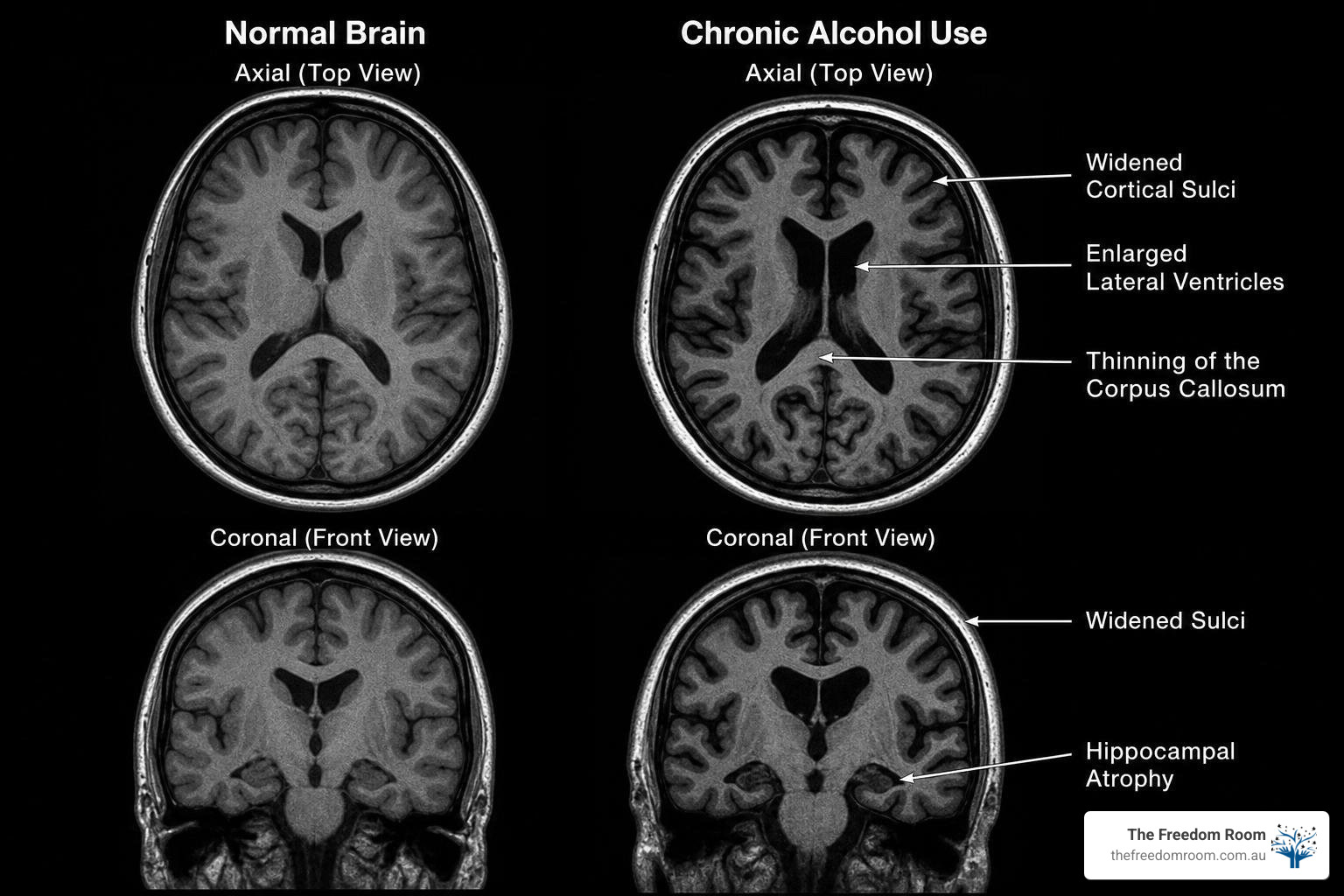
The central nervous system is highly sensitive to the neurotoxic effects of ethanol. Chronic consumption alters neurotransmitter systems, disrupts neural communication pathways, and induces structural brain changes, leading to cognitive decline and memory impairment.
Research shows that higher alcohol consumption is directly associated with lower normalised brain volume. This volume loss affects both grey matter, which is responsible for processing information, and white matter, which connects different brain regions. Even moderate drinking levels are linked to this reduction in brain volume, suggesting there is no completely safe threshold for brain health.
Furthermore, heavy drinking severely interferes with how the body absorbs essential nutrients. Up to 80% of individuals with severe physical dependence on alcohol develop a thiamine (vitamin B1) deficiency. This deficiency can lead to Wernicke-Korsakoff syndrome, a devastating neurological condition.
This syndrome consists of two distinct stages: Wernicke’s encephalopathy, which causes acute confusion and coordination issues, and Korsakoff’s psychosis, which results in persistent, irreversible memory loss. To learn more about how alcohol alters brain structures and cognitive functions over time, read our article on the long-term effects of alcohol on the brain.
Cardiovascular and Hepatic Complications
The heart and the liver bear much of the burden of chronic alcohol consumption. The cardiovascular system is highly sensitive to ethanol, which can weaken the heart muscle over time. This weakening leads to a condition known as alcoholic cardiomyopathy, where the heart stretches and droops, making it difficult to pump blood efficiently.
Chronic drinking also contributes to high blood pressure, irregular heartbeats like atrial fibrillation, and an increased risk of stroke. Even light to moderate drinking can elevate these risks, while heavy drinking significantly increases the likelihood of experiencing a life-threatening cardiovascular event.
Meanwhile, the liver is the primary site of alcohol metabolism, making it incredibly vulnerable to damage. The progression of alcohol-related liver disease typically follows three distinct stages:
- Fatty Liver (Steatosis): The accumulation of fat inside liver cells, which can occur after only a short period of heavy drinking.
- Alcoholic Hepatitis: An inflammatory condition that causes liver swelling, pain, and early scarring.
- Cirrhosis: The final, irreversible stage where healthy liver tissue is replaced by permanent scar tissue, leading to liver failure.
During these stages, liver fat increases by an average of 0.15% for every doubling of alcohol consumption. To understand the physical progression of these cardiovascular and hepatic conditions, refer to this detailed analysis of the long-term effects of alcohol.
Cancer Risks Associated with the Long Term Negative Effects of Alcohol
Public awareness regarding the carcinogenic properties of alcohol remains relatively low. The World Health Organisation classifies alcohol as a Group 1 carcinogen, placing it in the same risk category as asbestos and tobacco. The primary culprit is acetaldehyde, a highly toxic chemical produced when the liver breaks down ethanol.
Acetaldehyde directly damages cellular DNA and prevents the body from repairing this damage, which can lead to the formation of cancerous tumours. Additionally, alcohol can act as a solvent, making it easier for other harmful carcinogens to enter cells. It also increases the levels of certain hormones, such as estrogen, which is directly linked to breast cancer risk.
The risk of developing alcohol-related cancers increases with any amount of alcohol consumed. For instance, even one standard drink per day can increase a woman’s risk of breast cancer by 5% to 15%. For every 10 grams of pure alcohol consumed daily, the risk of breast cancer rises by 12%.
Other common cancers linked to chronic drinking include colorectal cancer, liver cancer, and head and neck cancers. People who consume three drinks per day are up to twice as likely to develop colon cancer and have two to three times the risk of head and neck cancers compared to non-drinkers. To examine how specific consumption patterns influence oncological risk, refer to this resource on the long-term health effects of binge drinking.
Reversibility and the Long-Term Effects of Quitting Drinking

A significant aspect of achieving sobriety is the physiological capacity for recovery. While some advanced structural damage can be permanent, many of the long term negative effects of alcohol are highly reversible. The key factor is the timing and duration of abstinence.
Upon cessation of alcohol consumption, physiological recovery begins rapidly. Within days to weeks, the immune system begins to recover, and cardiovascular markers like blood pressure show measurable improvement. The liver is also highly regenerative; early-stage fatty liver can completely resolve within a few weeks of total abstinence.
Even brain structure can show signs of recovery. Studies tracking the reversibility of alcohol-caused diseases indicate that brain volume can partially recover after prolonged periods of sobriety. This structural healing is often accompanied by improvements in concentration, memory, and emotional regulation.
However, advanced chronic conditions, such as full-blown liver cirrhosis, are not fully reversible. In these cases, quitting drinking will not erase existing scar tissue, but it will significantly slow down the progression of the disease and prevent further life-threatening complications. For a comprehensive overview of the physiological changes associated with sobriety, refer to this guide on the long-term effects of quitting drinking.
Social, Mental Health, and Economic Consequences
The consequences of chronic alcohol consumption extend beyond physical pathology. Alcohol significantly impacts mental health, frequently establishing a cycle of dependence. Although individuals may use alcohol to self-medicate for stress, ethanol disrupts neurochemistry and exacerbates underlying psychiatric conditions.
Long-term alcohol use is strongly linked to depressive disorders, severe anxiety, and an increased risk of self-harm. Men who misuse alcohol experience an 800% increase in the risk of psychotic disorders, while women experience a 300% increase. This mental toll can make daily functioning incredibly challenging, leading to further isolation and distress.
Furthermore, chronic drinking often leads to significant social and economic consequences. It can cause severe relationship strain, leading to the breakdown of families and friendships. It also impacts work performance, which can result in job loss and long-term financial instability.
The financial cost of supporting a drinking habit, combined with potential medical bills and lost income, can create a heavy burden. To explore the psychological impacts of chronic consumption, refer to these articles on the mental toll of long-term alcohol use and the long-term alcohol mental health effects.
Safe Drinking Guidelines and Harm Reduction in Australia
To help Australians make informed decisions, the National Health and Medical Research Council (NHMRC) provides clear guidelines to reduce health risks from drinking. These guidelines are based on extensive scientific evidence regarding the long-term risks of alcohol consumption.
According to the guidelines, healthy adults should consume no more than 10 standard drinks per week and no more than 4 standard drinks on any single day to keep their lifetime risk of alcohol-related disease or injury below 1 in 100. A standard drink in Australia contains exactly 10 grams of pure alcohol, which is less than many people realise.
For certain groups, the safest option is to not drink at all. This includes children and young people under the age of 18, as well as women who are pregnant, planning a pregnancy, or breastfeeding. Alcohol exposure during pregnancy can lead to Fetal Alcohol Spectrum Disorders (FASD), causing permanent developmental and cognitive challenges for the child.
Implementing harm-reduction strategies can help individuals manage their consumption and reduce immediate risks. These strategies include pacing drinks, alternating alcoholic beverages with water, eating a substantial meal before drinking, and choosing lower-alcohol alternatives. For detailed statistical data, access the official Australian alcohol data and research or review this analysis of the long-term effects of alcohol abuse.
Take the First Step Toward a Fulfilling, Alcohol-Free Life
Acknowledging the long term negative effects of alcohol on physical and mental health is a critical step toward clinical recovery. At The Freedom Room Wellness and Recovery, we recognise that addressing physical alcohol dependence requires structured guidance, evidence-based interventions, and ongoing professional support.
Our clinical team provides objective, non-judgmental support throughout the recovery process. We offer personalised, evidence-based treatment plans for individuals seeking to reduce their alcohol consumption, achieve complete abstinence, or maintain long-term sobriety.
We invite you to visit our clinic located at 9a/521 Beams Rd, Carseldine QLD 4034, which provides a professional environment conducive to recovery. To evaluate our clinical offerings, please visit Our Services, or contact our professional team directly via our Contact Us page.
Frequently Asked Questions
Is there a safe level of alcohol consumption?
No level of alcohol consumption is considered completely safe, particularly regarding cancer risks. While low consumption levels carry lower risks, even one drink per day increases the likelihood of developing certain conditions, such as breast cancer.
How quickly does the brain recover after someone stops drinking?
Some cognitive improvements and brain volume recovery can begin within a few weeks of total abstinence. However, more significant structural healing and cognitive recovery typically require several months to a year of sustained sobriety.
Can liver damage from chronic drinking be reversed?
Early-stage liver damage, such as fatty liver, is highly reversible and can resolve within a few weeks of quitting alcohol. Advanced scarring, known as cirrhosis, is permanent, but stopping drinking will prevent further damage and slow the progression of the disease.