

Understanding the Path from Dependence to Freedom
Alcohol dependence recovery is a process of pursuing remission from Alcohol Use Disorder (AUD) and ceasing heavy drinking. Marked by improvements in health, social support, and quality of life, recovery is a gradual journey that can range from harm reduction to complete abstinence.
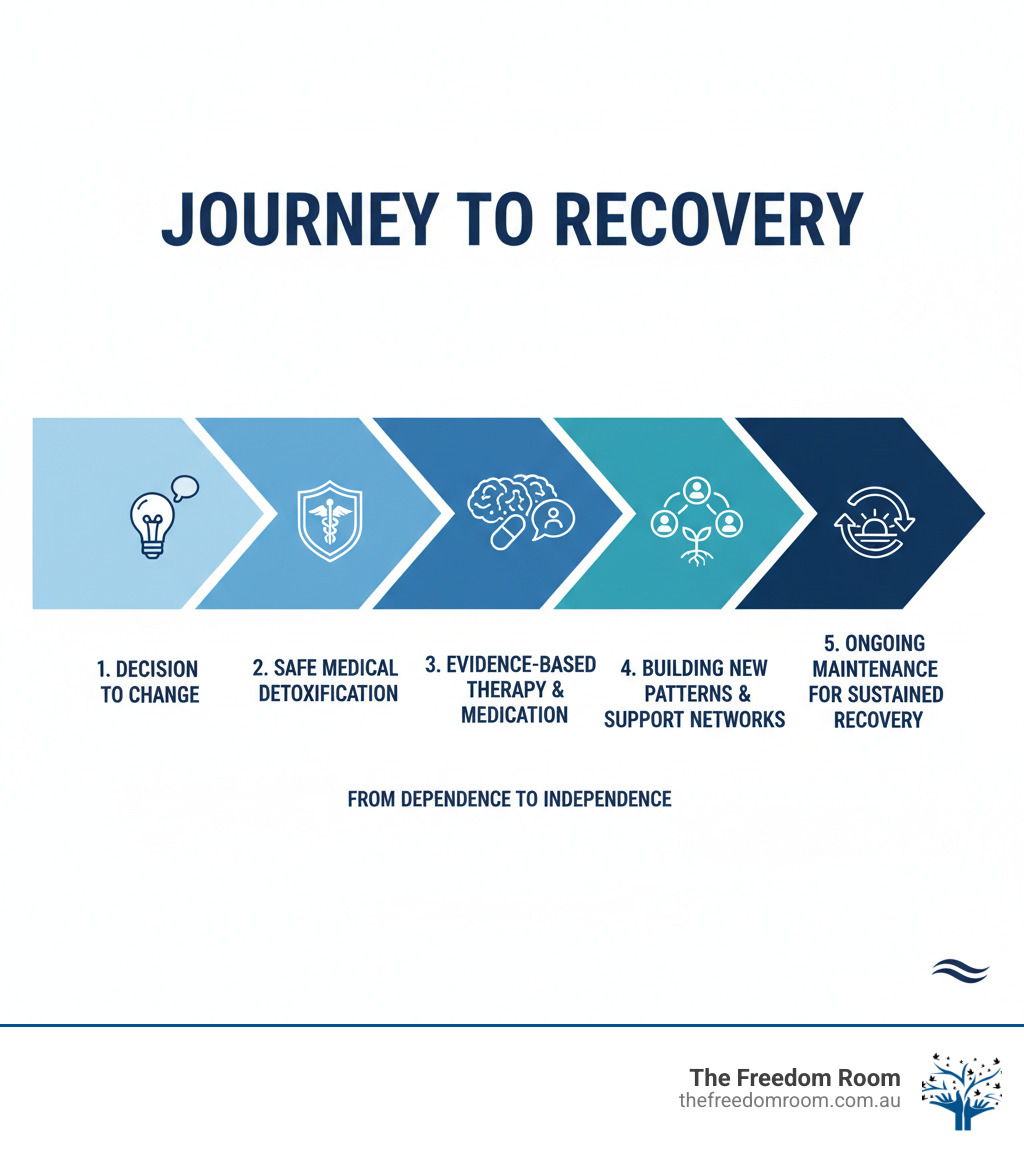
Key elements of alcohol dependence recovery include:
- Safe detoxification under medical supervision to manage withdrawal symptoms
- Evidence-based treatment combining medication and behavioural therapy
- Building new patterns and healthy routines to replace drinking behaviours
- Strong support networks including peer groups, family, and professional guidance
- Ongoing maintenance, recognising that recovery requires lifelong management
In Australia, about 1 in 20 people are affected by alcohol or other drug dependence. Chronic heavy drinking alters brain regions involved in motivation, memory, and impulse control. However, the brain’s plasticity means it can heal and form healthy behaviours with the right support and treatment.
This guide will walk you through the science, stages, and strategies for recovery. Whether you are questioning your relationship with alcohol or are ready to seek help, understanding this process is the first step towards reclaiming your independence.
Alcohol dependence recovery vocabulary:
The Science and Stages of Alcohol Dependence Recovery
Understanding how alcohol impacts our brain and body is fundamental to navigating the path to alcohol dependence recovery. Addiction is a complex condition driven by profound changes within our neurobiology, not a moral failing.
How Alcohol Affects the Brain and Body
Alcohol is dually reinforcing, activating the brain’s pleasure centres while reducing stress and anxiety. This makes it a powerful but deceptive coping mechanism. Chronic heavy drinking causes significant neurobiological changes, shifting the motivation for drinking from pleasure to relieving discomfort.
The brain’s dopamine pathway reinforces compulsive alcohol-seeking. Over time, neuroadaptations alter brain chemistry, contributing to tolerance, dependence, and cravings. Executive functions like impulse control and decision-making become impaired, making it harder to stop drinking.
A challenging part of withdrawal is hyperkatifeia, a hypersensitive negative emotional state. This intense discomfort, including irritability and dysphoria, often drives people back to drinking. The adolescent brain is especially vulnerable, as heavy drinking can disrupt development and increase the risk of future AUD.
Fortunately, the brain has remarkable adaptability, known as plasticity. With treatment and abstinence, the brain can heal and establish healthy behaviours. This is why evidence-based treatments are effective. You can learn more about the neurobiology of addiction explained by the National Institutes of Health and the Long-Term Effects of Alcohol.
Recognising the Stages of Alcohol Use and Recovery
Understanding the progression of alcohol use and recovery provides valuable insight. Jellinek’s model describes four stages of alcohol use:
- Pre-Alcoholic Stage: Using alcohol to cope or relax, leading to increased tolerance.
- Early Stage: Marked by cyclical abuse, deteriorating relationships, and possible blackouts.
- Middle Stage: Characterised by shame, guilt, and failed attempts to control drinking.
- Late Stage: A compulsion to drink with little control, leading to physical and cognitive decline.
Similarly, Prochaska and DiClemente’s model outlines six stages of addiction recovery:
- Pre-Contemplation: Aware of a problem but with no immediate intention to change.
- Contemplation: Acknowledging the problem and considering change, but feeling ambivalent.
- Preparation: Making concrete plans to stop drinking, such as setting timelines.
- Action: Actively engaging in treatment like detox and therapy to stop or reduce drinking.
- Maintenance: Applying learned skills and strategies to sustain long-term sobriety.
- Termination: While some models see this as the end, we view recovery as requiring lifelong management for stable, long-term remission.
Understanding these stages empowers us to recognise the Warning Signs of Alcohol Dependency and steer the 4 Stages of Alcohol Recovery.
The Critical First Step: Safe Alcohol Detoxification
For many, the first step in alcohol dependence recovery is detoxification. Quitting after prolonged heavy use can be dangerous due to physiological dependence. When alcohol is stopped, the brain goes into overdrive, causing withdrawal symptoms.
Withdrawal symptoms range from mild to severe. Milder symptoms include anxiety, irritability, and shakiness, while more severe ones can involve sweating, nausea, rapid heartbeat, and tremors.
The most severe form of withdrawal is delirium tremens (DTs), which can be life-threatening. Symptoms include severe confusion, hallucinations, fever, and seizures, and can dangerously affect blood pressure and breathing. DTs can appear two to seven days after the last drink.
Due to these risks, medical supervision is essential during detoxification. A medically managed detox, which typically takes 2 to 7 days, ensures symptoms are managed safely, often with medication. Safe detox is the foundation for effective alcohol dependence recovery. To learn more, visit Safe Alcohol Detox and understand the dangers of Delirium Tremens (aka The DTs).
Building a Personalised Alcohol Dependence Recovery Plan
After detox, the focus shifts to a personalised alcohol dependence recovery plan. A professional assessment is a crucial first step, where healthcare professionals use DSM-5 criteria to diagnose Alcohol Use Disorder (AUD).

Medication can be a powerful tool. TGA-approved medications for AUD in Australia include:
- Naltrexone: Blocks the pleasurable effects of alcohol and reduces the urge to drink.
- Acamprosate: Helps combat cravings and manage emotional discomfort after stopping drinking.
- Disulfiram: Creates an unpleasant physical reaction if alcohol is consumed, acting as a deterrent.
Behavioural therapies are also vital for developing coping mechanisms. Common approaches include:
- Cognitive Behavioural Therapy (CBT): Helps change unhealthy thought patterns and behaviours. Learn more at Cognitive Behavioural Therapy Alcohol.
- Motivational Improvement Therapy (MET): Builds motivation for change and commitment to recovery.
- Acceptance and Commitment Therapy (ACT): Focuses on accepting difficult feelings while committing to value-aligned actions. Explore Acceptance and Commitment Therapy (ACT).
- Family Counselling: Improves family dynamics and communication to create a supportive environment.
Treatment options range from counselling to intensive outpatient or residential programs, allowing for a personalised journey. For details on medications, see our page on Alcohol Dependence Medication.
Sustaining Long-Term Recovery and Preventing Relapse
Sustaining sobriety requires ongoing commitment. Long-term alcohol dependence recovery is about building a new life with robust coping mechanisms and a strong support system.
Lifestyle changes are foundational. It is crucial to establish new routines, focusing on physical health through exercise, nutrition, and sleep. Building healthy relationships is another cornerstone, which involves setting boundaries and fostering connections with supportive people. Learn more about Healthy Relationships in Recovery.
Support groups offer invaluable peer encouragement. Options in Australia include:
- Alcoholics Anonymous (AA): A 12-step fellowship where members share experiences for mutual support.
- SMART Recovery: An evidence-based program using Cognitive Behavioural Therapy (CBT) principles.
- Al-Anon and Alateen: Support groups for friends and families of people with a drinking problem.
- Women for Sobriety: A self-help program custom to the needs of women in recovery.
Mindfulness and spiritual practices can also play a significant role, helping to restructure the brain’s reward system. Find more about Mindfulness for Alcohol Recovery.

Relapse prevention is an ongoing process of identifying and managing triggers and cravings. A slip is not a failure but an opportunity to learn and recommit to recovery. We offer comprehensive Relapse Prevention Strategies to help you steer this process.
Take the First Step Toward a Fulfilling, Alcohol-Free Life
Beginning alcohol dependence recovery is a courageous decision. While the journey requires commitment, it is absolutely achievable, and every person’s path will have its own unique challenges and victories.
This guide has explored the science of addiction, the stages of recovery, and the strategies for long-term sobriety. Understanding these elements shows that change is possible, especially given the brain’s ability to heal with the right support.
Recovery is about progress, not perfection. It involves building new routines, nurturing healthy relationships, and developing skills to maintain your sobriety. Every step forward matters, whether you are reducing harm or pursuing complete abstinence.
At The Freedom Room Wellness and Recovery, we understand this journey because many of our team members have lived experience in recovery. We offer personalised, evidence-based therapy that combines professional expertise with genuine empathy. You do not have to steer this path alone.
If you are ready to take the first step or want to learn more about your options, we are here to help. Find More information about Alcohol Use Disorder and find how we can support you in creating the fulfilling, alcohol-free life you deserve.