

Introduction to Alcohol Use Treatment
Alcohol use treatment encompasses a range of evidence-based options designed to help individuals reduce or cease drinking, manage cravings, and improve their quality of life. A personalised plan typically combines medical support, counselling, and community connections.
Key Treatment Options Available:
- Medically supervised detoxification
- Inpatient (residential) and flexible outpatient programs
- Evidence-based therapies like CBT and EFT
- Medications to reduce cravings
- Peer support groups
- Integrated care for co-occurring mental health conditions
In Australia, nearly 18 per cent of the population aged 15 or older will experience alcohol use disorder in their lifetime. Although initiating the process of seeking help can seem daunting, recovery is an achievable outcome.
Research indicates that a majority of individuals benefit from treatment, leading to a reduction in alcohol consumption or complete abstinence. This guide provides an overview of the process, from identifying the issue to accessing professional support and establishing a foundation for long-term recovery. The information herein is intended to clarify the available options and facilitate informed decision-making.
Understanding Alcohol Use Disorder (AUD)
Alcohol use disorder (AUD) is a medical condition characterised by an impaired ability to stop or control alcohol use despite adverse social, occupational, or health consequences. It is not a moral failing but a condition involving brain changes that can make controlling consumption extremely difficult, even with a genuine desire to do so. The condition ranges from mild to severe, with serious forms also known as alcoholism or alcohol dependence.
High-risk drinking significantly increases the likelihood of developing AUD. For women, this is defined as more than four standard drinks in one day or eight per week. For men, it is more than five drinks in one day or 15 per week. Over half of Australians aged 15 or older drink more than the recommended amount, highlighting the widespread nature of this challenge.
Signs and Symptoms of AUD
Recognising the signs is the first step toward diagnosis and treatment. Key indicators include:
- Intense cravings and drinking more than intended.
- Continuing to drink despite negative consequences for work, relationships, or health.
- Increased tolerance, needing more alcohol to feel the same effect.
- Withdrawal symptoms like shakiness, nausea, or anxiety when not drinking.
- Neglecting responsibilities at home, work, or school.
- Failed attempts to cut down or control drinking.
- Giving up hobbies and social activities in favour of drinking.
Healthcare providers diagnose AUD using criteria from the Diagnostic and Statistical Manual of Mental Disorders (DSM-5). The severity is classified as mild (2-3 criteria met), moderate (4-5 criteria), or severe (6 or more criteria), which helps guide the alcohol use treatment plan. You can find more information by visiting our page on What is Alcohol Use Disorder?
Health Complications of Untreated AUD
Untreated AUD can lead to numerous serious health complications. Alcohol is a known carcinogen, increasing the risk of developing various cancers. Other significant risks include:
- Liver Damage: Chronic alcohol consumption can cause conditions such as alcoholic hepatitis and cirrhosis, which severely impair liver function.
- Cardiovascular Issues: The heart can be affected, leading to problems like alcohol-induced cardiomyopathy.
- Neurological Damage: The brain is also vulnerable, with potential for conditions like cerebellar degeneration.
- Alcohol Poisoning: In cases of excessive consumption, the medical emergency of alcohol poisoning presents a significant and immediate risk to life.
The Link Between AUD and Mental Health
AUD frequently co-occurs with mental health conditions like anxiety, depression, and PTSD. Some people use alcohol to self-medicate emotional pain, which provides temporary relief but ultimately worsens the underlying condition. In other cases, heavy drinking can trigger or intensify mental health issues by disrupting brain chemistry.
Effective, sustainable recovery requires an integrated treatment approach that addresses both AUD and any co-occurring mental health condition simultaneously. This is known as dual diagnosis treatment. Our holistic approach to addiction provides comprehensive care that supports both mental wellbeing and sobriety.
Professional Alcohol Use Treatment Pathways
The initial step in seeking alcohol use treatment is typically a consultation with a General Practitioner (GP). A GP can provide a non-judgemental assessment, discuss drinking patterns, and refer an individual to specialists or appropriate services.
The assessment process is comprehensive. It explores an individual’s alcohol history, co-occurring conditions, support systems, and personal goals. This ensures the treatment plan is individualised. Providers often use standardised clinical criteria to match an individual with the right level of care, which can include:
- Outpatient Care, which involves regular therapy sessions while the individual lives at home.
- Intensive Outpatient or Partial Hospitalisation Programs, providing structured care for several hours a day on multiple days per week.
- Residential Treatment, offering 24-hour structured care within a dedicated facility.
- Intensive Inpatient Treatment, which consists of medically directed 24-hour services for individuals with complex needs.
To explore options, visit our page on Alcohol Addiction Treatment Centres.
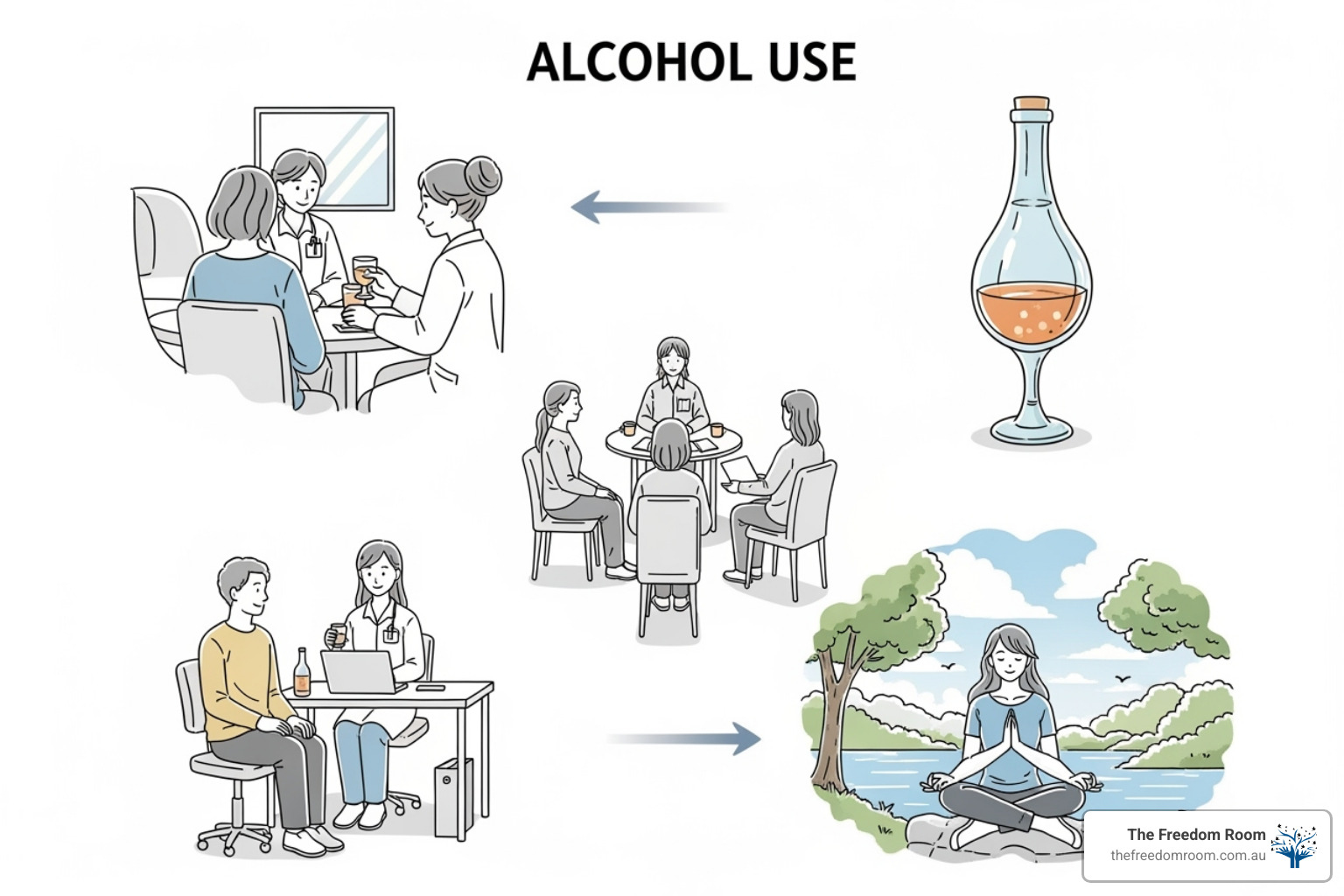
Medically Supervised Detoxification
For many individuals with moderate to severe AUD, medically supervised detoxification is the essential first step. Detox manages the physical withdrawal symptoms that occur when a person stops drinking. Medical supervision is crucial because alcohol withdrawal can be dangerous, with symptoms ranging from shakiness and nausea to seizures and hallucinations. Delirium tremens, the most severe form of withdrawal, is a life-threatening emergency.
Detox can occur in an inpatient setting with 24-hour medical monitoring or, for milder cases, as an outpatient with regular medical check-ins. The goal is to ensure safety and comfort while the body adjusts. Detox is not a cure, but it prepares an individual for the next phase of recovery. Learn more about Safe Alcohol Detox and alcohol dependence detox.
Inpatient and Outpatient Programs
After detox, alcohol use treatment continues with inpatient or outpatient programs.
Inpatient (residential) treatment provides a structured, 24/7 supportive environment away from daily triggers. It is ideal for those with severe AUD or co-occurring conditions, involving therapy, counselling, and wellness activities.
Outpatient treatment offers flexibility, allowing individuals to attend scheduled therapy while maintaining work and family life. It is suitable for those with milder AUD and strong support systems. Intensive outpatient programs (IOPs) bridge the gap, offering more structure than standard outpatient care without requiring an overnight stay. For more on non-residential options, see our resource on How to get sober without going to rehab.
Evidence-Based Therapies and Counselling
Therapy is a central component of effective alcohol use treatment. While detoxification addresses physical dependence, therapy helps individuals understand the underlying reasons for drinking and develop skills for a life without alcohol. These approaches are known as Evidence-Based Alcohol Treatment because research has proven their effectiveness.

Cognitive Behavioural Therapy (CBT)
Cognitive Behavioural Therapy (CBT) is a highly effective therapy for AUD. It is based on the principle that thoughts, feelings, and actions are interconnected. CBT helps individuals identify and change unhelpful thinking patterns and behaviours that contribute to drinking.
Treatment involves learning to recognise and challenge thoughts that trigger cravings, such as the belief that one cannot cope without a drink. Individuals also develop practical problem-solving skills and build confidence in their ability to handle difficult situations without alcohol. Our page on CBT for Alcoholism provides more detail.
Emotional Freedom Techniques (EFT)
Emotional Freedom Techniques (EFT), or tapping, is a tool that helps process the emotional roots of addiction. It involves gently tapping on specific acupressure points while focusing on a distressing thought or emotion. This process sends a calming signal to the brain’s stress centre, helping to reduce the intensity of cravings, anxiety, and traumatic memories.
An EFT practitioner guides an individual safely through this process, helping to clear emotional triggers without reliving past trauma. By reducing emotional stress, EFT allows the body’s natural healing processes to begin. It is beneficial for addiction, anxiety, PTSD, and stress management. Learn more on our Therapy for Alcohol Addiction page.
Other Therapeutic Approaches for Alcohol Use Treatment
A comprehensive treatment plan may also include other therapies:
- Motivational Enhancement Therapy (MET) assists individuals in exploring their personal motivations for change and strengthening their commitment to recovery.
- Couples and Family Counselling involves loved ones in the treatment process to repair relationships, improve communication, and foster a supportive home environment.
- Group Therapy offers a strong sense of community and peer support from others who have similar experiences. Our Group Therapy Addiction Recovery page has more information.
- Private Counselling provides one-on-one support tailored to an individual’s specific needs and objectives. Explore Private Counselling for Alcohol Addiction for personalised care.
Medications and Medical Support in AUD Treatment
Medications can be a valuable part of alcohol use treatment, working alongside therapy to manage the chronic nature of AUD. These medications are not a cure but serve as a tool to support the recovery process. When combined with counselling, medications can significantly improve outcomes. Our page on Alcohol Dependence Treatment Drugs explores this topic further.

Approved Medications for Alcohol Dependence
Several medications are approved in Australia to help manage alcohol dependence. A doctor can determine the most suitable option for an individual.
- Naltrexone functions by reducing the pleasurable effects of alcohol and decreasing cravings.
- Acamprosate (Campral®) assists in maintaining sobriety by reducing cravings and alleviating post-acute withdrawal symptoms.
- Disulfiram (Antabuse®) serves as a deterrent by inducing an unpleasant physical reaction if alcohol is consumed. For more information, see the Consumer information on Disulfiram.
These medications are most effective as part of a comprehensive treatment plan.
The Role of Your GP and Potential Medication Risks
Your GP plays a central role in your alcohol use treatment. They can provide screening, diagnosis, referrals, and manage medications for AUD while monitoring your overall health.
Careful consideration of medication is vital, especially with co-occurring conditions. For example, some antidepressants (SSRIs) may not be effective and can sometimes worsen alcohol consumption in people with active AUD, as noted in this practice article on SSRI risks. This highlights the importance of working with healthcare professionals experienced in addiction medicine to ensure a treatment plan is both safe and effective.
Building a Lasting Support Network
Long-term recovery from alcohol use disorder is an ongoing process that is significantly enhanced by robust social and community connections. A strong support network is a fundamental component for sustaining sobriety and preventing relapse. Alcohol use treatment should focus on building these connections for long-term wellness.
Our Alcohol Recovery Coach Addiction Counselling services can help establish this vital support system.
Support Groups and Community Connections
Peer-led support groups offer a unique sense of belonging and a safe space to share experiences without judgment. The diversity of groups, from structured to secular, allows an individual to find a community that fits their needs.
Identifying a suitable group may require some time, however, the relationships formed can offer sustained encouragement. Consistent participation in such groups is often a key element in maintaining sobriety.
Support for Family and Friends
The effects of alcohol use disorder extend to the entire family unit. It is therefore important for family and friends to have access to support and educational resources. Comprehending AUD as a medical condition can assist families in moving past blame and learning to establish healthy boundaries.
Support groups for families provide a space to share experiences and learn coping strategies. It is essential for family members to care for their own wellbeing, as this creates a stronger, more resilient environment for everyone’s recovery.
Overcoming Alcohol Use Disorder and Initiating Treatment
Overcoming alcohol use disorder is a challenging but achievable goal. A structured and professional approach to recovery provides the greatest chance of success. With a range of evidence-based treatments, including medical detoxification, therapeutic interventions, and ongoing support systems, a life free from the constraints of alcohol is attainable.
At The Freedom Room, we provide professional, evidence-based, and affordable alcohol use treatment. Our services are delivered by qualified staff with a deep understanding of the recovery process, providing the guidance necessary to build a foundation for lasting sobriety.
The options for treatment are varied and accessible. The initial step towards recovery is often the most critical. We encourage individuals to explore our affordable addiction treatment services in Brisbane to begin the path to healing today.
Frequently Asked Questions about Alcohol Use Treatment
How long does alcohol use treatment take?
The duration of alcohol use treatment varies for each person. It depends on factors such as the severity of the AUD, the presence of co-occurring mental health conditions, and an individual’s personal goals. Formal programs can last from weeks to months, but recovery should be viewed as a lifelong process. Ongoing commitment to support groups or therapy is often key to maintaining long-term sobriety.
Is relapse a sign of failure?
Relapse is not indicative of failure. It is a recognised component of the recovery process for many individuals with chronic health conditions, including AUD. A relapse should be viewed as an opportunity to identify triggers, reassess coping mechanisms, and reinforce the recovery plan. The most effective response is to re-engage with treatment and support systems promptly, avoiding the potential for isolation.
Can I be forced into treatment?
Treatment is most effective when voluntary, as personal motivation is a key driver of success. However, in Australia, legal frameworks exist for involuntary treatment in specific circumstances where an individual’s alcohol use poses a significant and immediate risk of harm to themselves or others. For families concerned about a loved one, a professionally guided family intervention can be a constructive method for encouraging an individual to seek help in a supportive manner.