

Dealing With Alcoholism in a Relationship
When alcohol affects a close relationship, it can leave you unsure how to respond, especially when care, worry and frustration are all present. You can support your partner without taking over responsibility for their recovery.
Start with practical steps you can control: choose calmer moments to communicate, set boundaries that protect your wellbeing, seek support and take safety concerns seriously. These actions can create clarity without trying to manage your partner’s drinking.
I’m Rachel Acres, CEO and Founder at The Freedom Room, and my therapist training and lived experience inform the compassionate, practical support our team provides to people and families affected by alcohol dependence.
How Alcohol Use Can Affect a Relationship
No two relationships are affected by alcohol in exactly the same way. The Australian Institute of Health and Welfare provides national information on alcohol-related harm that can help place these experiences in a broader context.
Patterns may also change over time, especially when stress, health concerns or family responsibilities are involved. It can be helpful to notice what is happening now rather than comparing your relationship with someone else’s experience. Keeping a brief private record of recurring incidents can also help you describe patterns clearly when you seek counselling or discuss practical changes.
For some couples, the main strain is recurring arguments or emotional distance; for others, it is missed responsibilities, financial pressure, secrecy or uncertainty about what will happen from one day to the next.
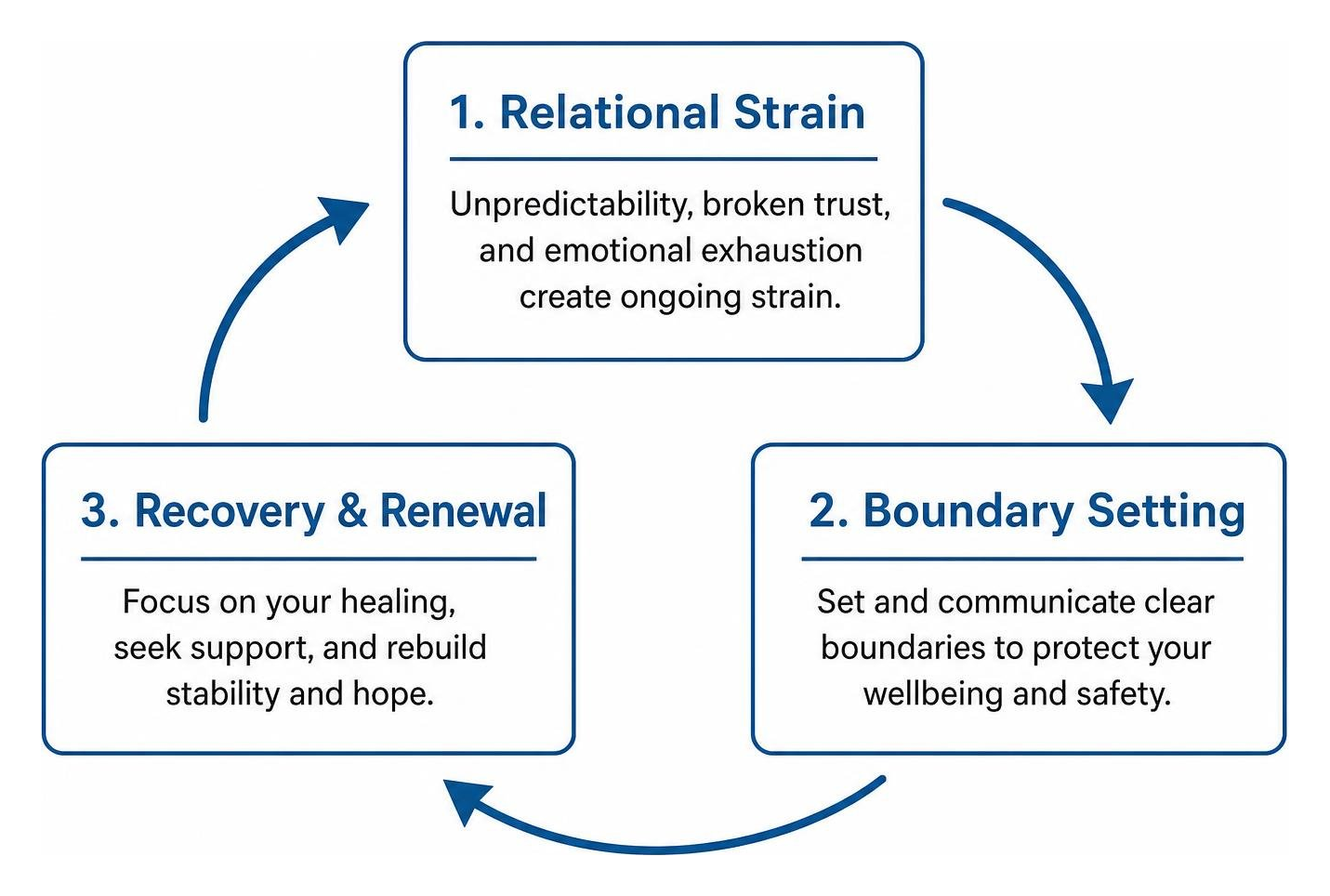
When drinking affects reliability, trust can gradually erode. A partner may feel they need to monitor moods, change plans or carry more of the household and family responsibilities. This can lead to stress, exhaustion and isolation, even when both people want the relationship to improve.
It can help to name the specific changes you are experiencing rather than assuming every difficulty has the same cause. Focusing on observable behaviour creates a clearer starting point for conversations, boundaries and professional support.
What to Do When Your Partner Has a Problem With Alcohol
Talk About Their Drinking When They Are Sober
Choose a calm, private time when your partner is sober and neither of you is rushed or distressed. Describe specific behaviours and their impact on you or the relationship, such as cancelled plans, arguments or worries about safety, rather than using labels or accusations.
A productive conversation is unlikely while someone is intoxicated. You can encourage professional support and explain what you need, without demanding an immediate answer or trying to force them to agree that they have a problem.
Set Clear, Healthy Boundaries

A boundary is a decision about what you will do to protect your safety, wellbeing and values. It is not a threat designed to control someone else. Clear boundaries can reduce confusion and help you respond consistently when alcohol affects the relationship.
Practical boundaries might include:
- Not discussing relationship problems while your partner is intoxicated.
- Not getting into a car with anyone who has been drinking.
- Keeping separate access to essential money and documents.
- Leaving a situation if shouting, threats or intimidation begin.
- Not covering up missed commitments or alcohol-related consequences.
Boundaries work best when they are realistic and followed through calmly. If you are unsure where to begin, individual addiction counselling can provide a confidential space to clarify your options.
Look After Your Own Wellbeing

Keep contact with trusted friends, family members and routines that help you feel grounded. When a relationship is affected by alcohol, it is easy for your own needs, interests and support network to become smaller over time.
Consider counselling for yourself if stress, anxiety or uncertainty is affecting your daily life. If there is aggression, coercive control, threats or physical danger, prioritise immediate safety and contact emergency services or a specialist support service.
Support Them Without Managing Their Recovery
Many partners become exhausted by checking, persuading, covering up or trying to prevent every consequence of drinking. The Three Cs can offer a gentler reminder: you did not cause their drinking, you cannot control it and you cannot cure it for them.
Supporting someone is different from becoming their recovery manager. You can listen, encourage treatment and respond with care, while allowing them to take responsibility for their own decisions and professional support.
Support can be compassionate without removing responsibility. Helpful support may include encouraging professional care, listening during sober conversations, acknowledging positive changes and making space for healthy recovery routines.
Enabling may involve making excuses for missed commitments, paying for the consequences of drinking, covering up alcohol-related problems or constantly policing another person’s behaviour. These responses often come from care or fear, but they can leave you overwhelmed and make it harder for the person drinking to face the impact of their choices.
Try to focus on what is within your control. You can offer information, express concern and reinforce healthy choices, while stepping back from tasks that belong to your partner.
Can Couples Counselling Help With Alcohol Problems?
Couples counselling can help partners improve communication, work through trust issues, establish healthier boundaries and understand relationship patterns that have developed around alcohol use. It can also help each person express their needs without making one partner responsible for the other’s recovery.
Joint counselling is not appropriate in every situation. Individual support and safety planning should take priority where there are immediate safety concerns, coercive control, violence or acute medical needs. Medical assessment may also be important if physical dependence on alcohol or withdrawal is possible.
The Freedom Room offers addiction counselling and EFT and CBT therapy to support individuals and couples with practical, compassionate care.
Rebuilding Trust After Alcohol Problems

Trust is usually rebuilt through consistent actions over time. Apologies can matter, but they are most meaningful when they are followed by reliability, honesty and changed behaviour.
Both partners may need time to process what has happened and decide what repair looks like for them. Recovery and relationship repair can happen alongside each other, but neither should be rushed or treated as guaranteed.
A therapist can help couples discuss expectations, transparency and boundaries in a structured way. Approaches such as EFT and CBT therapy can support clearer communication while keeping each person’s wellbeing central.
Discover the Support You Need for a Lasting, Successful Recovery
You do not have to wait until the person drinking is “fixed” before seeking help for yourself or your relationship. A partner cannot recover on someone else’s behalf, but compassionate support can help you communicate more clearly, set workable boundaries and make decisions that protect your wellbeing. Affordable addiction treatment services may help you explore accessible professional support, whether your partner is ready to seek help, considering change or not yet ready to engage.
Explore Addiction Counselling, Our Services or Contact Us to discuss the support that may be right for you. The Freedom Room is located at 9a/521 Beams Rd, Carseldine QLD 4034.
Frequently Asked Questions
How do I deal with a partner who drinks too much?
Focus on what you can control: speak when they are sober, set boundaries, seek support and prioritise your own safety and wellbeing. You cannot make another person stop drinking, but you can decide how you will respond.
How do I talk to my partner about their drinking?
Choose a calm, sober time and use specific examples of behaviour and its impact. Avoid accusations or trying to resolve the issue while they are intoxicated.
Should I set boundaries with an alcoholic partner?
Yes. Boundaries can protect your safety, finances, time and emotional wellbeing. They should describe what you will do, rather than trying to control what your partner does.
How can I support my partner without enabling their drinking?
Encourage professional help and acknowledge healthy changes, but avoid covering up consequences, making excuses or taking over responsibility for their recovery.
Can couples counselling help with alcohol problems?
It can help with communication, trust and boundaries when both partners can participate safely. Individual support may be more appropriate where safety, violence, coercive control or acute medical needs are present.
What should I do if I feel unsafe because of my partner’s drinking?
Treat safety concerns seriously. Leave the immediate situation if you can do so safely, contact emergency services if there is danger and seek specialist support to make a personal safety plan.