

Alcohol withdrawal can begin within 6 to 24 hours after someone who is physically dependent on alcohol substantially reduces or stops drinking. Symptoms often peak between 36 and 72 hours, with acute withdrawal commonly easing within 5 to 7 days.
However, the experience can vary from person to person, and some symptoms may last longer.
If you’re searching for answers about alcohol withdrawal, you may also come across terms like “alcohol addiction”, “alcohol dependence” and “alcohol use disorder (AUD)”. These terms are related, but they don’t all mean the same thing. Physical dependence is about the body becoming used to regular alcohol use, while withdrawal is what can happen when drinking is reduced or stopped. AUD is the broader term used for ongoing problems with alcohol use.
Hi, I’m Rachel Acres, Founder and CEO at The Freedom Room. Our team draws on lived experience and clinically informed care to provide calm, compassionate support for people navigating alcohol dependence and recovery. Everyone’s situation is different, so the right support should reflect their needs, goals and safety.
Key Takeaways
- Physical dependence, alcohol withdrawal and recovery are different experiences.
- Withdrawal may begin within hours and change over the following days.
- A timeline cannot predict one person’s symptoms or risk.
- Some withdrawal can become medically serious, so professional advice is important.
- Ongoing support can help after withdrawal management.
Alcohol Withdrawal Timeline: How Long Does It Last?

For a person with physical dependence on alcohol, withdrawal can begin within 6 to 24 hours after alcohol use is substantially reduced or stopped. Symptoms are often more intense between 36 and 72 hours, and acute withdrawal commonly settles within 5 to 7 days.
These are typical ranges rather than a fixed sequence. Symptoms can overlap, vary in severity and occur in a different order; sleep difficulties, anxiety, low mood and cravings may continue after the acute phase.
An alcohol detox timeline refers to this early withdrawal period. Alcohol detox, also called withdrawal management, addresses the physical effects of stopping or reducing alcohol. It is not the same as treating AUD or completing recovery.
Withdrawal management and recovery have different timeframes. Physical dependence is the body’s adaptation to alcohol, while withdrawal is the symptoms that may follow a substantial reduction or cessation. Appropriate care depends on the person, not a generic timetable.
A General Alcohol Withdrawal Timeline
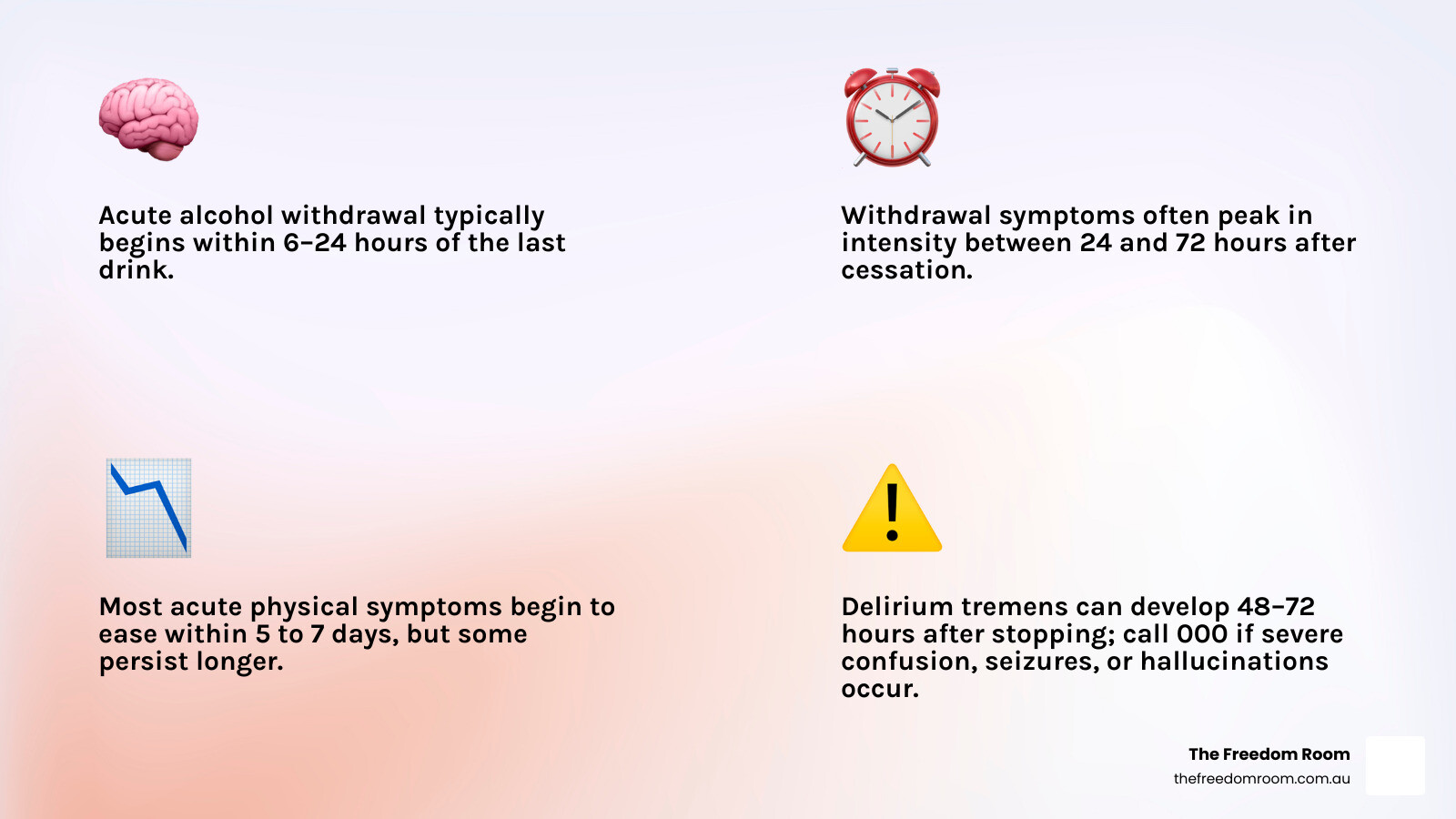
- Possible early changes: During the first day after alcohol is reduced or stopped, a person may notice shaking, sweating, nausea, headache, anxiety, restlessness, a faster heartbeat or disturbed sleep.
- A more intense period for some people: Symptoms may be strongest between roughly a day and a half and three days after the last drink. Their pattern and intensity differ, and perceptual disturbances can occur.
- Symptoms that need urgent care: Withdrawal-related seizures may develop during the first two days, and delirium can develop two to five days after stopping alcohol. Seek urgent medical assessment for seizures, marked confusion, hallucinations or severe agitation.
- Improvement and lingering effects: The acute physical phase often resolves over the following week. Sleep problems, low mood, reduced concentration and cravings may take longer to settle.
Clinical reviews describe alcohol withdrawal as a spectrum rather than a fixed sequence. Research on recognising and managing alcohol withdrawal and a review of withdrawal mechanisms and manifestations both emphasise the importance of individual assessment, particularly when symptoms are moderate or severe.
What Is the Difference Between Alcohol Dependence, Withdrawal and AUD?
Alcohol use disorder (AUD) is the broader diagnostic term for alcohol-related difficulties that may affect health, relationships or daily life. “Alcohol addiction” is a familiar everyday phrase, but it is not itself a diagnosis.
Physical dependence on alcohol describes the body’s physiological adaptation to regular alcohol exposure. Alcohol withdrawal refers to symptoms that may develop when alcohol use is substantially reduced or stopped after physical dependence has developed.
“Alcohol dependence” is also a common search term, but its meaning can vary. When discussing the body’s adaptation and the possibility of withdrawal, physical dependence is the more precise term. Detox, or withdrawal management, focuses on the immediate physical withdrawal period, while recovery can involve longer-term support for alcohol use patterns, cravings, triggers and wellbeing.
What Determines How Long Alcohol Withdrawal Lasts?

Withdrawal varies between people. A timeline offers context but cannot reliably predict an individual experience.
How Much and How Often You Drink
Sustained, heavy alcohol use can contribute to physical dependence and affect withdrawal severity. There is no simple formula for withdrawal duration.
How Long You Have Been Drinking
The duration and pattern of alcohol use can be relevant, but cannot reliably predict symptoms without clinical assessment.
Previous Withdrawal Experiences
Previous significant withdrawal can increase concern about future episodes. Discuss previous symptoms with a health professional.
Your Overall Health and Other Medicines or Substances
Health conditions, prescribed medicines and other substances can complicate withdrawal and treatment. Individual assessment helps determine appropriate support.
Whether Withdrawal Is Medically Supported
Trying to stop without professional advice differs from community-based withdrawal management, medically supervised withdrawal or residential treatment. AIHW alcohol treatment information reports that alcohol was the principal drug of concern in 41% of specialist treatment episodes in Australia in 2024-25.
Why Individual Assessment Matters
Individual assessment matters because severe or unusual symptoms need urgent medical attention. Seizures, severe confusion, significant agitation, hallucinations or collapse are not symptoms to manage alone.
What Happens After Alcohol Withdrawal?
Withdrawal management, sometimes called alcohol detox, supports the immediate physical changes that can occur when alcohol use stops or decreases. It can be an important starting point for physical dependence, but does not by itself address AUD or recovery.
After the withdrawal phase, recovery support can focus on alcohol use patterns, cravings, triggers, daily routines and emotional wellbeing.
Withdrawal Management and Longer-Term Recovery
Completing withdrawal management does not mean a person has to manage the next stage alone. Recovery support may include counselling, planning, coping strategies and understanding the situations that contribute to alcohol use.
Why Ongoing Support Can Matter
Ongoing care can help people:
- Build Strategies For Managing Cravings And Triggers.
- Rebuild Supportive Routines And Relationships.
- Address Stress, Emotional Health And Other Factors Linked To Alcohol Use.
- Develop Relapse-Prevention Plans That Fit Their Circumstances.
Counselling is a core part of Australian alcohol and other drug treatment. The AIHW treatment-services overview provides further context on the range of support available.
When To Seek Professional Support
Professional advice is particularly important for someone who may be physically dependent, has experienced withdrawal symptoms, has a history of seizures or severe withdrawal, or is unsure whether stopping suddenly is safe. A health professional can help assess the appropriate support.
Discover the Support You Need for a Lasting, Successful Recovery
There is no single alcohol detox timeline. Physical withdrawal is only one part of recovery, and people who may be physically dependent should seek professional guidance before changing their drinking.
The Freedom Room provides compassionate, professional support that respects the different paths people take towards recovery. Explore Our Services and alcohol recovery coaching and counselling to learn about available support.
To discuss the next step, contact The Freedom Room or visit 9a/521 Beams Rd, Carseldine QLD 4034.
Frequently Asked Questions
How Long Does Alcohol Dependence Last?
“Alcohol dependence” is a common search term with different meanings. Physical dependence describes the body’s adaptation to alcohol and the possibility of withdrawal when alcohol use changes. AUD is the broader diagnosis, while treatment and recovery can extend beyond acute withdrawal.
How Long Does Alcohol Withdrawal Last?
For a person with physical dependence, withdrawal can begin within 6 to 24 hours after alcohol use is reduced or stopped. Symptoms often peak between 36 and 72 hours and acute withdrawal commonly subsides within 5 to 7 days, although some symptoms can continue longer.
How Long Does Alcohol Detox Take?
Withdrawal management is the clinical support sometimes referred to as alcohol detox. It helps address the immediate effects of stopping or cutting down alcohol, but it does not replace treatment for AUD or the broader recovery process.
Can Alcohol Withdrawal Last for Weeks?
Acute physical symptoms commonly settle within 5 to 7 days, but sleep disruption, anxiety, mood changes, cravings or difficulty concentrating can continue longer. Ongoing recovery support may help.
Is It Safe To Stop Drinking Alcohol Suddenly?
Safety depends on physical dependence, medical history and previous withdrawal. Someone who may be physically dependent should seek medical advice rather than manage withdrawal alone.
What Is the Difference Between Alcohol Addiction and Alcohol Dependence?
“Alcohol addiction” is a widely used everyday term, not a diagnosis. AUD is the clinical term for broader alcohol-related difficulties. Physical dependence is more specific: physiological adaptation that can result in withdrawal when alcohol use is reduced or stopped.
Does Alcohol Detox Mean I Am Recovered From AUD?
No. Alcohol detox or withdrawal management addresses short-term physical withdrawal. Recovery from AUD or alcohol addiction often extends beyond that phase and may include ongoing support, revised routines and coping approaches.