

Why Evidence-Based Alcohol Treatment Changes Everything
Evidence-based alcohol treatment represents the gold standard in recovery support, combining scientific research with proven therapeutic approaches to help individuals overcome alcohol dependency. Unlike traditional one-size-fits-all methods, these treatments are backed by rigorous clinical studies and customised to address the complex nature of Alcohol Use Disorder (AUD).
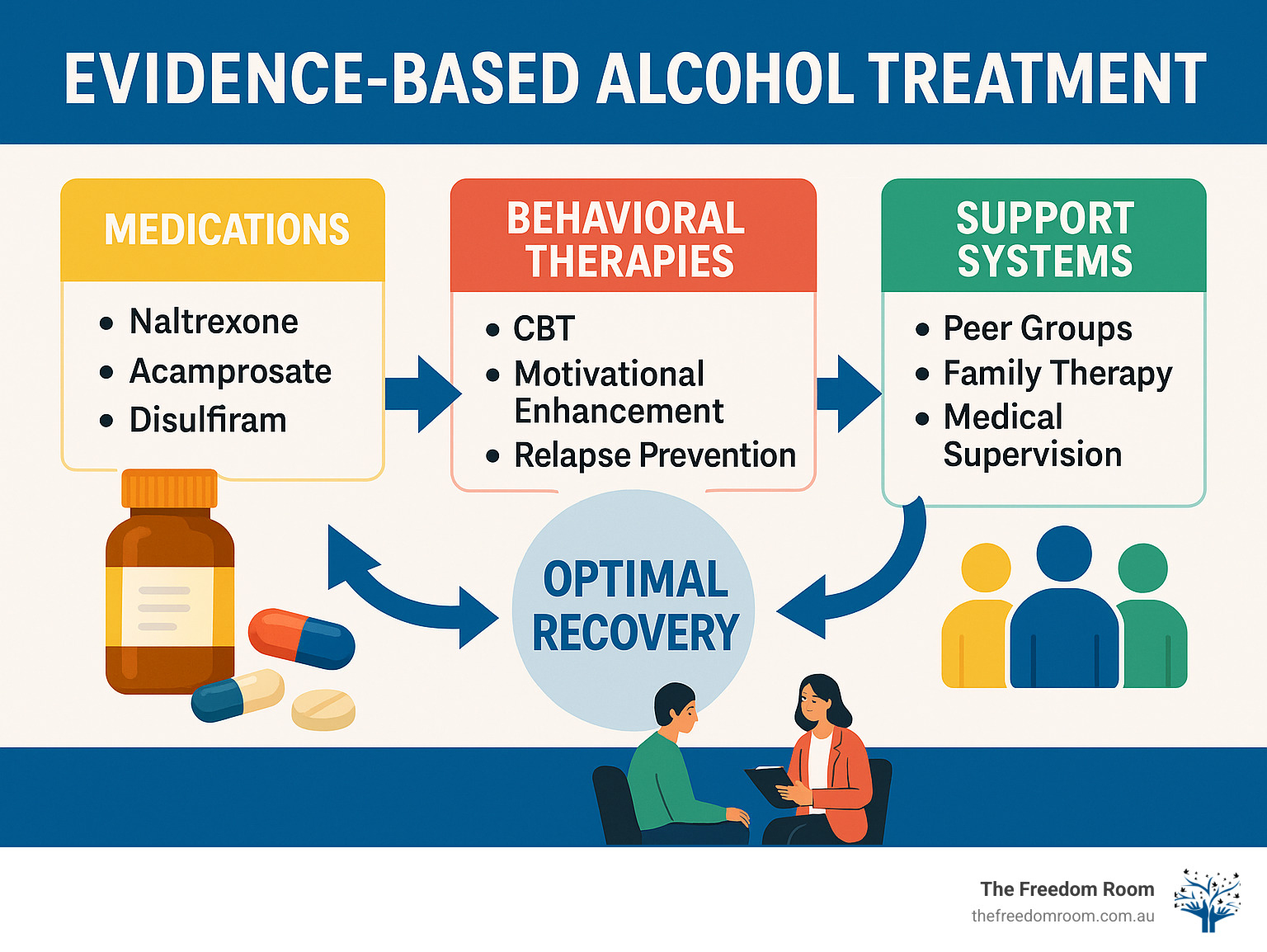
The most effective evidence-based treatments include:
- Medications: Naltrexone, acamprosate, and disulfiram – TGA-approved, non-addictive options that reduce cravings and support abstinence
- Behavioural therapies: Cognitive Behavioural Therapy (CBT), Motivational Enhancement Therapy, and relapse prevention techniques
- Peer support programmes: Structured group support including Alcoholics Anonymous, SMART Recovery, and secular alternatives
- Integrated care: Combining medical supervision, psychological support, and family involvement for comprehensive treatment
In Australia, it is estimated that 1 in 25 people have an alcohol use disorder. Concerningly, a significant portion of those affected do not receive any form of treatment, and even fewer access evidence-based medications that could substantially improve their recovery outcomes.
What makes evidence-based treatment different is its foundation in scientific validation. Each approach has been tested through controlled studies, showing measurable improvements in reducing alcohol consumption, preventing relapse, and supporting long-term recovery. This ensures that individuals are not relying on unproven methods during a critical life transition.
Recovery is not a matter of willpower alone; it requires accessing the right combination of medical support, therapeutic guidance, and community connection that addresses both the physical and emotional aspects of alcohol dependency.
What is Evidence-Based Alcohol Treatment and Why Does It Matter?
When discussing evidence-based alcohol treatment, we are describing a straightforward yet powerful approach to healthcare. This model integrates three essential components: proven scientific research, clinical expertise, and an individual’s personal values and preferences.
This approach is important because it moves beyond the outdated “one-size-fits-all” mentality that once dominated addiction treatment. Instead of relying on anecdotal evidence, evidence-based practice uses treatments that have been rigorously tested and shown to produce real, measurable results.
The Science Behind Better Outcomes
The difference in outcomes is remarkable. Individuals who receive evidence-based alcohol treatment experience significantly higher rates of sustained recovery and are much less likely to relapse. The effectiveness of this approach is supported by extensive clinical studies that track recovery success over months and years.
This approach is effective because it recognises alcohol use disorder as a complex medical condition, not a moral failing or lack of willpower. By treating it with the same scientific rigour applied to conditions like diabetes or heart disease, we can offer genuine hope for lasting change.
Understanding the Two Main Pillars
Evidence-based alcohol treatment typically rests on two main pillars that are designed to work in a complementary manner. These are:
- Medication: This involves TGA-approved, non-addictive medications that help reduce cravings, manage withdrawal symptoms, and support the brain’s natural healing process.
- Behavioural Healthcare: This includes proven therapies that help you develop new coping skills, identify triggers, and build lasting strategies for maintaining recovery.
Making Informed Choices About Your Care
Crucially, evidence-based treatment empowers individuals to make informed choices about their recovery journey. Rather than hoping a particular approach might work, you can feel confident knowing that the treatments you are considering have helped thousands of others facing similar challenges.
This scientific foundation does not make treatment cold or impersonal. It provides the solid ground needed to build a personalised recovery plan that respects both your unique circumstances and the proven strategies that offer the best chance of long-term success.
Medical Support: Medications for Alcohol Use Disorder
When it comes to evidence-based alcohol treatment, medications represent one of the most powerful tools available to support your recovery journey. While not a singular cure, these medications are scientifically proven to support the recovery journey as you rebuild your life.
The reality is that alcohol dependency involves real changes in brain chemistry. The brain adapts to regular alcohol consumption, and simply deciding to stop does not immediately reset these changes. This is where TGA-approved medications come in, as they are specifically designed to work with your brain’s chemistry.

These medications are completely non-addictive, which is a key consideration for individuals concerned about replacing one dependency with another. They work in different ways: some reduce the pleasure derived from drinking, others help manage withdrawal symptoms, and one creates an unpleasant reaction if you consume alcohol.
The prescribing process is straightforward and begins with a consultation with your GP or a psychiatrist. They will assess your individual situation, discuss your goals, and determine which medication might work best for you. The most suitable medication varies between individuals.
Naltrexone
Naltrexone works by reducing the reward system that makes drinking feel pleasurable. When you drink alcohol, your brain releases endorphins that create positive feelings. Naltrexone blocks the opioid receptors where these endorphins would normally attach, reducing that sense of reward and satisfaction from drinking.
Many people find this particularly helpful because it not only reduces cravings but also makes drinking feel less appealing. You may find yourself naturally drinking less or losing interest in subsequent drinks.
You have two options with naltrexone: a daily tablet or a monthly injection. The injection can be particularly helpful for those concerned about remembering daily medication or who want the peace of mind that comes with consistent, long-term coverage.
Acamprosate
Acamprosate takes a different approach by helping to restore balance in the brain’s chemical messaging system. After regular, heavy drinking, the brain adjusts its natural chemical balance to compensate. When you stop drinking, this can lead to feelings of anxiety, restlessness, or difficulty sleeping.
This medication works on the brain’s glutamate system to help ease these uncomfortable post-acute withdrawal symptoms. Many people report feeling more emotionally stable and sleeping better when taking acamprosate. It is particularly effective for maintaining abstinence once you have already stopped drinking.
The standard dosing involves taking two tablets three times daily, which requires organisation with your medication routine. However, most people find this becomes second nature within a few weeks.
Disulfiram
Disulfiram operates on a completely different principle by creating a strong physical deterrent to drinking. When you take disulfiram and then consume alcohol, your body cannot properly break down the alcohol, leading to a buildup of acetaldehyde. This causes extremely unpleasant symptoms including flushing, nausea, vomiting, and severe headaches.
This medication requires serious commitment because the reaction can be quite severe. It is most suitable for people who are highly motivated to maintain complete abstinence and want an extra layer of protection against impulsive drinking.
Because of how disulfiram works, you will need close medical supervision throughout treatment. Your doctor will monitor you carefully and provide detailed guidance about avoiding alcohol in all forms, including in some household products and medications.
The medication is taken once daily, typically in the morning. The deterrent effect can last for several days after taking it, which means you cannot simply skip a dose and drink safely later that day.
For comprehensive information about these medications and how they work, consult with your healthcare provider or refer to resources from Australian health authorities.
Behavioural Therapies: Building Skills for Lasting Recovery
Behavioural therapies form the backbone of evidence-based alcohol treatment, working alongside medications to create a comprehensive approach to recovery. These therapies are not just about discussing problems; they are about fundamentally changing how you think, respond to triggers, and navigate life’s challenges.
The value of behavioural therapy lies in its practical application. You will develop real, usable skills that become part of your daily toolkit for maintaining sobriety. Whether delivered through individual sessions, group settings, or family sessions, these therapies adapt to what works best for you.
Modern therapy has also accepted flexibility through telehealth options. This means you can access professional support from the comfort of your own home, removing barriers like travel time or scheduling conflicts that might otherwise prevent you from getting the help you need.

The Core of Evidence-Based Alcohol Treatment: Foundational Therapies
Several behavioural therapies have proven themselves through rigorous research and countless success stories. These are not experimental treatments but tried and tested approaches that consistently help people achieve lasting recovery.
Cognitive Behavioural Therapy (CBT) stands as one of the most powerful tools in recovery. This therapy helps you recognise the patterns of thinking that lead to drinking. You will learn to identify automatic negative thoughts that arise during stressful moments and challenge them with more balanced, realistic alternatives. This provides a mental toolkit that helps you pause, reflect, and choose a healthier response rather than reaching for alcohol. We offer comprehensive programmes in both Cognitive Therapy for Alcoholics and CBT for Alcoholism to support this important work.
Motivational Enhancement Therapy (MET) takes a different but equally valuable approach. Rather than prescribing a course of action, MET helps you find your own reasons for change. This therapy explores any ambivalence you might have about recovery, helping you work through doubts and strengthen your personal motivation. The power comes from within you; MET simply helps you access it.
Relapse Prevention focuses on the practical reality that recovery involves navigating high-risk situations. This is not about expecting failure, but about being prepared for success. You will identify your personal triggers, develop strategies for managing cravings, and create action plans for challenging moments. Our specialised Relapse Prevention Strategies and Coping Skills to Prevent Relapse programmes provide comprehensive support in building these essential skills.
Creating Your Personalised Recovery Ecosystem
Recovery from alcohol use disorder is not a one-size-fits-all journey. Instead, it is about creating a personalised recovery ecosystem that weaves together various treatments and support systems to match your unique needs and circumstances. This holistic approach recognises that lasting recovery requires a robust support network that grows and adapts with you.
A key strength of modern evidence-based alcohol treatment is its flexibility. Your individualised treatment plan considers crucial factors like any co-occurring mental health conditions, the severity of your alcohol use, your personal preferences, and your life circumstances. This comprehensive approach ensures that every aspect of your wellbeing is addressed, creating a foundation for sustainable recovery.

The Role of Peer and Community Support
Connecting with others who understand your experience can be profoundly healing. Peer support offers a unique blend of understanding and encouragement that comes from shared experience, creating a powerful sense of belonging that can transform feelings of isolation into genuine connection.
Research consistently shows that active involvement in mutual support groups is linked to greater success in achieving and maintaining abstinence. These communities provide ongoing encouragement and accountability, which are vital elements for long-term sobriety.
While Alcoholics Anonymous remains widely known, effective secular alternatives like SMART Recovery, LifeRing, Women for Sobriety, and Secular Organisations for Sobriety offer diverse philosophies and approaches. This variety allows you to find a community that truly resonates with your personal values and recovery style.
Whether through structured group therapy for addiction recovery or informal gatherings, these connections become a cornerstone of your recovery ecosystem. We also offer Twelve Step Facilitation (TSF) to help you engage meaningfully with these valuable resources.
Integrating Family and Primary Care
Recovery rarely happens in isolation; it often becomes a family journey that touches everyone in your support network. Alcohol use disorder impacts the entire family unit, which means healing often needs to extend beyond the individual to include those closest to you.
Family involvement can be transformative. Therapies like couples therapy help partners address communication challenges, rebuild trust, and work together to create a supportive home environment. Providing Emotional Support for Families forms a crucial part of building a strong recovery ecosystem, as it strengthens the foundation from which healing can flourish.
Your General Practitioner (GP) plays an equally vital role in your recovery journey. Often serving as the first point of contact, your GP can conduct initial screenings, perform comprehensive physical examinations, and order necessary tests to assess alcohol’s impact on your health. More importantly, they coordinate your care by making referrals to specialists, ensuring seamless integration of medical and psychological support.
Finding the Right Evidence-Based Alcohol Treatment for You
The flexibility of modern evidence-based alcohol treatment allows it to meet you where you are. Treatment intensity varies significantly depending on your individual needs, with different levels of care designed to match your situation and personal circumstances.
- Outpatient Programmes: Involving regular therapy sessions and support group meetings while you continue living at home, these are ideal for those with mild to moderate AUD or individuals transitioning from more intensive care.
- Intensive Outpatient or Partial Hospitalisation Programmes: These provide more structured and frequent therapy than standard outpatient care, offering a higher level of support without requiring overnight stays.
- Residential Treatment: This provides a highly structured, alcohol-free environment for periods ranging from weeks to months, ideal for severe AUD or when distance from triggering environments is needed.
- Inpatient Detoxification: When significant physical dependence exists, this ensures safe withdrawal management under medical supervision, addressing potentially dangerous symptoms with professional care.
Addressing co-occurring mental health conditions like anxiety or depression is crucial, as these frequently accompany AUD. Integrated treatment approaches both the alcohol use disorder and mental health conditions simultaneously, significantly improving long-term outcomes.
Resources like the Alcohol and Drug Foundation’s Path2Help tool can assist in navigating various options and finding quality care. We also provide comprehensive information on Alcohol Use Disorder Treatment and Alcohol Addiction Treatment Centres to guide your decision-making process.
Emotional Freedom Techniques (EFT): A Unique Approach to Healing
Emotional Freedom Techniques (EFT), also known as “tapping,” is a valuable and evidence-based energy psychology tool that offers relief from stress and a wide range of other challenges. Despite the name, EFT isn’t about suppressing emotions but rather about gently processing the energy of long-held fear, anger, and worry through nurturing our bodies with tapping. This process can help us move from feeling overwhelmed by these emotions to a state of greater calm, ease, and inner peace, allowing our natural sense of self-worth to flourish.
What is the role of an EFT Practitioner?
The role of an EFT Practitioner (also known as an ‘Emotional Freedom Technique Therapist’) is to support and guide the release of emotional trauma held within the body and in subconscious memories in a safe and controlled way.
An EFT Therapist is trained and qualified to support clients in navigating and clearing both small ‘t’ and big ‘T’ traumas that they may have experienced in their lives. Each trauma is unique and will have its own pain points and nuances; a trained EFT practitioner will be able to identify these and work to clear them effectively.
One of the main priorities of an EFT practitioner is to ensure that the individual doesn’t relive the trauma and therefore experience all the hurt and pain they would have felt in the past. EFT is very safe therapy when dealing with traumatic memories, whereas more traditional talking therapies can sometimes leave you feeling like you’ve ‘opened a can of worms’ at the end of a session. Due to its nature EFT is working on clearing negative emotions so an individual will always feel better.
The aim of an EFT Practitioner is to get an individual to a place where the traumatic event no longer has an emotional charge; they look at it from a completely different perspective or are no longer able to access the memory.
What health areas does EFT focus on?
The ‘Emotional Freedom Technique’ can be effectively used as part of any healing journey. All illnesses, whether physical or mental, have an emotional root; we encourage all clients to explore this aspect in our sessions. Once the emotional stress has been cleared, the body is able to relax and enter into a parasympathetic nervous system state, which allows the healing process to begin. Often, individuals remain in a stress cycle due to unresolved emotions, which means they are unable to heal.
Areas where EFT is known to be particularly beneficial, are:
- Addictions
- Anxiety
- Depression
- Sexual/Emotional/Physical Abuse
- PTSD (Post Traumatic Stress Disorder)
- Stress Management
- Childhood Trauma
- Phobias
- Pain Management
- Loss and Grief
- Self-Confidence/Self-Esteem
How EFT Works:
EFT, or Tapping, offers a gentle yet effective way to work with our body’s natural stress response. Deep within our brain lies a small but powerful structure called the amygdala, which acts as a vigilant alarm system. When it senses danger, whether a genuine physical threat or something our mind interprets as stressful, it initiates the well-known “fight, flight, or freeze” response. This floods our system with stress hormones like adrenaline and cortisol, quickens our heart rate, and sharpens our senses – all designed to help us survive.
However, in our modern lives, this ancient survival mechanism can sometimes become overactive, reacting intensely to everyday stressors or even being triggered by past experiences. This chronic activation can negatively affect our overall well-being. This is where EFT comes in. The gentle tapping on specific acupressure points on the face and upper body while we focus on a particular distressing thought or emotion is believed to send a calming signal directly to the amygdala. It’s as if we’re gently reassuring that alarm system, communicating that the perceived threat is not as overwhelming as it feels in that moment.
This physical stimulation, paired with the cognitive focus on the issue at hand, helps to disrupt the typical stress response pathway, allowing our nervous system to return to a more balanced state. Over time, consistently using EFT can help to retrain this response, reducing the intensity and frequency of those overwhelming fight, flight or freeze reactions. Regular tapping can foster a greater sense of inner calm and emotional resilience in your daily life, allowing you to navigate the challenges of our busy world more easily.
Start Your Journey to Lifelong Recovery Today
Recovery from alcohol use disorder is a deeply personal process, and understanding that progress matters more than perfection can be liberating. When you choose evidence-based alcohol treatment options, you are giving yourself the strongest foundation for lasting change and a fulfilling, alcohol-free life.
The most effective recovery happens when medication, behavioural therapy, and strong social support work together. This combination creates a comprehensive safety net that addresses both the physical and emotional aspects of alcohol dependency. Each element strengthens the others, building resilience that can carry you through challenging moments.
Why The Freedom Room Makes a Difference
At The Freedom Room, our professional expertise is complemented by a deep understanding of the recovery journey. This combination of clinical knowledge and lived experience allows us to offer authentic, effective support that addresses the real-world challenges of recovery.
Our personalised sessions and workshops are designed to meet you exactly where you are in your recovery journey. Whether you are just beginning to consider change or are ready to engage in deep healing work, we tailor our approach to your specific needs and circumstances.
Taking Your First Step Forward
Recovery is a marathon, not a sprint, and every journey begins with a single step. The combination of evidence-based treatments, compassionate support, and practical tools creates the strongest foundation for lasting change. You do not have to figure this out alone.
If you are ready to explore how evidence-based alcohol treatment can transform your life, we are here to help. Our team understands both the science of recovery and the human experience of healing, and we are committed to supporting you with expertise and genuine care.
Contact us to start your journey toward a life of freedom, health, and genuine happiness. Your recovery journey is an important one, and we are here to provide guidance and support.