

Why Coping Skills for Relapse Prevention Are the Foundation of Lasting Sobriety
Coping skills for relapse prevention represent the essential practical tools and clinical strategies that assist individuals in recovery to manage cravings, navigate complex triggers, and maintain their sobriety during periods of significant stress. These skills are fundamental for any individual navigating the complexities of physical dependence on alcohol or other substances. Within the Australian healthcare landscape, there’s emphasis on the critical importance of evidence based approaches to maintain long term wellness and reduce the systemic harm associated with substance use. The development of these skills is not merely a secondary aspect of recovery but is the primary mechanism through which long term behavioural change is sustained.
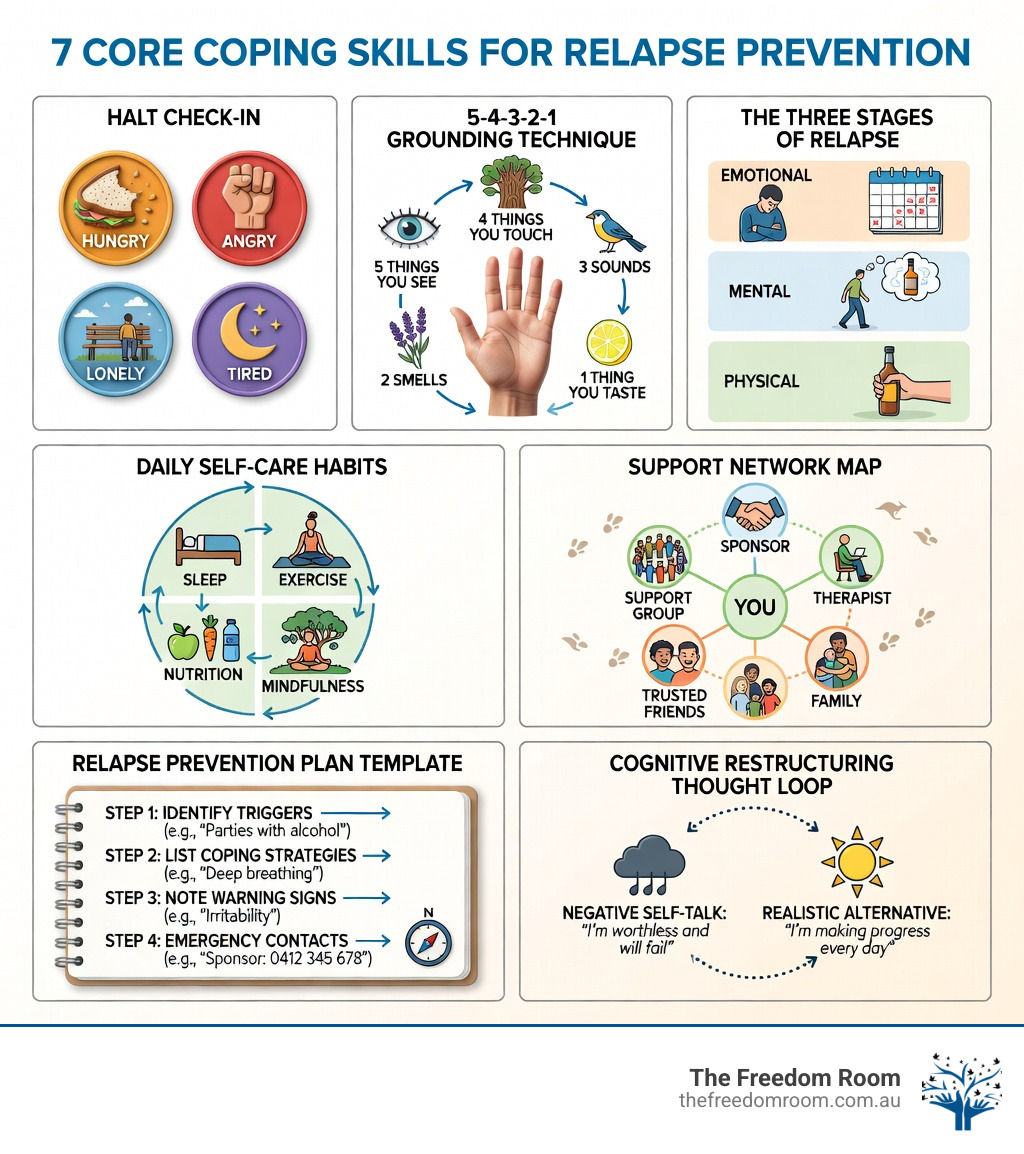
The following summary provides a concise overview of the primary coping skills utilised in clinical practice:
- The HALT check in process. This involves a systematic assessment of whether an individual is Hungry, Angry, Lonely, or Tired.
- Mindfulness and grounding techniques. These include the five four three two one sensory technique or structured deep breathing to maintain present moment awareness.
- Systematic trigger identification. This requires the recognition of internal emotional states and external environmental cues.
- Cognitive restructuring. This involves the identification and replacement of maladaptive thought patterns.
- Engagement with a support network. This includes professional counsellors, support groups, and trusted peers.
- Implementation of a structured routine. This focuses on establishing consistent habits regarding sleep, exercise, and nutrition.
- Development of a personalised relapse prevention plan. This is a formalised written document containing specific strategies and emergency contact information.
Recovery from physical dependence on alcohol or other drug use is a nonlinear process. Data from the Australian Institute of Health and Welfare (AIHW) indicates that alcohol remains the most prevalent substance for which Australians seek professional intervention. Statistics suggest that approximately 40 to 60 per cent of individuals with a substance use disorder may experience a lapse within the first year following treatment. This statistic should not be interpreted as a failure of the individual. Rather, it reflects the chronic nature of the condition and the profound impact that substance use has on the human neurological system.
Neurological changes resulting from prolonged substance use significantly affect memory, executive decision making, and the physiological processing of stress. Consequently, maintaining sobriety requires more than individual willpower. It necessitates a comprehensive toolkit of psychological and behavioural strategies. These coping skills do more than prevent a return to use. They facilitate the rebuilding of self efficacy, improve emotional regulation, and assist in the creation of a lifestyle that supports ongoing wellness. Whether an individual is in the early stages of recovery or has maintained sobriety for several years, the daily application of these skills is vital for success.
Comprehensive Strategies and Coping Skills for Relapse Prevention
Achieving long term sobriety requires a transition from passive abstinence to an active and engaged recovery process. This transition involves the development of a robust set of coping skills for relapse prevention that address both the psychological and physiological dimensions of dependence. Clinical research demonstrates that relapse is a progressive process rather than an isolated event. It frequently commences weeks or even months before the actual physical consumption of a substance occurs. By understanding the stages of this process, individuals can implement interventions during the early warning phases.
The Australian Institute of Health and Welfare continues to highlight alcohol as a primary health concern, which underscores the necessity for accessible and evidence based prevention strategies. Effective prevention focuses on building resilience against internal psychological pressures and external environmental influences. Scientific literature suggests that adherence to structured relapse prevention protocols significantly improves clinical outcomes. These protocols often include modifying one’s environment to support recovery, maintaining absolute honesty with a support network, and seeking professional assistance before a crisis develops. For a detailed review of these principles, clinicians and individuals may refer to this open access study on relapse prevention in substance use disorders.

Identifying Emotional and Environmental Triggers
Triggers are specific stimuli or situational cues that elicit a physiological or psychological desire to consume substances. These are generally categorised as internal or external. Internal triggers encompass emotional states such as anxiety, depression, or intense stress. External triggers include specific individuals, locations, or objects associated with previous substance use, such as a local hotel or a high pressure professional environment. Recognising these cues is a fundamental component of Addiction Relapse Prevention Strategies.
Sensory cues are particularly powerful in activating the brain circuits associated with past habits. The scent of a specific beverage or the presence of former associates can trigger intense cravings. Identifying these factors allows for the development of a proactive management plan. In the Australian context, social interactions frequently involve alcohol, making it necessary to develop assertive communication skills to decline offers of substances. Stress management, including regular physical activity and engagement with the natural environment, helps to reduce the baseline tension that often exacerbates the impact of triggers. Utilising alcohol risk minimisation strategies provides a structured framework for navigating these high risk social scenarios.
The HALT Method and Physiological Regulation
The HALT method is a foundational tool in recovery management. It serves as a mnemonic for Hungry, Angry, Lonely, and Tired. These four states represent significant vulnerabilities that can impair judgement and reduce the capacity for self regulation. By performing regular self assessments using this framework, individuals can address basic physiological and emotional needs before they manifest as a craving for substances. For instance, hunger can lead to fluctuations in blood glucose levels that mimic the symptoms of anxiety. Maintaining a consistent nutritional intake is essential for emotional stability.
Anger and unresolved resentment can lead to maladaptive thought patterns and impulsive behaviour. Learning to process these emotions through healthy channels is a vital skill. Similarly, social isolation is a known risk factor for a return to substance use. Engaging with a support group or a trusted friend can mitigate the effects of loneliness. Finally, chronic fatigue significantly impairs cognitive control. Prioritising sleep hygiene is a critical element of a Mental Health Relapse Prevention Guide. This approach shifts the focus from merely resisting urges to actively maintaining one’s well being.
Clinical Distinctions Between Lapse and Relapse
It is important to distinguish between a lapse and a relapse within a clinical context. A lapse is defined as a brief and isolated return to substance use, followed by an immediate recommitment to sobriety. A relapse involves a sustained return to previous patterns of problematic use and a significant loss of control over the recovery process. The individual’s response to a lapse is often the determining factor in whether it evolves into a full relapse. The Abstinence Violation Effect describes the intense shame and guilt that often follow a slip. If an individual perceives a lapse as a total failure, they are more likely to abandon their recovery goals. However, viewing a lapse as a learning opportunity allows for the analysis of the preceding events and the strengthening of craving management techniques.
Evidence Based Mindfulness and Cognitive Techniques
Evidence based interventions such as mindfulness and grounding provide immediate psychological relief during a crisis. Grounding techniques, such as the five four three two one method, assist in redirecting the mind from future anxieties or past regrets to the present moment. This involves identifying five objects in view, four textures that can be felt, three distinct sounds, two scents, and one taste. Furthermore, deep breathing exercises can alter brain chemistry by activating the parasympathetic nervous system, which induces a state of relaxation. This is particularly useful during high stress events where the urge to use may feel overwhelming.
Urge surfing is another specific mindfulness technique where the individual visualises a craving as a wave. Rather than attempting to suppress the urge, the individual observes its rise, peak, and eventual decline. Research on mindfulness based relapse prevention indicates that individuals who employ these techniques experience fewer cravings and maintain longer periods of sobriety. A summary of these findings can be found in this mindfulness based relapse prevention review. These healthy coping mechanisms are indispensable during the early months of recovery when the brain is undergoing significant neurobiological healing.
Cognitive Restructuring and Support Systems
Cognitive restructuring involves the identification and systematic challenging of distorted thought patterns that often precede a return to substance use. This may include all or nothing thinking or euphoric recall, where an individual remembers only the perceived benefits of substance use while ignoring the negative consequences. By replacing these distortions with realistic assessments, the psychological power of the dependence is diminished. This process is often facilitated through professional therapy or structured outpatient alcohol treatment programmes.
Establishing a robust support network is equally critical. This includes participation in organisations such as AA, NA, or SMART Recovery. It also involves maintaining a list of emergency contacts and engaging with a professional therapist or sponsor for accountability. Setting clear boundaries with individuals who do not support a sober lifestyle is a necessary step in protecting one’s progress. Understanding alcohol withdrawal symptoms and having a plan for alcohol detox at home under medical supervision can also be part of a comprehensive safety strategy.
Developing a Formalised Relapse Prevention Plan
A formalised relapse prevention plan is a written document that details specific triggers and the corresponding strategies for management. This plan should be developed during a period of stability and reviewed on a regular basis. A structured daily routine serves as the foundation of this plan, providing the necessary stability through consistent sleep, exercise, and nutrition. Self care is a clinical necessity for maintaining mental and physical health in recovery. Activities such as journaling, pursuing hobbies, and regular physical activity help to rebuild self esteem and provide healthy outlets for stress. A comprehensive Relapse Prevention Plan Guide should also include a contingency protocol for responding to a lapse, ensuring that a minor setback does not escalate into a major crisis.
Professional Support and Long Term Recovery Goals
At The Freedom Room Wellness and Recovery, we recognise that the journey toward sobriety is a highly individualised process. We provide compassionate and professional alcohol treatment services designed to meet the specific needs of each client. Our team consists of individuals with lived experience in recovery, ensuring that our support is grounded in empathy and authentic understanding. Our sessions and workshops focus on providing the practical coping skills for relapse prevention that are necessary for a fulfilling and alcohol free life.
We are committed to assisting you in building a resilient future. For further information regarding our services, please visit our Addiction Recovery page or contact our office directly to discuss your requirements. We provide a supportive and professional environment where the focus remains on your long term wellness and recovery objectives. Further resources on self care practices and rebuilding your life after addiction are also available to support your journey.
Frequently Asked Questions
What are the most effective coping skills for relapse prevention? Clinical evidence supports the use of mindfulness meditation, the HALT method, cognitive restructuring, and the establishment of a robust support network. these tools are designed to assist individuals in managing cravings and navigating high risk situations effectively.
How does the HALT method assist in maintaining sobriety? The HALT method serves as a diagnostic tool for individuals to assess if they are Hungry, Angry, Lonely, or Tired. By addressing these fundamental physiological and emotional needs, individuals can prevent the impulsive decision making that often leads to a lapse.
What is the clinical difference between a lapse and a relapse? A lapse is defined as a brief and temporary departure from sobriety goals, followed by an immediate return to recovery protocols. A relapse involves a more significant and sustained return to previous levels of substance use and a loss of control over the recovery process.
When is it appropriate to seek professional assistance for relapse prevention? Professional support should be sought if cravings become unmanageable, if signs of emotional or mental relapse are identified, or if assistance is required to develop a structured prevention plan. Early intervention is a key factor in maintaining long term wellness and preventing a return to physical dependence on alcohol.