

Why Socialising Without Alcohol is More Important Than Ever
Socialising without alcohol is increasingly relevant as more Australians accept healthier lifestyles and reconsider alcohol’s role in social settings. Whether you are exploring sobriety, reducing your intake, or are curious about alcohol-free experiences, you are part of a movement that prioritises genuine connection.
Quick Guide to Socialising Without Alcohol:
- Have non-alcoholic drinks ready (mocktails, craft sodas, sparkling water)
- Prepare simple responses like “No thanks, I’m not drinking tonight”
- Suggest alcohol-free venues like cafes, galleries, or outdoor activities
- Focus on meaningful conversations and genuine connections
- Plan your transport independently so you can leave when ready
- Find supportive friends who respect your choices
- Your presence adds value regardless of what you’re drinking
Alcohol often seems central to Australian social culture, from work functions to weekend gatherings. Yet, a growing number of people are choosing to reduce or eliminate alcohol for their health, mental clarity, and to foster authentic connections.
Navigating this change presents challenges, such as peer pressure, awkwardness, or a fear of missing out. However, the benefits extend beyond avoiding hangovers to include deeper conversations, improved self-awareness, better physical health, and significant financial savings.
Learning practical strategies for socialising without alcohol can lead to more fulfilling and authentic connections. The key is preparation, confidence, and knowing your choice is both valid and increasingly common.
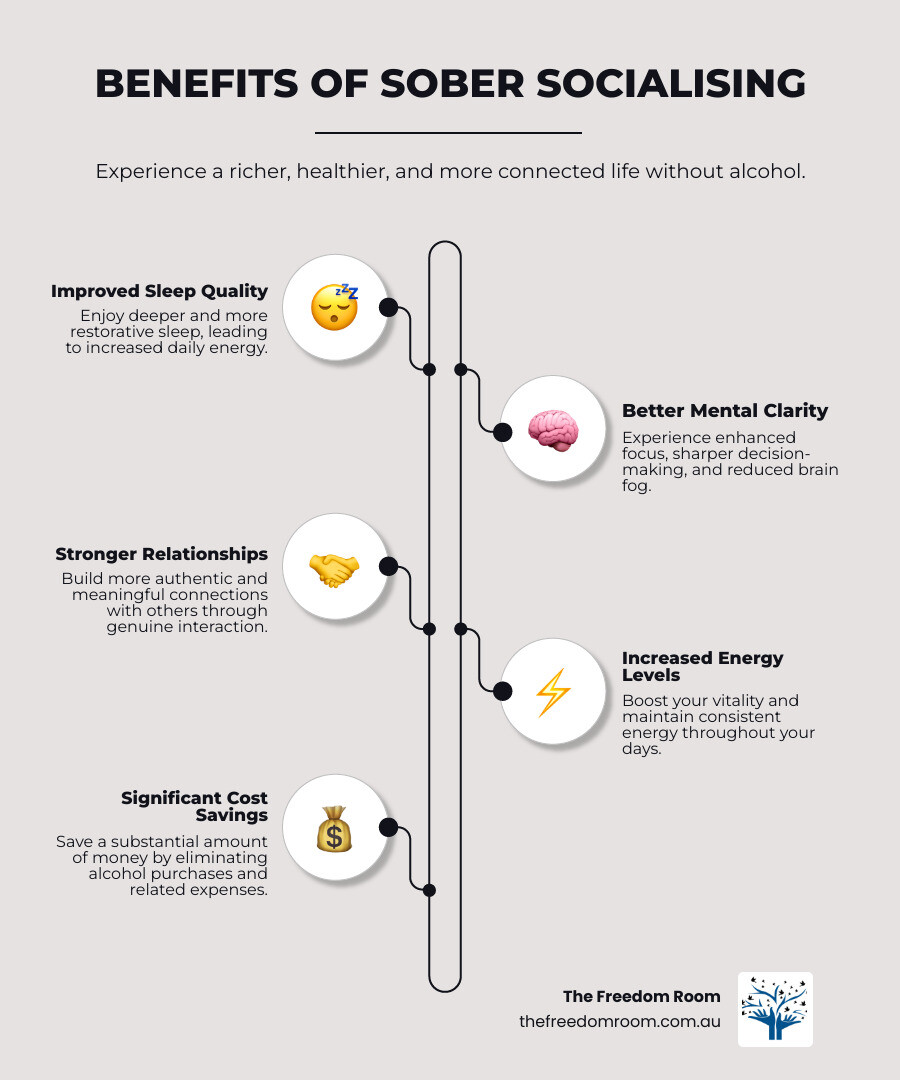
Socialising without alcohol terms made easy:
Understanding the Shift: Challenges and Benefits
Choosing to socialise without alcohol can feel unfamiliar, especially when it seems integral to most social gatherings. Understanding both the challenges and the rewards can help you steer this change with confidence.
The main challenges of socialising without alcohol
The prospect of attending social events without a drink can bring genuine concerns. Many people worry about peer pressure, feeling awkward, or not knowing how to enjoy themselves without alcohol. The fear of standing out or facing uncomfortable questions is understandable.
Social anxiety is a significant factor. For many, alcohol serves as a temporary tool to ease the fear of judgement in social situations, lowering inhibitions and making interactions feel more manageable.
This relief is fleeting and can worsen underlying anxiety over time, potentially leading to problematic drinking patterns. Anxiety is the most common form of mental illness, affecting millions of adults worldwide.
The cultural expectation to drink adds another layer of difficulty, as alcohol is often the default choice at events from work functions to barbecues. This can lead to awkward moments when declining a drink or facing insensitive comments.
Those in recovery face the added challenge of navigating questions while maintaining their commitment to sobriety.
Feeling left out is particularly challenging when conversations turn to shared drinking experiences or when the group’s energy shifts. The worry about appearing boring or antisocial can cause genuine distress, especially in the early stages of an alcohol-free lifestyle.
The rewarding benefits of an alcohol-free social life
Despite these challenges, the benefits of socialising without alcohol are extensive. When alcohol is removed from social interactions, we open ourselves to deeper connections with others. Conversations become more meaningful as we remain fully present and engaged.
The health benefits are immediate and long-lasting, including improved sleep, increased energy, and better mental clarity. Many people also experience decreased anxiety and improved physical wellbeing.
In the long term, reducing or eliminating alcohol significantly lowers the risk of various health conditions, contributing to The Joys of Sobriety.
Financial savings from not buying alcoholic drinks can be substantial, freeing up funds for other activities or goals. Many are surprised by how much they save when they stop buying alcohol.
Most importantly, alcohol-free socialising fosters increased self-awareness and genuine confidence. We learn that our personality and ability to connect do not depend on alcohol. This realisation can be liberating, allowing us to experience social situations with authentic presence.
The shift towards socialising without alcohol leads to stronger, more authentic relationships built on genuine connection. We learn to value our contribution to social situations, recognising our presence adds value regardless of what we are drinking.
Your Toolkit for Sober Social Events (Tips 1-5)
Socialising without alcohol is more manageable with practical strategies. These first five tips are an essential toolkit for navigating social situations with confidence.
1. Set Clear Intentions and Boundaries
Successful alcohol-free socialising begins with understanding your personal reasons for this choice. Reflect on whether your motivation is health, mental clarity, or recovery, as this purpose provides strength against social pressure.
This self-awareness acts as an anchor in challenging moments. When you are confident in your choice, others are more likely to respect your decision. Consider sharing your intentions with a trusted friend for support.
Setting boundaries is also about being honest with yourself. Recognise and honour your limits without guilt. This is a vital aspect of Personal Growth in Recovery and a form of genuine self-care.
2. Prepare Polite and Assertive Responses
Preparing simple responses for when alcohol is offered is empowering. Having them ready removes awkwardness and helps you respond confidently.
A straightforward “No thanks, I’m not drinking tonight” is often sufficient. If someone persists, you might say “I’m driving” or “I have an early start tomorrow.” You do not need to justify your choice.
Practising these phrases builds confidence and makes them feel natural. Good friends will respect your decision. If the conversation continues, redirect it to another topic. Assertiveness without over-explaining is key. Building your drink refusal skills emphasises that directness and confidence are effective.
3. Have a Go-To Non-Alcoholic Drink
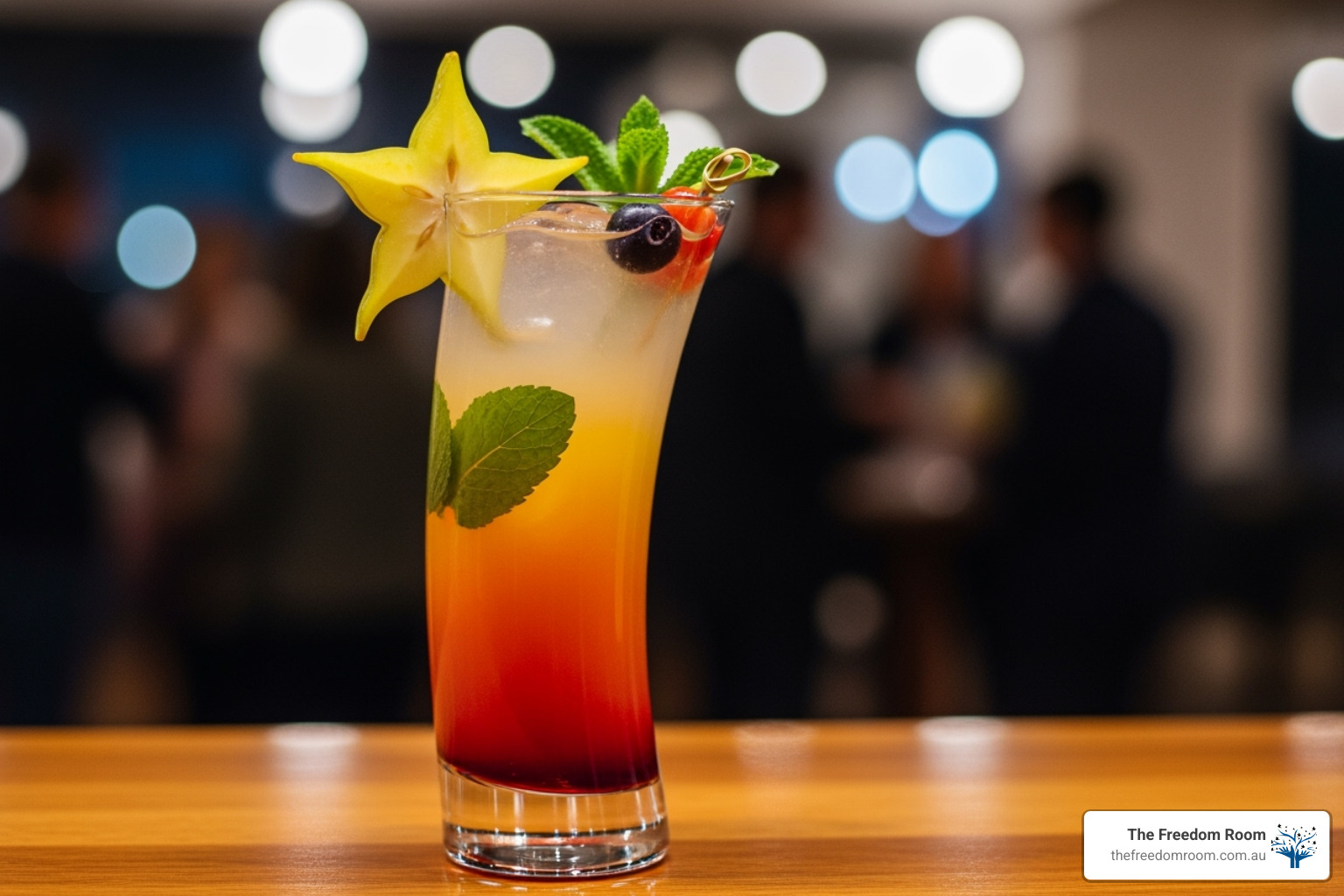
Having a drink in hand is a powerful tool when socialising without alcohol. It occupies your hands, reduces offers of alcohol, and helps you blend into the social environment. Non-alcoholic options have also evolved significantly.
Well-crafted mocktails are sophisticated alternatives. Many venues now offer impressive alcohol-free cocktail menus. Craft sodas and kombuchas provide interesting flavours, while sparkling water with fresh garnishes like lime or mint can feel festive.
Non-alcoholic beers and wines can be good substitutes, but be aware of your personal triggers. If the taste or smell is too reminiscent of alcohol, it is best to avoid them.
Do not hesitate to ask bartenders for suggestions. Many can craft drinks that look similar to alcoholic ones, helping you feel more comfortable. For inspiration, explore our guide on Mocktails and Alcohol-Free Beverages.
4. Plan Your Arrival and Exit
Strategic timing can reduce the stress of social events. Consider arriving later to miss the initial drinking period, or plan to leave earlier if the atmosphere becomes too alcohol-focused.
The most important aspect is arranging independent transport. Knowing how you will get home gives you complete control over your evening, allowing you to leave when you feel ready.
You do not owe anyone an explanation for leaving. Your comfort and wellbeing are the priority. It can be helpful to commit to staying for a set period, such as one hour, which gives you permission to leave afterwards without feeling guilty.
5. Proactively Manage Social Anxiety
Social anxiety is a common challenge when socialising without alcohol, but there are effective ways to manage it. Acknowledging the anxiety is the first step toward working through it.
Deep breathing exercises can be very helpful when you feel overwhelmed. Excuse yourself and practise slow, deliberate breaths to calm your nervous system. Mindfulness techniques that focus on your senses can ground you in the present.
Focusing on others instead of your own feelings can be transformative. Ask genuine questions and practise active listening to reduce self-consciousness and connect more deeply. It is also important to challenge negative thoughts about your ability to socialise sober.
These strategies are part of building Healthy Coping Mechanisms that serve you in many situations. With practice, these techniques become natural, helping you steer social environments with greater ease.
Building a Fulfilling Life and Socialising Without Alcohol (Tips 6-10)
Beyond simply navigating social events, socialising without alcohol can be a pathway to deeper fulfilment. These final strategies focus on creating lasting change and a social life that truly nourishes you.
6. Shift Your Focus to Genuine Connection
Without the influence of alcohol, there is an opportunity for authentic human connection. Instead of relying on alcohol for confidence, you can find satisfaction in being genuinely present with others.
This shift begins with curiosity. Ask questions that go beyond small talk and listen to the emotions behind the words. Sharing your own experiences with honesty can lead to more memorable conversations.
Active listening is a powerful skill in social situations. When not distracted by alcohol, you can pick up on subtle cues, remember details, and respond with empathy, creating stronger connections.
Participate fully in the activities around you. Your presence and attention are valuable contributions to any social gathering, regardless of what is in your glass.
7. Suggest Alcohol-Free Activities and Venues
Taking control of your social calendar is an empowering aspect of socialising without alcohol. Instead of only adapting to alcohol-centric plans, you can introduce friends to new experiences.
Australia’s landscape offers endless possibilities. Consider suggesting:
- Morning coffee dates for meaningful conversation.
- Weekend hiking adventures in local national parks.
- Beach picnics combining nature with good company.
Cultural activities also open up new social dimensions, such as art gallery visits, exploring local markets, or attending live music venues that focus on the performance.
You could also host game nights or suggest creative workshops like pottery or cooking classes. Even simple group walks can become enjoyable social rituals. These alternatives create better conditions for connection by focusing on shared enjoyment. For more ideas, see our guide on Sober Camping.

8. Nurture Supportive Friendships
Your social circle plays a crucial role in making socialising without alcohol enjoyable. True friends will support your choices and may even be inspired by your commitment to healthier habits.
Open communication is the foundation of these relationships. Genuine friends respond with respect and curiosity, not pressure or judgement.
Pay attention to how friends respond. You may need to set clearer boundaries with those who consistently pressure you to drink or make you feel uncomfortable. This might mean limiting certain interactions with them.
The friends who accept your choice become your strongest allies. These relationships deepen as they are built on mutual respect and care, rather than shared drinking habits. Building Healthy Relationships in Recovery requires effort, but the rewards are immeasurable.
9. Find or Create Your Sober Community
Connecting with others who share your commitment to socialising without alcohol can be incredibly valuable. These communities provide understanding from shared experience and offer alcohol-free social opportunities.
Hobby-based groups like photography clubs, book groups, or hiking organisations are excellent entry points. Online communities on social media can also help you find local events and like-minded individuals.
Fitness communities, such as gyms or running groups, naturally align with an alcohol-free lifestyle. Support groups also provide structured environments for connection and often organise social events.
The key is finding communities where not drinking is the norm. This creates space for Recovery and Sober Connections that support your long-term wellbeing.

10. Accept the Long-Term Advantages
The rewards of socialising without alcohol compound over time, creating a richer, more fulfilling life. These benefits extend beyond social events to your overall quality of life.
Mental health often improves, with decreased anxiety and increased mental clarity. Emotional stability also increases as you learn to steer social situations without alcohol’s influence.
Physical health benefits accumulate steadily, including better sleep quality and increased energy levels. Your overall health improves as your body functions without the stress of processing alcohol.
Relationship quality deepens when built on authentic connection. Friendships become more resilient and satisfying.
Financial freedom grows as you redirect money towards experiences that enrich your life. This can mean travel, new hobbies, or greater financial security.
You develop unshakeable confidence in your ability to enjoy life without depending on a substance. This self-assurance contributes to Being Present in My Families Life Through Sober Eyes.
Ready for Change? Let’s Build a Stronger, Alcohol-Free Future Together
Choosing to socialise without alcohol is a powerful step towards empowerment, self-findy, and lasting personal change. This journey requires courage and demonstrates a commitment to building a healthier, more authentic life.
The path is not always straightforward, which is normal. What matters is having the right support, practical strategies, and compassionate guidance to help you steer challenges and celebrate victories.
Finding Support That Understands Your Journey
At The Freedom Room, we understand that lasting change requires support and understanding. Our approach is built on compassion and empathy, recognising each journey is unique. With lived experience in recovery, our team truly understands the challenges involved.
We offer personalised sessions, workshops, and therapy designed to build your confidence and equip you with practical skills. Our evidence-based approach combines two powerful modalities: Emotional Freedom Techniques (EFT) and Cognitive Behavioural Therapy (CBT).
How EFT and CBT Support Your Social Confidence
EFT, commonly known as “tapping,” is a gentle, effective way to manage social anxiety. The technique involves tapping on specific acupressure points while focusing on distressing emotions. This process sends calming signals to the brain’s alarm system, reducing the intensity of fight-or-flight responses.
CBT complements this approach by helping you identify and change unhelpful thinking patterns. Through CBT, you develop skills to challenge negative thoughts, build genuine confidence, and create healthier coping mechanisms for social situations.
Together, these approaches provide a strong foundation for navigating social interactions with more confidence. They help you learn to be engaging and present without relying on alcohol.
Taking Your First Step Forward
If you are ready to explore a life where socialising without alcohol is genuinely enjoyable, we are here to support you. The change you seek is possible, and you do not have to do it alone.
Whether you are just beginning to question your relationship with alcohol or are ready to make significant changes, our team is prepared to meet you where you are. We believe in progress over perfection, and every step forward is worth celebrating.
Explore our range of Addiction Treatment Services custom to your unique journey.
Learn more about our Affordable Addiction Treatment Services and how we can help.
Understand the benefits of EFT and CBT Therapy in your recovery journey.
Find our Group Therapy Program and take the first step towards lasting change.
Your journey towards a fulfilling, alcohol-free future starts with a single step. We are here to walk alongside you, offering the support and tools you need to build the life you want.
Frequently Asked Questions
How can I handle socialising without alcohol at work functions?
Work functions can be challenging when you are socialising without alcohol, especially if there is an established drinking culture. Preparation and confidence are key.
Always have a non-alcoholic drink in your hand, such as sparkling water with lime or a mocktail. This can deter colleagues from offering you an alcoholic drink.
Keep your responses simple and professional. Phrases like “No thanks, I’m not drinking tonight” or “I’m focusing on an early start tomorrow” are effective. You do not need to provide detailed explanations.
Focus on the purpose of work functions: building professional relationships. Engage in conversations about projects or industry topics. Your value comes from your professional contributions, not what you are drinking.
What are some good non-alcoholic drinks to order at a pub?
The range of non-alcoholic options at Australian pubs has expanded significantly, making socialising without alcohol more enjoyable.
Ask the bartender about their mocktail menu, as many pubs now offer sophisticated alcohol-free cocktails. Most are also happy to create something for you using fresh fruit and mixers.
Sparkling water with fresh garnishes like lime or mint is a classic choice. Ginger beer and kombucha offer more complex, adult flavours.
Non-alcoholic beers and ciders have also improved in quality. However, be mindful if the taste or smell is a trigger for you. It is perfectly fine to avoid these options if needed.
Other creative options include soda water with a dash of bitters or fresh fruit cordials mixed with sparkling water.
How do I cope with feeling left out when everyone else is drinking?
It is normal to feel left out at gatherings where others are drinking when you are socialising without alcohol. While these feelings are valid, they do not have to define your experience.
Shift your focus from what you are not consuming to what you are gaining: genuine connections and clear-headed conversations. You are building real social confidence while others may be relying on alcohol.
Focus on the social aspects of the gathering, not the drinking. Participate in games, start conversations, and remember that your presence adds value.
If the feeling becomes overwhelming, you always have the option to leave. Having an exit strategy removes pressure and gives you control.
Connect with supportive friends at the event who understand and respect your choice. True friends will appreciate your company for who you are, not for what you drink.