

Understanding Alcohol Withdrawal Tremors
The question of “how long do alcohol withdrawal shakes last”, is a matter of considerable clinical concern for many Australians seeking to address a physical alcohol dependence. According to data provided by the Australian Institute of Health and Welfare, alcohol remains the most prevalent substance for which individuals seek professional treatment within the Australian healthcare system. Gaining a comprehensive understanding of the physiological timeline of withdrawal is fundamental to ensuring a safe and sustainable recovery.
The tremors observed during the withdrawal phase are a direct physiological consequence of the central nervous system attempting to recalibrate after a period of prolonged alcohol exposure. When alcohol is consumed regularly, the brain modifies its internal chemistry to compensate for the depressant effects of the substance. This complex process involves the suppression of excitatory neurotransmitters, such as glutamate, and an increase in the activity of inhibitory neurotransmitters, specifically gamma-aminobutyric acid (GABA).
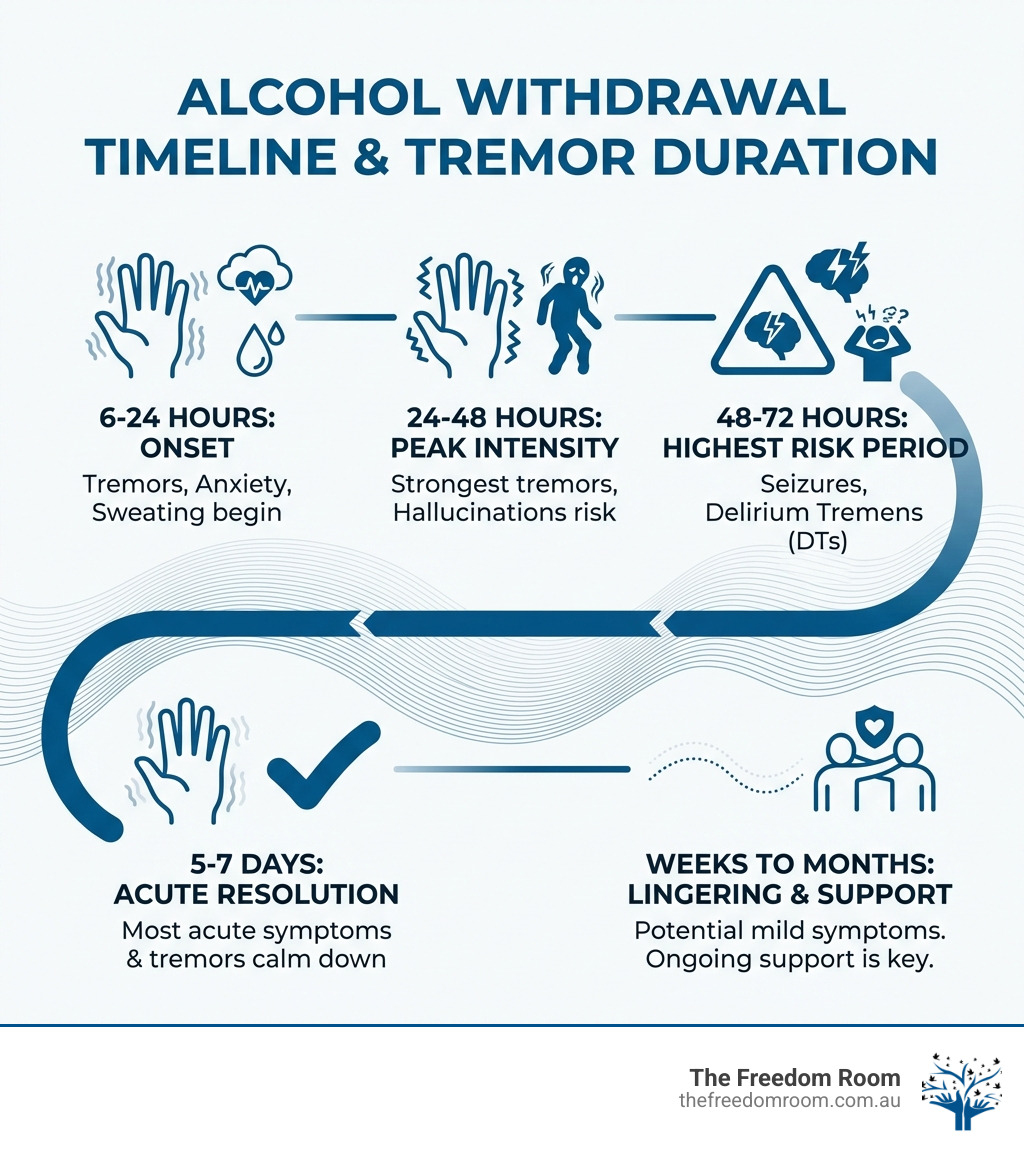
When the consumption of alcohol is ceased abruptly, the brain remains in a state of heightened excitability. This neurological imbalance leads to the involuntary muscle movements that are commonly recognised as the shakes or tremors. For the majority of individuals, these symptoms follow a relatively predictable clinical progression:
- The initial onset of tremors typically occurs between 6 to 24 hours following the final drink.
- The peak intensity of these tremors is usually reached between 48 to 72 hours into the withdrawal process.
- The resolution of acute tremors generally occurs between day 5 and day 7.
- The total duration of the acute withdrawal phase is typically between 3 to 7 days.
While these tremors are physically distressing and frequently result in significant psychological anxiety, they serve as a clinical indication that the body is initiating the process of physiological healing. However, because the withdrawal process can be unpredictable and potentially hazardous, professional medical oversight is always recommended to ensure the safety and comfort of the individual. Understanding what to expect during this challenging period can assist in preparing for the recovery journey. The severity and duration of these shakes vary between individuals, influenced by factors such as the volume of alcohol consumed, the duration of the physical alcohol dependence, and the overall health status of the person.
Clinical Progression and the Timeline of Symptoms
The neuroadaptation that occurs during chronic alcohol consumption is a sophisticated physiological process. When alcohol is consumed regularly, the brain attempts to maintain homeostatic stability by counteracting the depressant effects of the substance. This leads to a state of heightened excitability within the central nervous system. When alcohol is removed from the system, this overactivity manifests as the autonomic nervous system entering a state of hyperactivity. Scientific research on alcohol withdrawal syndrome indicates that these tremors are a direct result of the brain being unable to immediately regulate its neurotransmitter levels in the absence of alcohol.
The Australian guidelines to reduce health risks from drinking alcohol highlight that alcohol withdrawal is a clinical condition that necessitates careful management. It is understood that for many individuals in Strathpine and across Queensland, the apprehension regarding these shakes can be a significant barrier to seeking professional assistance. The severity of withdrawal shakes is often a primary clinical indicator of the level of physical alcohol dependence. While some individuals may only experience a slight tremor in their hands, others may find that the shaking involves the entire body. This involuntary movement is a clear sign that the brain is struggling to establish a baseline without the presence of a central nervous system depressant.
The progression of withdrawal symptoms follows a relatively standard schedule, although individual metabolic rates and overall health can cause variations. Most individuals will notice the first signs of shakiness within 6 to 24 hours of their last drink. This initial phase is often accompanied by increased anxiety and a rapid heart rate. As the body continues to process the remaining alcohol and the brain reacts to its absence, the tremors typically intensify. According to the long term alcohol withdrawal guide, the peak of this intensity usually occurs between 48 and 72 hours. This is the period where the risk of clinical complications is at its highest and where professional support is most critical.
By the fifth or seventh day, the acute symptoms generally begin to resolve. However, clinical observations suggest that for those with a significant alcohol physical dependence, the recovery journey does not always conclude at this point. While the most violent tremors may subside, a finer tremor can sometimes persist for several weeks as the nervous system continues its gradual recovery. Several biological and lifestyle factors play a role in determining the duration and severity of these tremors. No two individuals experience withdrawal in exactly the same manner, and the approach at The Freedom Room Wellness and Recovery accounts for these individual differences.
Key factors include the total quantity of alcohol consumed daily and the duration of the dependence. Furthermore, the presence of the kindling effect, where repeated withdrawal episodes increase the severity of future episodes, must be considered. Overall liver health and the ability of the body to process toxins efficiently are also vital. Nutritional status, particularly the presence of severe thiamine or magnesium deficiencies, can significantly impact the severity of tremors. Age related risks are also a factor, as older adults often experience more prolonged and severe withdrawal symptoms. The presence of co-occurring physical or mental health conditions also complicates the timeline.
Our alcohol dependence detox resources explain that nutritional rehabilitation is a vital component of recovery. Chronic alcohol use often leads to malabsorption, meaning the body cannot effectively absorb the vitamins required to maintain nervous system stability. Ensuring a safe alcohol detox involves addressing these deficiencies alongside the management of physical symptoms. It is also vital to distinguish between standard withdrawal tremors and the life threatening condition known as Delirium Tremens. While tremors are common, Delirium Tremens occurs in approximately 3 to 5 percent of individuals undergoing withdrawal. This condition is a medical emergency that requires immediate intensive care. The delirium tremens aka the dts involves more than just shaking, as it is characterised by global confusion, vivid hallucinations, and extreme autonomic hyperactivity. Our detailed guide to delirium tremens dts provides a deeper look into these risks.
Professional Management and Long Term Recovery
Managing the physical symptoms of withdrawal is the initial step toward a fulfilling life. At The Freedom Room Wellness and Recovery, we provide a supportive environment where lived experience is combined with professional expertise. We recognise that the shakes are not merely a physical symptom but are also a source of significant stress and anxiety. While some individuals may investigate alcohol detox remedies at home, we always advise caution. Attempting to manage severe withdrawal without professional assistance can be hazardous. Our guide on how to detox from alcohol at home emphasises the necessity for a professional assessment before any such attempt is made.
Hydration strategies and electrolyte replacement are fundamental to a professional support model. We focus on restoring magnesium and B group vitamins, which are frequently depleted in those with a physical alcohol dependence. Medically supervised detoxification ensures that the withdrawal process is as safe and comfortable as possible. Clinical assessments allow for the tailoring of support to the specific needs of the individual. This often includes the use of medications to stabilise the nervous system and prevent the most severe symptoms. Scientific research on propranolol for tremors suggests that beta blockers can be effective in managing the physical manifestations of the shakes. Furthermore, Scientific research on baclofen has shown promise in reducing the overall severity of withdrawal symptoms.
Seizure prevention is a primary objective of supervised detoxification. By utilising evidence based protocols, clinicians can minimise the risk of the brain reaching a state of dangerous overexcitation. This professional care allows the individual to focus on healing rather than simply enduring physical pain. For some individuals, the tremors do not completely disappear after the first week. Chronic alcohol use can lead to conditions such as cerebellar tremor or alcoholic neuropathy. These conditions are the result of long term damage to the nerves or the part of the brain responsible for coordination. Our alcohol dependence recovery complete guide discusses how to manage these ongoing challenges.
While Scientific research on alcoholic neuropathy indicates that some nerve damage can be permanent, the brain also possesses remarkable neuroplasticity. Through sustained abstinence and nutritional rehabilitation, many individuals observe significant improvements in their coordination and cognitive function over time. Therapeutic workshops and personalised sessions at our Strathpine location help individuals develop new coping mechanisms. We focus on the whole person, ensuring that while the body heals, the mind is also provided with the tools required for a lasting recovery. If you are ready to begin this process, please contact us to discuss your options for professional support.
The Path Forward
The decision to address a physical alcohol dependence is a courageous and life changing choice. It is important to understand that while withdrawal tremors are a difficult aspect of the recovery process, they are temporary and manageable with the correct support. You do not have to face these challenges alone. Our team is dedicated to providing the authentic support and professional guidance required to make your recovery both successful and safe. We invite you to reach out to The Freedom Room Wellness and Recovery to discuss your journey. Whether you are in the early stages of considering change or are prepared to begin your recovery, we offer the compassionate and professional care you deserve. Your path to a fulfilling and alcohol free life begins with a single step, and we are here to support you throughout that process.
Frequently Asked Questions Regarding Alcohol Withdrawal Shakes
What is the clinical difference between hangover shakes and withdrawal shakes? Hangover shakes are typically short lived and are caused by dehydration or the acute toxic effects of a single heavy drinking session. In contrast, withdrawal shakes occur when the body has developed a physical dependence on alcohol and the brain is reacting to the absence of the substance after a period of prolonged and heavy use. Withdrawal shakes are a sign of a more serious underlying physiological adaptation.
Can alcohol shakes result in permanent neurological damage? While most withdrawal shakes resolve within one week, long term heavy alcohol use can lead to permanent conditions such as alcoholic neuropathy or cerebellar degeneration. Scientific research on malabsorption and vitamin deficiency explains how a chronic lack of thiamine can contribute to these long term neurological issues. Early intervention and nutritional support are vital to minimising this risk.
Is it safe to manage alcohol withdrawal shakes at home? The safety of home management depends entirely on the severity of the physical alcohol dependence. For mild cases, home management with a support person and medical oversight may be possible. However, for moderate to severe dependence, the risk of seizures and Delirium Tremens makes professional medical supervision essential for safety. A professional assessment is always the recommended first step.
What are the emergency warning signs that require immediate medical attention? If tremors are accompanied by extreme confusion, vivid hallucinations, a very high fever, or seizures, you must seek emergency medical help immediately. These are clinical indicators that the withdrawal process has progressed to a dangerous and potentially life threatening level. Do not delay in seeking assistance if these symptoms appear.
How do support groups assist with the management of shakes? While support groups do not directly stop the physical tremors, they provide the emotional stability and community support required to maintain abstinence during the withdrawal phase. Knowing that others have successfully navigated the same symptoms can significantly reduce the anxiety that often exacerbates the physical sensation of tremors. Emotional support is a key component of a comprehensive recovery plan.