

How to Find Affordable Group Therapy That Fits
To find affordable group therapy, ask a GP, community health service, or counsellor about local and online options. Check the session fee, whether a rebate applies, and who leads the group. If cost is your main barrier, ask about sliding scale fees, university training clinics, and Medicare subsidised programs alongside free peer support groups.
A clinician-led therapy group offers structured, evidence-based care and often costs significantly less than one-to-one psychological therapy. In contrast, a peer support group is generally free or donation-based and run by volunteers with shared lived experience. While peer groups provide valuable community encouragement, they do not replace clinical treatment. The right choice depends on your clinical needs, the group focus, and your budget.
At The Freedom Room, our team brings together formal clinical training and personal lived experience in alcohol recovery. We understand how overwhelming it can be to navigate therapy options when managing financial pressures. Quality therapeutic care should be accessible, dignified, and practical for every Australian seeking meaningful change.
Key Takeaways:
- Clinician-led group therapy delivers professional, structured psychological care at a fraction of the cost of individual private consultations.
- Medicare rebates under a Mental Health Treatment Plan can subsidise up to 10 group therapy sessions per calendar year.
- University psychology clinics and community health centres offer low-cost, sliding scale fee structures based on household income.
- Telehealth group sessions remove travel expenses and provide confidential access for regional and busy participants.
- Individuals with possible physical dependence on alcohol should seek professional medical guidance before reducing or stopping drinking.
Affordable group therapy terms made easy:
Practical Ways to Find Affordable Group Therapy
Taking the first step toward getting support for mental health or alcohol recovery can feel daunting, especially when finances are tight. Many people assume professional psychological care is completely out of reach. According to the Australian Institute of Health and Welfare overview on alcohol consumption and related harms, accessing appropriate, timely care significantly improves long-term outcomes for individuals and families. Navigating the mental health landscape requires understanding your funding avenues, community clinics, and the types of structured groups operating in your region. Learning about understanding the costs of mental health services via Healthdirect can help you budget effectively for ongoing care.

Navigating Sliding Scale Fees and Affordable Group Therapy Directories
A sliding scale fee structure is an income-based pricing system where providers adjust the session fee according to your household income and personal circumstances. This model ensures that professional psychological support remains accessible to individuals experiencing financial stress or receiving government support payments. When contacting a clinic, ask what documentation they require, such as recent payslips, a summary of household expenses, or a Services Australia Health Care Card, to establish your adjusted rate.
Several accessible pathways exist across Australia to secure affordable treatment:
- University training clinics: Universities with postgraduate psychology, social work, or counselling faculties often run low-cost community clinics open to the general public. Sessions are facilitated by provisional psychologists or postgraduate intern counsellors under the direct supervision of highly experienced, registered clinical supervisors.
- Community health centres: Public and non-profit community health hubs provide subsidised group programs targeting issues like emotion regulation, trauma recovery, and substance use support.
- Evidence-based structured groups: Many community organisations run specific programs using Dialectical Behaviour Therapy (DBT) and anger management strategies. These programs teach mindfulness, distress tolerance, and healthy communication in an accessible group setting.
- Non-government community organisations: Non-profit organisations frequently secure government grants to deliver targeted recovery and emotional wellbeing groups at nominal costs or free of charge for local residents.
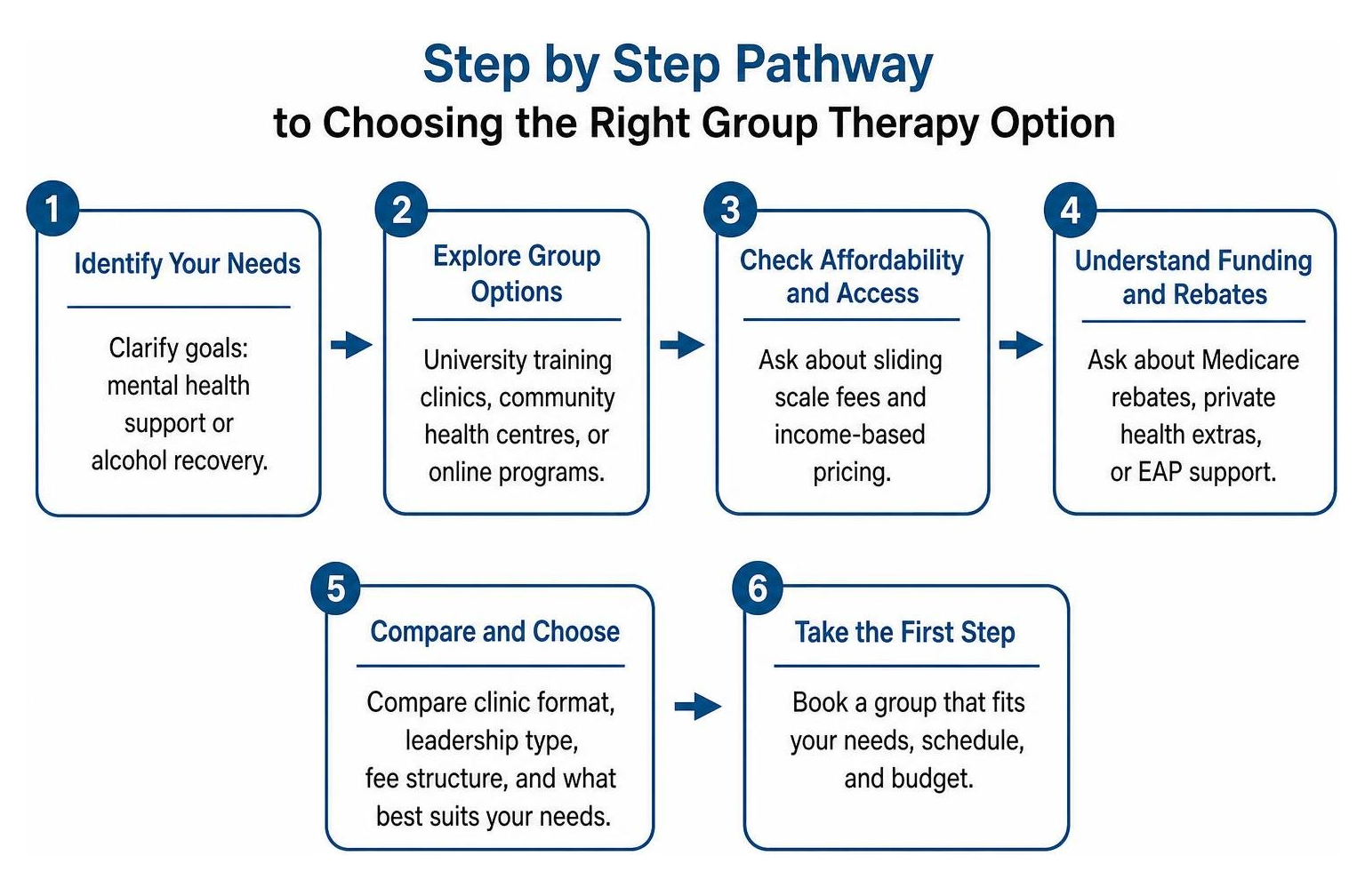
When exploring affordable recovery services, comparing different clinic models makes it easier to match your clinical needs with your budget.
| Clinic Format | Leadership Type | Best Suited For | Fee Structure |
|---|---|---|---|
| University Training Clinics | Provisional psychologists under clinical supervision | General anxiety, life transitions, and mild to moderate challenges | Substantially discounted standard rates |
| Community Health Centres | Registered allied health professionals and social workers | Complex family needs, dual diagnoses, and subsidised recovery | Income-based sliding scale |
| Online Group Therapy Programs | Qualified addiction counsellors and psychotherapists | Structured recovery, flexible scheduling, and regional access | Structured program fee or package |
Insurance Coverage, Rebates, and Subsidised Care
Navigating healthcare subsidies in Australia can significantly reduce your out-of-pocket expenses. When booking a clinician-led group, ask the practice manager directly whether their sessions qualify for Medicare rebates or private health fund extras. Under a Mental Health Treatment Plan prepared by your General Practitioner (GP), Medicare provides rebates for up to 10 individual and 10 group therapy sessions per calendar year with eligible registered providers.
To access these benefits, schedule an extended appointment with your GP to discuss your mental health or substance use goals. The GP will assess your circumstances and create a formal referral that allows you to claim Medicare item numbers for group psychotherapy. Furthermore, if you hold private health insurance with extras cover, check your policy details. Many Australian insurers offer annual limits for group psychology consultations or accredited counselling sessions.
Another underutilised resource is an Employee Assistance Program (EAP). Many employers offer confidential, employer-funded counselling services. While EAPs traditionally focus on short-term individual sessions, many providers also offer group wellness workshops or will approve structured group programs upon request. If you are seeking mutual aid alongside formal therapy, complementary sober support groups can provide a strong community foundation without added cost.
Specialised and Virtual Options for Affordable Group Therapy
Virtual group therapy has made evidence-based care accessible to individuals living outside metropolitan centres or balancing tight schedules. Telehealth groups eliminate commuting costs and provide greater flexibility, allowing you to connect with experienced facilitators from the comfort of your home.
When choosing between different group structures, it is essential to consider the format:
- Closed cohort groups: These groups require all members to enrol at the same time and attend every session together for a fixed duration, typically 8 to 12 weeks. This design fosters deep mutual trust, safety, and consistent progress through a structured curriculum.
- Open drop-in groups: These sessions welcome new members each week on a flexible basis. They are ideal for ongoing drop-in support, though group dynamics change from week to week.
- Demographic-focused cohorts: Some groups cater specifically to specific life stages, genders, or community groups, creating a safe space where shared lived experiences are understood immediately.
- Psychoeducational skill groups: These cohorts operate much like a supportive classroom, focusing on specific skill acquisition such as relapse prevention planning, cognitive restructuring, and stress management techniques.
Participating in specialised tracks like conflict resolution group therapy helps members build practical boundaries and communication skills. Furthermore, learning how peer recovery coaching keeps you on the right path shows how lived-experience mentorship strengthens the formal clinical process.
What to Expect and How to Choose the Right Group
Joining a group for the first time can provoke normal feelings of hesitation. Knowing what happens behind the scenes helps demystify the experience so you can participate with confidence.

First Session Expectations and Essential Questions to Ask Providers
Before entering your first group session, most professional clinics conduct an individual intake screening. This pre-group appointment allows the facilitator to understand your personal background, assess your goals, and ensure the group format is clinically appropriate for your current needs.
During this initial phase, you will review clear group agreements:
- Confidentiality: Everything shared within the room or video call remains strictly private among group members.
- Mutual respect: Everyone is given space to speak without interruption, judgement, or unsolicited advice.
- Participation pacing: While active engagement is encouraged, you are never forced to share deeply before you feel comfortable and ready.
- Sobriety and presence: Participants agree to attend sessions clear-minded and focused, ensuring a safe psychological environment for everyone involved.
Different groups employ varied clinical approaches, including Cognitive Behavioural Therapy (CBT) to adjust unhelpful thought patterns, DBT for emotional regulation, or process-oriented models focused on relational dynamics.
To ensure a group aligns with your needs, consider asking the provider these practical questions:
- What are the professional qualifications and recovery background of the group facilitator?
- Is this a closed curriculum group or an ongoing open-enrolment format?
- What specific therapeutic modalities are used during the sessions?
- How do you structure each weekly session between teaching skills and open sharing?
- What are the expectations around attendance, missed sessions, and session cancellations?
- How does the facilitator handle group conflicts or disruptive behaviour during a meeting?
- Are course materials, workbooks, or between-session exercises included in the total program fee?
Discover the Support You Need for a Lasting, Successful Recovery
Finding the right balance between cost, therapeutic quality, and personal comfort is an important step in your wellbeing journey. Clinician-led group therapy offers an evidence-based, cost-effective way to build practical coping tools, gain fresh perspectives, and overcome isolation alongside peers who understand your journey. We encourage you to reach out directly to providers, confirm their fee options and intake processes, and find a format that suits your life.
At The Freedom Room Wellness and Recovery, we provide compassionate, cost-effective alcohol addiction support informed by our own lived experience in recovery. We walk beside you with genuine empathy, practical tools, and zero judgement. You can explore our comprehensive in-person programs through Our Services at our centre located at 9a/521 Beams Rd, Carseldine QLD 4034, or connect with our team directly by visiting Contact Us. If you prefer flexible, remote guidance, explore The Freedom Room 12 Week Online Recovery Program to build sustainable, positive change from anywhere.
Frequently Asked Questions About Low-Cost Group Support
How does the cost of group therapy compare to individual therapy?
Group therapy is generally substantially more affordable than individual private therapy. Because a qualified clinician facilitates multiple participants simultaneously, the operational cost is shared across the group. This allows clinics to offer lower per-session rates while maintaining high standards of clinical care, structured skill-building, and professional guidance.
What is the difference between a free peer support group and clinical group therapy?
A peer support group is run by volunteers or peers who share a common experience, focusing on mutual encouragement, storytelling, and shared coping strategies without clinical intervention. Clinical group therapy is designed, led, and supervised by a qualified mental health or addiction professional who applies structured evidence-based therapies, such as CBT or DBT, to treat specific psychological and behavioural health challenges.
When should someone seek a medical assessment for alcohol dependence?
If you or a loved one are considering reducing or stopping drinking and have been drinking heavily or consistently, it is essential to consult a GP or medical professional before making sudden changes. Physical alcohol dependence can lead to withdrawal symptoms that range from mild discomfort to severe, potentially dangerous medical complications. Withdrawal severity varies greatly from person to person depending on health history, duration of use, and overall physical wellbeing.
Do not attempt to abruptly stop drinking without appropriate medical supervision. A healthcare professional can provide a personalised clinical assessment and safe detoxification support if needed. The educational information provided here is not a substitute for individual medical advice.
Can I join group support sessions online?
Yes, online options are widely available and provide an accessible, confidential way to access structured support without travel barriers. Virtual formats allow participants to engage in professional psychoeducation, guided skill-building, and peer discussions securely from home.