
When Addiction Affects the Whole Family: Where to Find Support
If you’re looking for a meeting for family of drug addicts, here are the main options available in Australia:
- Nar-Anon Family Groups – 12-step peer support for families and friends of people with drug dependence
- Al-Anon Family Groups – 12-step support originally focused on alcohol, but 35% of members attend due to a loved one’s drug use
- SMART Recovery Family & Friends – science-based, non-12-step meetings run by trained facilitators
- Families Anonymous – 12-step fellowship covering drug, alcohol, and behavioural dependence
- Local clinical support groups – free programs run through health services, some with no referral needed
Addiction is often described as a family disease. That’s not a figure of speech. When someone close to you is struggling with substance dependence, the impact reaches every corner of family life – your sleep, your finances, your relationships, and your sense of self.
Many family members describe feeling trapped between wanting to help and not knowing how. Some feel ashamed. Others feel responsible. Most feel exhausted.
You are not alone in this.
Research shows that family involvement in addiction treatment can increase recovery success by up to 40%. And yet, families are often the last ones to seek support for themselves.
That changes when you walk into the right room.
Basic meeting for family of drug addicts vocab:
Finding the Right Meeting for Family of Drug Addicts in Australia
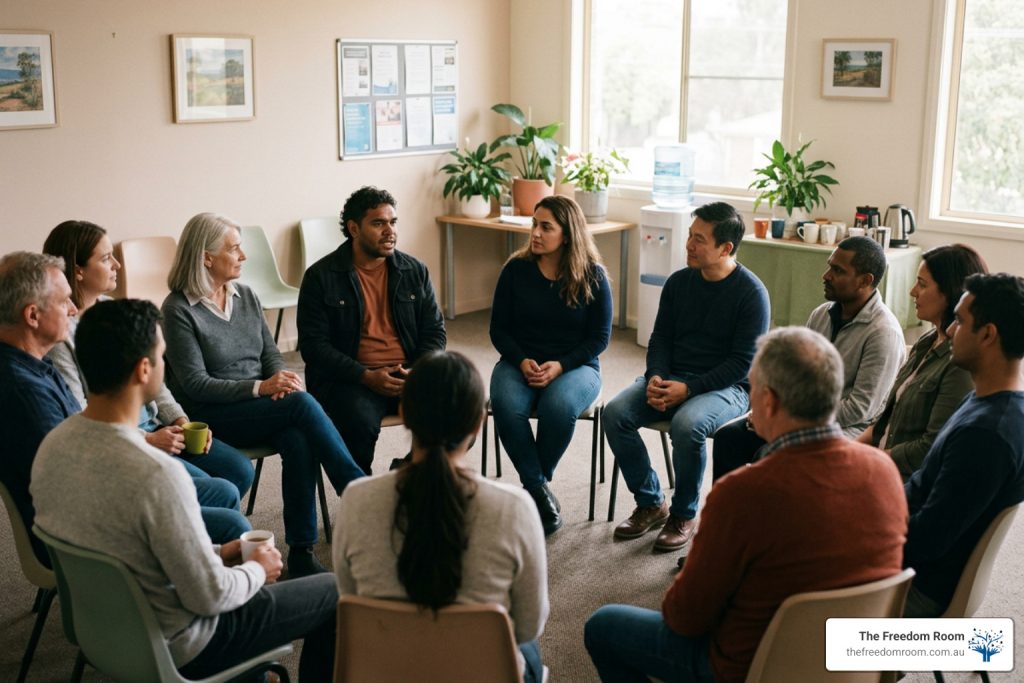
Finding a safe space to share your experiences is a vital first step on your own path of recovery. In Australia, families navigating the complexities of a loved one’s substance use often experience profound isolation. This isolation is compounded by social stigma, which frequently leads families to hide the issue rather than seek assistance. When we step into a dedicated peer support group, we enter a non-judgmental space where other people truly understand the unique challenges we face.
These meetings are designed specifically for the relatives, partners, and friends of individuals experiencing substance dependence. They do not focus on how to cure the person struggling with substance use. Instead, they focus entirely on helping you regain your own emotional stability, health, and peace of mind. Taking this step is not a sign of giving up on your loved one. Rather, it is an acknowledgement that you cannot pour from an empty cup. To learn more about how structured environments help heal the broader family unit, you can read our detailed guide on Family Support Addiction Recovery.

What to Expect at a Meeting for Family of Drug Addicts
For those attending a support meeting for the first time, the experience can feel intimidating. It is completely normal to feel nervous, apprehensive, or even slightly embarrassed before walking through the door or logging into an online session. Understanding the basic structure of these meetings can help ease these anxieties.
Most peer-led support meetings follow a consistent and predictable format to ensure emotional safety for everyone present. When you arrive, you will find a group of people who are there for the exact same reason you are. The meetings are strictly confidential, meaning that whatever is shared in the room stays in the room. This rule of anonymity allows participants to speak honestly without fear of social or professional repercussions.
Sharing your story is entirely voluntary. If you attend a meeting and simply want to sit, listen, and absorb the experiences of others, you are completely welcome to do so. There is no pressure to speak, introduce yourself in detail, or answer personal questions. When individuals do choose to share, there is generally a strict policy against cross-talk, which means other members do not interrupt, offer unsolicited advice, or judge what is being said. This structure creates a highly respectful, compassionate environment where you can process your feelings safely. For further insights on processing the emotional toll of a loved one’s substance use, explore our resources on Emotional Support for Families.
Comparing Support Groups: Nar-Anon, Al-Anon, and SMART Recovery
Choosing the right support group depends on your personal preferences, values, and what style of recovery resonates most with you. There are several major national and international programs available to Australian families, each with its own philosophy and structure.
Nar-Anon Family Groups is a twelve-step program designed specifically for the relatives and friends of individuals experiencing drug dependence. It operates on the same spiritual, non-religious principles as Narcotics Anonymous. Members share their experiences, strength, and hope to resolve common problems. You can learn more about their meetings and literature directly through Nar-Anon Family Groups.
Al-Anon Family Groups is another highly accessible option. Although Al-Anon was originally founded to support those affected by someone else’s alcohol use, its welcoming environment has made it a vital resource for drug-related support as well. In fact, statistics show that approximately 35% of Al-Anon members joined the program specifically because of a loved one’s drug addiction rather than alcohol. You can access local resources and meeting directories via Al-Anon Family Groups. For broader context on how alcohol and other drug trends impact Australian communities, you can refer to the official Australian Institute of Health and Welfare alcohol data.
For families seeking a non-twelve-step, secular alternative, SMART Recovery Family & Friends offers a highly practical option. Rather than focusing on spiritual principles, SMART Recovery utilises cognitive behavioural tools and self-empowerment strategies. These meetings are run by trained facilitators who help family members develop practical skills to manage stress, set boundaries, and improve communication. Other options include Families Anonymous, which focuses on both substance use and related behavioural issues, and Alateen, which is specifically tailored for teenagers affected by a family member’s substance use.
Key Benefits of Family Involvement in Substance Use Recovery
When a family actively engages in their own recovery and education, the positive effects ripple outward to the individual struggling with substance dependence. Research consistently demonstrates that family involvement is one of the strongest predictors of long-term recovery success.
According to the National Institute on Drug Abuse, structured family participation in the recovery process can increase treatment success rates by up to 40%. When family members participate in support groups or therapy, the individual experiencing substance dependence is far more likely to complete their rehabilitation program and maintain long-term sobriety.
Furthermore, family involvement significantly reduces the risk of relapse. When a person returns home from treatment to an environment where family members understand the dynamics of recovery, they find a much more stable support system. This collaborative approach helps heal damaged relationships, rebuild broken trust, and foster systemic recovery throughout the household. To understand how to walk this path alongside your loved one while maintaining your own stability, read our guide on how to Be Their Anchor: Guiding Someone Through Alcohol Recovery.
Practical Coping Strategies and Boundary Setting
One of the most valuable aspects of attending a support meeting is learning practical coping strategies to navigate daily life. Addiction often distorts family dynamics, leading to codependency, chronic stress, and emotional exhaustion. Support groups help you untangle these complex dynamics.
A fundamental concept taught in twelve-step programs like Al-Anon and Nar-Anon is the “3 Cs” of addiction:
- You did not cause it.
- You cannot control it.
- You cannot cure it.
Accepting this reality is incredibly liberating for family members who have spent years carrying the burden of guilt and responsibility. Once you realise you cannot control your loved one’s choices, you can redirect your energy toward your own well-being.
These programs also teach the crucial distinction between helping and enabling. Helping means doing things for your loved one that they are genuinely unable to do for themselves. Enabling means stepping in to shield them from the natural consequences of their substance use, such as paying their debts, lying to their employers, or covering up their behaviour. By learning to set clear, compassionate boundaries, you allow your loved one to experience the reality of their situation, which is often the catalyst they need to seek help. For practical advice on establishing these boundaries without feeling overwhelmed by guilt, view our comprehensive article on Helping Them Without Enabling Them.
The Role of Professional Family Therapy alongside Peer Support
While peer-led support groups provide invaluable community connection and shared lived experience, professional family therapy plays a highly complementary role in the recovery process. Combining both resources offers a comprehensive approach to healing.
Professional family therapy provides clinical guidance tailored to your family’s unique situation. Licensed therapists can help identify deep-seated communication patterns, address unresolved family trauma, and navigate complex co-occurring mental health conditions. Many individuals struggling with substance dependence also experience depression, anxiety, or post-traumatic stress disorder, which heavily influence family dynamics.
Therapy sessions provide a structured, neutral environment where family members can address codependency, express their grievances, and work collaboratively to rebuild trust. This clinical support is especially beneficial during major transitions, such as when a loved one enters or graduates from a residential treatment program. For an in-depth look at how structured therapy sessions facilitate long-term healing, read A Complete Guide to Family Therapy for Alcohol Use Disorder. Families looking for practical, evidence-informed tools can also explore SMART Recovery Australia’s support resources for families. This clinical support is also highly relevant for families addressing a physical dependence on alcohol.
Accessing a Local Meeting for Families of Drug Addicts
If you are ready to take the step of attending a meeting, there are numerous local and digital pathways available to connect with a supportive community. In Queensland, families have access to both in-person gatherings and robust online networks.
For residents in and around the Brisbane and Moreton Bay regions, local face-to-face meetings provide a deeply personal way to connect with others. If you prefer the convenience and privacy of digital spaces, many organisations now offer virtual meetings via Zoom or other video platforms. These hybrid formats ensure that no matter your schedule, location, or level of comfort, support is always within reach.
To find specific, up-to-date meeting directories and events across Queensland, you can consult Support Meetings – QLD – Family Drug Support Australia. Additionally, exploring local networks is a highly effective way to discover community-based options. For a curated list of top-rated support networks and resources, check out our guide on The Family Circle and Top Alcohol Support Groups for Loved Ones.
Discover the Support You Need for a Lasting, Successful Recovery
At The Freedom Room Wellness and Recovery, we understand that substance dependence is a journey that impacts the entire family unit. We operate with a deep sense of empathy because our own team members have lived experience with recovery, allowing us to provide authentic, compassionate, and non-judgemental support. If you or your family are navigating the challenges of substance use, we are here to help you heal together.
We offer personalised, cost-effective support sessions, workshops, and therapy options designed to help you establish healthy boundaries, rebuild communication, and regain control of your life. Our physical clinic is located in Brisbane’s northern suburbs, providing a welcoming and serene environment for your healing journey.
Visit us at our Carseldine clinic: 9a/521 Beams Rd, Carseldine QLD 4034
To explore how our tailored clinical programs can support your family’s unique path to wellness, view Our Services. If you are ready to take the first step toward a healthier, more balanced future, please Contact Us today. We also invite you to learn more about our commitment to accessible care by reviewing our affordable addiction treatment services.
Frequently Asked Questions
Are family support meetings free to attend?
Yes, the vast majority of peer-led support groups, including Nar-Anon, Al-Anon, and SMART Recovery Family & Friends, are completely free to attend. They are self-supporting through voluntary contributions from members, but there is never any cost, registration fee, or financial commitment required to participate.
Do I need a professional referral to join a support group?
No, you do not need a GP referral or any professional recommendation to attend peer-led support meetings. You can simply find a meeting in your local directory or online and turn up. For clinical family programs run by health services, many also allow self-referral via phone or online forms.
Can I attend a meeting if my loved one refuses to seek treatment?
Absolutely. Family support meetings are designed specifically to help you, regardless of whether your loved one is in recovery, actively using, or refusing treatment. The strategies, coping skills, and emotional support you receive are meant to improve your quality of life independently of their choices.