
Why Addiction Education Programs Are the First Step Toward Lasting Recovery
Addiction education programs provide you with the practical knowledge and tools required to understand physical dependence on alcohol, make informed decisions about your recovery, and regain control over your life.
If you are looking to take back control, the core components of these programs include:
- What they are: Supportive, easy-to-understand programs that explain how physical alcohol dependence develops, how it affects your brain and behaviour, and how you can build a lasting recovery.
- Who they are for: Anyone personally struggling with physical alcohol dependence, as well as families and loved ones looking to understand and support them.
- What they cover: How alcohol affects your brain, practical coping strategies for daily life, trauma-informed care, relapse prevention planning, and connecting with peer support networks.
- How to access them: Flexible online self-paced modules, face-to-face workshops, community-based programs, and supportive recovery services.
- Why they matter: Learning the ‘why’ behind your struggles reduces shame, builds self-awareness, and gives you a clear, step-by-step roadmap to long-term recovery.
Many Australians experiencing physical alcohol dependence report a common cycle: recognising the adverse effects of drinking but lacking the understanding of why the cycle persists or how to break it. This gap between your experience and your understanding is where structured addiction education programs provide essential clarity.
Acquiring knowledge about physical dependence on alcohol does not involve merely reviewing academic literature. Rather, it provides you with the precise terminology to describe your physiological and psychological experiences. When you and your family can accurately identify and name the mechanisms of dependence, you will experience a significant reduction in shame, making it much easier to reach out for professional support systems.
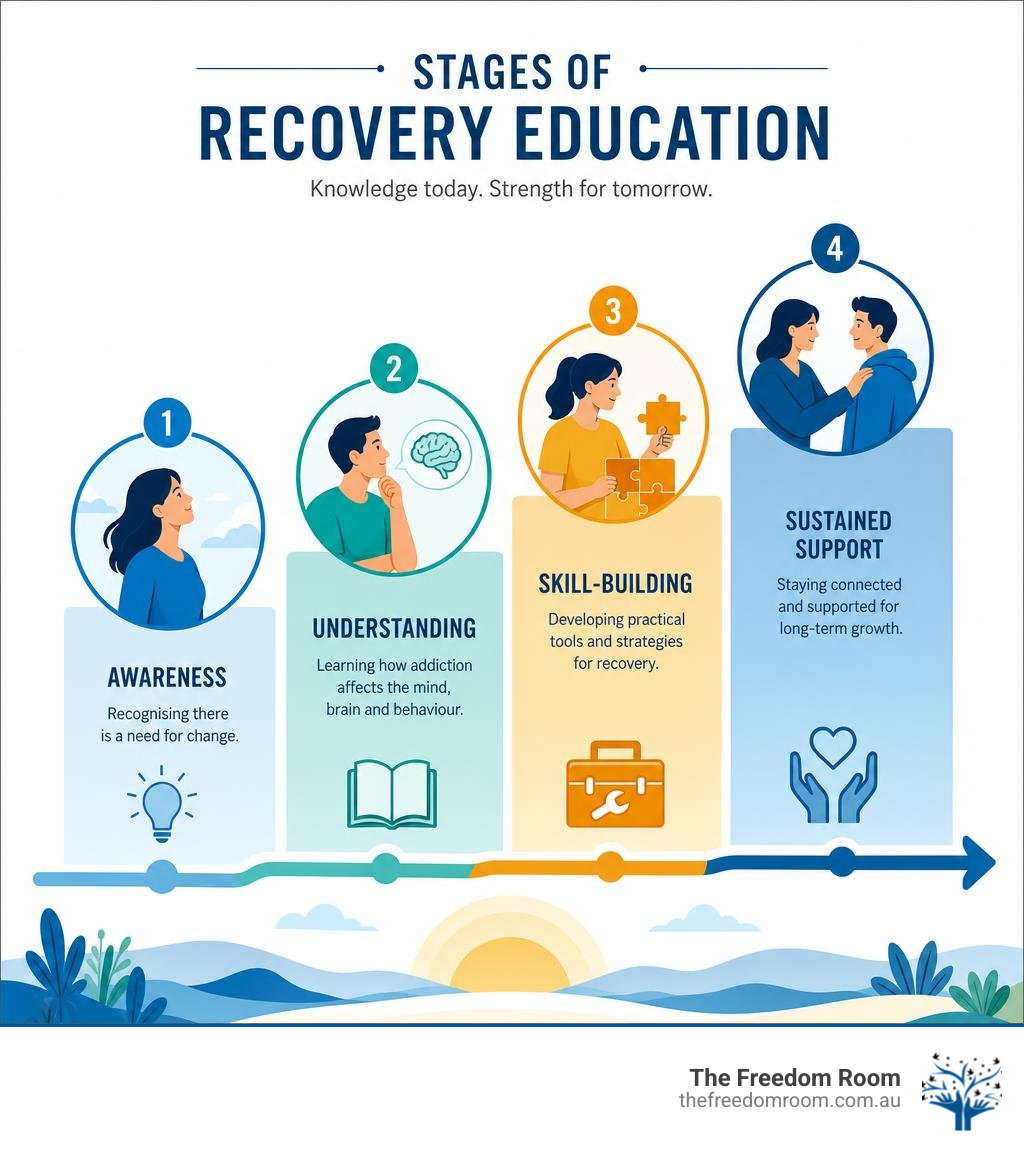
Sustainable recovery extends beyond simply stopping drinking. It requires a comprehensive understanding of what drives your dependence and the practical steps to build healthier daily habits. Education is the critical foundation upon which your entire healing journey is established.
How to Choose the Right Addiction Education Programs
Choosing the right educational pathway is a deeply personal decision. Navigating support services can feel overwhelming, especially when you are trying to balance your work, family, and daily life with your recovery journey. When looking at your options, it is highly beneficial to select programs that offer structured, personalised support tailored to your needs within the Australian healthcare framework.
According to official Alcohol use data in Australia, alcohol remains one of the most prevalent substances for which Australians seek professional treatment and information. This widespread societal impact has led to the development of numerous educational resources, though their clinical utility varies. A high-quality program must go beyond presenting basic statistics; it should assist you in translating complex clinical concepts into practical, structured strategies for your Addiction recovery.
What are Addiction Education Programs for Recovery?
If you are looking for professional support, these educational programs are often called psychoeducation. This simply means combining clear psychological education with practical, everyday tools to help you understand the physical side of alcohol dependence. Rather than training professionals, these programs are designed specifically for you and your family, giving you clear, actionable insights to navigate your own recovery.
Many participants find that self-paced learning models offer an excellent entry point. This format allows you to process complex information about how alcohol affects the brain within the privacy of your home, eliminating the pressure associated with rigid schedules. By demystifying the physiological processes of physical alcohol dependence, you can transition away from self-blame and adopt a more objective, self-compassionate perspective.
An effective starting point involves understanding alcoholism as a chronic health condition rather than a moral or personal failing. Free introductory resources, such as the Addiction 101 | Addiction School course, provide concise, structured modules explaining how substance use alters neural pathways and how recovery is systematically achieved.
Key Topics Covered in Recovery-Focused Addiction Education Programs
A comprehensive educational program must address several core areas to ensure you acquire a robust toolkit for long-term recovery. These essential topics include:
- How alcohol affects your brain: This subject explains how prolonged alcohol consumption alters your brain’s reward pathways, particularly the dopamine and gamma-aminobutyric acid systems, rendering cessation a physiological challenge rather than a simple matter of willpower.
- Practical Coping mechanisms for addiction: These strategies assist you in identifying your personal environmental triggers and managing physiological cravings using evidence-based, constructive alternatives.
- A structured Relapse prevention plan guide: This document outlines the cognitive, emotional, and physical warning signs of a potential setback, providing clear protocols to follow when you feel vulnerable.
- Evidence-based Mindfulness for addiction recovery tips: These techniques assist in emotional regulation, stress reduction, and maintaining cognitive grounding during periods of high anxiety.
By focusing on these core areas, you transition from feeling like a passive observer of your condition to becoming an active manager of your long-term health.
Evaluating Evidence-Based and Trauma-Informed Approaches
When researching educational programs, it is critical to verify that the curriculum is grounded in modern, scientifically validated methodologies. Programs should explicitly incorporate Evidence-based therapy practices, which are clinical interventions that have undergone rigorous scientific testing and have been proven effective in supporting long-term sobriety.
For example, CBT for addiction is a highly effective modality that assists you in identifying and restructuring negative thought patterns that lead to harmful behaviours. Furthermore, a comprehensive curriculum must offer a Holistic approach to addiction, acknowledging that physical dependence on alcohol does not occur in isolation. It is intrinsically linked to your emotional health, physical well-being, social environment, and personal history.
It is equally important to ensure that the program adheres to Trauma-informed therapy principles. A significant proportion of people experiencing physical alcohol dependence have histories of unresolved trauma or chronic physiological stress. A trauma-informed educational environment prioritises your safety, transparency, and empowerment, ensuring that the learning process itself does not inadvertently trigger psychological distress.
Assessing Program Formats, Costs, and Accessibility in Australia
The delivery format of an educational program significantly influences your ability to complete the curriculum. Australians currently have access to several flexible delivery models designed to accommodate your professional, familial, and personal commitments.

- Online self-paced courses: These programs allow you to access educational modules, instructional videos, and clinical worksheets at any time, providing maximum privacy and flexibility for those with busy or irregular schedules.
- Face-to-face workshops: These sessions facilitate real-time interaction, allowing you to ask questions, engage in group discussions, and establish peer support networks with others pursuing similar recovery goals.
- Hybrid models: These programs combine the convenience of digital learning with scheduled live sessions, offering a balanced approach to psychoeducation.
Financial accessibility is another critical consideration. While formal academic qualifications in addiction studies are costly and designed primarily for clinicians, community-focused recovery workshops and psychoeducation programs are highly cost-effective.
For residents of Queensland, localised support is readily accessible. You can explore regional initiatives through Alcohol and other drug treatment services to locate affordable, community-led educational and counselling options that align with your recovery objectives.
The Role of Families and Communities in Recovery Education
Recovery is rarely an isolated process. The support network surrounding you significantly influences your long-term outcomes, which is why family-focused education is highly valuable. When your family members understand the scientific principles underlying physical dependence on alcohol, they can transition from emotional frustration to constructive, evidence-based support.
Education equips families with healthier communication strategies, thereby reducing interpersonal conflict, which frequently serves as a primary trigger for substance use. Furthermore, community-wide education plays a vital role in reducing the social stigma that often prevents people from seeking timely professional assistance.
In Queensland, specialist organisations such as Insight provide high-quality training and resources that build community capacity, ensuring that families, support workers, and individuals have access to the latest evidence-based clinical information. Engaging in community education or participating in a structured Group therapy for alcoholism session can effectively mitigate the isolation associated with dependence, replacing it with shared understanding and collective resilience.
Professional Support and Pathways to Recovery
At The Freedom Room Wellness and Recovery, we understand how much courage it takes to take this first step. We believe your recovery should be built on a foundation of deep understanding, genuine empathy, and practical tools that actually work in your daily life.
Our strength lies in our team’s unique composition; we are professionals who possess lived experience in recovery. Having successfully navigated these challenges ourselves, we provide authentic, compassionate, and non-judgmental support that respects the unique circumstances of your journey.
We offer cost-effective, personalised alcohol treatment sessions, educational workshops, and holistic therapies tailored to meet your specific needs. Whether your goal is to understand your behavioural patterns, develop a robust relapse prevention plan, or engage with a supportive recovery community, our team is prepared to assist you at every stage of the process.
If you are ready to explore our educational workshops, individual therapy, or group support sessions, please visit our Our Services page to learn more about our offerings.
To initiate this process or to schedule a confidential consultation with a member of our professional team, please visit our Contact Us page today. You are also welcome to visit our clinic in person.
Our Location: 9a/521 Beams Rd, Carseldine QLD 4034
Frequently Asked Questions
What is the difference between professional addiction courses and recovery education?
Professional courses are designed for clinicians, nurses, and social workers seeking academic credentials or continuing education hours. Recovery-focused education, or psychoeducation, is designed specifically for you and your family, focusing on practical coping strategies and self-understanding to help you heal.
Can families participate in addiction education programs?
Yes. Family participation is highly encouraged. When families learn about the neurobiology of physical alcohol dependence together, they can improve communication, reduce household stress, and build a more cohesive support system for you.
Are there free addiction education resources available in Australia?
Yes. There are several free and low-cost resources available through community health networks, local government initiatives, and reputable online platforms. These introductory courses are an excellent, low-pressure way to begin learning about your recovery.
How does trauma-informed care benefit me in recovery?
Trauma-informed care recognises that many people struggling with physical alcohol dependence have experienced significant life stress or trauma. By prioritising safety, collaboration, and empowerment, these programs ensure that you feel secure and supported throughout your educational and therapeutic journey.