

EFT Tapping for Stress and Anxiety: A Simple Way to Reset
EFT tapping for stress and anxiety is an evidence-informed somatic self-regulation technique combining targeted acupressure stimulation with cognitive exposure. By tapping gently on specific meridian points across the face and upper torso whilst acknowledging distressing thoughts or somatic sensations, individuals can actively down-regulate sympathetic nervous system arousal. This mind-body intervention helps lower the physiological intensity of acute worry, muscular tightness, and overwhelming psychological tension in real time.
A fundamental clinical sequence involves several distinct stages:
- Identify a distinct stressor, emotional difficulty, or triggering sensation.
- Quantify baseline distress using a standard scale from 0 to 10.
- Formulate a setup statement pairing the emotional challenge with self-acceptance, repeating it whilst stimulating the side of the hand.
- Complete a sequential cycle tapping through the designated facial and upper-body acupoints whilst voicing a focused reminder phrase.
- Pause, take a controlled diaphragmatic breath, and re-evaluate distress levels.
Emotional Freedom Techniques are designed to serve as an accessible grounding mechanism alongside professional psychological treatment, peer support, and holistic recovery plans. The protocol is particularly valuable when individuals experience heightened distress, emotional dysregulation, or intense urges that feel challenging to navigate in isolation.
Contemporary clinical research indicates that EFT tapping produces measurable reductions in anxiety and somatic stress markers across diverse clinical populations. The practice requires no specialised equipment, remains non-invasive, and can be applied discreetly in domestic, professional, or social environments. Should tapping bring suppressed or distressing feelings to the surface, individuals are advised to seek guidance from experienced mental health professionals.
Key resources for managing acute emotional distress include:
The Science and Practice of EFT Tapping for Stress and Anxiety
Emotional Freedom Techniques combine somatic stimulation with focused cognitive awareness. Originating from Traditional Chinese Medicine principles, the practice stimulates specific acupressure meridians without needles. When psychological distress arises, the nervous system initiates a survival alarm, elevating stress hormones and muscular tension. EFT pairs mechanical tapping of upper-body acupoints with mindful exposure to difficult thoughts.
Acknowledging distress enables cognitive reframing. This begins by evaluating emotional discomfort using the Subjective Units of Distress Scale (SUDS) from 0 (complete calm) to 10 (maximum distress). Combining this metric with self-acceptance statements helps untangle distressing emotional associations. For people navigating emotional dysregulation, mastering stress and anxiety management techniques creates an internal sense of agency. A detailed Cleveland Clinic medical guide to tapping highlights that this mind-body connection helps soothe an overstimulated limbic system and improves vagal tone.
How Somatic Acupressure Regulates the Nervous System
Perceived threats trigger a rapid sympathetic fight-or-flight response. The amygdala signals the adrenal glands to release cortisol and adrenaline. Light tapping on specific acupoints sends calming electrochemical impulses to the amygdala and cortical regions.
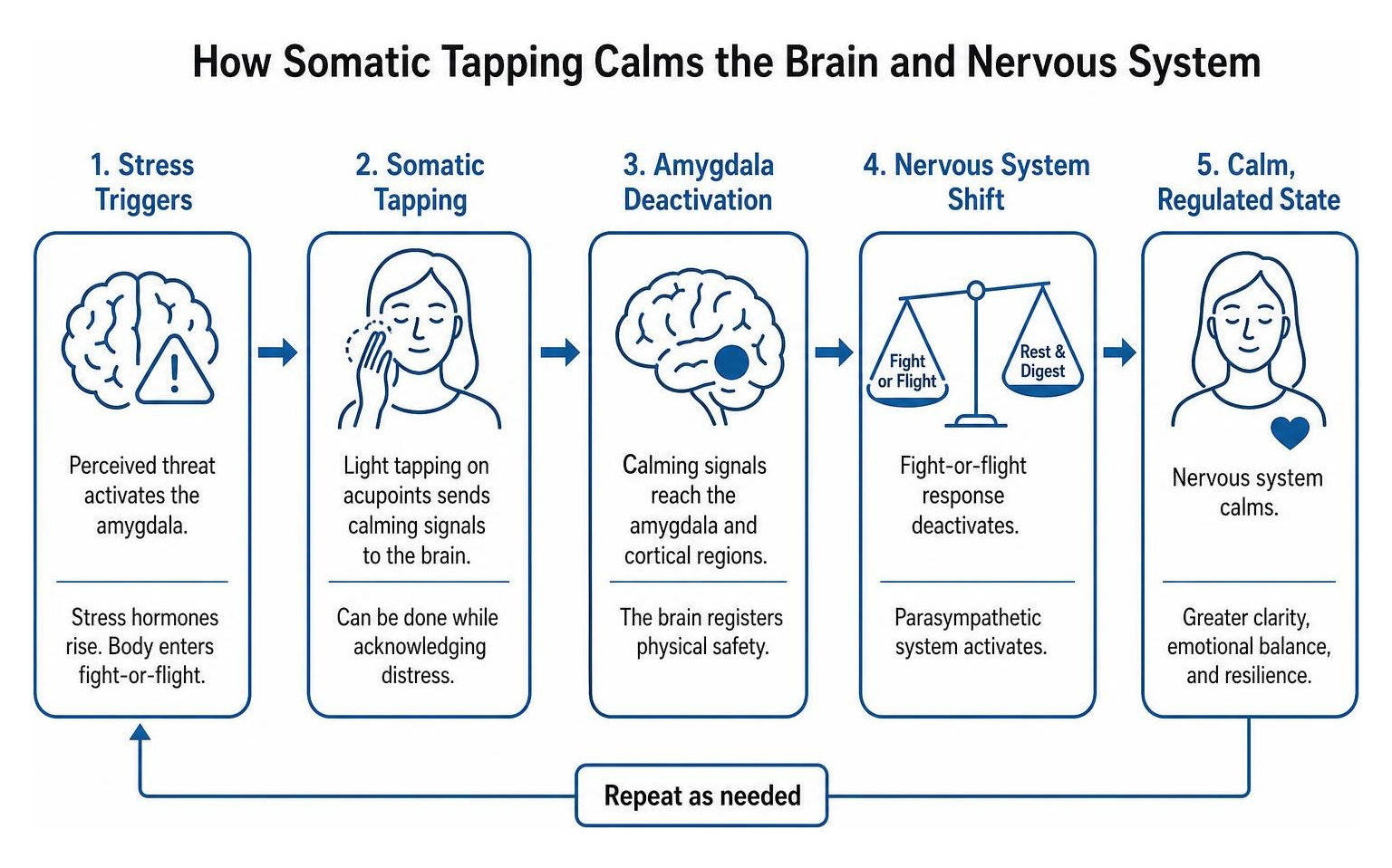
These soothing signals inform the brain that the body is safe, even whilst recalling an upsetting event or cognitive trigger. This reassurance deactivates fight-or-flight responses and engages the parasympathetic branch, shifting physiology into a restorative state. Tapping bilaterally across symmetrical meridians provides balanced sensory input across both brain hemispheres. For those exploring EFT tapping for beginners, this neurobiological uncoupling prevents acute overwhelm and supports long-term nervous system stability.
Step-by-Step Guide to EFT Tapping for Stress and Anxiety
Practising structured tapping follows a precise clinical sequence:
- Identify the Core Issue: Focus on a single emotional challenge, physical sensation, or triggering event.
- Measure Baseline Intensity: Quantify your initial distress level on the standard SUDS scale from 0 to 10.
- Formulate the Setup Statement: Speak a clear phrase combining the issue with unconditional self-acceptance. Repeat this three times whilst tapping the karate chop point on the side of your hand.
- Execute the Acupoint Sequence: Tap five to seven times firmly yet gently on each remaining acupoint whilst repeating a concise reminder phrase:
- Eyebrow (inner edge near the bridge of the nose)
- Side of the Eye (on the bone at the outer corner)
- Under the Eye (on the bone beneath the pupil)
- Under the Nose (centred between nose and upper lip)
- Chin Crease (midpoint between lower lip and chin)
- Collarbone (just below the junction of the sternum and collarbone)
- Under the Arm (approximately ten centimetres beneath the armpit)
- Top of the Head (crown centre)
- Re-evaluate and Breathe: Take a deep diaphragmatic breath and re-score your distress on the 0 to 10 scale. Repeat rounds until subjective distress subsides.
Integrating structured protocols like tapping for anxiety relief allows people to calm their physical state whenever distressing thoughts arise.
Clinical Evidence for EFT Tapping for Stress and Anxiety
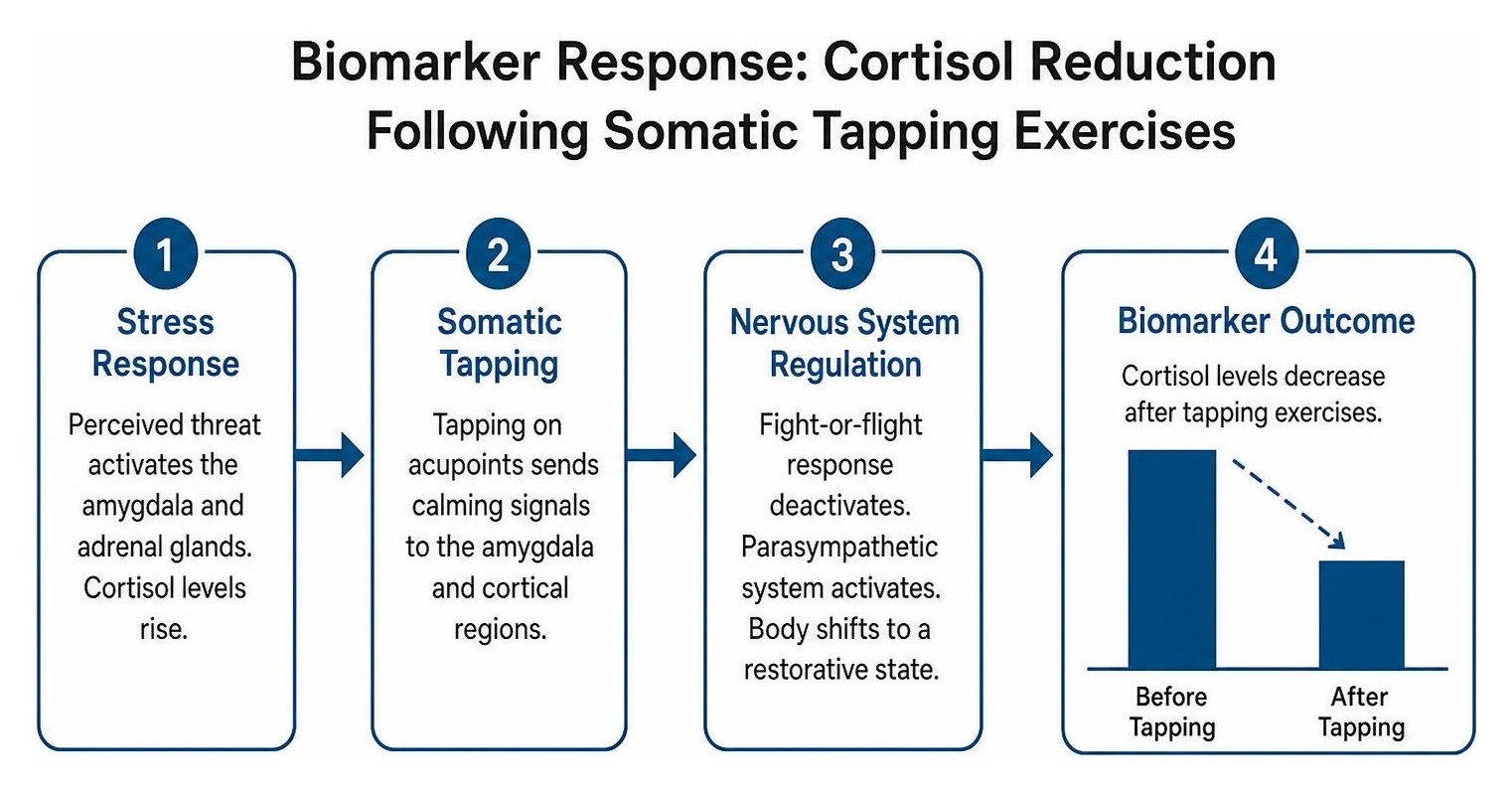
Clinical evidence supporting EFT has expanded across peer-reviewed literature. A 2022 systematic review analysing over 50 research trials concluded that EFT is moderately to largely effective for managing generalised anxiety, depressive disorders, post-traumatic stress, and chronic pain conditions.
Trials evaluating biological markers have shown that EFT tapping produces up to a 43% reduction in salivary cortisol levels, significantly outperforming standard resting conditions. In large-scale digital interventions, observational data from over one million completed tapping sessions showed an average anxiety reduction of 41% within nine minutes, alongside a 31% increase in subjective happiness scores. As detailed in a WebMD overview on stress reduction, measurable shifts in heart rate variability, arterial blood pressure, and endocrine function confirm that tapping induces genuine somatic changes.
EFT Tapping Compared with Cognitive Behavioural Therapy
Cognitive Behavioural Therapy (CBT) identifies maladaptive cognitive distortions and restructures unhelpful thought patterns. While highly effective, traditional talk-based restructuring can feel challenging during acute somatic dysregulation, where physical alarm responses overpower rational analysis.
EFT incorporates cognitive exposure whilst adding physical meridian stimulation to calm physiological arousal. In a multi-year investigation across 11 clinical settings involving 5,000 people, 90% of participants receiving tapping therapy showed clinical improvement, with 76% reaching complete symptom relief. By comparison, 63% receiving traditional CBT improved, with 51% achieving complete relief. Follow-up assessments indicated that 78% of the tapping group maintained gains at one year. Exploring the combined benefits of EFT and CBT therapy demonstrates how pairing cognitive restructuring with somatic release provides durable emotional regulation.
Practical Applications for Trauma, Depression, and Cravings
Beyond generalised anxiety, EFT is widely used in trauma recovery, mood support, and urge regulation. In studies examining complex post-traumatic stress, approximately 63% of participants no longer met clinical diagnostic criteria after ten or fewer targeted tapping sessions. A 2023 meta-analysis confirmed that EFT produces significant reductions in post-traumatic stress symptoms compared with passive controls.
Tapping is equally beneficial for managing compulsive urges. Emotional dysregulation often contributes to unhealthy coping mechanisms. Official reports, such as the Australian alcohol data and research from the Australian Institute of Health and Welfare (AIHW), underline the impact of substance-related harm. Developing physical alcohol dependence frequently stems from attempts to self-soothe underlying anxiety, chronic stress, or unresolved trauma.
When applied during acute cravings, somatic tapping uncouples environmental triggers from compulsive urges. It is normal to experience emotional releases during practice as suppressed feelings resolve safely. Utilising Emotional Freedom Technique as a complementary practice provides a safe, grounded coping mechanism that supports long-term recovery without adverse side effects.
Bringing Tapping into Long-Term Recovery
Somatic regulation tools offer clinical value when integrated into everyday life and sustainable recovery programs. While self-administered tapping provides rapid relief during acute stress, lasting healing thrives within a structured, empathetic community. Holistic recovery addresses the physical, psychological, and social dimensions of health, blending practical somatic exercises with evidence-based behavioural strategies.
At The Freedom Room Wellness and Recovery, we understand emotional dysregulation and substance dependency because our team shares lived experience in recovery. We offer compassionate, cost-effective alcohol recovery support through personalised sessions, workshops, and therapy. Blending somatic practices with peer guidance empowers individuals to overcome triggers, release emotional burdens, and build healthy daily habits. Incorporating tools like how to manage stress fast with proven techniques and structured, affordable addiction treatment services ensures continuous support at every stage of the healing journey.
Practical Integration of Somatic Tools in Daily Routines
Establishing a reliable routine transforms somatic tapping from an emergency coping tool into a sustainable lifestyle practice. Consistent meridian stimulation can improve baseline nervous system resilience, preventing minor daily stressors from escalating into panic or severe cravings.
Clinical practitioners recommend short tapping sequences at predictable intervals:
- Morning Alignment: Five minutes of tapping upon waking can regulate the cortisol awakening response and cultivate calm focus.
- Pre-Transition Grounding: A brief sequence before stressful environments, such as workplace meetings or high-stimulus social events, stabilises the autonomic nervous system.
- Evening Decompression: A gentle tapping round before sleep can release muscular tension accumulated throughout the day and support restorative rest.
By weaving these brief practices into a broader wellness plan, people build the capacity to tolerate uncomfortable emotional states without turning to maladaptive coping behaviours.
Discover the Support You Need for a Lasting, Successful Recovery
EFT tapping serves as an effective self-regulation tool, but chronic stress, severe anxiety, and physical alcohol dependence require professional guidance, structured care, and community support. Healing is more sustainable when people are surrounded by qualified practitioners who understand the biological and psychological complexities of recovery.
Our dedicated team provides evidence-based therapies, practical somatic tools, and compassionate peer support informed by genuine lived experience. We help you overcome persistent triggers, restore emotional regulation, and achieve enduring sobriety.
You can also visit our specialist recovery centre in person:
The Freedom Room Wellness and Recovery 9a/521 Beams Rd, Carseldine QLD 4034
To begin your personal path toward wellness, connect with us directly through our Contact Us page. Take the next step toward renewed vitality, sustainable sobriety, and lasting emotional balance today.