

Why Life After Addiction Treatment Requires Ongoing Support
After addiction treatment, the critical phase of maintaining long-term recovery begins. While completing a formal programme is a significant milestone, maintaining sobriety requires continuous effort, structured support, and effective strategies for navigating life without substances.
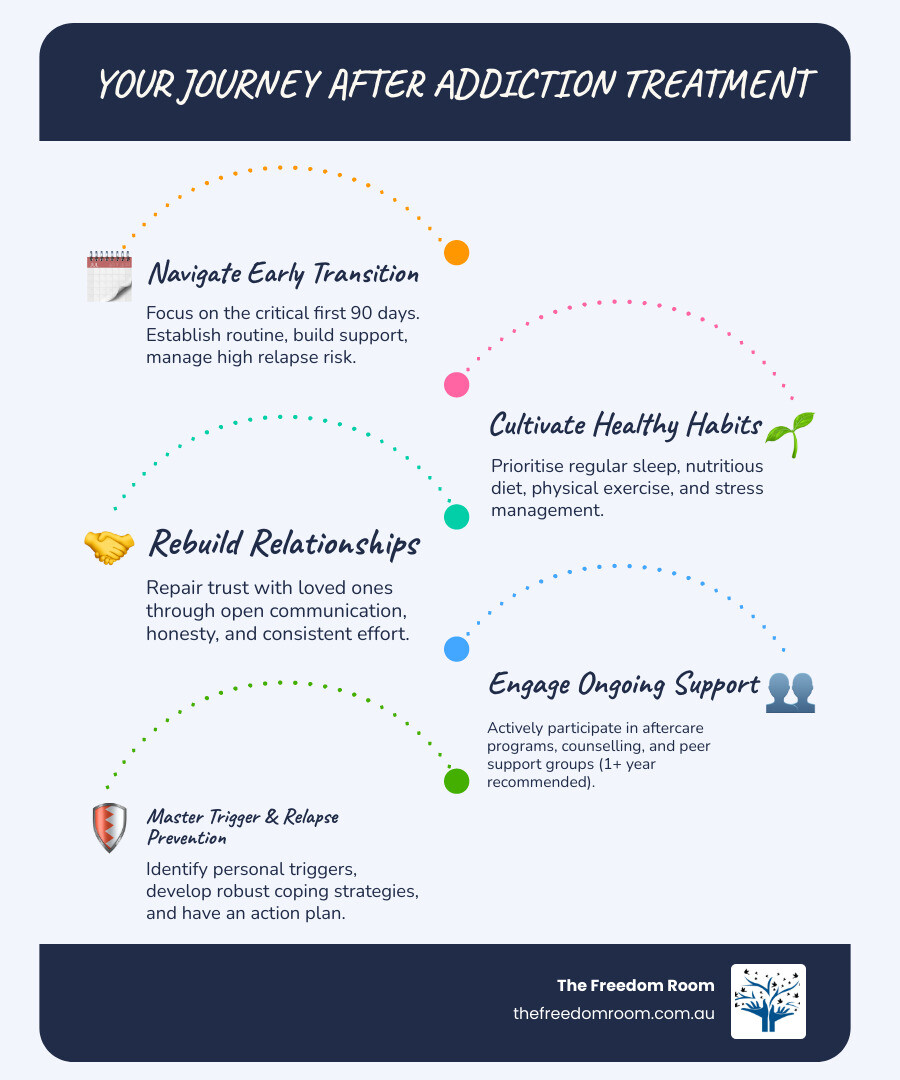
The transition from the structured environment of treatment back to independent living presents unique challenges. To build a strong foundation for long-term recovery, it is essential to focus on several key areas.
Key areas to focus on after addiction treatment:
- Immediate transition period – The first 90 days carry a high relapse risk, requiring structured routines and strong support networks.
- Relationship rebuilding – Repairing trust with family and friends through consistent actions and open communication.
- Lifestyle changes – Developing healthy habits including regular sleep, exercise, and stress management techniques.
- Ongoing support systems – Engaging with aftercare programmes, counselling, and peer support groups.
- Trigger management – Identifying and developing coping strategies for situations that may challenge sobriety.
- Relapse prevention – Understanding warning signs and having a clear action plan if challenges arise.
This ongoing support helps bridge the gap between formal treatment and independent recovery, providing essential tools and guidance during this vulnerable period.
Navigating the Transition: The First 90 Days
The first three months after addiction treatment represent a period of great vulnerability and opportunity. The risk of relapse is highest during this transition from a structured treatment environment to independent living. Feelings of boredom, loneliness, or a sense of being lost are common and require practical strategies to manage effectively.
Successfully navigating this period involves creating structure and establishing healthy patterns. With appropriate planning and effective Coping Skills to Prevent Relapse, this vulnerable time can become a foundation for positive, long-term change.
Developing a Healthy Lifestyle
Creating a healthy lifestyle involves rebuilding one’s approach to daily living, focusing on physical and emotional wellbeing. A consistent routine provides the structure needed for security and focus.
Key elements for a healthy lifestyle include:
- Consistent sleep schedule – Aim for 7-8 hours of quality rest to support mood, decision-making, and stress tolerance.
- Balanced meals – Nutritious food helps restore physical health while stabilising energy levels and mood.
- Regular exercise – Physical activity manages stress, improves mood, and provides a healthy outlet for energy.
- Mindfulness practices – Techniques like deep breathing or meditation help individuals stay grounded. Our guide on Mindfulness for Addiction Recovery Tips offers practical strategies.
- Relaxation and hobbies – Engaging in enjoyable activities combats boredom and provides satisfaction, reinforcing the benefits of The Joys of Sobriety.
Managing Triggers and Cravings
Identifying and managing personal triggers is essential for maintaining sobriety. Triggers are specific situations, emotions, or places that create urges to use substances.
Common triggers include:
- Stressful situations
- Social gatherings where alcohol or drugs are present
- Certain locations or routines associated with past use
- Emotional distress such as anxiety, sadness, or loneliness
Triggers become less powerful over time with proper management. Cognitive Behavioural Therapy (CBT) helps challenge thought patterns that lead to cravings, while Emotional Freedom Techniques (EFT) can provide immediate relief by calming the nervous system.
EFT works by sending calming signals to the brain’s alarm system, helping individuals process emotional distress without becoming overwhelmed. More information about these therapeutic approaches is available through our EFT and CBT Therapy services. Each time a trigger is successfully managed, it reinforces coping mechanisms and strengthens the recovery process.
Rebuilding Connections: Relationships and Social Life

A significant component of life after addiction treatment is reconnecting with loved ones. Addiction often damages relationships, leaving behind broken trust and strained communication. Rebuilding these connections requires patience, commitment, and an understanding of Healthy Relationships in Recovery.
Rebuilding Trust and Reconnecting with Loved Ones
Trust is rebuilt slowly through consistent actions, not just promises. This process is foundational to Personal Growth in Recovery.
Steps to rebuild trust:
- Maintain open and honest communication – Share progress, challenges, and emotions.
- Show accountability and consistency – Take responsibility for past actions and follow through on commitments.
- Consider professional guidance – Family or relationship counselling can provide a safe space for difficult conversations.
- Respect boundaries – Respecting the boundaries and emotional needs of loved ones is crucial for mutual healing.
The Role of Family Support After Addiction Treatment
Family members play a vital role but often need guidance on how to provide effective support without enabling. Our Recovery Journey Support resources can help families navigate this process.
Ways families can support recovery:
- Learn about addiction – Education fosters realistic expectations and reduces frustration.
- Encourage healthy habits – Acknowledge positive changes such as attending meetings or maintaining a routine.
- Celebrate progress – Recognising milestones helps to foster a positive and hopeful environment.
- Avoid enabling behaviours – Allow the individual to take responsibility for their recovery and face natural consequences.
Building a New Sober Social Life
Creating a fulfilling social life without substances often means seeking new connections that support recovery goals. This process requires time and patience.
Ideas for sober social activities:
- Join local clubs or groups – Connect with like-minded people through shared interests.
- Take up new hobbies – Build confidence and meet others through activities like sports or creative classes.
- Volunteer in the community – Find purpose and connect with compassionate individuals.
- Attend support meetings – Group Recovery Meetings provide a structured environment for building supportive, authentic connections.
The Cornerstone of Recovery: Essential Support After Addiction Treatment
After addiction treatment, the process of maintaining sobriety commences. Aftercare, also known as continuing care, provides essential support that bridges the gap between the structured environment of treatment and the independence of everyday life.
Addiction is a chronic condition that requires ongoing management. Individuals who actively engage in aftercare programmes have significantly better long-term recovery outcomes. Our Long-Term Addiction Recovery approach recognises that sustainable sobriety requires comprehensive, ongoing support.
Creating a Plan for Life After Addiction Treatment
An effective aftercare plan is a personalised roadmap for early recovery, ideally developed before the completion of initial treatment. It should be flexible and reviewed regularly as an individual’s needs evolve. Our Relapse Prevention Strategy resources can help guide this process.
Key components of an aftercare plan:
- Safe and stable accommodation – This may include a sober living environment or modifications to the current home.
- Employment or education support – Guidance in this area reduces stress and provides a sense of purpose.
- Access to ongoing therapy – Individual sessions provide a space to work through challenges and develop coping strategies.
- Legal and financial guidance – Proactively addressing these issues prevents them from becoming overwhelming stressors.
Types of Continuing Support and Aftercare
Modern recovery support offers a variety of options, allowing individuals to find a combination that suits their needs.
Continuing support options include:
- Outpatient programmes – These offer structure while the individual lives at home, with varying levels of intensity.
- Individual counselling – One-on-one support with therapies like Cognitive Behavioural Therapy (CBT) or Emotional Freedom Techniques (EFT) allows for deep, personalised work.
- Sober living environments – These homes provide a drug- and alcohol-free setting with peer support and accountability.
- Peer support and alumni groups – Connecting with others who have similar experiences is an effective component of the healing process. Our Peer Support Recovery programmes foster these vital connections.
The Role of Peer and Group Support
Peer support provides a unique form of healing derived from connections with individuals who have direct experience with addiction and recovery. It involves witnessing recovery in action and learning practical strategies from others.
Benefits of group support:
- Shared understanding and encouragement – An atmosphere of honesty without judgement.
- Accountability and motivation – Committing to a group fosters a sense of mutual accountability.
- Learning from others’ experiences – Gain practical wisdom for navigating real-world challenges.
Our Group Recovery Meetings are designed to foster a sense of community and mutual support.
Understanding and Preventing Relapse
The path to recovery after addiction treatment is often non-linear. Relapse is not an indication of failure but a common part of the recovery process for many. Statistics show that 40% to 60% of people experience a relapse, highlighting the importance of ongoing support.
Relapse is a gradual process, not a single event. Recognising the early signs allows for timely intervention. Our Addiction Relapse Prevention Strategies explore these warning signs in detail.
The Stages of Recovery
Recovery often follows predictable patterns. The Transtheoretical Model, or Stages of Change model, maps out this process. Understanding an individual’s current stage helps the support team provide the right kind of help.
Stages of change:
- Precontemplation – Not yet recognising a problem or considering change.
- Contemplation – Acknowledging a problem and weighing the pros and cons of change.
- Preparation – Making a concrete decision and planning to take action.
- Action – Actively modifying behaviour, often by entering treatment.
- Maintenance – Focusing on preventing relapse and solidifying gains.
Movement between these stages is a normal aspect of the recovery process. Our approach to Addiction Recovery provides consistent support throughout all stages.
Recognising the Signs of Relapse
Relapse unfolds in phases: emotional, mental, and finally, physical. Early identification of these signs is critical for preventing a return to substance use.
Common warning signs include:
- Emotional Relapse – Withdrawing from support, neglecting self-care, and experiencing intense emotions without healthy outlets.
- Mental Relapse – Romanticising past substance use, experiencing increased stress, and making poor decisions that create vulnerability.
By recognising these earlier warning signs, the final stage of physical relapse can often be prevented entirely.
Responding to a Relapse
If a relapse occurs, it is critical to respond with compassion, not shame. It does not erase the progress that has been made.
Steps to take after a relapse:
- Reach out for support promptly – Contact a therapist, sponsor, or a trusted support person immediately.
- Revisit the recovery plan – Identify what led to the relapse and how to strengthen the plan.
- Focus on learning, not blame – Use the experience as a valuable insight to prevent future relapses.
- Reconnect with support – Re-engaging with therapy or groups provides the structure needed to get back on track.
Setbacks can be used as learning opportunities to strengthen the foundation for long-term recovery. Our understanding of Emotional Sobriety emphasises self-compassion and resilience during these challenges.
Frequently Asked Questions about Post-Treatment Recovery
Individuals often have many questions when navigating life after addiction treatment. This section addresses some of the most common queries to provide clarity on the recovery process.
Can addiction be cured?
Addiction is recognised as a chronic brain condition, not a moral failing. Like other chronic health conditions such as diabetes or asthma, it cannot be “cured” but can be effectively managed long-term.
Key points to remember:
- Addiction is a long-term health condition – It alters brain function, creating lasting vulnerabilities that require ongoing care.
- Ongoing management is essential – Treatment provides the tools to manage cravings and prevent relapse.
- Lifelong recovery is possible – With sustained support, individuals can achieve remission and live fulfilling, substance-free lives.
How long should aftercare last?
The duration of aftercare varies, but research shows that active engagement for at least 12 months dramatically improves long-term outcomes. For many, recovery becomes a lifelong process of growth.
- The first year is crucial – It helps solidify new skills and integrate healthy habits into daily life.
- Support needs change over time – Intensive support may evolve into less formal check-ins or peer group participation.
- Ongoing check-ins are beneficial – Maintaining connections with a support network provides reinforcement during life’s challenges. Explore our Staying Sober After Rehab resources for more guidance.
What therapies are used after addiction treatment?
A combination of therapeutic approaches is used after addiction treatment to support long-term recovery and address underlying issues.
Common therapies include:
- Cognitive Behavioural Therapy (CBT) – Helps identify and change unhelpful thought patterns and behaviours that lead to substance use.
- Emotional Freedom Techniques (EFT) – A technique, also known as tapping, used for processing difficult emotions, trauma, and cravings by calming the nervous system.
- Support for co-occurring conditions – Integrated treatment for mental health conditions like anxiety or depression is essential for a strong recovery foundation.
Consulting with qualified practitioners ensures individuals receive the most appropriate support for their unique situation.
Professional Support for Long-Term Recovery
Sustaining recovery is a long-term process that requires commitment and structured support. Progress involves learning from challenges and consistently applying recovery principles after addiction treatment.
The Freedom Room provides professional, evidence-informed post-rehabilitation support. Our services integrate established therapeutic modalities, such as CBT and EFT, with an empathetic approach grounded in a deep understanding of the recovery process. We offer individualised support plans to address the unique needs of each client.
Taking proactive steps to secure ongoing support is a critical investment in one’s long-term health and wellbeing. Post-Rehabilitation Support is available for individuals ready to take the next step in their recovery.