

Why Self-care Practices Are Essential for Your Wellbeing
Self-care practices are the intentional actions you take to care for your mental, physical, and emotional health. In the face of work demands, family responsibilities, and daily pressures, prioritising your own wellbeing is not a luxury; it is a fundamental requirement for healthy functioning.
Purposeful engagement in self-care helps manage stress, build resilience, and prevent burnout. Neglecting your needs can leave your body in a constant stress response, which research from the National Institute of Mental Health has linked to a higher risk of depression and anxiety.
Core self-care practices include:
- Physical care: Sleep, nutrition, and movement.
- Mental care: Learning, mindfulness, and stress management.
- Emotional care: Processing feelings and self-compassion.
- Social care: Meaningful connections and boundaries.
- Spiritual care: Purpose, values, and reflection.
The World Health Organization defines self-care as your ability to promote health, prevent disease, and maintain health. This highlights an important truth: taking care of yourself is not selfish, but necessary. The challenge is often knowing where to start.
Find more about Self-care practices:
Understanding the Foundations of Self-Care
Self-care practices are more than just occasional indulgences; they are conscious actions to maintain your health. Neglecting your own needs leads to exhaustion, irritability, and a reduced capacity to cope. This is not a personal failing, but a natural consequence of running on empty.
Your mental, physical, and emotional states are interconnected, which is why mental health is important. Chronic stress keeps your body in a high-alert state, diverting energy from healing and emotional regulation. This can increase the risk of serious health issues.
Self-care is essential for counteracting this. Calming activities activate your parasympathetic nervous system, your body’s natural relaxation response. This allows your system to shift from a state of constant alert to one of rest and repair.
This shift improves mood, reduces anxiety, and strengthens mental resilience. Consistent self-care is crucial for preventing burnout and building the capacity to handle life’s challenges, especially during recovery.
Hack #1: Conduct a Personal Wellness Audit
Effective self-care practices begin with understanding your unique needs. A personal wellness audit is a structured self-assessment to identify your stressors and pinpoint which areas of your life require more support. This self-reflection helps you understand your emotional health definition and what balance looks like for you.
This personalised approach ensures your efforts are purposeful. The goal is to create actionable steps that address your specific needs, allowing you to tailor self-care strategies that genuinely support you.
Assessing the Five Core Areas of Self-Care
To develop a comprehensive plan, assess these five interconnected areas of your life to identify any imbalances. Neglecting one area can affect the others.
-
Physical self-care: Nurture your body with adequate sleep (7-9 hours), balanced nutrition, and regular movement. This also includes managing your health through regular medical check-ups.
-
Mental self-care: Stimulate your mind and foster clarity through activities like reading, learning new skills, or practising mindfulness. Take mental breaks when you feel overwhelmed.
-
Emotional self-care: Address how you process your feelings, which is vital for emotional wellness. Find healthy outlets like journaling or talking with a trusted friend.
-
Social self-care: Nurture meaningful connections with others. Spend quality time with supportive friends and family, and set boundaries in relationships that drain your energy.
-
Spiritual self-care: Connect with your sense of purpose and values. This might involve meditation, spending time in nature, or engaging in activities that provide a deeper sense of meaning.

Take time to honestly assess your current state in each domain. This clarity allows you to tailor your self-care practices to your actual needs, providing a clear starting point for moving forward with intention.
Hack #2: Align Practices with Your Core Values
The most effective self-care practices are intentional choices that connect with your core values. When self-care reflects what matters most to you, it becomes genuinely nourishing rather than another task on your to-do list.
Your values act as an internal compass. Connecting your self-care to your ACT values transforms routine activities into meaningful acts of self-nurturing. This alignment fosters intrinsic motivation, as you engage in these practices because they genuinely matter to you.
This approach also builds psychological flexibility, your ability to adapt to challenges while staying true to yourself. Research confirms this link, with one study finding a strong association between life purpose and mortality. People with a clear sense of purpose tend to have better health outcomes.
Reflect on what truly matters to you. If community is a core value, volunteering may be restorative. If you value learning, taking a course could be your form of mental self-care. Choosing self-care practices that support your values creates a powerful source of resilience.
Hack #3: Categorise by Time and Energy for Daily Self-care Practices
A common barrier to self-care practices is a perceived lack of time. However, meaningful self-care does not always require large blocks of time. The key is to categorise activities by the time and energy they require, allowing you to weave them into your day.
These micro-practices accumulate, creating a foundation of wellbeing. Scheduling these moments as appointments with yourself is an active step towards work-life balance and burnout prevention.
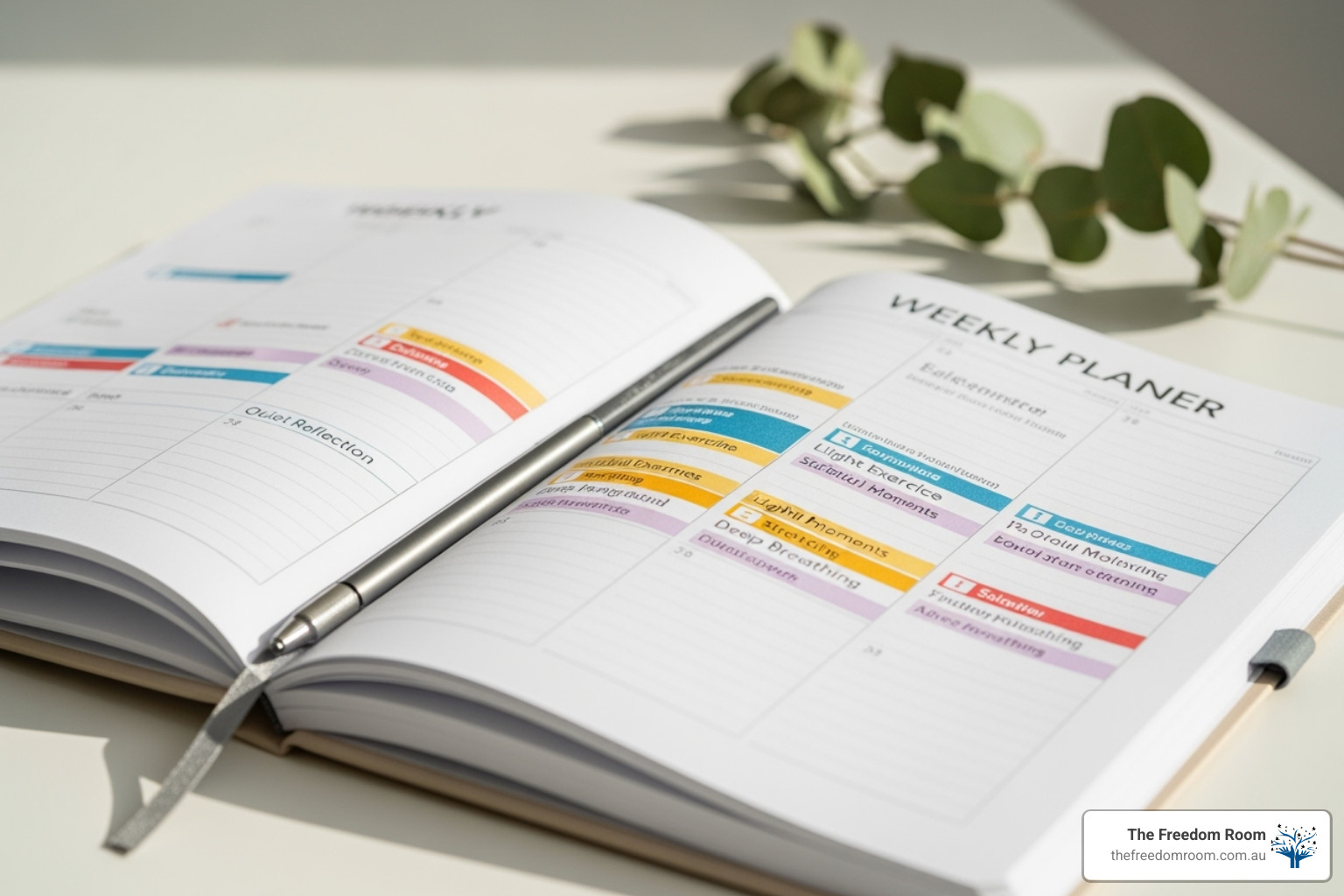
Building Your Toolkit of Practical self-care practices
Build a diverse toolkit of practices so you always have an option that fits your circumstances.
-
One-minute practices: For a gentle reset, try three deep breaths, a quick stretch, or drinking a glass of water. These small actions interrupt stress patterns.
-
Ten-minute practices: For more substantial restoration, listen to a favourite song, step outside for fresh air, or try a quick body scan. You can also complete breathing exercises for addiction recovery.
-
Thirty-minute practices: For a more meaningful break, take a brisk walk, engage in a hobby, or process your thoughts through the healing power of journalling. Preparing a nutritious meal or taking a warm shower can also be restorative.
-
One-hour practices: For deeper immersion, consider a full workout or yoga session, spend quality time with loved ones, explore a new interest, or attend a therapy session.
Matching the practice to your available time and energy creates a sustainable approach. On depleted days, a one-minute exercise is a victory. This adaptability helps you maintain your self-care practices without demanding perfection.
Hack #4: Explore Somatic and Movement-Based Care
Your body holds tension and stress, and somatic self-care practices offer a way to release it through conscious movement and body awareness. This approach focuses on your internal physical sensations, going beyond traditional exercise to foster a deeper mind-body connection.
Chronic stress can leave your body in a state of high alert. Somatic practices use gentle, mindful movement to release muscular tension, regulate breathing, and signal to your nervous system that it is safe to relax. This makes them one of the best stress management techniques, especially during recovery.
Somatic movement is highly accessible and requires no special equipment. Simple practices include:
- Conscious breathing
- Gentle stretching
- Slow, deliberate movements
Start by noticing where you hold tension, such as in your shoulders or jaw. Then, use gentle movements like shoulder rolls or neck stretches to release it. For a demonstration, you can watch a short video on somatic movement.
Cultivating this body awareness helps you recognise early signs of stress and respond effectively. This connection between movement and healing can be an essential part of your wellbeing journey.
Hack #5: Experiment with Mindfulness and Tapping
Mindfulness and Emotional Freedom Techniques (EFT), or tapping, are two powerful self-care practices for calming the nervous system and building emotional resilience.
Mindfulness is a core element of mindfulness and ACT. It involves observing your thoughts and feelings without judgement. This present-moment awareness creates space between you and your reactions, reducing stress and promoting clarity.
The Emotional Freedom Technique involves gently tapping on specific acupressure points while focusing on a distressing issue. This sends a calming signal to the brain’s alarm system (the amygdala), helping to disrupt the fight, flight, or freeze response. Consistent practice can retrain your stress response, fostering greater inner calm.

The tapping sequence is straightforward, using points on the head, face, and upper body. While tapping, you acknowledge the issue you are working with, which helps process stored emotional trauma. Our guide to EFT tapping for beginners is an accessible starting point for this effective technique.
Hack #6: Create a “No” List to Protect Your Energy
One of the most transformative self-care practices is learning to say “no.” This is not about being unhelpful, but about protecting your time and energy. Creating a “no” list is a practical way to set clear boundaries and develop healthy coping mechanisms.
Constantly saying “yes” to draining commitments can lead to resentment and burnout. A “no” list helps you identify activities, requests, or situations that deplete your energy. This could include certain social gatherings, unnecessary work tasks, or constant digital demands.
Setting boundaries is an act of self-preservation. Examples include:
- A digital detox to limit screen time and reduce mental fatigue.
- Limiting contact with individuals whose interactions consistently leave you feeling drained.
Saying “no” creates space for what truly matters, including restorative self-care practices, quality time with loved ones, and necessary rest. Start by identifying one or two areas where you feel over-committed and politely decline. This essential boundary-setting protects your energy for your recovery and wellbeing.
Hack #7: Know When Self-Care Isn’t Enough
While self-care practices are essential, they have limits. Recognising when you need more support is a crucial act of self-care. If symptoms like persistent low mood, sleep difficulties, or loss of interest in activities continue for two weeks or more despite your efforts, it may be time to seek professional help.
Knowing how to care for your mental health includes knowing when to seek professional guidance. This support complements your self-care routine, providing a comprehensive approach to wellbeing.
For immediate support in a crisis, you are not alone. Contact Lifeline at 13 11 14 for free, confidential support from a trained crisis counsellor, available 24/7.
Finding Professional Support for Your self-care practices
Navigating support options can feel overwhelming, but there are clear pathways.
- General Practitioner (GP): Your GP is an excellent starting point for an initial assessment and referral to specialists.
- Psychologists and Counsellors: These professionals offer evidence-based approaches like CBT and EFT to address root causes of distress, complementing your self-care practices.
- Recovery Coaches: Coaches with lived experience, like our team at The Freedom Room, provide authentic understanding and practical guidance.
Our mental health support complete guide offers a comprehensive overview of available options to help you find the right support for your journey.
Ready for Change? Let’s Build a Stronger, Alcohol-Free Future Together
Self-care practices are an ongoing journey, not a one-time fix. Your needs will evolve, and it is important to adapt your approach with self-compassion. For those in recovery, self-care is a vital tool for maintaining sobriety and building a fulfilling life.
At The Freedom Room, we understand this journey because our team has walked it. Many of us are in recovery, bringing authentic, lived experience to our support. We know the challenges and the profound power of meaningful self-care.
We are here to help you implement personalised self-care practices that align with your values and build resilience. Our holistic addiction recovery services are designed to meet you where you are.
Recovery is possible, and you do not have to do it alone. Take the next step with us as you build a stronger, healthier, alcohol-free future.
Frequently Asked Questions About Self-Care
What are the 8 areas of self-care?
Many wellness models identify eight dimensions of self-care that contribute to overall wellbeing. A comprehensive approach to self-care practices considers all of them:
- Physical (body, sleep, nutrition)
- Emotional (feelings, self-compassion)
- Social (relationships, connection)
- Intellectual (learning, creativity)
- Spiritual (purpose, values)
- Environmental (surroundings, nature)
- Financial (money management)
- Vocational (work satisfaction)
Is it selfish to practise self-care?
No, practising self-care is not selfish. It is a necessary foundation for your health, allowing you to better support others. You cannot pour from an empty cup; when you are depleted, you have less to offer your family, work, and community. Prioritising your needs ensures you can show up more fully in all areas of your life.
How do I practise self-care if I have no money?
Many of the most powerful self-care practices are completely free. Effective self-care comes from intentional acts, not expensive treatments. Free options include deep breathing exercises, spending time in nature, journaling, practising gratitude, connecting with loved ones, getting adequate sleep, and simple at-home stretches.