

The Importance of Self-Care for Overall Well-Being
Self-care refers to the intentional practices undertaken to preserve and improve one’s physical, mental, and emotional well-being. The World Health Organization defines it as the ability to promote health, prevent disease, maintain wellness, and cope with illness or disability.
Domains of Self-Care:
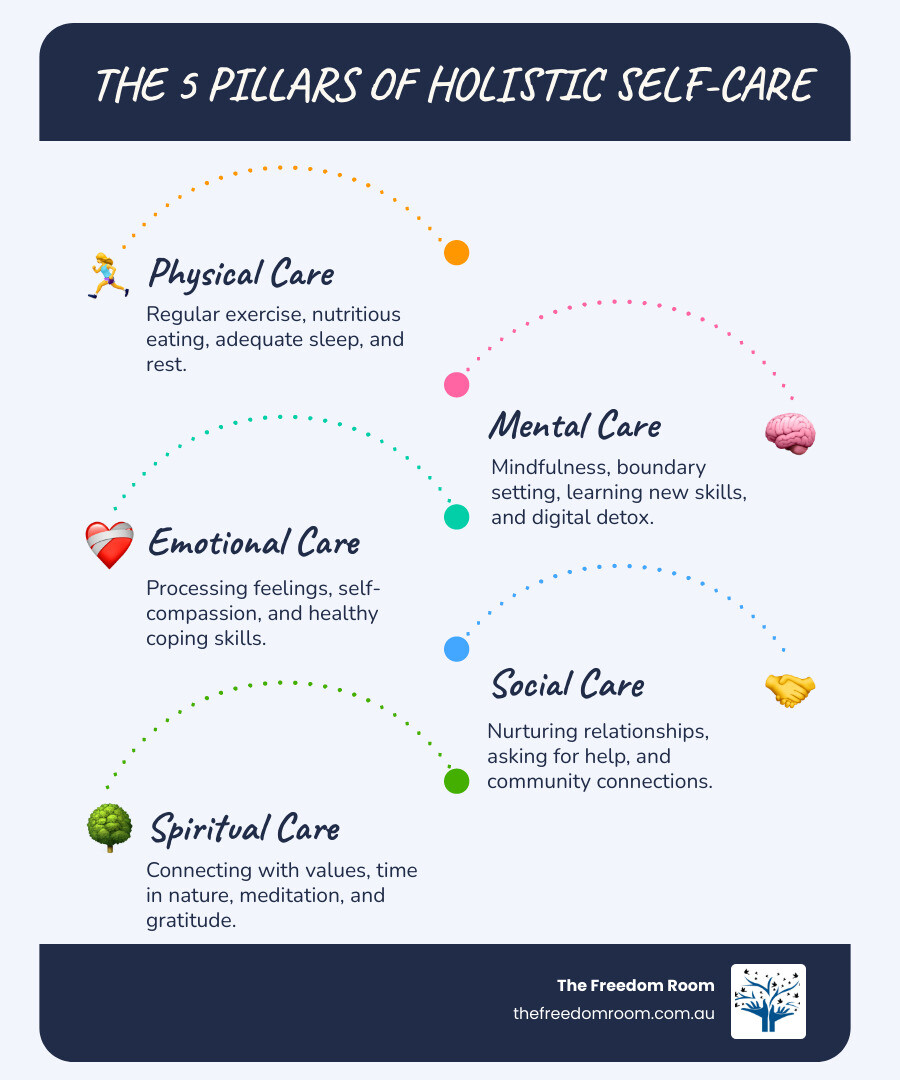
- Physical care: Encompasses regular exercise, nutritious eating, and adequate sleep, which is typically 7 to 9 hours for adults.
- Mental care: Includes mindfulness, setting boundaries, learning new skills, and taking digital detoxes.
- Emotional care: Involves processing feelings, practising self-compassion, and managing stress.
- Social care: Pertains to nurturing relationships, asking for help, and building community connections.
- Spiritual care: Relates to connecting with values, spending time in nature, and gratitude practice.
Contrary to some beliefs, self-care is not an act of selfishness. Research indicates that it improves mental health, boosts self-esteem, increases optimism, and reduces symptoms of anxiety and depression. Furthermore, it builds resilience, which enhances an individual’s ability to manage life’s challenges effectively.
Effective self-care does not necessitate significant investments of time or money. Minor, consistent actions, such as performing three deep breaths or dedicating five minutes to organising a workspace, can yield meaningful improvements.
Self-care is particularly important for those in recovery or managing addiction. It helps re-establish balance and creates healthy coping mechanisms that support long-term wellness.
This guide provides information on integrating practical self-care strategies into a daily routine and outlines when professional support may be beneficial.
Selfcare terms made easy:
Defining the Concept of Self-Care
During periods of significant stress, dedicating time to oneself can appear to be a luxury. However, authentic selfcare is not about indulgence; it is a fundamental necessity for well-being.
What is Self-Care?
The World Health Organization defines selfcare as the ability to promote health, prevent disease, and cope with illness. It is the intentional act of evaluating one’s own needs and taking action to preserve physical, mental, and emotional well-being.
This proactive approach helps create balance and stability in daily life. For those navigating recovery or managing addiction, self-care is vital for rebuilding healthy patterns and creating sustainable ways to cope with stress.
Why Self-Care is Essential for Well-being
An individual’s mental health encompasses their emotional, psychological, and social well-being, allowing them to cope with stress and work productively. Regular selfcare protects mental health and is proven to boost self-esteem, increase optimism, and reduce symptoms of anxiety and depression.
Most importantly, it builds resilience, providing the inner strength to navigate life’s challenges. Without adequate selfcare, an individual risks experiencing chronic stress and burnout. It is the mechanism through which a person restores their capacity for a fulfilling life.
For those in recovery, selfcare helps prevent relapse by providing healthy coping mechanisms. You can learn more through our guide on Caring for Your Mental Health.
Debunking Common Self-Care Myths
A common misconception is that selfcare is selfish or indulgent, which can lead to feelings of guilt. This is incorrect. Investing in one’s own well-being enhances the capacity to be present and care for others, positioning it as an act of self-awareness and responsibility.
Another myth is that selfcare requires significant time or financial expenditure. This belief is inaccurate. Effective selfcare can be free and take very little time.
It involves integrating minor, consistent actions into one’s routine, such as taking three deep breaths or spending five minutes outdoors. The primary requirements are intention, consistency, and a commitment to prioritising personal well-being.
The Pillars of Holistic Selfcare
Holistic selfcare recognises that an individual’s physical, mental, emotional, social, and spiritual health are interconnected. Nurturing each of these pillars creates a resilient foundation for genuine well-being.
Physical Self-Care
Physical selfcare involves consistent, caring actions that help the body function optimally. This pillar focuses on actions that support optimal bodily function.
Sleep hygiene is a cornerstone of physical wellness. It’s a common misconception that adults need less sleep, in reality, most adults still need 7 to 9 hours of quality sleep. A consistent routine in a comfortable bedroom can significantly improve its quality.
Healthy eating involves nourishing the body with balanced meals. Minor dietary adjustments, such as increasing vegetable intake or water consumption, can enhance energy levels and mood.
Regular exercise is a powerful mood booster. Even 30 minutes of daily walking improves physical and mental health. Incorporating movement into daily activities, for example by choosing stairs over lifts, is beneficial.
Rest also encompasses brief pauses throughout the day. Taking a five-minute break between tasks or sitting quietly when feeling overwhelmed can help one to reset.
Here are some practical ways to incorporate physical selfcare:
- Establish a consistent sleep schedule.
- Keep a water bottle nearby to stay hydrated.
- Choose stairs over lifts when possible.
- Take short walking breaks during the workday.
- Schedule regular health and dental check-ups.
- Heed the body’s signals for rest.

Mental Self-Care
Mental selfcare involves practices that promote mental clarity and help process daily information. Mindfulness and meditation can quiet the internal monologue, even for just three minutes a day. Explore more about Mindfulness and ACT.
Lifelong learning keeps the mind engaged, whether through reading, learning a new skill, or exploring a new subject. Setting boundaries protects mental energy by enabling one to decline commitments that deplete mental resources.
Digital detoxes, or regular breaks from screens, allow the mind to rest. Journaling provides a safe space to process thoughts and emotions. Learn about The Healing Power of Journalling.
Emotional Self-Care
Emotional selfcare involves developing a healthy relationship with one’s feelings and building resilience. This involves permitting the experience of emotions without judgment and developing healthy coping skills like physical activity or creative pursuits.
Self-compassion is about treating oneself with kindness, especially during difficult times. Practising acceptance of things one cannot change allows for the focus of energy where it matters.
Emotional Freedom Technique (EFT), or tapping, is an evidence-based tool for emotional wellness. It involves tapping on specific acupressure points while focusing on distressing emotions. This process sends calming signals to the brain’s alarm system, helping to disrupt the stress response. EFT is effective for processing difficult feelings related to anxiety, trauma, and stress. Learn more about Emotional Wellness and Emotional Freedom Technique.
Social Self-Care
Social selfcare involves nurturing supportive relationships and maintaining healthy boundaries. Invest time in connections that bring joy and support. Meaningful connections can also come from community involvement, like volunteering for a cause one cares about.
Seeking assistance is a sign of strength, not a weakness. An individual’s social network is an invaluable resource. Community involvement fosters a sense of purpose and belonging. Research confirms the vital importance of social connections for mental health, as shown in studies on the correlation of social support with mental health.
Spiritual Self-Care
Spiritual selfcare is about connecting with one’s values, purpose, and sense of meaning. This form of self-care is not contingent on religious affiliation. Connecting with one’s values involves aligning actions with core principles.
Spending time in nature can provide peace and perspective. Meditation and reflection create space for inner exploration. A gratitude practice shifts focus towards appreciation, cultivating optimism. Learn more about Gratitude.
Finding purpose involves engaging in activities that give life meaning, whether through work, creative pursuits, or family.
Integrating Self-Care into Your Busy Life
Integrating selfcare into a demanding schedule is both critical and achievable. The process involves incorporating small, intentional actions into an existing routine, which can accumulate to provide significant benefits for well-being.

How to Create a Personalised Selfcare Plan
An effective selfcare plan is tailored to the individual and commences with honest self-reflection. Assessing your current needs is the foundation. A Self-Care Assessment can provide valuable insights into which areas of life require more attention.
Next, one should identify barriers like time constraints or guilt to develop strategies to work around them. The most sustainable approach involves beginning with small, manageable changes. The focus should be on continuous, incremental improvements rather than drastic overhauls.
Finally, a process of trial and error is natural. Patience and flexibility are required as one experiments with different practices to find what is most effective.
Practical Tips for a Packed Schedule
Even with a busy schedule, selfcare can be practised by viewing it as an essential component of one’s routine, rather than an additional task.
- Schedule your selfcare: Block out time in your calendar for self-care activities to make them a priority.
- Use habit stacking: Attach a new self-care practice to an existing habit, such as practising mindful breathing before your morning coffee.
- Accept five-minute practices: Brief moments of self-care, like stretching or stepping outside, can be transformative when done consistently.
- Decline non-essential commitments: Protecting one’s time and energy by declining commitments that do not align with personal well-being is a powerful form of self-care.
For additional guidance, explore Take Care of Yourself.
Self-Care in the Workplace
Given the significant amount of time spent in the workplace, selfcare in professional environments is essential for overall well-being. Organisations that promote employee well-being often see reduced staff turnover and improved morale.
Setting work-life boundaries is key. This includes establishing clear start and finish times and avoiding work communications outside of those hours. Encouraging regular breaks throughout the day also supports mental clarity and reduces stress.
A supportive culture where selfcare is valued creates an environment where everyone can thrive. This involves normalising conversations about mental health and recognising that rest is essential for sustainable performance.
When Self-Care Isn’t Enough: Seeking Professional Support
While selfcare is a powerful tool, it may not always be sufficient. Recognising when to seek professional assistance is a crucial component of caring for yourself, particularly when challenges exceed an individual’s personal coping strategies.

Recognising the Signs You Need More Help
It is important to be aware of physical and mental signs that indicate a need for professional support. Consider seeking help if distressing symptoms persist for two weeks or more. Key signs include:
- Significant sleep disturbances or changes in appetite.
- Persistent difficulty concentrating or making decisions.
- Loss of interest in activities once enjoyed.
- Inability to complete usual tasks at home or work.
- Overwhelming feelings of sadness, hopelessness, or anxiety.
These signs are not indicative of personal weakness; rather, they are important communications from the body regarding its needs. For more guidance, visit How to Improve Mental Health.
How to Find Professional Support
Seeking professional help is a proactive act of selfcare that demonstrates a commitment to one’s well-being. Consulting with a General Practitioner (GP) is an accessible first step. A GP can provide an initial assessment and refer you to a qualified mental health professional. In Australia, a GP can develop a Mental Health Care Plan, which may allow access to Medicare rebates.
For challenges with anxiety and addiction, specialist services provide targeted support. The Freedom Room offers compassionate care from a team with lived experience. Learn more about our Anxiety and Addiction Treatment.
Crisis support is always available. In Australia, contact Lifeline on 13 11 14 or Beyond Blue on 1300 224 636. In life-threatening situations, always call Triple Zero (000).
Understanding Therapeutic Options
Various therapies can support mental health and improve the selfcare journey.
Cognitive Behavioural Therapy (CBT) is a form of psychotherapy based on the principle that our thoughts, feelings, and behaviours are interconnected. It assists individuals in changing unhelpful thinking and behavioural patterns by learning to recognise distortions, use problem-solving skills, and face fears.
Acceptance and Commitment Therapy (ACT) employs mindfulness and acceptance strategies to increase psychological flexibility. It assists individuals in clarifying their values and taking meaningful action, even when facing difficult thoughts and feelings. Learn more about ACT Mindfully: Acceptance and Commitment Therapy.
Emotional Freedom Techniques (EFT), or tapping, is an evidence-based tool that can provide relief from stress and emotional trauma. This technique involves tapping on specific acupressure points, which sends calming signals to the brain’s alarm system, disrupting the stress response. It is particularly beneficial for addictions, anxiety, depression, PTSD, and stress management. For an introduction, see EFT Tapping for Beginners.
Conclusion: The Path to Recovery
Selfcare is a continuous process. This guide has explored the five pillars of holistic wellness, which are the physical, mental, emotional, social, and spiritual domains. Each small step taken in these areas contributes to positive change.
The path to recovery is often non-linear, and challenging periods are a normal part of the experience. The most important factors are persistence and self-compassion in consistently attending to one’s needs.
At The Freedom Room Wellness and Recovery, it is understood that managing addiction while building sustainable selfcare habits requires specialised support. The team in Strathpine, QLD, combines professional expertise with lived experience, recognising the unique challenges individuals may face.
Our approach combines evidence-based therapies, such as Cognitive Behavioural Therapy (CBT) and Emotional Freedom Techniques (EFT), with personalised selfcare strategies. Compassionate guidance is provided to assist clients in developing the necessary tools and confidence to improve their well-being.
Recovery should not be undertaken in isolation. Building a support network is a crucial act of selfcare, and we are available to be part of that network. Each instance of seeking support represents a commitment to recovery and hope.
Find our addiction counselling services and find how our unique combination of professional expertise and personal understanding can support your journey.
Frequently Asked Questions about Self-Care
How much time do I need for selfcare each day?
Consistency is more important than duration. Commencing with just 5 to 10 minutes daily can yield meaningful benefits. Small, intentional acts, such as deep breathing or brief stretching, help to build sustainable habits.
Focus should be on the quality and intentionality of the selfcare practice. For example, a mindful five-minute walk can be more restorative than an hour of distracted activity. Integrating these small practices into a daily routine facilitates lasting positive change.
Can selfcare help with anxiety?
Yes, selfcare is highly effective for managing the symptoms of anxiety. Practices such as regular exercise, adequate sleep, and mindfulness can help to regulate the nervous system and reduce the chronic stress response that often contributes to anxiety.
When engaging in selfcare, the body is taught that it is safe to relax. Although selfcare is a powerful tool, persistent or severe anxiety may necessitate professional support. Explore Relaxation Techniques for Anxiety to complement your routine.
What if I feel guilty taking time for myself?
Feelings of guilt are common but are often based on the misconception that selfcare is selfish. In reality, it is a fundamental necessity. Selfcare replenishes the energy required to be present and supportive for others, as personal resources must be replenished to support others effectively.
It is helpful to reframe this perspective and view selfcare as an investment in one’s capacity to function effectively. Practising self-compassion is essential. It involves treating oneself with kindness and recognising that personal well-being has a positive impact on those nearby.