

Why Finding the Right Alcohol Recovery Support Program Matters
Engaging with a structured alcohol recovery support program represents a critical milestone for individuals seeking to address problematic alcohol consumption. Whether an individual is beginning to evaluate their relationship with alcohol or transitioning from an intensive clinical treatment facility, establishing a robust support framework is essential for maintaining long-term sobriety and preventing relapse.
Quick answer: What types of alcohol recovery support programs are available?
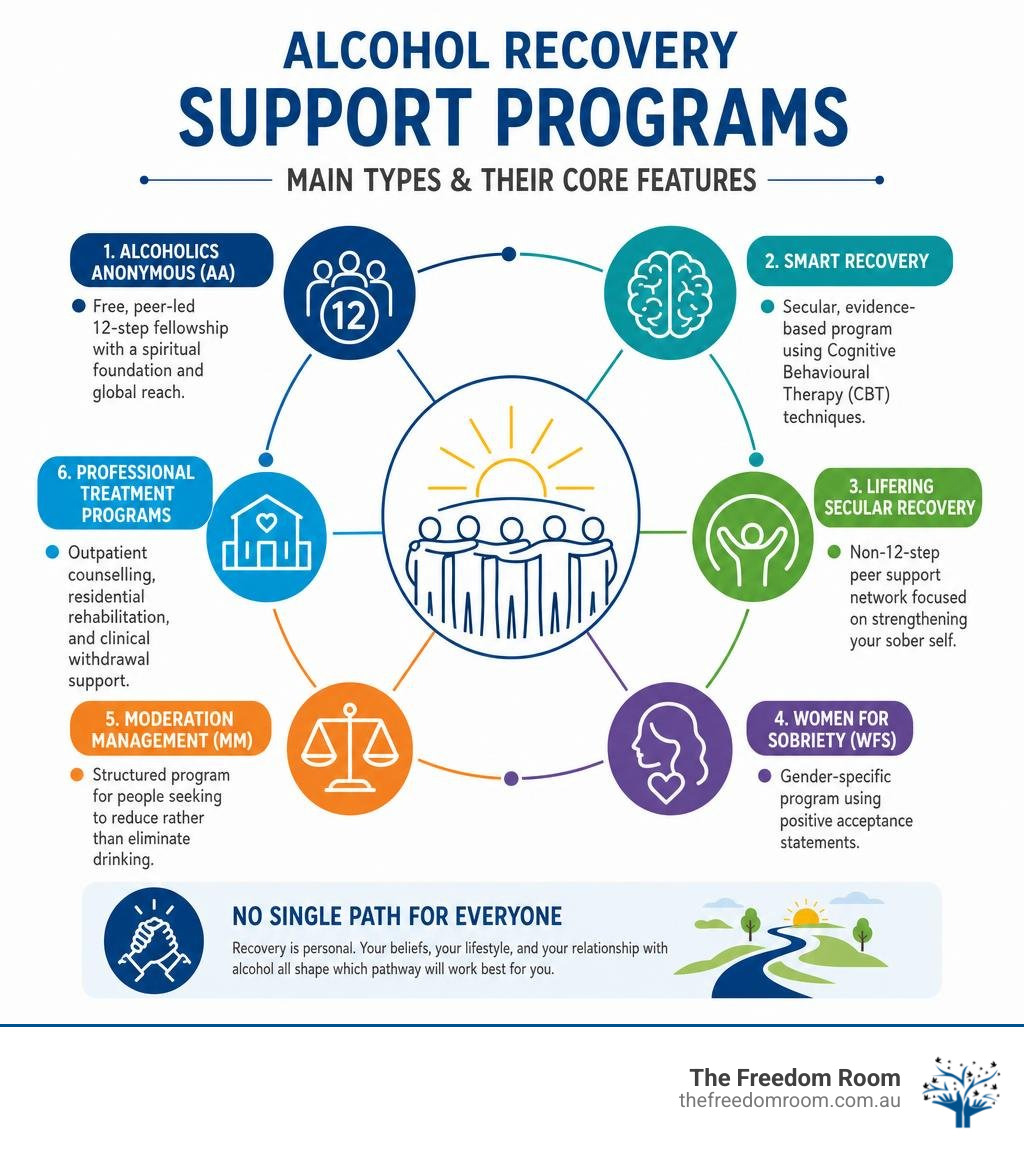
- Alcoholics Anonymous (AA): A free, peer-led 12-step fellowship with a spiritual foundation and global reach.
- SMART Recovery: A secular, evidence-based programme using Cognitive Behavioural Therapy (CBT) techniques.
- LifeRing Secular Recovery: A non-12-step peer support network focused on strengthening your sober self.
- Women for Sobriety (WFS): A gender-specific programme using positive acceptance statements.
- Moderation Management (MM): A structured programme for people seeking to reduce rather than eliminate drinking.
- Professional treatment programmes: Outpatient counselling, residential rehabilitation, and clinical withdrawal support.
Clinical research consistently validates the efficacy of structured peer support. A comprehensive meta-analysis of 35 studies involving more than 10,000 participants demonstrated that peer-led recovery programmes yield significantly superior abstinence outcomes compared to formal psychotherapy alone or no intervention. However, because individual circumstances, beliefs, and clinical needs vary, no single recovery model is universally applicable.
The process of recovery is highly individualised. Personal values, lifestyle demands, and the specific nature of one’s relationship with alcohol will ultimately dictate which support pathway offers the greatest likelihood of sustainable success.
Choosing the Right Alcohol Recovery Support Program
Selecting the ideal recovery pathway requires an understanding of your personal values, goals, health needs, and daily responsibilities. Some people feel supported by structured, spiritually focused fellowships, while others prefer secular, science-informed approaches that focus on practical coping skills and personal agency.

There is no requirement to commit to only one model. Many Australians combine professional therapy, mutual aid, online meetings, and structured self-help to create a recovery plan that is realistic and sustainable. The most effective alcohol recovery support program is the one that helps you feel safe, respected, and able to keep taking the next step.
The Role of a Peer-Led Alcohol Recovery Support Program
Peer support is a cornerstone of long-term recovery. When people experiencing physical alcohol dependence connect with others who understand the emotional, social, and practical challenges involved, isolation is reduced and accountability becomes easier to maintain. This shared experience fosters a unique therapeutic alliance that professional clinical settings cannot fully replicate.
According to the Australian Institute of Health and Welfare (AIHW), alcohol continues to be a significant contributor to treatment demand and health-related harm in Australia. This makes accessible, community-based support especially important for people leaving withdrawal support, rehabilitation, counselling, or hospital-based care. The transition from intensive clinical environments to independent daily living represents a high-risk period for relapse, making immediate integration into a peer network highly beneficial.
A structured Peer Support Recovery framework can help people develop practical skills for managing cravings, rebuilding routines, repairing relationships, and responding to high-risk situations. Lived experience also provides hope. Seeing others maintain recovery in ordinary daily life can make change feel more achievable. Furthermore, peer support helps individuals reconstruct their social identity, shifting from a self-image dominated by substance use to one defined by active recovery and community contribution.
12-Step Fellowships: Alcoholics Anonymous (AA)
Alcoholics Anonymous is one of the best-known mutual aid fellowships for alcohol recovery. It is free to attend, widely available, and based on the Twelve Steps, which guide members through reflection, accountability, amends, and ongoing personal growth. The programme operates on a peer-to-peer model, completely independent of professional clinical oversight.
AA has a spiritual foundation, although members interpret this in different ways. Some people connect strongly with the idea of a higher power, while others focus on humility, honesty, service, and connection. The sponsor system is another key feature, pairing newer members with someone who has longer-term experience in recovery. This relationship provides direct, individualised guidance through the practical application of the Twelve Steps.
Research into AA and similar Twelve Step Facilitation approaches is substantial. A major AA effectiveness study found strong evidence that these fellowships can support abstinence, particularly when people attend consistently and build supportive sober connections. The structured nature of the meetings provides a predictable environment, which is highly beneficial during early recovery when internal stability may be low.
Key features of AA include:
- The Sponsor System: Members can receive one-to-one guidance from someone with lived experience of the Twelve Steps.
- Anonymity: Privacy helps reduce stigma and supports people to attend without fear of public exposure.
- Global Accessibility: Meetings are available across Australia and online through Alcoholics Anonymous Australia.
- Community Connection: Local Alcohol Addiction Support Groups can help people build a sober network close to home.
AA is not the right fit for everyone, and that is acceptable. A support programme should align with your values and help you participate honestly and consistently.
Evidence-Based Alternatives: SMART Recovery and LifeRing
For people who prefer a secular or skills-based approach, SMART Recovery and LifeRing Secular Recovery are well-established alternatives. These programmes do not require belief in a higher power and generally place more emphasis on self-management, motivation, and practical tools.
SMART Recovery is grounded in principles drawn from Cognitive Behavioural Therapy and Motivational Enhancement Therapy. It focuses on building motivation, managing urges, working with thoughts and behaviours, and creating a balanced lifestyle. The programme utilises a specific four-point framework that addresses building and maintaining motivation, coping with urges, managing thoughts, feelings, and behaviours, and living a balanced life. Participants are encouraged to view recovery as a scientific process of self-directed change.
LifeRing Secular Recovery uses peer discussion to strengthen the part of the person committed to sobriety. Meetings commonly focus on what helped during the past week, what challenges are coming up, and what practical plan can support recovery in the days ahead. This approach emphasises personal agency, encouraging individuals to design their own personal recovery plan rather than following a pre-determined set of steps.
If you are comparing secular and traditional options, a current non-12-step recovery guide can help clarify which approach may suit your needs. You may also benefit from Alcohol Recovery Self Help resources if you are still deciding whether your goal is abstinence, reduction, or a staged pathway toward sobriety.
Common differences include:
- Philosophical Foundation: AA uses a spiritual framework, while SMART Recovery and LifeRing are secular.
- Personal Language: AA uses traditional fellowship language, while secular groups often avoid fixed labels.
- Meeting Style: AA commonly centres on sharing and step work, while SMART Recovery is more interactive and tool-based.
- Recovery Goals: AA focuses on abstinence, while some secular and harm-reduction resources support personalised goal-setting.
Finding an Alcohol Recovery Support Program in Australia
Australians can access alcohol recovery support through face-to-face groups, online meetings, counselling services, and state-funded referral pathways. This flexibility is important for people in regional areas, people with work or family responsibilities, and those who feel more comfortable beginning online.
The Australian Government health finder is a useful starting point for locating alcohol and other drug services, helplines, and treatment options. Online communities can also provide valuable continuity between appointments or meetings. Resources such as Sober Community Online The Winner Revealed can help you assess digital peer support options more carefully.
When choosing a programme, consider:
- Accessibility: Can you attend regularly in person or online?
- Safety: Does the group feel respectful, confidential, and non-judgemental?
- Fit: Does the language, structure, and philosophy align with your values?
- Support Level: Do you also need counselling, withdrawal support, or mental health care?
Integrating Mutual Aid with Professional Treatment
Peer-led groups can be powerful, but they are not a substitute for clinical care. They do not provide medical withdrawal management, psychiatric assessment, trauma therapy, or personalised treatment planning. For many people, the strongest pathway combines professional support with ongoing mutual aid.
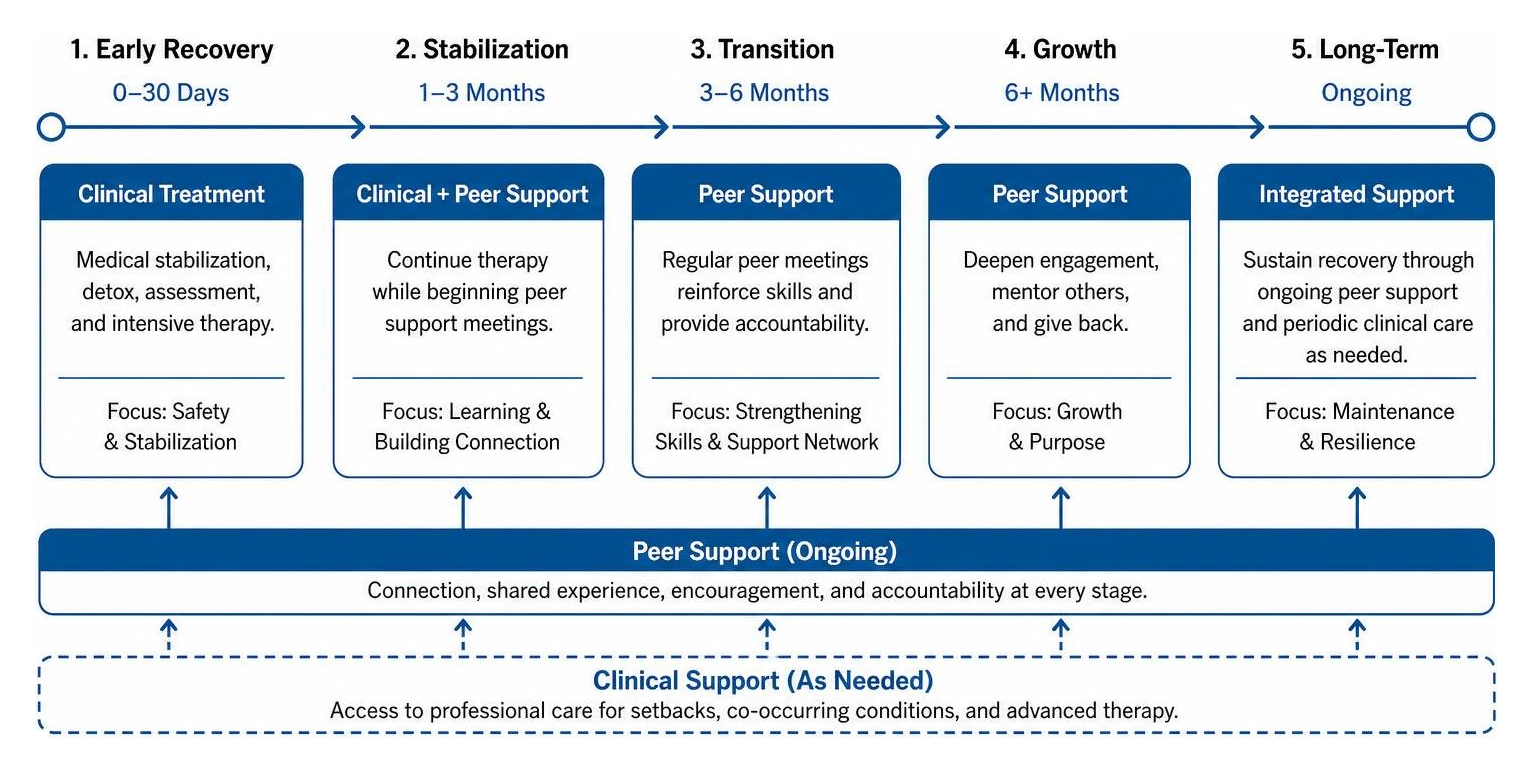
Professional treatment can help stabilise health, address co-occurring mental health concerns, and build relapse prevention skills. Peer support then reinforces those skills in daily life, where triggers, stress, relationships, and routines must be managed consistently. Clinical interventions often focus on identifying the root causes of substance use, such as unresolved trauma or co-occurring mental health disorders, while peer support provides the daily structure and community reinforcement needed to apply clinical insights in real-world scenarios.
Planning aftercare is especially important after residential rehabilitation, withdrawal support, or intensive counselling. The Ultimate Roadmap for Recovery After Rehab can help you think through structure, accountability, and daily routines. A Post Rehab Support Complete Guide can also support a more complete plan that combines therapy, peer meetings, wellbeing practices, and practical relapse prevention.
Discover the Support You Need for a Lasting, Successful Recovery
If you are looking for a professional, compassionate, and cost-effective alcohol recovery support program, The Freedom Room Wellness and Recovery is here to help. We offer personalised sessions, workshops, and evidence-based therapy for people seeking meaningful change in their relationship with alcohol. Our clinical approach is designed to empower individuals by providing them with the practical tools, psychological insights, and community connections necessary to sustain long-term sobriety.
Our team includes people in recovery, which allows us to provide support informed by lived experience as well as professional care. We understand the courage it takes to ask for help, and we offer guidance without judgement. By combining clinical expertise with genuine empathy, we help clients navigate the complexities of early recovery and build a stable, fulfilling life.
Explore Our Services to find a treatment pathway that fits your needs, or consider The Freedom Room 12-Week Online Recovery Program for structured support from home. When you are ready, please Contact Us to take your next step.
You can also visit our clinic at: 9a/521 Beams Rd, Carseldine QLD 4034.
Frequently Asked Questions
What is the difference between professional treatment and peer support?
Professional treatment is delivered by qualified clinicians and includes medical detox, psychological therapy, and structured rehabilitation. Peer support groups are led by volunteers with lived experience and focus on mutual encouragement, shared coping strategies, and social connection.
Can I attend multiple different support groups at the same time?
Yes. Many people find that attending both 12-step meetings and secular cognitive-behavioural groups provides them with a wider variety of recovery tools and a broader supportive community.
Is complete abstinence always required in every recovery programme?
While traditional programmes like AA require complete abstinence, some support frameworks and harm-reduction models focus on helping individuals reduce their alcohol intake or set personal moderation goals.