

What to Expect When You Stop Drinking: A Quick Guide to Detox Duration
The duration of alcohol detoxification is highly variable, depending on individual physiological factors, the duration of heavy drinking, and overall health. For most individuals, the acute withdrawal phase is completed within three to seven days, with full physical stabilisation typically achieved by the tenth day.
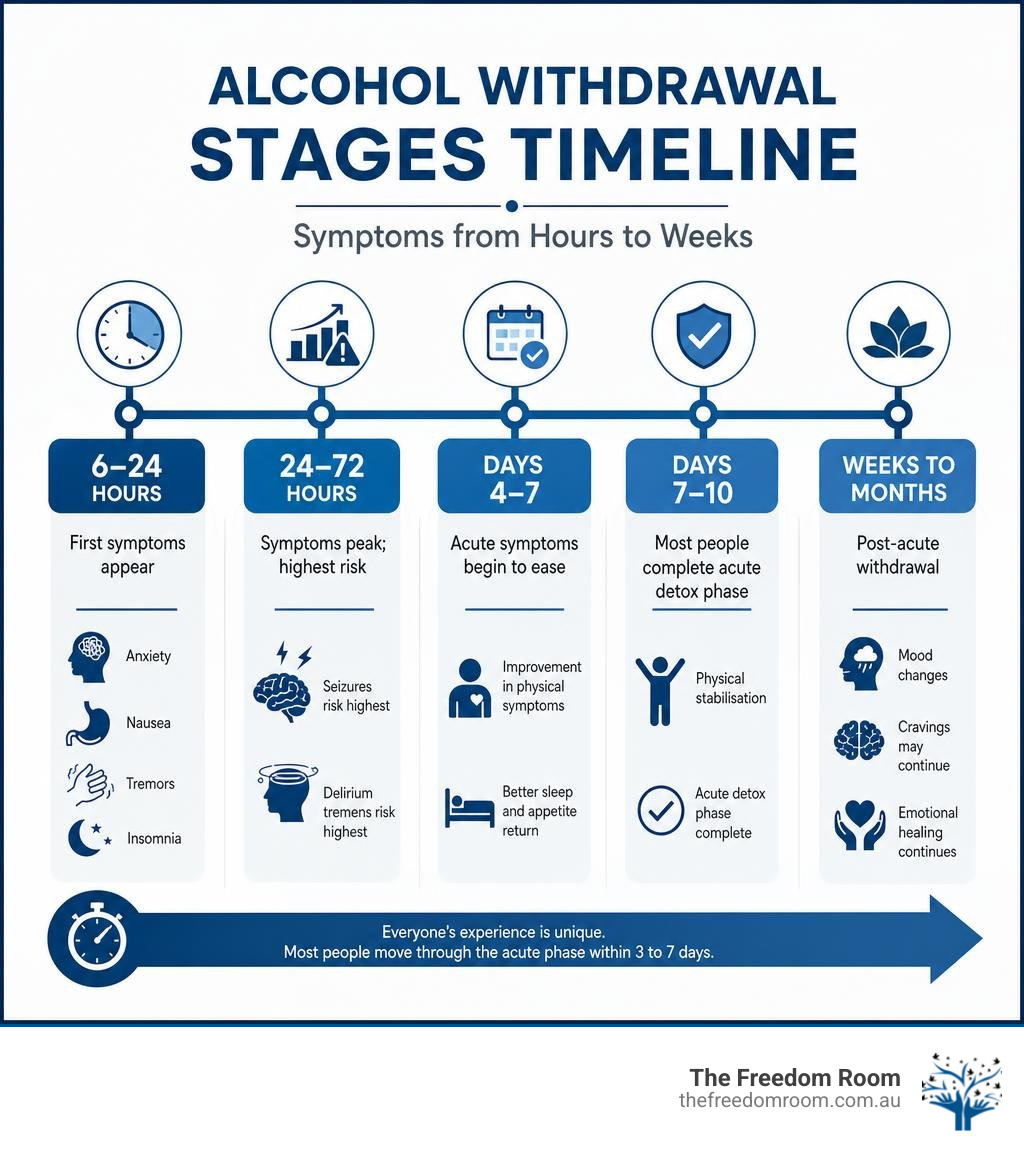
Understanding the progression of withdrawal symptoms is essential for anyone preparing to undergo this process. The timeline generally unfolds in several distinct stages:
- From 6 to 24 hours: The onset of early symptoms, including mild anxiety, nausea, physical tremors, and insomnia.
- From 24 to 72 hours: The peak of withdrawal severity, representing the highest risk for severe complications such as seizures and delirium tremens.
- From days 4 to 7: The gradual reduction of acute symptoms and the beginning of physical stabilisation.
- From days 7 to 10: The completion of the acute detoxification phase for the majority of individuals.
- Beyond the first week: The potential continuation of psychological symptoms and cravings, often referred to as post-acute withdrawal.
For many individuals, the anticipation of withdrawal discomfort serves as a significant barrier to seeking professional assistance. According to data from the Australian Institute of Health and Welfare, alcohol remains one of the most widely consumed substances in Australia, and physical alcohol dependence is far more prevalent than is commonly recognised.
When the human body adapts to regular, heavy alcohol consumption, sudden cessation forces the central nervous system to undergo a rapid and intense recalibration. This physiological process is known as detoxification. While the exact experience varies between individuals, the timeline of withdrawal follows a broadly predictable clinical pattern.
A survey of over 2,000 adults who underwent alcohol detoxification indicated that withdrawal symptoms lasted an average of just under five days, with most reporting symptoms lasting between two and eight days. Understanding this timeline is designed to ensure that individuals and their families are thoroughly prepared and informed before embarking on the path to recovery.
Terms related to how long does alcohol detoxification take:
How Long Does Alcohol Detoxification Take? The Clinical Timeline
To comprehend the precise timeline of detoxification, it is necessary to examine how chronic alcohol consumption alters the structure and function of the brain. Alcohol operates as a central nervous system depressant by enhancing the activity of gamma-aminobutyric acid (GABA), which is the primary inhibitory neurotransmitter responsible for calming neural activity. Concurrently, alcohol suppresses glutamate, an excitatory neurotransmitter that increases brain activity.
When alcohol is consistently present in the system, the brain attempts to maintain homeostasis by reducing its natural GABA production and increasing the number of glutamate receptors. When an individual suddenly ceases drinking, this delicate chemical balance is abruptly disrupted. The brain is left in a state of severe hyperexcitability, which manifests as physical withdrawal symptoms.
According to established medical guidelines on alcohol withdrawal, the severity and duration of this process are heavily influenced by the rate at which the liver metabolises residual alcohol and the speed at which the central nervous system can recalibrate to its natural baseline. For most individuals, this physiological adjustment occurs in distinct clinical phases over the course of approximately one week.
Understanding Physical Dependence on Alcohol
Physical dependence on alcohol is a complex physiological state that develops over months or years of regular, heavy consumption. The brain undergoes a profound process of neuroadaptation, permanently altering its neurochemistry to function in the presence of a chronic depressant. Over time, tolerance develops, meaning that increasingly larger quantities of alcohol are required to achieve the same physiological effects.
Once this neuroadaptation is complete, the body requires the presence of alcohol simply to maintain normal baseline functioning. If the substance is suddenly removed, the nervous system rebounds into a state of extreme hyperarousal. This is why attempting to cease drinking abruptly without professional medical supervision can be highly challenging and, in severe cases, life-threatening.
Understanding the underlying mechanics of physical alcohol dependence is a critical step in preparing for a safe recovery. For a comprehensive analysis of how the human body adapts and recovers during this initial phase, individuals can consult our detailed guide on alcohol dependence detox.
The First 24 Hours: When Does Withdrawal Begin?
The initial stage of withdrawal typically commences within 6 to 24 hours following the final drink. Even while residual alcohol remains in the bloodstream, a rapid decline in blood alcohol concentration can trigger the onset of early symptoms. This phase is characterised by mild to moderate physical discomfort as the body initiates the clearance process.
The most common early indicators include generalised anxiety, mild tremors, insomnia, and gastrointestinal distress such as nausea or vomiting. Many individuals also experience headaches, mild cognitive clouding, and diaphoresis (heavy sweating) during this initial window. These symptoms represent the direct reaction of the central nervous system to the sudden absence of its accustomed depressant.
While these early symptoms are highly uncomfortable, they are generally manageable with appropriate rest, hydration, and professional clinical monitoring. For those experiencing mild dependence, understanding these early withdrawal symptoms can help alleviate the anxiety associated with the onset of the detoxification process.
Days 2 to 3: Peak Symptoms and Delirium Tremens Risks

The second and third days following cessation represent the peak of the acute withdrawal phase. During this 48 to 72 hour window, physical and psychological symptoms reach their maximum intensity. This period also carries the highest risk for severe, life-threatening clinical complications, making professional medical monitoring highly advisable.
One of the primary clinical risks during this peak window is the onset of withdrawal seizures, which typically occur within 12 to 48 hours of the last drink. Additionally, a small percentage of individuals may develop a severe complication known as delirium tremens (DTs). This condition is characterised by profound confusion, rapid heart rate, severe tremors, vivid hallucinations, and dangerously elevated blood pressure.
Because of the significant risks associated with this phase, self-detoxification is strongly discouraged for heavy or long-term drinkers. To learn more about identifying and managing these high-risk symptoms safely, refer to our detailed guide to delirium tremens.
Days 4 to 7: How Long Does Alcohol Detoxification Take to Resolve?
For the majority of individuals, the acute physical symptoms of withdrawal begin to subside substantially between days 4 and 7. The brain gradually begins to regain its equilibrium, and the overactivity of the central nervous system steadily decreases. During this period, physical stabilisation occurs, and vital signs such as heart rate and blood pressure return to safe, normal ranges.
By the conclusion of the first week, most of the acute physical discomfort, including nausea, severe tremors, and sweating, has resolved. This milestone is why many clinical programmes utilise a standard 7-day detoxification protocol. However, while the immediate physical crisis may have passed, the body is still in the early stages of long-term healing.
Completing this first week safely provides a vital foundation for ongoing recovery. To explore the best practices for navigating this crucial first week under professional care, you can read more about safe alcohol detox protocols and understand the typical alcohol detox duration for different levels of dependence.
Beyond Week One: Post-Acute Withdrawal and Cravings
While the acute physical phase of detoxification generally concludes within a week, the psychological journey is far from over. Many individuals enter a phase known as post-acute withdrawal syndrome (PAWS), which can persist for several weeks or even months. During this time, the brain continues to rebuild and repair the neural pathways that were altered by chronic alcohol consumption.
The symptoms of post-acute withdrawal are primarily psychological and emotional rather than physical. They commonly include persistent sleep disturbances, mood swings, heightened anxiety, irritability, and intense cravings for alcohol. Because the physical symptoms have passed, many people are unprepared for these lingering mental challenges, which makes ongoing support vital.
Recognising that recovery is a long-term process helps prevent frustration and reduces the risk of relapse. For strategies on how to manage these ongoing psychological adjustments, consult our long-term alcohol withdrawal guide.
Factors Influencing How Long Does Alcohol Detoxification Take for Individuals
No two recovery journeys are identical, and several physiological and behavioural factors influence how long alcohol detoxification takes for any given individual. One of the most significant factors is your personal drinking history, including the volume consumed daily and the duration of active use.
Another critical factor is the kindling effect, a phenomenon where successive withdrawal episodes become progressively more severe and rapid in onset. Age and overall metabolic health also play a major role, as older adults often process toxins more slowly. Additionally, co-occurring mental health conditions and nutritional deficiencies, particularly a lack of thiamine, can complicate and extend the recovery timeline.
Understanding these individual variables allows for the creation of more effective, personalised recovery plans. To see how these factors might shape your personal experience, read your guide to alcohol withdrawal and detox timelines.
Take the First Step Toward a Fulfilling, Alcohol-Free Life

At The Freedom Room Wellness and Recovery, we understand that taking the first step toward sobriety can feel overwhelming. Our compassionate, cost-effective alcohol treatment programmes are designed to support you through every stage of this transition. We believe that recovery is not just about stopping a habit, but about rebuilding a meaningful, healthy, and fulfilling life.
What makes our approach unique is our team, many of whom are in recovery themselves. This lived experience allows us to provide authentic support, deep empathy, and practical guidance without judgment. We know the challenges of the detox timeline, and we are committed to walking alongside you every step of the way.
We invite you to reach out to our team to discuss how we can support your recovery journey. You can visit our clinic in Brisbane, located at 9a/521 Beams Rd, Carseldine QLD 4034, to speak with us in person. To learn more about our personalised workshops, therapy sessions, and recovery support, please explore Our Services or Contact Us today to begin your journey.
Frequently Asked Questions About Alcohol Detoxification
Can I safely detox from alcohol at home?
Detoxing from alcohol at home can be highly unpredictable and dangerous, especially for individuals with a history of heavy, daily consumption. Because of the risks of severe complications like seizures and delirium tremens, it is always safest to consult a medical professional before attempting to stop drinking.
What is the kindling effect in alcohol withdrawal?
The kindling effect refers to the neurological process where repeated episodes of alcohol withdrawal cause the brain to become increasingly sensitive. This means that each subsequent detox attempt can result in more rapid, severe, and potentially dangerous withdrawal symptoms, even if the amount of alcohol consumed was less than in previous cycles.
How do nutritional deficiencies affect the detoxification process?
Chronic alcohol consumption often leads to poor nutrient absorption and severe deficiencies, particularly in B vitamins like thiamine. During detox, a lack of thiamine can lead to serious neurological complications, which is why clinical detox programmes prioritise nutritional support and vitamin supplementation.