

Why Alcohol Counselling Services Are Worth Knowing About
Alcohol counselling services exist to help people understand their relationship with alcohol, address the root causes of harmful drinking, and build a path toward lasting recovery.
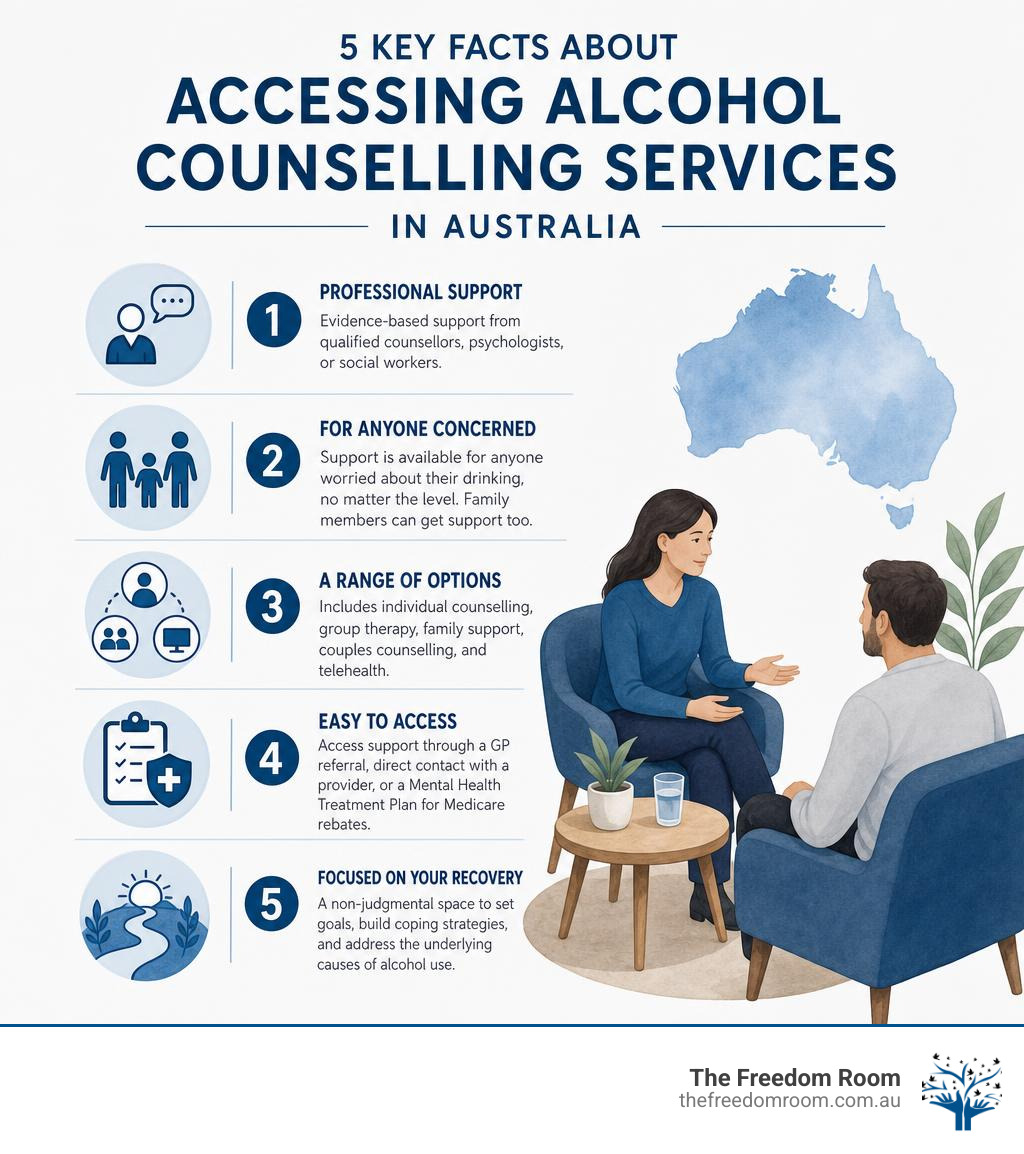
For a comprehensive overview, the following key points outline the nature and accessibility of these services:
- What they are: Professional, evidence-based support sessions delivered by qualified counsellors, psychologists, or social workers
- Who they’re for: Anyone concerned about their drinking, whether mild or severe, including their family members
- Types available: Individual counselling, group therapy, family support, couples counselling, and telehealth options
- How to access them: Through a GP referral, direct contact with a provider, or a Mental Health Treatment Plan for Medicare rebates
- What to expect: A non-judgmental space to set goals, develop coping strategies, and work through the underlying causes of alcohol use
Despite how common alcohol-related harm is in Australia, many people delay or avoid seeking help due to stigma or uncertainty about what support looks like. According to the Australian Institute of Health and Welfare, alcohol remains one of the most widely misused substances in the country, and its impact extends well beyond the individual.
Evidence indicates that early intervention significantly improves long-term outcomes. Individuals do not need to reach a point of crisis before seeking professional counselling; proactive engagement often facilitates a more sustainable recovery.
Understanding Alcohol Counselling Services and How They Work
At its core, professional support is built upon a strong therapeutic alliance. This collaborative relationship between the client and the practitioner forms a safe, trusting foundation where real change can occur. Healing begins when an individual feels heard, respected, and understood as an individual rather than a diagnosis.
Practitioners utilise medically recognised, person-first language to ensure clients feel valued and respected. This approach focuses on the individual first, addressing challenges such as a physical dependence on alcohol without defining the person by their struggles. This compassionate framing is essential for reducing the shame and stigma that so often delay people from seeking help.
The recovery process is rarely linear, and everyone requires a unique level of care. By utilising evidence-based care, practitioners can tailor sessions to specific needs, helping clients navigate both the physical and emotional aspects of recovery. Whether the objective is complete abstinence or a significant reduction in consumption, professional support provides the tools to help individuals succeed.

Different Types of Alcohol Counselling Services Available
There is no single approach that suits every individual when it comes to recovery. Different formats of support serve different purposes, allowing clients to choose the setting that feels most comfortable and effective for their situation.
For many, the journey begins with individual sessions. Engaging in structured Alcohol Addiction Counselling allows individuals to work one-on-one with a professional to explore personal triggers and develop tailored coping strategies. This private setting is ideal for deep self-reflection and addressing co-occurring mental health conditions.
Beyond individual therapy, other formats offer valuable connection and systemic healing:
- Group Therapy: Participating in structured groups allows individuals to share experiences and learn from others facing similar challenges, reducing isolation.
- Family Support: Engaging in Family Alcohol Counselling helps heal strained relationships and educates loved ones on how to provide healthy, constructive support.
- Couples Counselling: Utilising resources like a Couples Alcohol Counselling Complete Guide can help partners navigate the specific communication breakdowns caused by alcohol misuse.
- Telehealth: Online and telephone sessions provide exceptional flexibility, allowing clients to access professional care from the comfort and privacy of their own home.
For those living in the local area, accessing community-based resources is highly beneficial. You can explore local services such as Lives Lived Well, Strathpine, Adis, Queensland Health or join a peer-led community group through the Drug and alcohol support group in Strathpine, QLD 4500, Healthdirect to strengthen your local support network.
What to Expect from Professional Alcohol Counselling Services
Attending an initial consultation may cause apprehension; however, understanding the structure of these sessions can alleviate anxiety. Professional sessions are designed to be a collaborative, non-judgmental space where clients can speak openly without fear of criticism or shame.
Your support team may consist of various qualified practitioners, including psychologists, social workers, and specialist addiction counsellors. Many individuals benefit from working with professionals who possess lived experience of recovery, as this brings an authentic level of empathy and understanding to the therapeutic relationship.
Depending on professional backgrounds and lifestyles, clients can access specialised pathways. For instance, those looking for local support in the Brisbane region can access Alcohol Abuse Counselling Brisbane to find targeted local care. If privacy is the primary concern, choosing Private Counselling for Alcohol Addiction ensures a highly discreet experience. Furthermore, corporate professionals can consult an Alcohol Counselling for Professionals Ultimate Guide to learn how to balance intensive treatment with demanding career responsibilities.
Evidence-Based Therapeutic Approaches for Recovery
Modern recovery practices rely heavily on scientifically validated therapeutic modalities. These approaches are designed to help individuals restructure unhelpful thinking patterns, boost motivation, and prevent a return to use.
When engaging in Alcohol Recovery Counselling, practitioners will draw from several proven methodologies:
- Cognitive Behavioural Therapy (CBT): This approach helps identify the thoughts, feelings, and situations that lead to drinking, teaching practical skills to change these habits.
- Motivational Interviewing (MI): A client-centred conversation style that helps resolve ambivalence and strengthen personal motivation for change.
- Relapse Prevention: This involves identifying high-risk situations, creating emergency plan strategies, and learning how to handle cravings safely.
- Harm Minimisation: A practical framework focused on reducing the negative consequences of alcohol use, which may include controlled drinking goals rather than immediate abstinence.
For those who require ongoing, practical guidance in their daily lives, working alongside an Alcohol Addiction Recovery Coach Addiction Counselling specialist can provide the day-to-day accountability and lifestyle structuring needed to maintain long-term change.
Confidentiality and Privacy Protections in Australia
Privacy is a primary concern for anyone seeking help for substance use. In Australia, personal information is protected by strict state and federal privacy laws, ensuring that participation in treatment remains entirely confidential.
Practitioners are ethically and legally bound to keep records secure. Information regarding sessions cannot be shared with employers, family members, or third parties without explicit, written consent.
However, there are specific, legally mandated exceptions to confidentiality under a practitioner’s duty of care. These exceptions only apply if there is an immediate, serious safety risk to the client or others, or if a court of law subpoenas the records. Your therapist will discuss these ethical guidelines and boundaries during the very first session so that you can proceed with complete peace of mind.
Costs, Medicare Coverage, and Funding Options
The cost of accessing professional care can vary depending on the type of provider chosen and the level of support required. Fortunately, there are several pathways available in Australia to make treatment highly accessible and affordable.
Many clients choose to begin by visiting their GP to discuss a Mental Health Treatment Plan. This plan allows individuals to claim Medicare rebates for a set number of psychological therapy sessions per calendar year, significantly reducing out-of-pocket expenses.
Additionally, private health insurance may provide eligibility for extra rebates depending on the level of cover. For those seeking structured, comprehensive care, opting for Personalised Addiction Treatment North Brisbane providers can help identify flexible, cost-effective program packages that fit financial situations without compromising on the quality of care.
Recognising the Signs That Support is Needed
It can sometimes be difficult to determine when social drinking has crossed the line into something that requires professional attention. According to the Australian Institute of Health and Welfare Alcohol Data, a significant percentage of Australians experience long-term health risks due to their drinking habits, yet many delay seeking help until a major crisis occurs.
Recognising the early warning signs of a developing issue can prevent long-term harm. These signs generally fall into a few key categories:
- Physical Dependence on Alcohol: Experiencing mild tremors, sweating, nausea, or anxiety when attempting to stop drinking or cut down.
- Neglecting Responsibilities: Finding that drinking or recovering from its effects causes an individual to miss work, neglect family duties, or abandon personal commitments.
- Social Withdrawal: Choosing to isolate from friends, family, or hobbies in order to drink, or feeling defensive when loved ones express concern.
- Mood Changes: Experiencing heightened irritability, anxiety, or depressive symptoms when not drinking.
If these patterns are recognised in oneself or a loved one, it is a clear indicator that seeking professional guidance could be highly beneficial.
Discover the Support You Need for a Lasting, Successful Recovery
For individuals prepared to address their relationship with alcohol, professional support is available. The Freedom Room Wellness and Recovery provides compassionate, cost-effective alcohol addiction treatment through personalised sessions, workshops, and therapy. The clinical team includes dedicated professionals with lived experience of recovery, ensuring an empathetic, practical, and non-judgmental approach to treatment.
Whether seeking individual therapy, family programmes, or structured coaching, individuals are encouraged to explore Our Services to identify the most appropriate pathway. Comprehensive resources, such as the Alcohol Addiction Counselling Brisbane Complete Guide, are designed to help clients understand their options and feel confident in their decision to heal.
To initiate support, please contact the team directly through the Contact Us page, or visit the Carseldine clinic located at 9a/521 Beams Rd, Carseldine QLD 4034. This professional guidance supports individuals as they build a stronger, healthier, and more fulfilling future.
Frequently Asked Questions
What occurs during an initial consultation?
During the initial consultation, the practitioner focuses on understanding the client’s objectives and history. Discussions typically cover current consumption patterns, associated challenges, and desired outcomes. There is no requirement to implement immediate, drastic changes; the primary objective is to establish clinical trust and a secure therapeutic environment.
What is the typical duration of counselling?
The duration of treatment depends on individual requirements, clinical goals, and the severity of any physical alcohol dependence. Some individuals benefit from brief interventions spanning four to six sessions, whereas others engage in ongoing therapy over several months to consolidate coping strategies and sustain lifestyle adjustments.
Is support available for individuals who do not aim for complete abstinence?
Yes. Many practitioners operate within a harm minimisation framework, supporting clients who aim to reduce consumption or achieve controlled drinking. Treatment goals are collaborative, focusing on establishing a manageable and safer relationship with alcohol.