

Understanding Your Options for Relationship Recovery
Couples alcohol counselling is a therapeutic approach that helps partners address alcohol use disorders together. It focuses on both individual recovery and healing the relationship.
When alcohol use affects a relationship, both partners feel the impact. One person faces the challenges of addiction, while the other experiences stress, broken trust, and uncertainty. This shared struggle often leads to conflict, miscommunication, and a loss of connection.
Couples counselling offers a path forward by:
- Providing structured support with 12 to 20 weekly sessions over three to six months.
- Using evidence-based techniques like recovery agreements and communication training.
- Focusing on both reducing alcohol use and improving the relationship.
- Offering professional guidance from therapists trained in addiction and relationship dynamics.
Research shows that couples-based therapy for alcohol use disorders is highly effective. Partners who attend together often achieve better abstinence outcomes and higher relationship satisfaction than those in individual therapy alone. The approach works because a supportive relationship provides powerful motivation for change, creating a foundation for lasting recovery.
Understanding Couples Alcohol Counselling: The Therapeutic Approach
When alcohol becomes a problem in a relationship, it affects both partners. The person struggling with drinking faces their own battles, while their partner may experience broken trust and constant worry. Couples alcohol counselling offers a chance to heal together, addressing both the addiction and the relationship itself.

What is Couples Alcohol Counselling and How Does It Work?
Couples alcohol counselling, often delivered as Behavioural Couples Therapy (BCT), brings both partners into the treatment room. It is a specialised approach that recognises alcohol use is influenced by relationship patterns and daily interactions. The therapy is built on the principle that an intimate partner can be a powerful agent of change.
BCT works to shift relationship dynamics to create an environment where sobriety can flourish. It helps restructure interactions to actively support recovery rather than unintentionally reinforcing drinking patterns, with a growing evidence base showing that involving partners in treatment can improve both alcohol outcomes and relationship wellbeing.
The therapy has two main goals: to eliminate or significantly reduce alcohol use and to improve the relationship’s overall function. By engaging the natural support system within the partnership, BCT helps couples build new, healthier patterns that support lasting abstinence.
Key Techniques Used in Couples Counselling
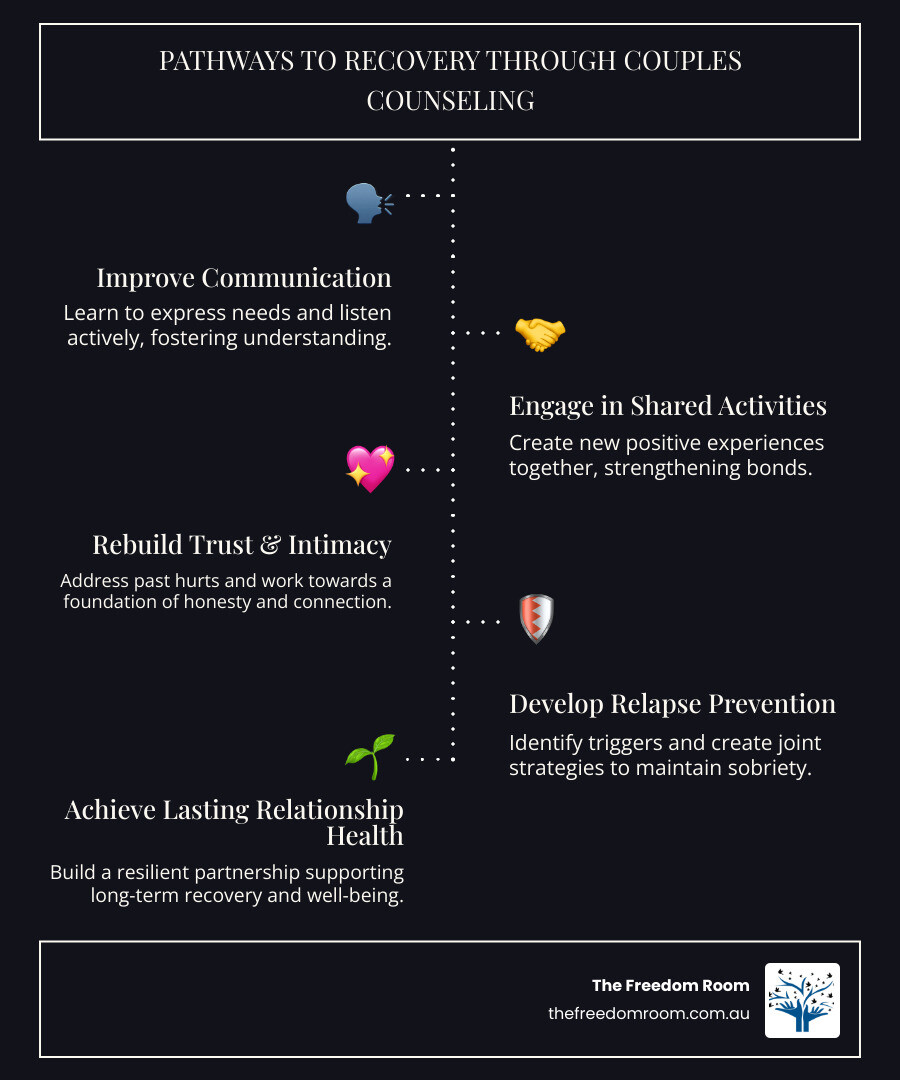
Couples alcohol counselling uses practical, action-oriented techniques to build sobriety and strengthen your connection. Key strategies include:
- Recovery Agreements: Often called a sobriety contract, this involves a daily commitment to abstinence, with the partner offering support. It helps create a visible record of progress and shifts the focus towards the future.
- Trust-Building Discussions: These structured conversations focus on rebuilding trust through present actions and future commitments, rather than dwelling on past hurts. The daily recovery agreement is a practical part of this process.
- Communication Skills Development: Therapists teach essential skills like active listening and using “I” statements to express feelings. This helps couples steer difficult topics without blame or escalation. For more on this, see our guide on How to Resolve Conflict.
- Problem-Solving Exercises: Couples learn to shift from blame to collaboration by identifying issues, brainstorming solutions, and negotiating requests together.
- Increasing Positive Shared Activities: This helps rebuild joy and connection by encouraging partners to notice positive behaviours and plan special activities that do not involve alcohol.
- Relapse Prevention Planning: You will develop a continuing recovery plan to identify high-risk situations and rehearse coping strategies, building resilience for the future. For more guidance, refer to our Addiction Coping Skills Ultimate Guide.
Effectiveness of Couples Alcohol Counselling
Extensive evidence from numerous clinical trials shows that couples alcohol counselling is highly effective. Behavioural Couples Therapy (BCT) often achieves superior outcomes compared to individual addiction treatment alone.
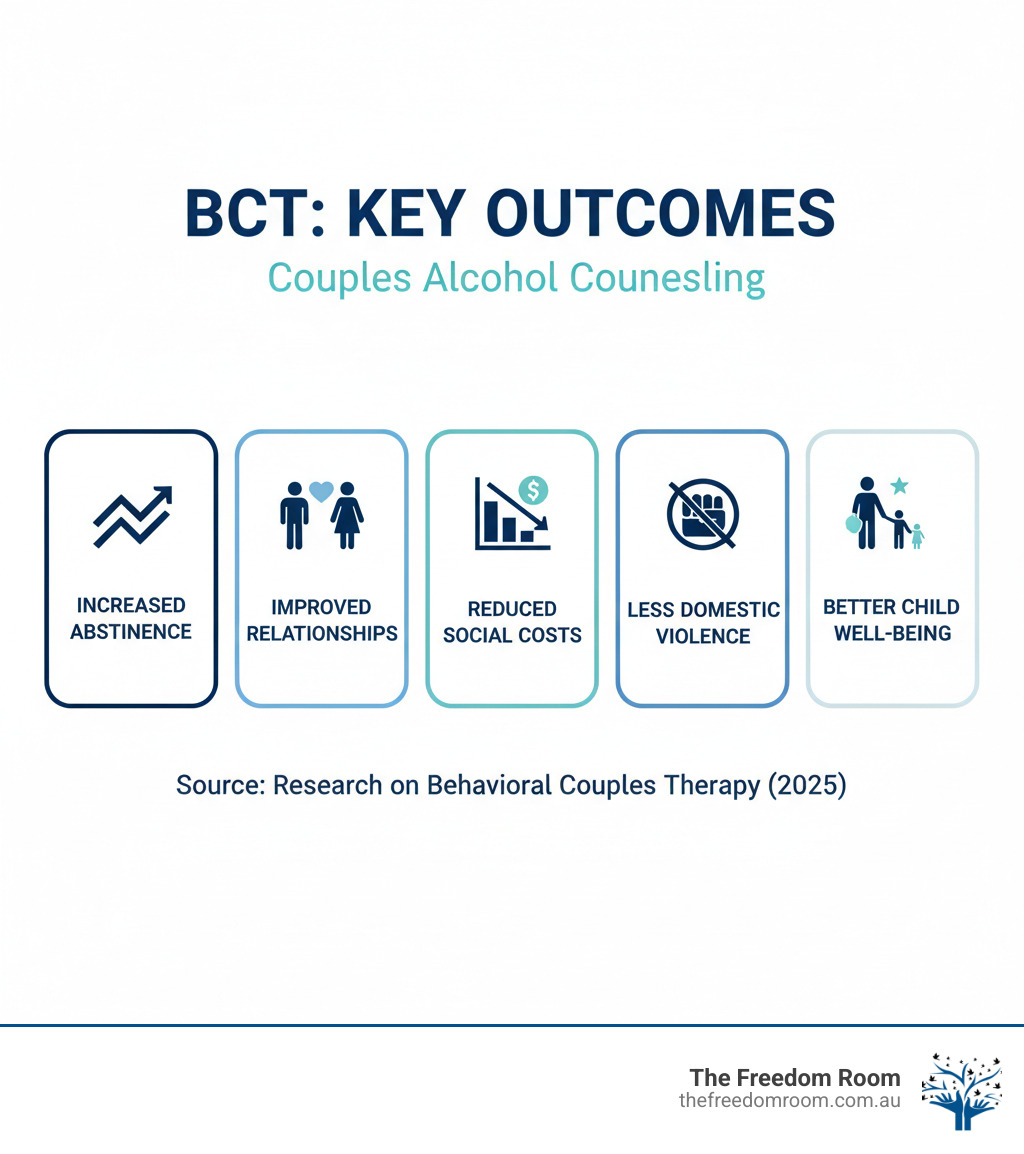
Key benefits of this approach include:
- couples’Higher Abstinence Rates: Individuals in couples-based alcohol counselling often achieve greater reductions in substance use and better follow-through with recovery plans than those in individual counselling alone.
- Improved Relationship Functioning: Couples commonly report higher relationship satisfaction, clearer communication, and better overall family functioning.
- Reduced Conflict and Domestic Violence: Evidence-based couples therapies can significantly reduce conflict and domestic violence, improving safety for partners and children.
- Better Outcomes for Children: As communication stabilises and alcohol use decreases, children in the family tend to show improvements in emotional and behavioural wellbeing.
- Cost-Effectiveness: By lowering alcohol-related health issues, conflict, and work disruption, couples’ alcohol counselling can reduce broader social and financial costs, making it an economically sound choice as well as a therapeutic one.
By addressing both addiction and relationship dynamics, couples counselling offers a path to a more stable and fulfilling life for the entire family. For more on the recovery journey, see our Addiction Recovery Process Complete Guide.
Addressing Relationship Damage from Alcohol Use
Alcohol addiction can cause significant damage to a relationship, breaking down trust, communication, and intimacy. Couples alcohol counselling provides a structured path to confront and heal these wounds.
The therapy helps partners to:
- Rebuild Trust: Trust is rebuilt not through apologies, but through consistent, sober behaviour. The daily recovery contract is a key tool in demonstrating reliability and restoring faith over time.
- Restore Intimacy: Counselling creates a safe space to address the loss of emotional and physical intimacy. As sobriety progresses, partners can reconnect with mutual respect and growing trust.
- Resolve Conflict Constructively: Destructive communication patterns are replaced with skills for active listening and respectful negotiation, changing how couples manage disagreements.
- Work Towards Forgiveness: BCT helps both partners process the pain caused by past actions and work towards genuine forgiveness, which is about releasing past hurt to create space for a healthier future.
- Move Forward Together: The therapy addresses unhelpful dynamics like enabling, establishes healthy boundaries, and promotes accountability, empowering both partners to build a stronger future.
Through these interventions, couples gain the tools to move beyond past pain and foster a relationship where both feel safe, respected, and connected. For more on this, visit Rebuilding Your Life After Addiction.
Beginning Your Journey with Couples Counselling
Taking the first step towards couples alcohol counselling is a courageous decision for your relationship. Understanding if this approach is right for you and how to prepare can make the journey feel more manageable.

Is Couples Alcohol Counselling Right for Us?
Deciding if couples alcohol counselling is the right path requires honest reflection on your relationship and the willingness of both partners to change. It is a powerful tool, but it is not suitable for every situation.
Consider the following factors:
- When to Seek Therapy: Counselling is beneficial if alcohol use is causing ongoing conflict, emotional distance, or broken trust. It can be effective whether one or both partners have drinking concerns and can begin early in the recovery journey.
- Typical Duration: A standard course of Behavioural Couples Therapy involves 12 to 20 weekly sessions over three to six months, providing a structured timeframe for change.
- Suitability: The approach is ideal when one partner has an alcohol use disorder and the other is supportive. It can be adapted for couples where both partners have substance use issues, as long as both are committed to recovery.
- When It May Not Be Appropriate: This therapy is not recommended in cases of recent, severe domestic violence, if a restraining order is in place, or if one partner is unwilling to participate honestly. Severe, unstable mental health conditions may also require individual stabilisation first.
For couples in Strathpine, Queensland, and nearby areas, considering these points can help you decide if this is your next step. We offer comprehensive Alcohol Addiction Help and various options for Therapy for Drinking Problems.
How to Find the Right Therapist and Prepare for Counselling
Finding the right therapist is a crucial step. The quality of the therapeutic relationship is a key foundation for healing.
Here is how to prepare for your journey:
- Find a Qualified Therapist: Look for a licensed therapist with specialised training and experience in both addiction treatment and couples therapy. They should be skilled in evidence-based approaches like Behavioural Couples Therapy (BCT).
- Prepare for Your Sessions: Before you begin, talk together about your goals. Approaching sessions with honesty, openness, and a willingness to do the work is essential for success. The focus should be on collaboration, not blame.
- Integrate Additional Supports: Couples counselling is often most effective when combined with other supports. This may include individual counselling, self-help groups, or medication-assisted treatment. You can learn more about our Group Therapy Addiction Complete Guide and Alcohol Rehab Group Therapy options.
- Develop a Continuing Recovery Plan: Towards the end of your sessions, you will create a long-term plan. This roadmap will outline strategies for maintaining sobriety and relationship health for years to come.
At The Freedom Room, our team includes individuals with lived experience in recovery, offering authentic empathy. We are dedicated to helping couples in Strathpine, Queensland, and beyond find the compassionate, evidence-based support they need to heal.
Ready for Change? Let’s Build a Stronger, Alcohol-Free Future Together
Choosing couples alcohol counselling is a commitment to each other and to building a life where you can both thrive. This approach offers the chance to transform your relationship with alcohol and with each other.
As we have explored, Behavioural Couples Therapy (BCT) delivers higher abstinence rates, strengthens communication, and provides practical tools for rebuilding trust. It recognises that healing as a team creates a foundation for recovery that is far stronger than what either partner could build alone.
At The Freedom Room, our team includes people with lived recovery experience who understand the courage it takes to seek help. We offer compassionate, evidence-based support custom to your unique situation because we believe every couple deserves the chance to heal and reconnect.
The journey may seem daunting, but you do not have to face it alone. A stronger, alcohol-free future is possible. If you are ready to take the first step, we are here to guide you.
Explore more about our recovery programs and see how we can support you both, or reach out directly via our contact page to start your next step.