

Why Group Therapy for Alcoholics Is One of the Most Powerful Steps Toward Recovery
Group therapy for alcoholics is a structured, professionally guided treatment approach where a small group of people with shared experiences meet regularly to support one another’s recovery.
If you are looking for group therapy options in Australia, here is a quick overview:
- What it is: Regular sessions (typically 60 to 90 minutes) with 5 to 12 participants, led by a trained facilitator
- Who it is for: Adults experiencing physical dependence on alcohol who want peer-supported, evidence-based help
- Main types available: Psychoeducational groups, cognitive-behavioural therapy (CBT) groups, skills development groups, interpersonal process groups, and peer support groups such as SMART Recovery
- Key benefits: Reduces isolation, builds accountability, improves self-efficacy, and dramatically lowers relapse risk
- How to access it in Australia: Through a GP referral, community alcohol and other drug (AOD) services, Medicare-supported mental health plans, or directly through private wellness centres
Living with physical alcohol dependence can feel deeply isolating. Many people carry a heavy burden of shame and believe their struggle is unique to them. The reality is very different.
Research consistently shows that human beings are wired for connection, and that shared recovery is often more effective than going it alone. A landmark clinical study found that adding structured group CBT to conventional treatment reduced the 12-month alcohol relapse rate from 51.6% to just 4.7%. Another study showed that 83.33% of participants achieved early remission after just three weeks of brief group therapy, even after an average of 20 years of alcohol use.
Group therapy works not because it is a shortcut, but because it replaces the isolation that fuels dependency with something far more powerful: genuine peer connection and a shared culture of recovery.
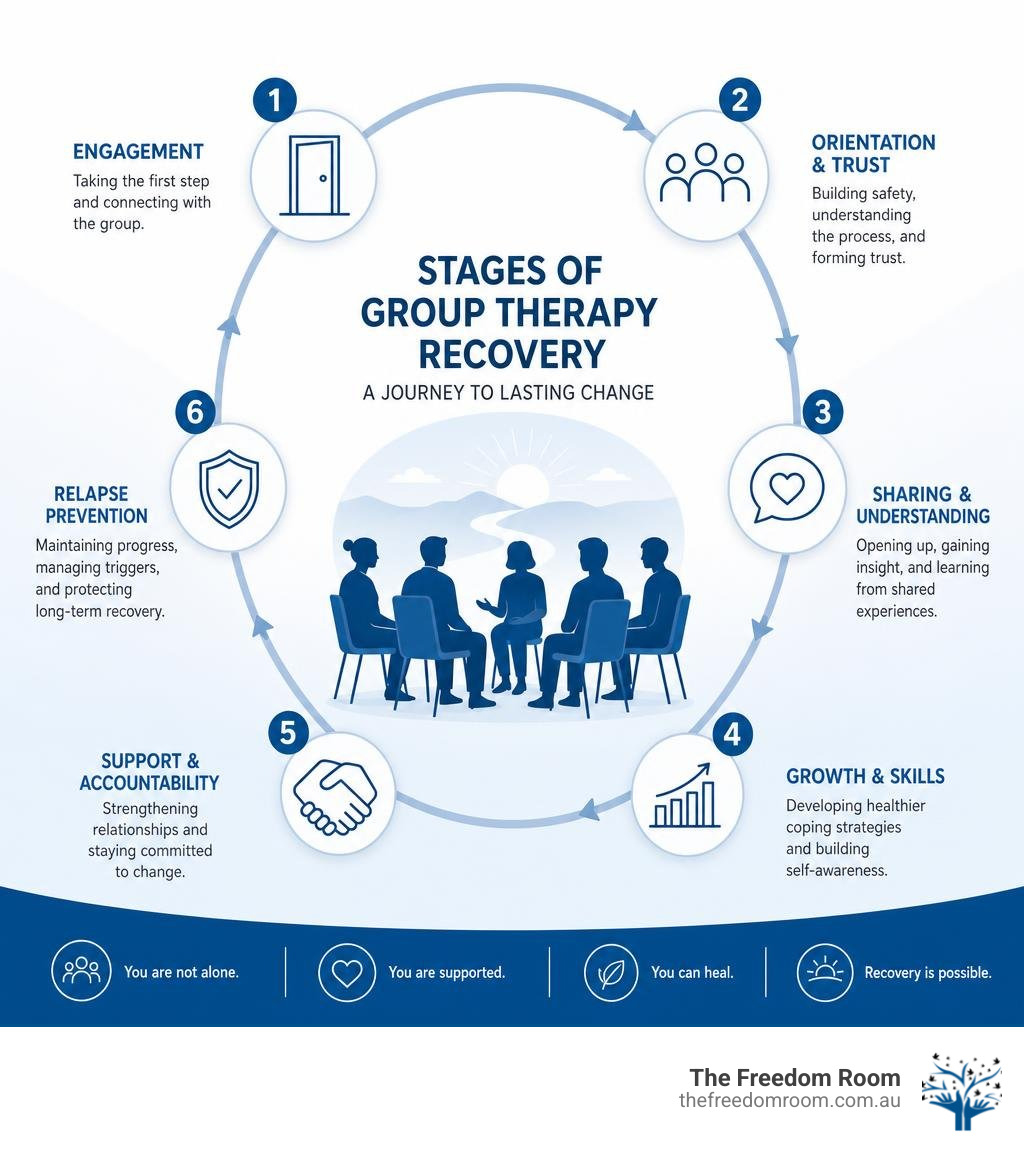
Understanding Group Therapy for Alcoholics
Group therapy is much more than a simple gathering of people talking about their struggles. It is a carefully structured therapeutic environment designed to leverage group dynamics to promote personal growth. In a therapeutic group, the relationships that form between members create a powerful therapeutic alliance.
This alliance helps individuals feel safe enough to explore the underlying causes of their physical alcohol dependence. According to the AIHW Alcohol Report, alcohol remains one of the most common substances for which Australians seek treatment. Group therapy addresses this widespread need by establishing a healthy, pro-recovery culture that directly counters the social patterns that often encourage drinking.

Group Therapy vs. Individual Therapy
While individual therapy offers highly personalised attention, group therapy introduces unique therapeutic factors that one-on-one sessions cannot replicate. One of the primary advantages of the group format is peer modelling. Seeing others who are further along in their recovery journey provides concrete proof that long-term sobriety is possible. This observational learning helps participants internalise positive coping strategies and builds confidence in their own capacity to change.
Additionally, group therapy is highly cost-effective, making quality care accessible to a broader range of people. Sharing experiences with peers who truly understand the daily challenges of overcoming dependence helps break down walls of denial far more effectively than advice from a clinician alone. In a group setting, feedback is delivered by peers who have lived experience, which often bypasses the defensiveness that can sometimes arise in individual clinical sessions.
Both modalities are highly valuable and often work best when used in combination. You can explore how these approaches complement each other in our guide on Group Therapy in Addiction Recovery. For a deeper look into the clinical frameworks of these group structures, the Substance Abuse and Mental Health Services Administration (SAMHSA) provides comprehensive guidelines in their resource on Substance abuse treatment Group therapy.
Evidence-Based Models of Group Support
Not all therapy groups operate in the same way. In Australia, treatment providers utilise several evidence-based models to suit different stages of the recovery process. The primary models outlined by clinical guidelines include:
- Psychoeducational Groups: These groups focus on educating participants about the physical and psychological effects of alcohol on the brain and body.
- Skills Development Groups: These sessions focus on practical skills, such as how to refuse a drink in social situations or manage stress without alcohol.
- Cognitive-Behavioural Groups: These highly structured groups help participants identify cognitive distortions, reframe negative thoughts, and develop healthy coping mechanisms.
- Interpersonal Process Groups: These groups explore how past relationships and family dynamics influence present behaviours and recovery patterns.
- Support Groups: These are peer-led or professionally facilitated spaces, such as SMART Recovery, that focus on mutual aid, daily accountability, and practical problem-solving.
Research indicates that the structure of the group plays a major role in how well participants stay engaged. A study published in the Cognitive Behaviour Therapist evaluated a structured CBT group intervention and found a remarkable 93.02% completion rate, compared to 74.47% in unstructured groups. Furthermore, participants in the structured CBT group attended an average of 50.97% of sessions, while those in the unstructured group attended only 25.53%.
These findings are supported by another study on group cognitive behavioural therapy for alcohol dependence, which highlights how structured cognitive-behavioural groups significantly improve treatment compliance. To learn more about which format might suit your needs, read our article on Group Therapy for Alcoholism.
The Core Benefits of Group Therapy for Alcoholics
The psychological benefits of recovering in a group setting are extensive. For many, the most immediate benefit is the reduction of isolation and shame. Hearing others share similar thoughts and experiences fosters a sense of universality, the comforting realisation that you are not alone in your struggles. This shared vulnerability helps dismantle the stigma associated with physical alcohol dependence, allowing participants to heal in a supportive environment.
Group therapy also plays a vital role in building self-efficacy, which is an individual’s belief in their ability to succeed. A clinical trial published in the Indian Journal of Psychiatry investigated the impact of brief interventional group therapy. The study showed that participants’ general self-efficacy scores increased significantly from a mean of 25.57 pre-intervention to 38.4 post-intervention.
Astonishingly, 83.33% of the participants achieved early remission, remaining completely abstinent for at least three months following the brief intervention. This demonstrates that even short-term group support can ignite profound, lasting changes. The structured environment of a group encourages participants to set realistic goals, celebrate milestones, and develop a stronger sense of personal agency. If you are wondering whether this approach is suitable for your situation, you can read our guide on 5 Ways to Know if Group Recovery Support is Right for You. More details on the clinical outcomes of brief interventions can be found in the study on brief interventional group therapy for alcohol use disorder.
Key Topics Addressed in Recovery Sessions
A professionally facilitated group therapy session covers a wide range of practical and emotional topics. Rather than simply discussing the act of drinking, sessions focus on the underlying triggers and lifestyle changes required to maintain long-term sobriety. Common topics include:
- Relapse Prevention: Identifying high-risk situations, social triggers, and early warning signs of physical relapses.
- Coping with Cravings: Practising cognitive restructuring, progressive muscle relaxation, and mindfulness techniques to ride out intense urges.
- Boundary Setting: Learning how to establish healthy personal boundaries with family, friends, and colleagues who may enable drinking behaviours.
- Managing Co-Occurring Mental Health Needs: Addressing the close link between alcohol use and mental health struggles, such as anxiety and depression.
Addressing co-occurring mental health needs is particularly critical in modern recovery programmes. National data shows that 71% of adults with a substance use problem also report having a mental health need, which is a significant increase from 53% in previous years.
Integrated treatment manuals, such as RAND’s integrated group CBT manual for co-occurring depression and substance use, provide evidence-based frameworks for addressing both depression and alcohol dependence simultaneously within a group setting. To understand how these topics are integrated into clinical programmes, you can explore our resources on Alcohol Rehab Group Therapy.
How to Access Group Therapy for Alcoholics in Australia
Navigating the Australian healthcare system to find the right support can feel overwhelming, but there are several clear pathways available. Many Australians begin by visiting their General Practitioner (GP) to discuss a Mental Health Treatment Plan, which can provide Medicare rebates for psychological services. This plan allows eligible individuals to access subsidised sessions with registered psychologists or clinical social workers who facilitate therapeutic groups.
Depending on your circumstances, funding may also be accessible through the National Disability Insurance Scheme (NDIS) or Queensland Health community programmes. However, professional support is highly recommended because navigating early recovery alone can be incredibly difficult. Private health insurance may also cover portions of group therapy programmes, depending on the level of extras cover.
In fact, national statistics show that approximately 33% of individuals seeking treatment for alcohol disengage from services prematurely. Finding a structured, compassionate group environment is one of the most effective ways to combat this drop-out rate and stay committed to your goals. The accountability and peer support inherent in group therapy provide a safety net during high-risk periods, significantly improving retention rates. You can find more information on local recovery networks through our directory of Alcohol Addiction Support Groups.
Discover the Support You Need for a Lasting, Successful Recovery
At The Freedom Room Wellness and Recovery, we understand that overcoming physical alcohol dependence requires more than just clinical advice. It requires deep empathy, authentic connection, and practical strategies built on real-world experience. Our unique strength lies in our team, who are in recovery themselves and provide compassionate, non-judgemental support to every individual who walks through our doors.
We offer highly personalised sessions, structured workshops, and cost-effective alcohol treatment programmes designed to help you rebuild your life. Whether you are taking your very first step or looking for a supportive community to maintain your long-term sobriety, we are here to walk beside you. Our evidence-based approach ensures that you receive the highest standard of care in a safe, confidential, and welcoming environment.
Our welcoming recovery centre is located at: 9a/521 Beams Rd, Carseldine QLD 4034
To learn more about how we can support your journey, please visit our Our Services page or reach out to us directly through our Contact Us page today.
Frequently Asked Questions
What is the typical size of a group therapy session?
Most professional group therapy sessions maintain a small, intimate size of 5 to 12 participants. This specific range ensures that everyone has sufficient time to share, receive feedback, and actively participate while still benefiting from diverse peer perspectives. It strikes the perfect balance between individual attention and group dynamic diversity.
Do I have to speak or share my story during my first session?
No, there is no pressure to share immediately. Many participants prefer to listen and observe during their first few sessions as they become comfortable with the group dynamics, rules, and facilitator’s style. Your comfort and safety are the primary priorities, and you can contribute whenever you feel ready.
How does group therapy compare to 12-step programmes like Alcoholics Anonymous?
While 12-step programmes are peer-led, spiritual, and focus on mutual aid, clinical group therapy is led by a trained professional. Clinical groups focus on evidence-based therapeutic modalities, such as CBT, to explore underlying psychological patterns and develop practical coping skills. Both approaches can be used concurrently to support long-term recovery.