

Why Recognising Relapse Warning Signs Early Can Change Everything
Relapse warning signs rarely appear without prior indication. In most cases, the process begins weeks or even months before an individual returns to substance use, manifesting quietly through subtle shifts in mood, behaviour, and daily habits.
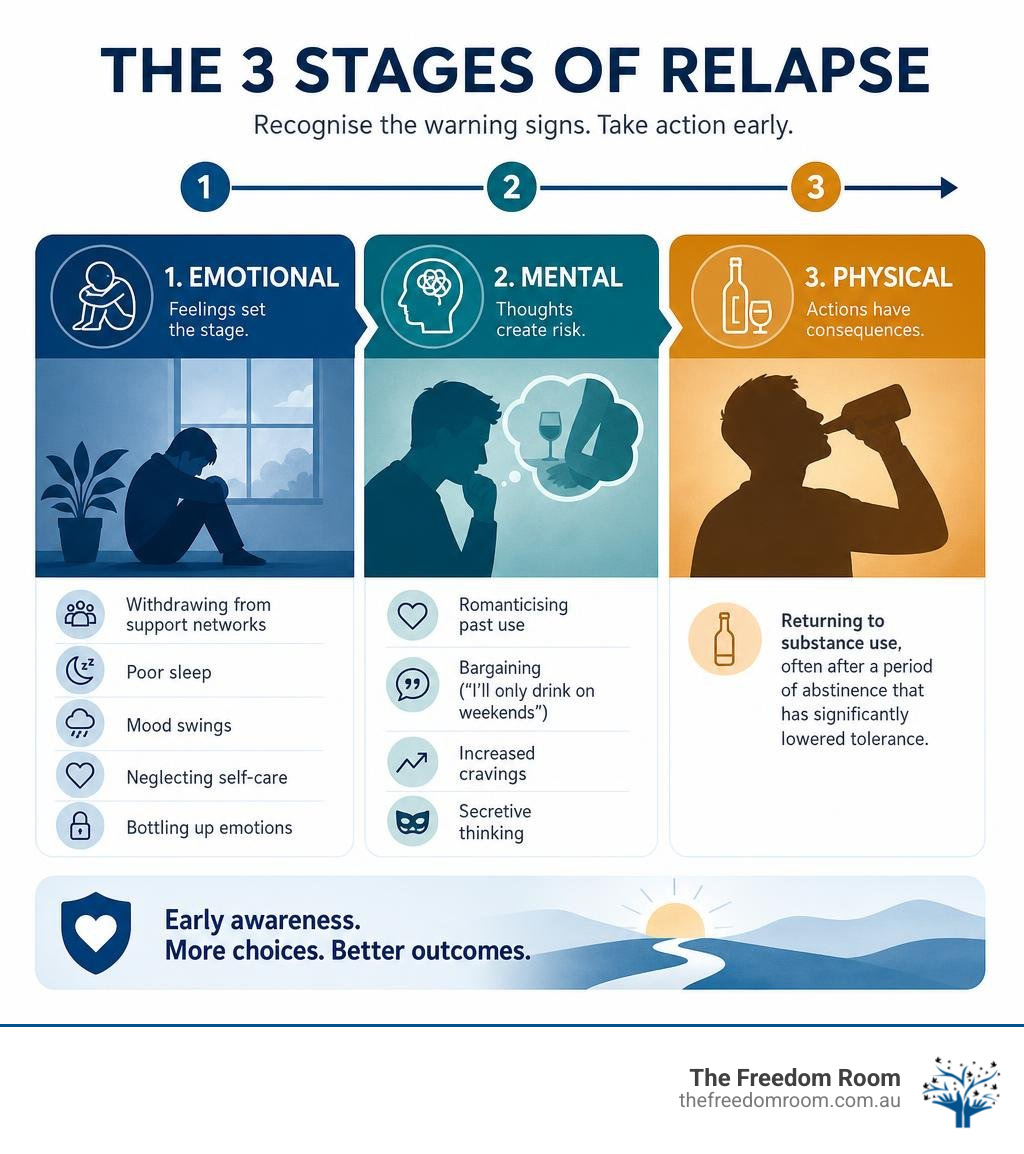
For individuals in recovery, or those supporting them, the following overview outlines the primary warning signs across the progressive stages of relapse:
Common relapse warning signs, by stage:
- Emotional stage: Withdrawing from support networks, experiencing poor sleep, exhibiting mood swings, neglecting self-care, and suppressing emotions.
- Mental stage: Romanticising past substance use, bargaining (such as planning to limit use to specific occasions), experiencing increased cravings, and engaging in secretive thinking.
- Physical stage: Returning to substance use, which frequently occurs after a period of abstinence that has significantly reduced physical tolerance.
Recovery from alcohol or other drug dependence is not a linear process. According to the Australian Institute of Health and Welfare, substance use remains one of Australia’s most significant health challenges, and relapse is a recognised component of managing such chronic conditions rather than an indication of failure.
Research consistently demonstrates that 40% to 60% of individuals in recovery will experience a return to use at some point. Some studies indicate this figure is higher within the first 90 days following treatment. This does not suggest that recovery is unattainable; rather, it highlights that identifying the warning signs early, before physical use occurs, is one of the most effective interventions available.
Early intervention provides a broader range of supportive options.
Easy relapse warning signs glossary:
Understanding the Stages and Relapse Warning Signs
Many individuals believe that a return to substance use is a sudden, impulsive decision. In reality, clinical research indicates that it is a gradual, progressive process with distinct phases. This progression is highly predictable and provides multiple opportunities for early intervention.
According to scientific research on relapse stages, the journey toward a return to use begins long before any physical substance is consumed. This process is driven by complex changes in brain chemistry. Over time, chronic alcohol use alters the neural pathways responsible for stress management, decision-making, and pleasure. When an individual enters recovery, the brain requires a significant period to recalibrate.
During this transitional period, individuals often experience a quiet cognitive conflict. The logical mind seeks to maintain sobriety, but the underlying neurological pathways remain highly sensitive to stress and environmental triggers. This tension is what makes understanding the stages of relapse so vital. By learning to identify the subtle shifts in each stage, individuals can actively interrupt the cycle.
Emotional Stage: Early Relapse Warning Signs to Watch
The emotional stage of relapse is highly critical because it is the most covert. During this phase, an individual is not actively planning to drink or use substances. Instead, behaviours and emotional states are gradually establishing a state of vulnerability.
The most common signs of an emotional relapse include:
- Neglecting basic self-care: This includes poor hygiene, erratic sleep patterns, and skipping meals.
- Social isolation: Withdrawing from family, friends, and established support groups.
- Suppressing emotions: Keeping stress, anger, or anxiety internalised instead of sharing with a peer or professional.
- Skipping recovery meetings: Avoiding the structured environments that maintain accountability.
This stage is also heavily influenced by Post-Acute Withdrawal Syndrome (PAWS). PAWS can cause persistent mood swings, low energy, and sleep disturbances for months after the physical alcohol dependence has been addressed. When these symptoms arise, individuals can easily feel overwhelmed.
Recognising these shifts as clinical symptoms rather than personal failures is key to maintaining recovery. Engaging with proactive coping skills to prevent relapse during this initial stage is highly effective because cravings have not yet dominated cognitive processes.
Mental Stage: Internal Struggles and Relapse Warning Signs
If the emotional stage is left unaddressed, it almost always transitions into a mental relapse. This is where a conscious, internal conflict begins, and the mind starts to actively debate whether or not to return to substance use.
Common warning signs of a mental relapse include:
- Romanticising past use: Remembering only the perceived positive aspects or social benefits of drinking, whilst overlooking the negative consequences.
- Bargaining: Believing that substance use can be controlled, such as attempting to drink only on special occasions or switching to beverages with lower alcohol content.
- Lying and secrecy: Engaging in dishonest behaviour regarding whereabouts, feelings, or social associations.
- Actively planning a return to use: Seeking opportunities to consume alcohol without the knowledge of family members or support networks.
During this stage, cognitive dissonance is exceptionally high. The individual understands that drinking will compromise their progress, yet the craving creates a powerful illusion of relief. According to clinical guidance on Relapse Prevention: Recognise the Signs | Geisinger, this mental conflict is a clear signal that the recovery plan requires immediate adjustment.
It is crucial to communicate openly during this phase. Sharing these thoughts with a sponsor, therapist, or peer support specialist breaks the secrecy that fuels addiction. Individuals can also explore practical techniques for dealing with cravings to help manage the mental urge without acting upon it.
Physical Stage: The Return to Substance Use
The physical stage involves the actual consumption of alcohol or drugs. It is important to distinguish between a minor, temporary lapse and a full relapse.
A lapse is a brief, isolated event where an individual has a single drink but immediately stops, experiences regret, and recommits to recovery. A relapse is a sustained return to previous heavy levels of use, where recovery goals are abandoned.
Regardless of the scale, returning to substance use carries severe physical risks. During sobriety, the body quickly loses its tolerance to alcohol. Returning to previous consumption levels can overwhelm the system, dramatically increasing the risk of severe medical complications.
If a lapse occurs, the immediate response must focus on safety and honest communication rather than shame. Contacting a medical professional, trusted family member, or recovery specialist immediately is vital. Reframing the event as a learning opportunity rather than a failure is essential. Utilising a structured relapse prevention plan guide can help dissect the event, identify missed warning signs, and safely rebuild daily structure.
How Families Can Spot Early Warning Signs
Family members and close friends are often the first to notice changes, even before the individual in recovery does. However, loved ones frequently look for obvious signs of physical intoxication, missing the subtle emotional and behavioural shifts that occur weeks earlier.
To support someone effectively, families should monitor these key changes:
- Defensiveness and irritability: Experiencing sudden, uncharacteristically defensive reactions to simple questions.
- A sudden drop in routine: Discontinuing attendance at therapy sessions, support group meetings, or exercise routines.
- An attitude of overconfidence: Expressing beliefs of being completely cured or no longer requiring support systems.
- Reconnecting with old social circles: Showing interest in visiting high-risk environments or contacting individuals associated with past substance use.
When noticing these signs, communication is highly important. Approaching a loved one with accusations or anger drives them further into isolation. Instead, focus on calm, non-judgmental communication. Share specific, objective observations rather than generalisations. For example: “I have noticed you have not been sleeping well lately and missed your last two meetings, and I want to ensure you feel supported.”
Learning the art of navigating your partner’s relapse without losing your mind is vital for personal mental health, helping to establish firm, loving boundaries while remaining a supportive presence.
Smart Strategies for Personal Prevention and Action
Preventing a return to use requires a proactive, daily commitment to self-care and structured planning. Relying solely on willpower is rarely sufficient when a mental craving arises. Instead, practical strategies must be implemented to safeguard sobriety.
The following strategies are highly effective for protecting recovery:
- Monitor HALT states: Regularly assess whether you are feeling Hungry, Angry, Lonely, or Tired, as these states are common triggers for stress and cravings.
- Maintain a structured daily routine: Ensure consistent times for sleep, nutritious meals, physical movement, and recovery activities to keep the nervous system regulated.
- Practice mindfulness and grounding techniques: When a craving occurs, practice the “wait 30 minutes” rule, using deep breathing or grounding exercises to allow the physical urge to pass.
- Maintain a written relapse prevention plan: Document personal triggers, early emotional warning signs, and a clear list of emergency contacts.
For a deeper look at creating a resilient defence, individuals can learn how to build a relapse prevention plan using proven methods tailored to their unique lifestyle. Additionally, understanding how external pressures impact mental state is crucial, as highlighted in clinical research on the Warning Signs of Relapse: Depression, Stress, and Other …. By combining daily mindfulness with a clear, actionable plan, individuals create a powerful safety net that can withstand challenging days.
Take the First Step Toward a Fulfilling, Alcohol-Free Life
At The Freedom Room Wellness and Recovery, we understand the complexities of navigating long-term sobriety. We operate with a deep sense of empathy because our team members are in recovery themselves. We have walked this path, experienced the internal struggles, and learned how to successfully manage the warning signs of a return to use.
We offer compassionate, cost-effective alcohol treatment through highly personalised sessions, workshops, and evidence-based therapies. You do not have to carry this weight alone, and there is no reason to feel ashamed of your struggles. Whether you are noticing the very first signs of emotional withdrawal or trying to rebuild after a physical setback, we are here to provide authentic, practical, and non-judgmental support.
If you are ready to strengthen your recovery or require professional guidance to support a loved one, we invite you to explore Our Services and see how we can assist you. Our welcoming clinic is located in Brisbane’s northern suburbs, and we are ready to stand by your side.
Please reach out to us today via our Contact Us page, or visit us in person at: 9a/521 Beams Rd, Carseldine QLD 4034.
Frequently Asked Questions
Does a relapse mean that treatment has failed?
No, a return to substance use does not mean that treatment has failed or that you are incapable of recovery. Substance dependence is a chronic health condition, and setbacks are a common, non-linear part of the healing journey. A relapse simply indicates that your current coping strategies, support systems, or treatment plan need to be adjusted, restarted, or intensified.
What is the difference between a lapse and a relapse?
A lapse is a brief, temporary slip-up where an individual consumes alcohol or drugs but immediately stops, reflects on the event, and returns to their recovery practices. A relapse is a more sustained, complete return to previous heavy patterns of substance use, where the person abandons their daily structure and recovery goals.
Why is returning to alcohol use so dangerous after a period of sobriety?
During a period of abstinence, your body quickly loses its physical tolerance to the substance. If you experience a relapse and consume the same amount of alcohol you used to drink, your body can easily become overwhelmed, which significantly increases the risk of an accidental, life-threatening overdose.
How can I talk to a loved one who is showing early warning signs?
Approach them in a quiet, private setting with a calm and supportive tone. Avoid making accusations, lecturing, or inducing guilt, as this will cause them to become defensive and secretive. Instead, use specific, non-judgmental observations about their sleep, mood, or routine, and express your genuine care for their well-being.