
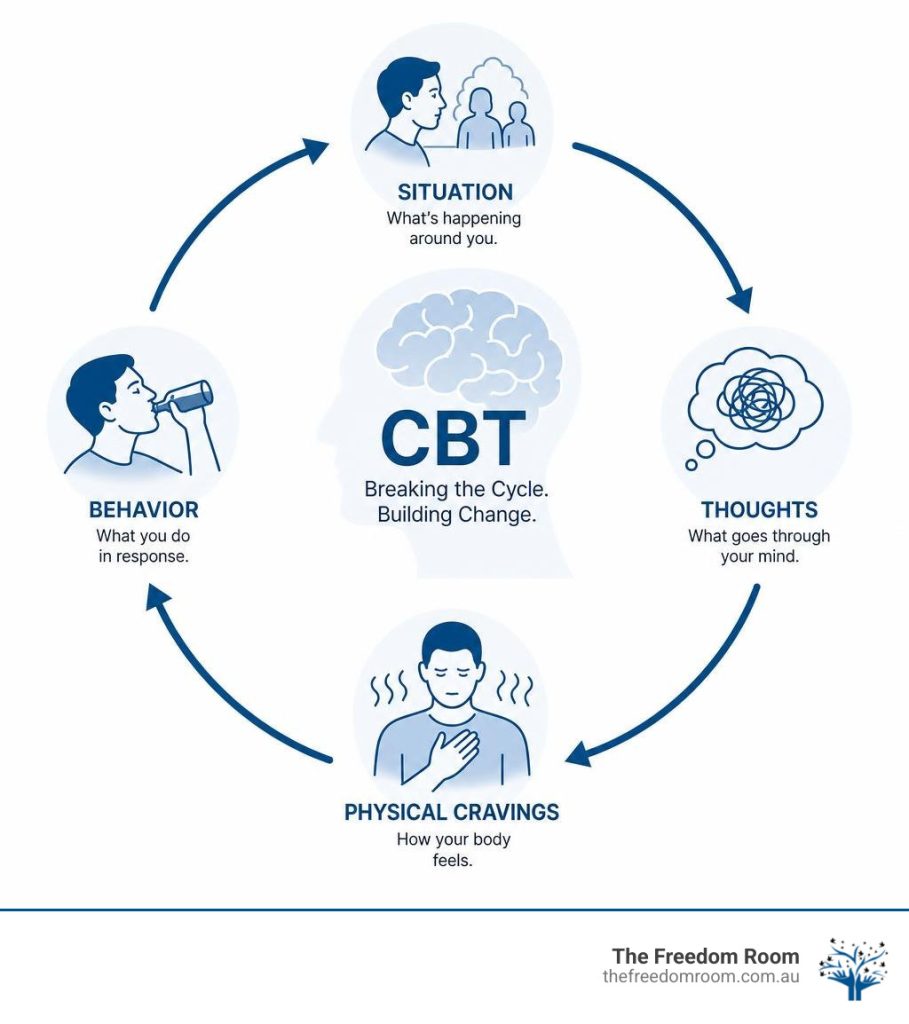
Cognitive Behavioural Therapy (CBT) is a highly structured, practical, and goal-oriented form of psychotherapy. Unlike traditional psychoanalysis, which may spend years exploring early childhood experiences, CBT focuses primarily on present-day thoughts, emotional responses, and actions. For individuals experiencing physical dependence on alcohol, this evidence-based approach provides a systematic framework to identify, challenge, and unlearn maladaptive coping mechanisms, replacing them with healthy, sustainable habits.
The therapeutic relationship in CBT is active and highly collaborative. Practitioners do not adopt a passive listening role; instead, they work alongside individuals as active partners in the recovery process. This collaborative dynamic helps individuals identify problematic patterns, establish clear recovery goals, and practice practical skills between scheduled sessions.
The Cognitive Model of Alcohol Dependence
The cognitive model rests on the premise that emotional and behavioural reactions are not caused directly by external situations, but rather by how individuals interpret those situations. In the context of alcohol recovery, this cognitive framework is divided into three distinct levels:
- Core beliefs: These are deeply held, often rigid and unconscious assumptions about oneself, others, and the world, such as “I am inadequate” or “I cannot cope with stress without assistance.”
- Cognitive distortions: These are biased or irrational ways of processing information that stem from core beliefs, such as all-or-nothing thinking, overgeneralisation, or catastrophising.
- Negative automatic thoughts: These are rapid, involuntary thoughts that arise during challenging moments, directly driving immediate physical cravings and the urge to drink.
By mapping the cycle of situations, thoughts, emotions, physical feelings, and actions, clinicians and individuals can pinpoint exactly where the chain of physical dependence can be broken. For more details on how this cognitive framework applies to recovery, read about CBT for Alcoholism.
How CBT Differs from Other Psychotherapies
It is helpful to understand how CBT differs from other common therapeutic approaches. Traditional 12-step programmes operate primarily on a disease model, viewing addiction as a progressive illness that requires surrender to a higher power. In contrast, CBT views problematic alcohol use as a learned, maladaptive behaviour sequence that can be systematically unlearned through skill acquisition and cognitive restructuring.
When compared to Motivational Interviewing, which is designed to build initial motivation and resolve ambivalence about change, CBT goes a step further by teaching concrete, practical coping skills to maintain that change over the long term.
CBT is highly active and hands-on, requiring collaborative goal setting, systematic skill practice, and structured homework assignments. It is also designed to be brief and time-limited, typically spanning between 5 and 20 sessions. This makes it an efficient and highly focused option for those seeking structured support. Learn more about Cognitive Therapy for Alcoholics and how it can help you build a practical toolkit for sobriety.
How Effective Is CBT for Treating Alcohol Use Disorder?
CBT is widely considered the gold standard of psychotherapy for treating addictions, backed by decades of rigorous scientific research. In Australia, risky alcohol consumption remains a significant public health issue. According to official data from the Australian Institute of Health and Welfare, alcohol continues to be one of the most common drug types for which Australians seek treatment.
Because of its structured, time-limited nature, CBT is also recognised as one of the most cost-effective therapeutic modalities available. It delivers meaningful, long-term outcomes without requiring years of expensive, open-ended therapy, making it highly accessible for individuals seeking structured recovery pathways.

Clinical Evidence and Success Rates
The clinical evidence supporting CBT is robust. Landmark clinical trials, such as Project MATCH, demonstrated that CBT leads to clinically meaningful improvements, significantly increasing the percentage of days abstinent and reducing the number of drinks consumed on drinking days. These outcomes highlight the utility of cognitive interventions in fostering long-term behavioural change.
Furthermore, research highlights the immense value of structured group CBT interventions over unstructured support groups. A study published in the Cognitive Behaviour Therapist found that structured CBT groups achieved a 93.02% completion rate compared to just 74.47% for unstructured psychosocial groups. This demonstrates that structured, goal-oriented environments foster higher engagement and retention rates.
Beyond the numbers, group CBT offers profound qualitative benefits. Participants report a deep sense of belonging and validation through shared understanding, helping to counteract the isolation and shame that so often accompany physical alcohol dependence.
The Delivery of CBT: Individual Sessions and Group Workshops
CBT can be delivered effectively in multiple formats, each offering unique advantages. Individual sessions allow for highly personalised cognitive restructuring, where clinicians can drill down into specific triggers, core beliefs, and personal history. This individualised focus ensures that unique psychological vulnerabilities are addressed systematically.
On the other hand, group workshops provide a collaborative environment where individuals can practice real-world skills, such as drink refusal techniques, alongside peers who share similar recovery objectives.
While digital and self-guided CBT tools have shown promise, clinical trials published in PMC demonstrate that therapist-guided or hybrid models consistently yield superior long-term outcomes compared to unguided self-help. Having facilitators who possess both clinical expertise and lived experience of recovery guiding these sessions adds an invaluable layer of authentic empathy, safety, and mutual trust.
What Specific Skills and Techniques Are Taught in CBT for Alcohol Recovery?
The primary goal of CBT is to equip individuals with a practical, portable toolkit of coping strategies. One of the foundational frameworks taught is the “Recognise, Avoid, Cope” model. This simple yet powerful strategy helps individuals manage daily triggers effectively and maintain long-term sobriety.
First, individuals learn to recognise the specific people, places, emotions, or situations that spark the urge to drink. Second, they learn to avoid these high-risk situations whenever possible, especially in early recovery. Third, because avoidance is not always possible, individuals are taught how to cope with cravings and difficult emotions using structured cognitive and behavioural exercises.
This process begins with a functional analysis, where clinicians and clients work together to map out the precise triggers (antecedents) and consequences of drinking behaviour, allowing for the development of highly targeted intervention plans. Explore more about these CBT Techniques for Addiction to see how they can be integrated into a daily routine.

Core Cognitive and Behavioural Techniques
During the recovery journey, participants practice several core techniques designed to reshape their relationship with alcohol:
- Thought Records: This exercise involves writing down a negative automatic thought, such as “I need a drink to get through this social event,” and objectively listing the evidence for and against it to develop a more balanced, rational perspective.
- Behavioural Experiments: These are safe, structured tasks designed to test the validity of self-limiting beliefs. For instance, an individual might attend a social gathering for one hour without drinking to test the belief that they cannot socialise or experience enjoyment whilst sober.
- Imagery-Based Exposure: Under clinical guidance, individuals safely revisit painful memories or craving-inducing scenarios in their mind, gradually reducing their emotional charge and the urge to self-medicate.
- Pleasant Activity Schedule: This technique helps individuals plan and schedule positive, alcohol-free daily routines, reintroducing natural sources of joy and dopamine to actively disrupt the habit loop of drinking.
Understanding Marlatt’s relapse model is also crucial, particularly in managing the Abstinence Violation Effect. If a minor slip occurs, many people experience intense guilt and self-blame, leading to the belief that they have completely failed, which often triggers a full-blown relapse. CBT teaches individuals to view a slip as a temporary lapse and a learning opportunity rather than an absolute failure, protecting hard-won progress. Read more about Mind Over Matter: Using Cognitive Behavioural Therapy for Addiction to understand how these mental shifts build lasting resilience.
Discover the Support You Need for a Lasting, Successful Recovery
Cognitive Behavioural Therapy is a highly effective, evidence-based approach that provides the practical tools needed to achieve and maintain long-term sobriety. However, clinical tools are most powerful when paired with genuine, compassionate human connection and professional guidance.
At The Freedom Room Wellness and Recovery, located in Carseldine, Queensland, we offer a unique approach to alcohol recovery. Our team members are in recovery themselves, meaning they have walked this path, faced similar challenges, and understand the complexities of overcoming physical alcohol dependence. We combine evidence-based therapeutic strategies with authentic empathy and non-judgemental guidance.
Whether you are looking for individual sessions, structured group workshops, or holistic recovery therapy, we tailor our support to your unique journey.
If you are ready to build a stronger, alcohol-free future, we invite you to explore Our Services and reach out to us today. You can visit our clinic at 9a/521 Beams Rd, Carseldine QLD 4034, or get in touch via our Contact Us page to take that vital first step toward sustainable recovery.
Frequently Asked Questions About CBT for Alcoholism
How long does CBT for alcohol recovery typically take?
CBT is designed to be a brief, structured therapy. Most individuals see meaningful results within 5 to 20 sessions, depending on their unique goals and the severity of their physical alcohol dependence.
Can CBT be combined with other treatments?
Yes. CBT is highly compatible with other recovery pathways, including medical detox, pharmacotherapy, and mutual aid support groups. Combining these approaches often yields the most robust long-term outcomes.
Do I need a referral to access CBT at your clinic?
No referral is necessary to begin working with us. You can contact us directly to discuss your needs and schedule an initial consultation with our lived-experience team.