
Understanding Somatic and Mindful Anxiety Relief Techniques
When acute stress or intrusive thoughts arise, using an effective anxiety relief technique can help interrupt overwhelming physical sensations and restore emotional balance. The human nervous system responds instinctively to perceived threats by elevating heart rate, tightening musculature, and shifting breath patterns into shallow chest movements. While this survival reaction serves a protective function during genuine emergencies, persistent stress can cause this mechanism to activate unnecessarily during everyday routines, creating ongoing discomfort and cognitive fatigue.
Grounding exercises, regulated breathwork, and somatic release practices offer direct, physiological pathways to deactivate this alarm response. Rather than attempting to control or suppress difficult thoughts through mental effort alone, body-focused interventions work directly with your physiology to signal safety to the autonomic nervous system. Practising these tools on a regular basis provides an immediate anchor when worry peaks and creates lasting emotional resilience over time.
Understanding how to soothe your nervous system can also assist when working through personal challenges, such as learning how to manage anxiety during alcohol recovery. Many people find that maintaining an organised checklist helps them systematically relieve anxiety symptoms in demanding situations, while exploring a structured quick-start guide to EFT tapping for anxiety provides actionable somatic support.
As practitioners informed by lived experience in recovery and holistic mental health, we understand how debilitating chronic tension and heightened worry can feel. We have applied these somatic and cognitive practices throughout our own journeys, witnessing how intentional nervous system regulation fosters sustainable wellbeing. Our objective is to offer clear, compassionate, and practical guidance that respects your personal experience and strengthens your daily self-care toolkit.
- Grounding exercises redirect mental focus away from racing thoughts by anchoring sensory attention in the immediate physical environment.
- Paced breathwork and progressive muscle relaxation encourage the autonomic nervous system to deactivate the fight-or-flight response.
- Somatic strategies like Emotional Freedom Techniques combine gentle acupoint stimulation with cognitive acceptance to lower emotional distress.
- Sustainable lifestyle routines, including restorative sleep, regular physical activity, and social connection, reduce baseline physiological vulnerability.
- Practical coping strategies serve as empowering self-care habits that complement formal clinical care when anxiety affects daily living.
Practical Anxiety Relief Technique Tools to Reset the Nervous System

When acute anxiety develops, your body reacts as though confronting immediate physical danger. Blood flow redirects toward major muscle groups, respiration becomes rapid, and stress hormones enter circulation. Applying a somatic anxiety relief technique allows your nervous system to recognise physical safety in the present moment, interrupting cyclical distress and restoring clarity.
Working directly with the body can ease heightened arousal and support calm.
| Technique | Primary Mechanism | Best Situational Use | Time Required |
|---|---|---|---|
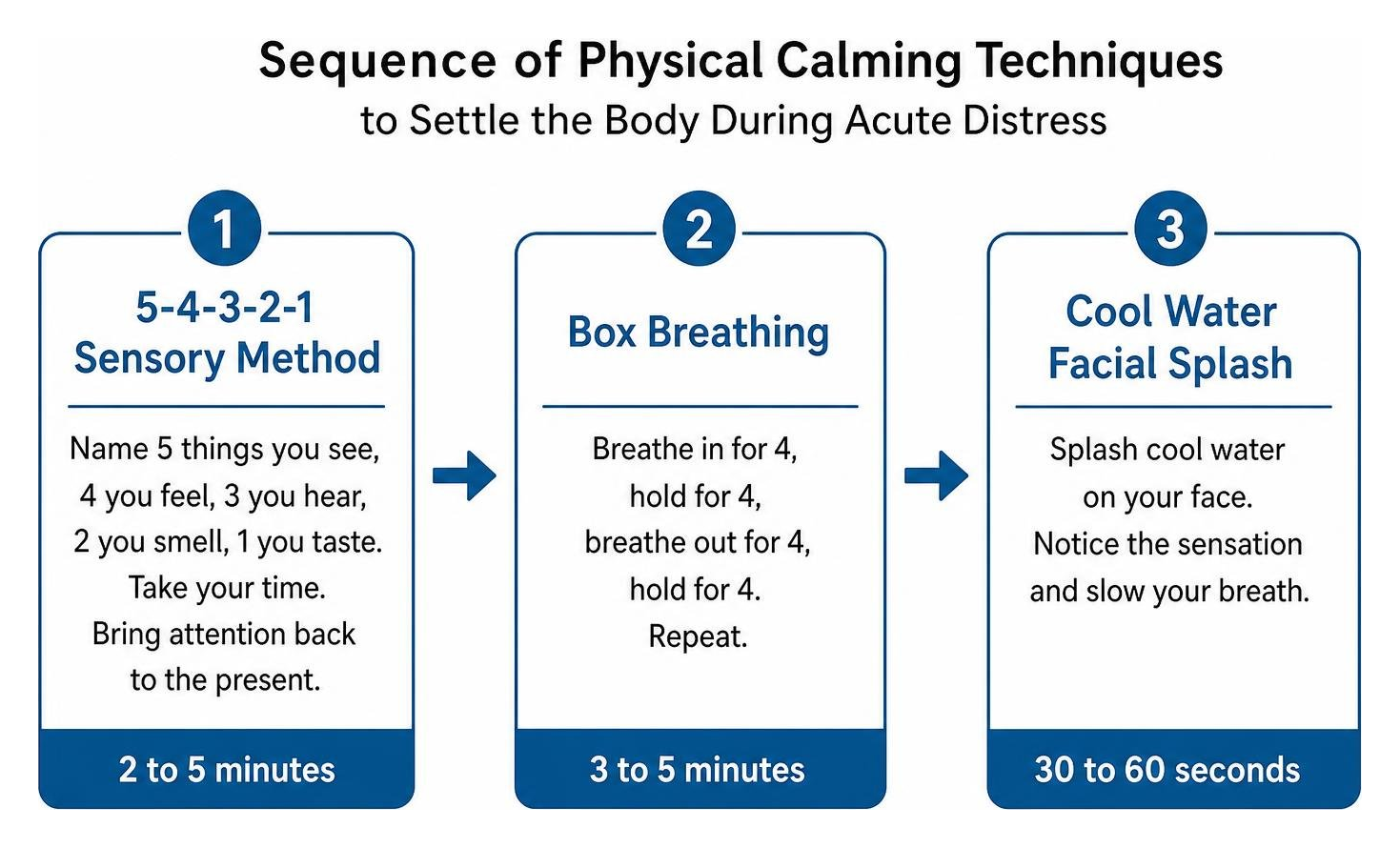
| 5-4-3-2-1 Sensory Method | Sensory reorientation | Acute mental worry or intrusive thoughts | 2 to 5 minutes |
| Box Breathing | Autonomic down-regulation | High-stress moments or pre-meeting nerves | 3 to 5 minutes |
| Cool Water Facial Splash | Mammalian dive reflex activation | Sudden panic spikes or high emotional overwhelm | 30 to 60 seconds |
| EFT Tapping | Acupoint stimulation and cognitive reframing | Persistent emotional distress or cravings | 5 to 10 minutes |
The 5-4-3-2-1 Sensory Grounding Method
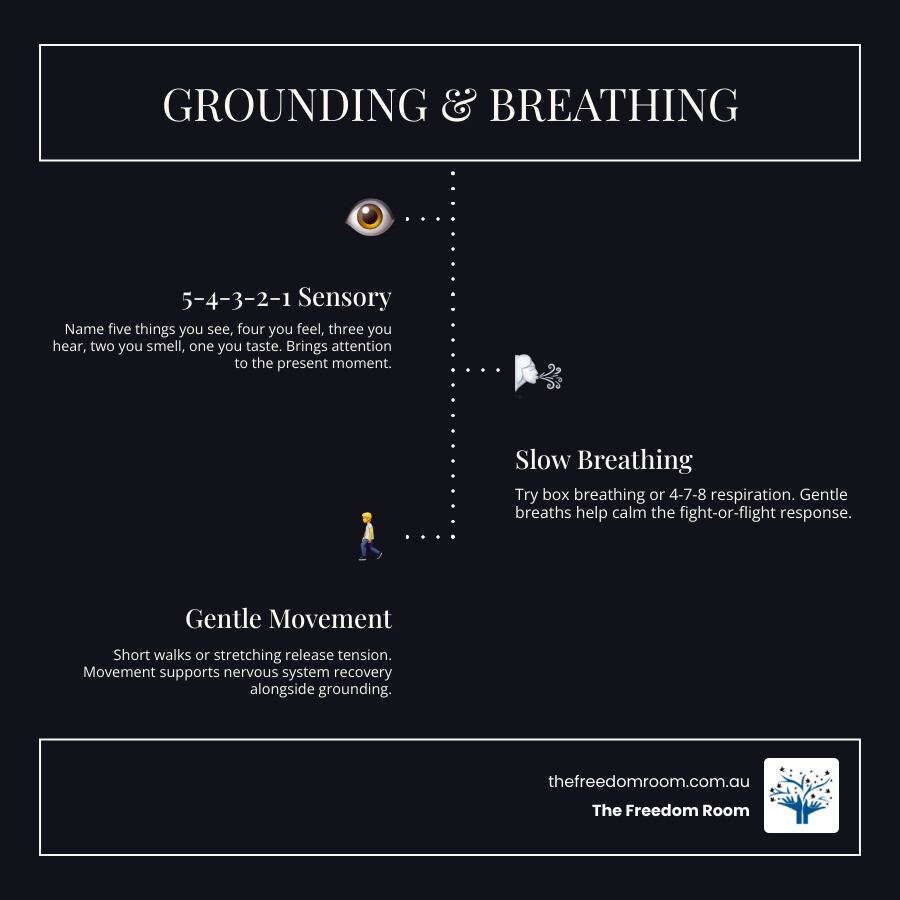
The 5-4-3-2-1 method anchors conscious awareness in your immediate environment, redirecting attention away from internal catastrophic narratives and physiological distress:
- See: Identify five distinct objects in your immediate surroundings, mindfully observing their colours, shapes, and textures.
- Feel: Acknowledge four tangible physical sensations, such as the fabric of your clothing against your skin or the supportive surface beneath your feet.
- Hear: Listen carefully for three external sounds, such as distant traffic, humming appliances, or birds outside.
- Smell: Notice two distinct scents present in the surrounding air, such as fresh coffee, essential oils, or eucalyptus.
- Taste: Identify one taste currently in your mouth, such as lingering tea, a mint, or cool water.
You can practise this grounding exercise discreetly in virtually any setting to disrupt internal rumination and reinforce a felt sense of safety.
Somatic and Breathwork Anxiety Relief Technique Practices
Altering your respiratory rhythm directly influences cardiovascular responses and vagal tone. Slow, paced exhalations signal to the brainstem that the immediate environment is safe, prompting the body to ease physical tension. For comprehensive bodily calm, exploring structured relaxation techniques for anxiety offers practical ways to release accumulated stress.
Box breathing involves inhaling smoothly through the nose for four seconds, holding for four seconds, exhaling gently through the mouth for four seconds, and pausing for four seconds before the next breath cycle. Alternatively, the 4-7-8 breathing method pairs a four-second inhalation with a seven-second hold and an eight-second slow exhalation to induce deep physiological relaxation.
Diaphragmatic breathing expands the lower abdomen rather than the upper chest, encouraging deeper oxygen exchange and decreasing muscular strain. Progressive muscle relaxation pairs diaphragmatic breathing with sequentially tensing specific muscle groups for five seconds and releasing them for ten seconds to systematically soften stored bodily tension.
Dialectical TIPP and Cognitive Interventions
Adapted from Dialectical Behaviour Therapy, TIPP skills provide body-first de-escalation when cognitive tools alone feel challenging during peak distress:
- Temperature: Splashing cool water on your face or applying a cold pack for thirty seconds stimulates the mammalian dive reflex to quickly decelerate heart rate.
- Intense exercise: Engaging in sixty seconds of brisk movement, such as star jumps or squats, helps metabolise excess adrenaline.
- Paced breathing: Slowing your breathing rate to five or six deep breaths per minute activates parasympathetic recovery pathways.
- Progressive relaxation: Systematically releasing muscular contraction softens physical tightness across the jaw, neck, and shoulders.
Pairing somatic resets with structured cognitive tools helps navigate unhelpful thought cycles. Applying established stress and anxiety management techniques allows you to pause before reacting emotionally. The STOPP method offers a reliable framework: Stop, Take a breath, Observe thoughts, Pull back for perspective, and Proceed mindfully.
Emotional Freedom and Tapping for Nervous System Regulation
Emotional Freedom Techniques, commonly known as EFT tapping, combine cognitive reframing with light acupressure on specific meridian points. Tapping fingertips on designated areas such as the side of the hand, eyebrow, under the eye, and collarbone sends calming signals directly to the amygdala.
Many individuals find that incorporating tapping for anxiety relief creates a reliable daily self-regulation habit. Practitioners begin with a setup phrase naming their current distress while affirming self-acceptance, repeating the sequence across several rounds to facilitate emotional release and physiological ease.
Building Sustainable Calm Through Lifestyle and Evidence-Based Therapy

While in-the-moment exercises resolve acute tension, lasting emotional balance relies on consistent daily habits. Integrating restorative routines builds baseline resilience, making you less vulnerable to chronic stress triggers over time. Establishing practical anxiety relief routines supports both physical and mental health across all stages of personal recovery.
Lifestyle Factors and Habitual Nervous System Care
Sustainable adjustments to your daily routine can significantly reduce baseline anxiety and improve nervous system flexibility:
- Daily physical movement: Moderate aerobic exercise, such as a thirty-minute walk, helps regulate mood, improve sleep quality, and clear circulating stress hormones.
- Sleep hygiene: Prioritise consistent sleep schedules, limit evening screen time, and maintain a dark, cool sleeping space to promote restorative rest.
- Caffeine and substance awareness: High caffeine intake can mimic physiological panic by elevating resting heart rate. When navigating alcohol recovery, unaddressed anxiety often surfaces as the body adjusts.
- Emotion-focused journaling: Regular journaling provides an objective outlet for processing complex concerns, lowering subjective emotional distress.
- Social connectedness: Meaningful social bonds foster emotional safety, reduce isolation, and strengthen ongoing resilience.
According to national health data from the Australian Institute of Health and Welfare, alcohol use patterns often intersect closely with psychological distress and wellbeing concerns in the community. When a person reduces or ceases drinking, underlying anxiety can become more prominent during the transition period as the central nervous system readjusts.
Please note that if you or someone you care about may be experiencing physical dependence on alcohol, sudden cessation without medical guidance can be dangerous. Withdrawal symptoms vary widely between individuals, making professional healthcare oversight essential for safe recovery.
Recognising When to Access Professional Support
Self-help exercises are powerful daily resources, but they do not replace clinical care when anxiety becomes pervasive. If worry interferes with work, relationships, or daily functioning, seeking professional guidance is an empowering step forward.
Cognitive Behavioural Therapy, Acceptance and Commitment Therapy, and other evidence-based approaches identify root causes and build adaptive coping skills. Australian clinical resources offer comprehensive guidance on treatments for anxiety through primary care networks.
At The Freedom Room, our lived experience in recovery shapes our compassionate approach. We offer dedicated in-person support alongside flexible programs for individuals addressing problematic alcohol use and associated stress.
Discover the Support You Need for a Lasting, Successful Recovery
Overcoming chronic stress and building a balanced life takes time, patience, and support. Somatic tools and compassionate guidance can support emotional wellbeing.
Explore our services to discover comprehensive pathways tailored to support your recovery and mental health. For individualised face-to-face assistance, our dedicated addiction counselling practice provides a safe, non-judgemental environment to address problematic alcohol use. You are also warmly invited to contact us to discuss your personal circumstances or to arrange a confidential consultation at our welcoming Carseldine location at 9a/521 Beams Rd, Carseldine QLD 4034.
Frequently Asked Questions
What is the 5-4-3-2-1 grounding technique and how does it work?
The 5-4-3-2-1 technique is a sensory mindfulness exercise where you identify five things you see, four you feel, three you hear, two you smell, and one you taste. It works by shifting your mental focus away from distressing thoughts and anchoring your attention in your physical environment.
How do breathing exercises help ease physical anxiety?
Slow, controlled breathing patterns, such as box breathing and the 4-7-8 method, lengthen the exhalation phase. This stimulates the parasympathetic branch of your nervous system, slowing your heart rate and easing muscular tension.
Can lifestyle changes permanently resolve chronic worry?
Healthy habits like regular exercise, quality sleep, reduced caffeine, and journaling lower your baseline stress level. While they build significant emotional resilience, they work best alongside professional therapy when addressing severe or persistent anxiety.
What should I do if grounding exercises do not relieve my panic?
If sensory grounding feels insufficient during intense distress, body-first techniques like splashing cool water on your face or engaging in brief vigorous movement can help reset your physiological state. If acute panic persists, consult a healthcare professional.
When is it necessary to seek professional care for anxiety?
You should seek professional support if anxiety consistently interferes with your daily responsibilities, disrupts your sleep, causes extreme distress, or leads to unhealthy coping mechanisms. A general practitioner or mental health professional can provide a tailored treatment plan.