

What is an intensive outpatient alcohol program?
An intensive outpatient alcohol program is structured clinical treatment for alcohol use that allows you to live at home while attending scheduled therapy sessions. It typically involves multiple sessions each week, totalling at least nine hours of clinical contact. These programs integrate group therapy, individual psychological counselling, psychoeducation, and practical relapse prevention strategies. This care model suits individuals requiring more substantial support than weekly counselling provides, provided their clinical circumstances do not require overnight residential admission. A qualified health professional can assess which level of care is safe and appropriate.
Intensive outpatient treatment represents a general model of care, not a specific service delivered by The Freedom Room. The Freedom Room provides personalised in-person addiction counselling and a structured 12-week online recovery program. For broader national health context and population data, see the Australian Institute of Health and Welfare reports on alcohol use and related harms.
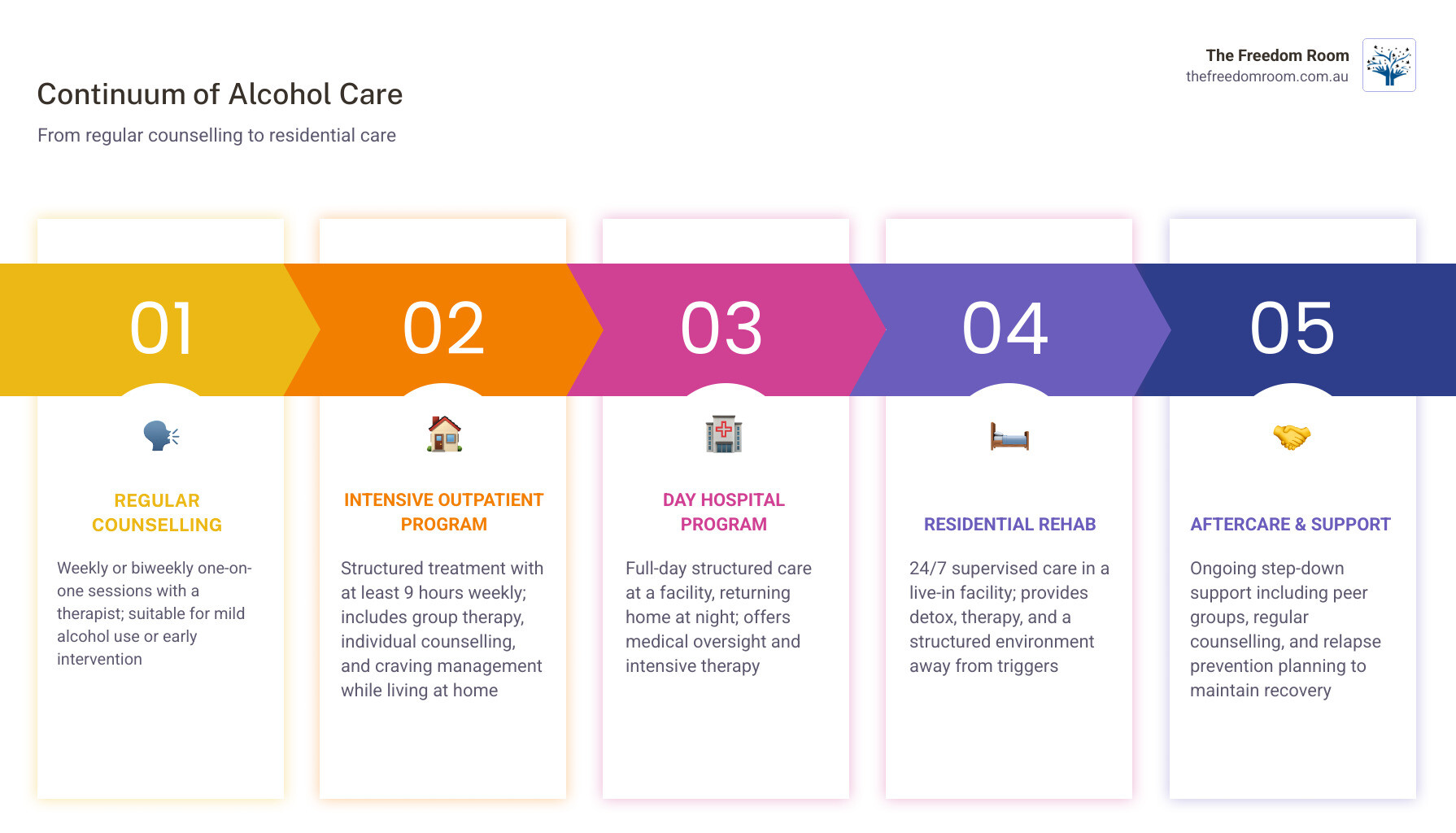
Navigating community-based alcohol support involves understanding alcohol addiction treatment costs, learning how long alcohol withdrawal lasts, and recognising the signs of physical alcohol dependence.
At The Freedom Room, our team brings lived experience in recovery alongside professional clinical training. We understand the practical challenges of navigating treatment options across Australia, and we are dedicated to helping you identify clear, compassionate, and evidence-based pathways forward.
Key Takeaways:
- Intensive outpatient programs provide structured clinical support while allowing individuals to remain at home and maintain daily routines.
- Clinical research demonstrates that structured outpatient care achieves comparable outcomes to residential settings for individuals with stable living environments.
- Core components combine individual therapy, peer group work, relapse prevention planning, and health education.
- A comprehensive clinical intake is vital to evaluate withdrawal risks and ensure outpatient care is safe.
- Ongoing continuing care and supportive peer networks remain critical for sustaining long-term recovery.
Core Structure and Schedule of an Intensive Outpatient Alcohol Program
The structure and scheduling of an intensive outpatient model vary across providers and individual client needs. As a standard clinical baseline, many programs deliver at least nine hours of structured clinical engagement weekly, commonly arranged as three three-hour sessions across weekdays or evenings. This intensity bridges the clinical gap between standard private therapy and round-the-clock residential care.

A typical week in a standard community program balances several therapeutic elements:
- Group therapy sessions focusing on shared problem-solving, emotional regulation, and interpersonal skill development.
- One-on-one psychological counselling to explore personal triggers, co-occurring stressors, and underlying emotional factors.
- Relapse management workshops designed to build practical coping mechanisms for social gatherings and workplace stress.
- External medical coordination, arranged with independent general practitioners or addiction medicine specialists when healthcare monitoring is required.
These structural features represent general industry models rather than services delivered by The Freedom Room. Many individuals seek flexible options to fit around career or family responsibilities, exploring practical alternatives to rehab that allow them to practice recovery skills directly in their everyday environments.
Key Therapeutic Modalities and Interventions
Evidence-based outpatient programs draw upon psychological therapies to address problematic alcohol use comprehensively, targeting behavioural, emotional, and cognitive patterns to help participants develop sustainable routines.
Common therapeutic approaches include:
- Cognitive Behavioural Therapy (CBT) to help identify and restructure unhelpful thought patterns and beliefs surrounding alcohol.
- Relapse prevention strategies that assist in identifying environmental cues, managing cravings, and establishing emergency action plans.
- Psychoeducation to give individuals and families a clear understanding of the mechanisms of dependence.
- Motivational Interviewing to strengthen personal motivation and commitment toward positive behavioural change.
- Supportive family involvement, which educates loved ones and establishes healthier communication patterns within the household.
Combining structured psychological care with accessible delivery makes therapy for alcohol use disorder through in-person and online support an effective way to establish meaningful life changes without stepping away from family life.
Clinical Effectiveness and Outcomes Compared to Inpatient Care
Decades of clinical research have examined how ambulatory, intensive models compare to traditional inpatient or residential programs. While inpatient care removes an individual entirely from their daily environment, research shows that structured community-based programs offer comparable long-term benefits for individuals who do not require medical detoxification or constant supervision.

Standardised assessment tools demonstrate significant reductions in alcohol use and substantial improvements in employment stability, legal standing, and family relationships following outpatient treatment. Because participants remain at home, they can immediately test coping mechanisms in real-world scenarios.
| Feature | Intensive Outpatient Model | Residential Inpatient Care |
|---|---|---|
| Living Arrangement | Reside at home | Onsite overnight stay |
| Weekly Commitment | Typically 9 to 15 hours | 24-hour continuous care |
| Real-World Practice | Immediate application in daily life | Practiced within a controlled facility |
| Disruption to Routine | Minimal impact on work or family | Requires complete leave of absence |
| Focus of Setting | Community integration and flexibility | Intensive crisis stabilisation |
Note: The table above outlines general industry care models for comparison and does not describe services offered by The Freedom Room.
Evidence-Based Outcomes for an Intensive Outpatient Alcohol Program
Clinical literature, including randomised controlled trials and naturalistic observational studies, demonstrates that outpatient programs lead to significant reductions in alcohol consumption between intake and long-term follow-up. Research syntheses show that outcomes between intensive outpatient care and residential settings remain broadly equivalent over extended follow-up intervals. Participants frequently report enhanced self-efficacy because they learn to navigate social pressures, work obligations, and personal triggers while actively receiving clinical support.
Modern clinical science recognises that individual recovery paths vary based on personal motivation, social stability, and aftercare engagement. Outpatient care allows participants to address challenges in real time, refining their strategies alongside experienced clinicians. To understand how these models fit into broader recovery journeys, consult our definitive guide to alcohol addiction recovery programs.
Comparing Inpatient Rehab and Outpatient Delivery
Selecting between residential admission, day hospital treatment, and structured outpatient care involves evaluating individual circumstances. Residential rehabilitation provides a safe environment away from triggers, which can be invaluable during acute distress, but requires a pause on personal responsibilities and substantial financial investment.
In contrast, ambulatory models allow participants to maintain their careers, support their families, and build local networks. For readers seeking local guidance, alcohol recovery support in Brisbane can help clarify which environment best supports their circumstances and recovery goals.
Determining Suitability and Building Long-Term Recovery Pathways
Not every treatment setting suits every individual. Proper placement requires a comprehensive clinical intake assessment to evaluate medical safety, psychiatric stability, and home environment support.
Understanding your clinical needs ensures you choose a safe and appropriate level of care among available evidence-based addiction treatment options.
Patient Selection Criteria and Problem Severity
Medical safety is the primary priority when considering an outpatient setting. When a person is experiencing physical alcohol dependence, suddenly stopping drinking without medical oversight can lead to dangerous health complications. Withdrawal severity varies significantly between individuals based on consumption history, physical health, and previous withdrawal episodes; therefore, a generic timeline should never be used to predict an individual’s safety.
A thorough assessment evaluates:
- Acute withdrawal risk and whether supervised medical detoxification is required before entering therapy.
- Co-occurring mental health conditions that may require coordinated psychiatric care.
- Home environment safety, ensuring the living situation is free from severe stress or active substance use.
- Personal recovery capital, which includes personal strengths, financial stability, and supportive relationships.
Lifestyle strategies such as nutrition, mindfulness, and regular exercise provide helpful day-to-day coping support during recovery, serving as complementary practices rather than substitutes for professional medical evaluation. For practical strategies on navigating these systems, refer to our structured recovery programs survival guide.
Structured Continuing Care and Aftercare Planning
Completing an initial treatment phase marks the beginning of ongoing recovery. Sustainable change depends on structured continuing care that steps down in intensity as an individual gains confidence and stability. This phased approach helps individuals consolidate healthy behavioural changes and maintain accountability over time.
Continuing care pathways often include:
- Step-down individual counselling to address emerging lifestyle challenges.
- Regular participation in peer-led mutual aid groups.
- Ongoing relapse prevention planning and healthy habit formation.
Accessing reliable guidance and comprehensive support for alcohol dependence ensures that the progress made during early recovery is protected and nurtured over the long term.
Discover the Support You Need for a Lasting, Successful Recovery
Rebuilding your relationship with alcohol is a journey that thrives on genuine empathy, clinical structure, and practical strategies. At The Freedom Room, our team combines professional clinical training and lived recovery insights to provide non-judgemental, empowering support tailored to your unique circumstances.
Explore Our Services to learn more about how we can support you, whether you are interested in our structured 12-week online recovery program or prefer to engage with our practitioners in person at 9a/521 Beams Rd, Carseldine QLD 4034. When you are ready to discuss your care options and begin making sustainable changes, please Contact Us to take your next step.
References
McCarty D, Braude L, Lyman DR, Dougherty RH, Daniels AS, Ghose SS, Delphin-Rittmon ME. “Substance abuse intensive outpatient programs: assessing the evidence..” Psychiatric services (Washington, D.C.), 2014. PMCID PMC4152944.
Frequently Asked Questions
How many hours per week does a typical intensive outpatient program require?
Most general intensive outpatient programs require a minimum of nine clinical hours per week, usually divided into three 3-hour sessions. Some programs may offer higher intensity schedules depending on individual client needs.
Can I continue working while participating in outpatient alcohol treatment?
Yes. One of the main benefits of outpatient care is that sessions are frequently scheduled during morning or evening hours, allowing participants to maintain employment, study, and family commitments while attending treatment.
Is an intensive outpatient program safe for someone with physical alcohol dependence?
Outpatient therapy alone is not safe for managing acute, severe withdrawal symptoms. Anyone with suspected physical dependence on alcohol should undergo a professional medical assessment first to determine whether medically supervised detoxification is required before beginning outpatient counselling.
How do outpatient outcomes compare to residential rehabilitation?
Clinical studies indicate that for individuals who have stable living environments and do not require 24-hour medical supervision, structured intensive outpatient programs achieve reductions in alcohol use and improvements in life functioning that are comparable to residential care.